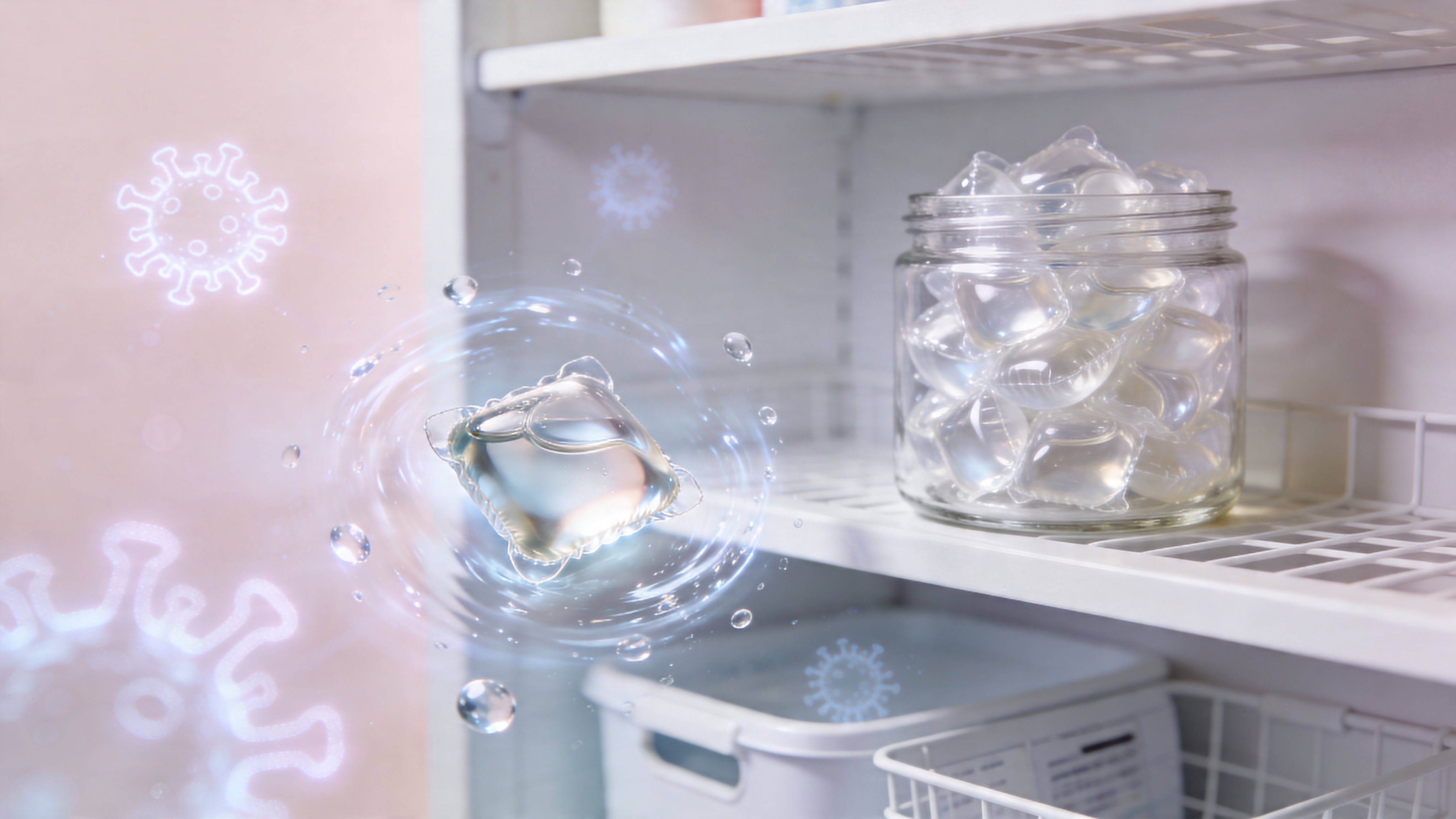
When someone in your home wakes up with a fever, cough, vomiting, or body aches, laundry stops being just another chore. The towels, pajamas, bedsheets, and reusable cleaning cloths around that person can become part of the chain of transmission inside the house. Many individuals initially consider medicine, handwashing, and maybe a mask. Fewer think about the hamper.
That gap matters. Fabrics don't spread viruses in the same way as hands or close-range breathing, but they can still carry body fluids, respiratory secretions, and the grime that helps microbes linger. Bulk laundry pods can play a useful role here, not because they're magical, but because they combine concentrated detergent ingredients in a premeasured form that helps people use them correctly and consistently.
Used well, pods support cleaning that removes soils and helps disrupt some viruses, especially the easier-to-damage ones such as influenza viruses and coronaviruses. Used poorly, they can create a false sense of security. Laundry also has limits. It won't disinfect your washer lid, hamper handle, folding counter, or the bedside table a sick person keeps touching.
Home infection control works best when the pieces fit together. Air quality matters, hand hygiene matters, and surface hygiene matters too. If you're also thinking about airflow and shared indoor spaces during illness, this overview of indoor air quality and your health is a useful companion to what happens in the laundry room.
Introduction Why Your Laundry Routine Matters for Health
A family member gets sick. You strip the bed, gather the used towels, and stare at a pile of laundry that suddenly feels less routine. The practical question is simple. Are you just washing away stains and odors, or are you also reducing viral risk?
The answer is both, but not equally for every virus. Some viruses are fragile on contact with soap-like chemicals. Others are tougher and may need stronger help from heat, longer wash cycles, and thorough drying. That distinction confuses a lot of people because laundry labels focus on whitening, fragrance, and stain lifting, not virology.
Clean looking is not the same as lower risk
A shirt can look spotless and still have traces of respiratory mucus or stool contamination in the fibers. Public health thinking separates cosmetic cleanliness from hygienic cleanliness. In plain language, one is about appearance. The other is about reducing what could make someone else sick.
Bulk laundry pods are often chosen for convenience, but convenience has a health angle too. A premeasured product can reduce guesswork, which matters when you're tired, caring for a sick child, or trying to avoid overhandling detergent.
Practical rule: During household illness, treat laundry as one layer of protection, not the whole system.
When laundry helps most
Laundry becomes especially important for items that have close contact with the body:
- Bed linens: These collect sweat, skin cells, respiratory droplets, and sometimes vomit.
- Towels and washcloths: They move moisture and microbes from one surface to another.
- Clothing: Shirts, sleepwear, and underwear can hold secretions and body fluids.
- Reusable cleaning cloths: These can spread contamination if washed poorly or reused too soon.
The rest of this article stays focused on one question that most detergent marketing skips. How do bulk laundry pods fit into a home viral control plan, and when are they not enough?
The Science of How Laundry Pods Deactivate Viruses
A laundry pod looks simple, but inside it is a tightly packed detergent system designed to work on several parts of the contamination problem at once. For viral control, that distinction matters. Laundry does not rely on a single "kill step." It uses chemistry, water, motion, and later drying to reduce what remains in fabric.

Surfactants target the weak point of enveloped viruses
The main antiviral help from detergent usually comes from surfactants. These molecules interact with both water and oily material, which is why they lift grime off fabric and suspend it in wash water.
That same chemistry affects many enveloped viruses, including influenza viruses and SARS-CoV-2. Their outer layer is made from lipids, which are fats. Surfactants disturb that fatty coating, weaken the virus's structure, and help wash viral material away from the fibers. The effect is less like a disinfectant spray on a countertop and more like loosening adhesive from cloth so it can rinse out.
This is one reason a shirt can become lower risk after washing even if the wash cycle was not designed as a laboratory disinfection test.
Enzymes do not attack viruses directly. They clear the debris around them.
Pods often include enzymes such as proteases and amylases. These are useful because viruses in household laundry are rarely sitting on clean fabric by themselves. They are usually mixed with mucus, sweat, food residue, stool traces, or other organic material.
Enzymes break down parts of that mess. Protease enzymes cut up proteins. Amylase enzymes act on starches. Once those materials are loosened, surfactants and rinse water can reach trapped particles more effectively. A good comparison is washing mud off a shoe tread. Removing the packed dirt first makes it easier to clear what is stuck underneath.
In laundry, better removal often depends on breaking apart the soil that shelters microbes, not just on damaging the microbe itself.
The hardest part for households to understand is that viruses do not all respond the same way
Public health guidance often sounds broad, but virology is more specific. Enveloped viruses are generally easier for detergent-based washing to disrupt. Non-enveloped viruses are usually tougher because they do not have that fatty outer layer. They are protected mainly by a durable protein shell.
| Virus type | Outer structure | General response to detergent-based washing |
|---|---|---|
| Enveloped viruses | Lipid envelope around the virus | Usually more vulnerable to surfactants and routine laundering |
| Non-enveloped viruses | No fatty envelope, protein shell is exposed | Often harder to inactivate and may need stronger support from heat and drying |
This difference matters in real homes. A load contaminated with cold or flu secretions may respond well to ordinary detergent plus a good wash and dry cycle. A load contaminated with a hardier non-enveloped virus, such as norovirus, is a different problem. In that case, laundering may reduce contamination, but it may not fully inactivate everything.
That is also the point where laundry reaches its limit. If vomit, stool, or heavily contaminated secretions touched the hamper lid, washer controls, bathroom surfaces, or nearby flooring, fabric care alone is not enough. Those surfaces may need separate cleaning and disinfection.
Heat and drying support the chemistry
Detergent does much of the work, but temperature and drying can add another layer of protection. Warmer water can improve soil removal and help detergent perform more effectively, although fabric care labels still set the safe limit. Readers who want the temperature side explained in plain language can see this guide on what temperature kills viruses in household settings.
Drying matters too. Viruses generally survive better in moisture than on thoroughly dried fabric, and a full dry cycle reduces the chance that damp textiles will keep supporting contamination.
The pod format can improve consistency
The format itself has a practical advantage. A premeasured dose reduces the chance that someone will underuse detergent during a stressful week of illness, or overpour and leave excess residue behind. Consistency helps because detergent only works well when enough active ingredients are present and dispersed properly in the load.
The dissolvable film releases the detergent into the wash water early in the cycle, which supports even distribution if the pod is used correctly. That does not make pods a magic infection-control tool. It makes them a controlled detergent dose within a larger hygiene strategy.
The key takeaway is simple. Laundry pods are usually most useful against enveloped viruses, somewhat less reliable against non-enveloped viruses, and never a substitute for cleaning and disinfecting contaminated hard surfaces when illness has spread beyond the fabrics.
Laundering Guidelines to Reduce Viral Transmission
Most households don't need a laboratory-grade protocol. They do need a repeatable routine that lowers risk without turning every load into a crisis.
The practical approach has three moving parts. Detergent chemistry, water temperature, and drying all matter. If one part is weak, the others have to do more work.

A household routine that makes sense
Start by handling soiled laundry gently. Don't shake it. Agitation can spread lint, dust, and dried debris into the air and onto nearby surfaces. Carry it straight to the machine in a dedicated basket or washable liner if you have one.
Then follow a simple sequence:
- Place the pod in the drum first. That gives it the best chance to dissolve fully before fabrics crowd around it.
- Load without overstuffing. Clothes need room for water and detergent to circulate.
- Choose the warmest water safe for the fabric. The garment care label still matters.
- Use a full wash cycle. Quick cycles may not give enough mechanical action or contact time.
- Dry thoroughly. Don't leave damp items sitting in the machine.
Why heat still matters
Detergent does a lot, but heat adds another layer. Warmer water helps dissolve soils and can speed up the chemistry that weakens viral structures. Heat also improves how many detergents spread through fabrics and lift debris from fibers.
That said, people often ask if hot water is always required. Not always. Cold-water washing can still remove contamination well when the detergent is effective and the cycle is long enough. But if you're dealing with illness in the home, especially visible body fluids, warm or hot water within the fabric's care limits is the safer practical choice.
For a related guide on the non-fabric side of infection control, see what kills viruses on surfaces.
Drying is not an afterthought
Many people stop thinking once the wash cycle ends. That's a mistake. The dryer can act as a final stress step for microbes that survived washing or remained trapped in damp fibers.
Use the highest dryer setting the fabric can tolerate, and run the load until items are fully dry. Slightly damp towels and sheets are poor end points during household illness. Moisture supports survival for some microbes and invites odor and mildew problems too.
Home rule: If the item touched a sick person closely, don't air-dry it in a pile and assume the job is finished.
A quick decision guide
| Situation | Best practical approach |
|---|---|
| Routine cold and flu season laundry | Use the pod correctly, avoid overloading, dry completely |
| Laundry with visible body fluids | Wash promptly, choose warmer water if fabric allows, dry thoroughly |
| Delicates that can't take heat | Prioritize a good wash, then isolate until fully dry and avoid sharing |
| Shared household towels | Replace often and wash before reuse by another person |
One more detail gets overlooked. After you load the machine, wash your hands. If your hands touched used tissues, a sick child's pillowcase, or contaminated towels, you don't want to transfer that material to doorknobs, light switches, or your phone on the way out of the laundry room.
Navigating Safety Risks and Proper Storage
Laundry pods are convenient for adults and dangerously interesting to children. That's the central safety problem.
A shiny, squishy pod can look like candy or a toy. Bulk containers raise the stakes because they store many pods in one place, often in a low cabinet or on top of the washer where a child can still reach them by climbing. Convenience for the household can become access for the toddler.

Why pods need stricter storage than many cleaners
A bottle of detergent usually looks and feels like a cleaning product. A pod doesn't. It has bright colors, a soft surface, and a single-use size that invites handling. If a child bites one, the concentrated detergent can burst into the mouth and eyes quickly.
The verified product information notes that moisture can trigger film breakdown and that pods contain bittering agents to deter ingestion, as described in the earlier linked formulation source. That's helpful, but bittering agents are not a safety system by themselves. They're a backup. Primary protection is keeping pods out of reach and out of sight.
Safe storage checklist for bulk laundry pods
- Keep the original container: Don't move pods into a candy jar, snack bin, or any unlabeled box.
- Store high and locked: A shelf isn't enough if a child can drag over a chair or laundry basket.
- Close the lid every time: Even brief lapses matter when adults are distracted.
- Handle with dry hands: Wet hands can start dissolving the film before the pod reaches the washer.
- Never let children "help" by holding pods: Give them socks to sort or towels to stack instead.
If you're comparing options for storing larger hygiene supplies in general, this VirusFAQ guide on hygiene products in bulk can help you think through household organization more broadly.
What adults often forget
Adults create many of the risk moments. A caregiver sets the tub on the floor while switching loads. A teen leaves the lid loose. Someone places a pod on top of the washer "just for a second" while they answer the phone.
Keep pods in your hand only long enough to place them in the drum. No staging. No decanting. No shortcuts.
If accidental exposure happens, follow the product label directions and contact emergency help or poison control right away. Don't wait to see if symptoms develop. Pod detergent is concentrated enough that delay can make the situation harder to manage.
Environmental Concerns of Laundry Pods
A pod disappears in the wash within minutes, but the environmental question does not disappear with it. Families often notice the convenience first. Then they ask the next reasonable question. What, exactly, is going down the drain?
Many laundry pods use a water-soluble film made from PVOH. That film is designed to dissolve during the wash cycle and then continue breaking down later through wastewater treatment and microbial action, as noted earlier. The key point is simple. Dissolving is not the same as vanishing. The wrapper becomes dissolved material in water, and its environmental impact depends in part on what happens after it leaves your home.
That distinction matters because people often picture two extremes. One extreme is "the film is gone, so there is no issue." The other is "it dissolved, so it must be the same as persistent plastic litter." Reality sits between those claims. The film is made to disperse and biodegrade under the right conditions, but readers are right to ask how fully and how consistently that happens in real wastewater systems.
A fair comparison must be made between pods and their most common alternative: bottled liquid detergent.
Here are the main tradeoffs:
- Pods can reduce bulky packaging: Concentrated, premeasured doses may use less large-bottle packaging than liquid detergent sold in rigid containers.
- Pods can limit overuse: A fixed dose helps prevent the extra squeeze or splash that people often add by habit, which can send more detergent into wastewater than needed.
- Pods still use a synthetic film: Some households are comfortable with that. Others prefer to avoid dissolvable films altogether.
- Liquid detergents often rely on larger plastic bottles: Those bottles may be recyclable in some communities, but they still require more material, transport space, and disposal effort.
There is also a hygiene angle that gets overlooked. During a stomach virus outbreak or another contagious illness at home, a premeasured pod can support consistent laundering because it reduces guesswork. Consistency helps. But laundry chemistry and environmental preference are separate questions. A product can be convenient for infection-control routines and still raise valid environmental concerns.
The practical takeaway is to choose with both goals in view. If reducing large detergent bottles is your main concern, pods may fit that goal. If avoiding dissolvable synthetic film matters more to you, powders or other formats may be a better match. And if you are washing linens exposed to illness, remember the larger public health point of this article: laundry helps lower viral spread on fabrics, especially for easier-to-disrupt enveloped viruses, but it does not replace cleaning and disinfecting high-touch surfaces when contamination extends beyond the hamper.
Household vs Healthcare Laundry Protocols
A home laundry room and a hospital laundry service don't operate under the same risk level. That's why their protocols differ. The contrast helps clarify what bulk laundry pods can do well at home, and where their role ends.
At home, the goal is usually to reduce ordinary transmission risk from common illnesses. In healthcare, staff may handle linens contaminated with blood, stool, vomit, or pathogens that are harder to control and more dangerous for vulnerable patients.

What households usually need
Most homes can rely on a strong routine rather than industrial processing. That means careful handling of soiled fabrics, a suitable detergent, an appropriate wash temperature for the fabric, and complete drying. For colds, influenza, or many everyday respiratory infections, that's often a sensible level of control.
Households also have practical limits. You may have one washer, mixed fabric types, and children who need clothes for school tomorrow morning. A realistic plan has to work under those conditions.
What healthcare settings build in
Healthcare laundries often add layers that homes don't have. They may separate contaminated linens more strictly, use specialized cycles, rely on institution-level infection control procedures, and train staff to avoid cross-contamination throughout collection, transport, washing, and redistribution.
If your household situation becomes unusually demanding, such as caring for someone with heavy soiling, limited washer access, or mobility constraints, a professional laundry service can sometimes help with the logistics, especially when keeping contaminated items moving through the home becomes difficult.
The limits of laundry
This is the point many people miss. Laundry only treats the fabric. It does not disinfect the outer hamper, the washer controls, the detergent container lid, the sink faucet, the folding table, or the doorknob you touched after handling soiled sheets.
Those hard surfaces can matter a lot in household spread, especially when a sick person has vomiting, diarrhea, or heavy respiratory symptoms. If you wash the towels well but leave the hamper rim contaminated, you haven't finished the job.
Laundry lowers risk on textiles. Surface disinfection lowers risk on the objects around the textiles.
A side by side view
| Setting | Main goal | Typical textile strategy | What must happen beyond laundry |
|---|---|---|---|
| Household | Reduce everyday transmission risk | Correct detergent use, proper cycle, full drying | Clean high-touch surfaces and wash hands after handling laundry |
| Healthcare | Control higher-risk and more complex contamination | Formalized linen handling and stricter process control | Broader environmental disinfection and staff protocols |
Consequently, disinfecting wipes and similar surface products become logically important. Not because laundry pods failed, but because they were never meant to sanitize the nightstand, washer knob, or bathroom counter in the first place. Home hygiene works best when fabrics and hard surfaces are treated as separate problems requiring coordinated tools.
Conclusion Your Comprehensive Home Hygiene Strategy
Bulk laundry pods are useful because they make good detergent chemistry easier to use consistently. For home illness situations, that matters. They help clean away the soils that carry microbes, and they can disrupt more fragile viruses, especially when paired with an appropriate wash cycle and complete drying.
They also require respect. Safe storage matters, especially in homes with children. Environmental questions are worth asking too, particularly around pod film and packaging tradeoffs.
The bigger lesson is simple. Laundry is one layer of infection control, not the whole plan. Wash hands after handling soiled items. Launder fabrics thoughtfully. Dry them fully. Then remember the places laundry can't reach, such as hamper handles, washer buttons, counters, bedside tables, and bathroom fixtures.
A strong home strategy uses different tools for different surfaces. Clean the fabrics. Disinfect the high-touch hard surfaces. Keep air moving well. Those layers work together better than any single product can on its own.
Frequently Asked Questions About Laundry Pods
A good FAQ should answer the questions people ask at the washer, not just repeat the main article. These are the practical points that tend to matter most during a home illness.
If one person in the house is sick, should I wash their clothes separately
Usually, yes if you can do it without delaying laundry for days. Separation lowers the chance that heavily soiled items will spread mucus, stool, or vomit residue onto other fabrics before the wash cycle even starts. If you need to combine loads, avoid shaking the laundry, wash your hands after handling it, and clean the hamper if it held contaminated items.
Which viruses are laundry pods more likely to help with
Pods are generally more helpful against enveloped viruses than non-enveloped viruses. The easiest way to picture the difference is structure. Enveloped viruses have a fatty outer coat, and detergent ingredients are good at breaking up fatty material. Non-enveloped viruses lack that outer coat, so they tend to tolerate routine washing better and may require more than laundry alone to reduce spread around the home.
What matters more for infection control: the pod or the whole laundry process
The whole process matters more. A pod is one part of a chain that includes prompt washing, enough water and agitation, fabric-safe temperature, full drying, and clean hands after unloading. If one link is weak, such as leaving damp laundry in the machine for hours, the result is less reliable.
Should I add extra pods for heavily contaminated items
Use the label dose for the load size and soil level. Adding more than directed can create a different problem. Excess detergent can trap residue in fabric or leave buildup in the washer, which is a bit like using too much soap to rinse a dish clean. More product does not automatically mean better viral control.
Can laundry pods replace disinfecting sprays or wipes during a stomach bug or flu at home
No. Pods work on fabric during the wash. They do not treat the hard surfaces that sick hands touch before and after laundry, such as doorknobs, faucet handles, hamper lids, washer controls, and counters. This matters even more with viruses that spread well from surfaces, especially some non-enveloped viruses.
Is pre-treating stains also part of infection control
Sometimes. Visible body fluids can shield germs the way dried mud can shield the ground underneath. Removing that material before washing helps the detergent reach the fabric more evenly. Wear disposable gloves if available, avoid pressing contaminated fabric against your clothing, and wash your hands after handling.
Are pods a good choice for teens, grandparents, or anyone who often overpours detergent
They can be a smart choice because the dose is already measured. That reduces guesswork. In many homes, consistent use beats perfect intentions, especially when someone is tired, stressed, or doing extra laundry during an illness.
What should I do if I suspect the laundry is too risky to handle at home
That usually means the problem is bigger than detergent choice. Items heavily soiled with vomit, stool, or large amounts of blood need careful handling first, and some situations call for gloves, bagging, or professional guidance depending on the setting. Home laundry can reduce risk, but it is not the same as a healthcare infection-control system.
For more plain-language virus prevention guides, practical hygiene explainers, and science-based household infection control advice, visit VirusFAQ.com.
Leave a Reply