Hand sanitizer is often used as if it answers one simple question: clean or not clean. That’s the first mistake.
A product like purell foaming hand sanitizer can be very effective, but “effective” depends on what’s on your hands, how you use it, and what kind of virus you’re trying to interrupt. If you hear that a sanitizer kills 99.99% of most common germs that may cause illness, that sounds absolute. It isn’t. It tells you the product can reduce many microbes very well under the right conditions, not that it prevents every infection in every setting.
That distinction matters in homes, schools, clinics, and hospitals. PURELL Advanced Hand Sanitizer Foam is the #1 hand sanitizer brand most used in hospitals and is formulated to kill 99.99% of most common germs that may cause illness, according to the product listing from AS Legal. That’s a meaningful credential. It also doesn’t mean hand sanitizer replaces soap and water, or that it cleans a contaminated countertop, bed rail, phone screen, or grocery cart handle.
Good hygiene works in layers. Your hands are one layer. The surfaces you touch are another. The viruses themselves add a third layer, because some are easy for alcohol to disrupt and some are much harder to remove or inactivate.
Introduction The Power and Pitfalls of Hand Sanitizer
People often treat sanitizer as a universal shield. Rub it on, problem solved. Public health isn’t that tidy.
purell foaming hand sanitizer earns its place in routine hygiene because it’s fast, accessible, and designed for frequent use. In busy settings, speed matters. Healthcare workers can’t walk to a sink after every brief contact, and families can’t always wash up the second they leave a store or bus stop.
Still, the phrase “kills 99.99% of most common germs” can confuse readers because it bundles bacteria, viruses, and everyday hygiene into one reassuring message. It tells you the sanitizer is strong. It doesn’t tell you which pathogens are easier targets, which ones resist alcohol better, or when physical washing is the better move.
Practical rule: Hand sanitizer is a strong tool for hand hygiene. It isn’t a substitute for soap when hands are dirty, and it isn’t a substitute for disinfecting surfaces.
That’s why a teaching approach matters more than brand familiarity. If you understand what the foam is doing chemically, you’ll use it better. If you understand viral structure, you’ll know why influenza and coronaviruses don’t behave like norovirus. If you understand transmission, you’ll stop expecting any hand sanitizer to solve a surface contamination problem it was never designed to solve.
A smart hygiene routine is less about choosing one hero product and more about matching the right tool to the right job.
The Science Inside the Foam How Purell Works
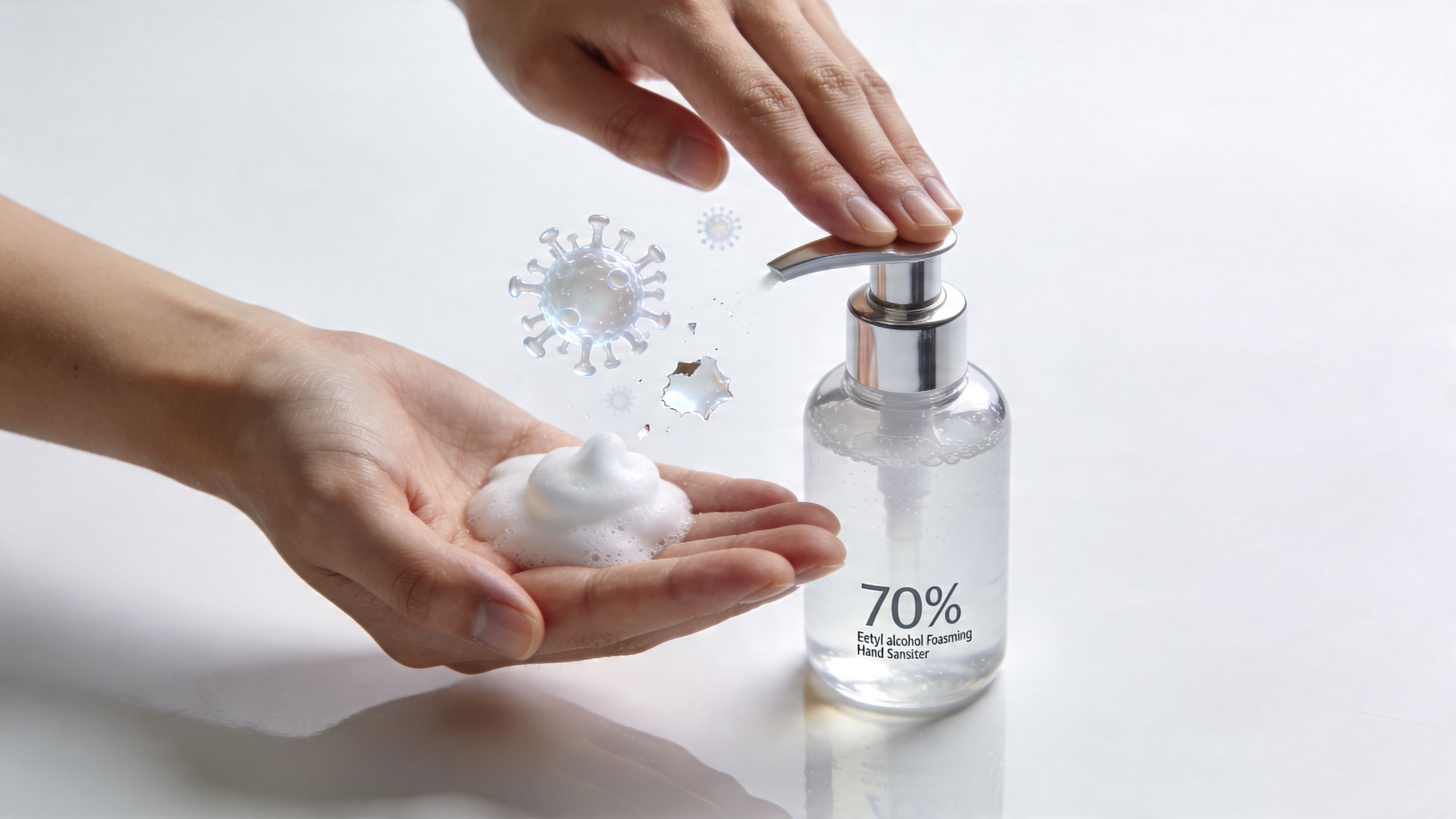
PURELL Advanced Instant Hand Sanitizer Foam uses 70% ethyl alcohol as its active ingredient, according to the product information listed on DailyMed. That concentration helps explain why the foam acts quickly on many microbes found on hands.

Why alcohol works so quickly
Ethyl alcohol works by disrupting proteins and, for some microbes, damaging lipid membranes. If that sounds technical, the egg analogy still helps. Heat turns a clear egg white solid by forcing its proteins to lose their original shape. Alcohol causes a similar loss of structure in microbial proteins. Once those proteins are misshapen, the organism cannot carry out the basic functions it needs to survive or infect.
On hands, speed changes behavior. A product that dries fast and can be used at the point of care is easier to fit into daily routines than a trip to the sink every time. In healthcare, that practical advantage is one reason alcohol-based hand rubs became standard for many situations involving clean, visibly unsoiled hands.
The same source notes that the formula produced a strong reduction in tested bacteria within seconds under product testing conditions. That result helps explain why alcohol foams are widely used for hand antisepsis. It does not mean every microbe on every hand will respond the same way, especially when hands are greasy, visibly dirty, or contaminated with organisms that tolerate alcohol better.
What the other ingredients are doing
The inactive ingredients shape how the foam behaves on skin. They affect spread, drying time, and whether repeated use leaves hands feeling tight, rough, or more comfortable.
Ingredients such as glycerin and PEG-12 dimethicone help explain that difference. Glycerin is a humectant, which means it helps the skin hold onto water. PEG-12 dimethicone improves slip and contributes to how the foam spreads across the hands. The formulation also includes a skin-compatible pH range. For frequent users, those details are practical, not cosmetic. Skin that stays intact is easier to clean well and more likely to tolerate repeated hygiene.
A useful way to read the formula is to separate jobs:
- Ethyl alcohol provides the main antimicrobial action.
- Glycerin helps reduce the drying feel that can come with repeated alcohol use.
- PEG-12 dimethicone supports spread and foam performance.
- The rest of the formulation helps the product feel acceptable enough that people will keep using it correctly.
That distinction is important because a sanitizer can be chemically strong and still fail in practice if people avoid it due to skin irritation.
Why contact and coverage matter
Sanitizer only affects the skin it reaches.
If someone dispenses foam into the palm, rubs for a few seconds, and misses the thumbs, fingertips, nail folds, and spaces between the fingers, part of the hand is left out of the process. In infection prevention, those missed areas are common trouble spots because they touch phones, door handles, keyboards, bed rails, and faces.
Coverage is also where hand sanitizer reaches its limit as a prevention tool. It can treat the hands. It does not clean a countertop, disinfect a shared device, or remove grime that physically shields microbes from the alcohol. The chemistry inside the foam is effective within its lane. Good virus prevention still depends on matching that hand hygiene step with surface disinfection and handwashing when soil or residue is present.
The Viral Envelope Why Sanitizer Excels and Fails
This is the idea that clears up most confusion about purell foaming hand sanitizer.
Some viruses are wrapped in a fatty outer layer called an envelope. Others are not. That difference changes how vulnerable they are to alcohol.

Think grape versus nut
An enveloped virus is a bit like a grape. It has a delicate outer skin. Alcohol is very good at disrupting that outer layer, which can make the virus unable to infect.
A non-enveloped virus is more like a nut without that fragile outer membrane. It relies on a tougher protein shell. That structure can make it more resistant to alcohol-based sanitizers.
If you want a deeper primer on this structural difference, VirusFAQ has a focused explainer on the viral envelope.
Why this matters in real life
This is why people get mixed messages about sanitizer. They hear that alcohol sanitizers are strong against viruses, which is true in many contexts. Then they assume the same level of performance applies to every virus, which isn’t how virology works.
For a fragile enveloped virus, alcohol often targets a structural weak point. For a more resilient non-enveloped virus, that same sanitizer may be less reliable as a stand-alone measure. At that point, mechanical removal becomes more important. Soap and water don’t just chemically affect microbes. They also help lift and rinse them off the skin.
If a virus is easy for alcohol to disrupt, sanitizer can be an excellent hand-hygiene tool. If the virus is structurally tougher, washing becomes more important because removal matters as much as inactivation.
Comparison table
| Virus Type | Structure | Examples | Efficacy of Alcohol Sanitizer |
|---|---|---|---|
| Enveloped | Has a lipid outer layer | Influenza viruses, HIV, coronaviruses, HSV-1, HSV-2, HCV, HBV | Often a strong fit because alcohol can disrupt the outer layer |
| Non-enveloped | Lacks a lipid outer layer and relies on a tougher capsid | Norovirus, rotavirus, rhinovirus, feline calicivirus | Often less reliable as a stand-alone option, so handwashing becomes especially important |
Where readers often get confused
People usually assume “stronger product” is the answer. But the bigger issue is often matching the tool to the virus.
Consider two scenarios:
- You leave a waiting room during flu season. An alcohol foam sanitizer is a practical choice because you need immediate hand hygiene after touching shared objects.
- You’re caring for someone with vomiting or diarrheal illness. That raises concern for pathogens that may be more resistant to alcohol alone, so washing hands well and cleaning contaminated surfaces becomes more important.
The second scenario is where many households underperform. They sanitize hands but leave the bathroom handle, faucet, light switch, and nearby surfaces untreated. That breaks the chain only halfway.
Hands and surfaces are different jobs
Hand sanitizer is for skin. It doesn’t decontaminate a countertop, tray table, doorknob, or phone case. If viral material is still sitting on the things everyone keeps touching, clean hands can become contaminated again almost immediately.
That’s why a complete prevention strategy usually combines:
- Hand sanitizer for quick access moments
- Soap and water when removal matters more
- Surface disinfection for high-touch objects and shared spaces
For tough outbreaks, especially those involving gastrointestinal illness, that layered approach matters more than brand loyalty.
Efficacy Claims and Regulatory Realities
The phrase “kills 99.99% of germs” is useful, but it’s easy to overread it.
It means the product can reduce many microbes on the skin. It does not automatically mean the product has proven it prevents illness from every named virus that appears in news coverage or public anxiety. That gap between reduction of microbes and prevention of disease is where regulation becomes important.
What the FDA challenged
A major reality check came when the FDA issued a warning letter to GOJO Industries. As summarized in CBS News coverage of the FDA action, the agency objected to marketing claims suggesting Purell products could be effective against specific viruses such as Ebola, norovirus, and flu, stating these were unproven drug claims because no controlled studies confirmed that reducing germs on skin prevents infection from those pathogens.
That matters because public health language has to be precise. A hand sanitizer may lower microbial burden on the skin. That still isn’t the same claim as preventing a person from getting a named viral disease.
Why that distinction is medically important
A clinician hears “reduces microbes on skin” and understands the claim is bounded. A casual reader often hears “protects me from the virus.” Those aren’t the same statement.
Here’s the practical logic:
- Skin reduction claim: The product lowers the amount of certain microbes on hands.
- Disease prevention claim: The product has been shown to stop infection or illness from a specific pathogen in real-world use.
Public communication gets sloppy when those two ideas merge.
Reducing microbes on hands is valuable. It just isn't a blanket proof of disease prevention for every virus people worry about.
The norovirus problem
Norovirus is where this issue becomes especially important. People often call it “the stomach bug,” but from a hygiene standpoint, the key lesson is that not all viral threats are equally vulnerable to alcohol-based products.
When diarrheal illness is involved, soap and water become especially important because you’re not relying only on chemistry. You’re using friction and rinsing to physically remove contamination. In household outbreaks, that often makes a bigger difference than repeated sanitizer use alone.
A second problem appears at the environmental level. Bathrooms, bedside tables, sink handles, remotes, and shared kitchen surfaces can all become part of the transmission pathway. Even excellent hand hygiene can fail if contaminated surfaces keep reseeding hands.
A better way to read marketing language
When you evaluate sanitizer claims, ask four questions:
- What exactly is being claimed? Reduction of germs, or prevention of a named disease?
- Is the claim broad or specific? “Most common germs” is not the same as a claim about one hard-to-kill virus.
- What’s the use setting? Clean hands in a hallway are different from contaminated hands after caregiving.
- What else is needed? Surface cleaning and handwashing may be the actual missing pieces.
This doesn’t make purell foaming hand sanitizer less useful. It makes your expectations more accurate. And accurate expectations lead to better hygiene decisions.
Why the Foaming Format Matters for Coverage and Feel
Why does the texture of a hand sanitizer matter if the active ingredient is still alcohol? Because hand hygiene is partly chemistry and partly geometry. The product has to reach the skin before it can disrupt microbes on that skin.

Coverage changes real-world performance
Foam spreads differently from gel. A mound of foam tends to fan out across the hands with less dripping, so users can work it into the backs of the hands, between the fingers, around the thumbs, and over the fingertips before it runs off. That sounds minor, but those are the spots people commonly miss.
A useful analogy is sunscreen. The active ingredient only helps where you apply it. Hand sanitizer works the same way. If a product feels easier to spread, it can improve the odds of complete coverage during rushed use.
Foam can also feel lighter on the skin. For many users, that means less stickiness and less residue after drying. In busy settings, that matters. A product people dislike often gets underused, applied too sparingly, or rubbed in for too short a time.
Feel affects behavior
Infection prevention often rises or falls on small habits. A sanitizer that feels easy to control may fit better into repeated daily use in clinics, schools, offices, and homes.
Common reasons people prefer foam include:
- More even spread. The texture can help users distribute product across both hands before dry spots appear.
- Less dripping. That makes application easier while walking between tasks or standing away from a sink.
- A cleaner feel after rubbing. Comfort matters for repeated use during long shifts or frequent caregiving.
- Quick acceptance by reluctant users. Children, older adults, and staff with sensitive skin often respond to feel as much as function.
Readers who want a simple format comparison can see this guide to hand foam sanitizer.
Better format does not erase biological limits
Foam can improve distribution on hands. It does not change what alcohol can and cannot do once it reaches a virus.
That distinction is easy to miss. The foaming format may help the product contact more skin, which improves the chance of good hand coverage. It does not make the sanitizer stronger against hardier non-enveloped viruses, and it does not turn a hand product into a cleaner for counters, bed rails, phones, or doorknobs.
In other words, foam may improve delivery, not scope. That is why format should be viewed as a usability advantage within hand hygiene, not as a solution to every route of viral spread.
A Practical Usage Guide for Home and Clinical Settings
The best sanitizer technique is simple, but it's frequently rushed. Users often apply too little, miss key areas, or cease rubbing before their hands are fully dry.

How to use purell foaming hand sanitizer well
Start with enough foam to cover the full surface of both hands. Rub palms, backs of hands, between fingers, around thumbs, and across fingertips and nails. Keep rubbing until dry.
Don’t treat sanitizer like a quick dab. The goal is complete coverage, not symbolic effort.
Rub until your hands are dry, not until you’re bored. Wet spots usually mean missed time or poor distribution.
When it makes sense at home
At home, sanitizer is most useful in transition moments. You come in from public places, handle shared objects, or need quick hand hygiene before touching your face, food packaging, or household surfaces.
Examples include:
- After touching high-contact public items. Think cart handles, elevator buttons, gas pumps, and transit rails.
- Before entering a car or home after errands. This prevents transferring what’s on your hands to steering wheels, keys, phones, and doorknobs.
- During caregiving between tasks. It can help when moving from one quick task to another, provided hands aren’t visibly soiled.
When soap and water should win
Some situations call for washing, not sanitizing.
Use soap and water when:
- Hands are visibly dirty or greasy. Dirt and oils can interfere with effective contact.
- You’ve been in a gastrointestinal illness setting. Physical removal matters.
- You’ve handled bodily fluids or heavily contaminated material. Washing gives you friction and rinsing, not just chemical exposure.
This is also the point where surface hygiene matters. If a sick person has touched bathroom fixtures, bedside surfaces, or kitchen handles, clean hands alone won’t keep the environment from recontaminating everyone.
Why touch-free dispensers matter in busy settings
In professional environments, dispenser design becomes part of infection control. Imperial Dade’s product information notes that each 1200 mL PURELL Advanced Foam refill supports approximately 1300 dispenses and is compatible with touch-free dispensers like the LTX-12, which helps reduce fomite transmission.
That matters in clinics, school entrances, waiting rooms, and other high-traffic spaces where many people sanitize one after another. If you’re comparing placement and system design, a general primer on the automatic hand sanitizer dispenser can help frame those decisions.
A quick setting-by-setting guide
| Setting | Best use of sanitizer | When to switch tools |
|---|---|---|
| Home entry | Sanitize after returning from public spaces | Wash if hands are dirty or after illness care |
| Grocery or transit | Use after touching shared surfaces | Clean phone, wheel, or other touched surfaces later |
| Clinic hallway | Sanitize between brief contacts when appropriate | Wash when contamination is visible or heavier |
| Sick room or bathroom | Use as one layer only | Add handwashing and surface disinfection |
The main habit to build is this: sanitize your hands, then think about what your hands will touch next.
Conclusion Your Role in a Complete Hygiene Strategy
purell foaming hand sanitizer deserves its place in daily hygiene. It works quickly, it’s practical for frequent use, and the foam format can help people cover their hands more effectively. For many routine situations, that makes it a very useful public health tool.
Its limits matter just as much as its strengths.
Some viruses are easier for alcohol to disrupt than others. Dirty hands still need soap and water. Contaminated surfaces remain contaminated until someone cleans and disinfects them. That’s why strong prevention never rests on one product alone.
The most reliable approach is layered. Wash with soap and water when removal matters. Use an alcohol-based hand sanitizer when you need fast access and clean hands aren’t visibly soiled. And don’t ignore the environment around you. If shared surfaces keep carrying contamination, hand hygiene has to work much harder to compensate.
The goal isn’t perfect sterility. It’s breaking transmission routes in everyday life, one smart choice at a time.
Leave a Reply