You finish a workout, your shirt is damp, and you still have errands, work, or a commute ahead. The gym shower is right there. So is the hesitation.
A lot of people feel this split-second uncertainty. Shower now and save time, or wait until you get home because communal showers feel risky. That concern is reasonable. A shared shower is convenient, but it's also a wet, high-touch space used by many people in quick succession.
The good news is that safe gym showering isn't complicated. It works best when you treat it as a hygiene system. You need the right gear, a few smart habits, and a quick way to judge when the environment isn't worth the risk. If you already think carefully about your workout and recovery, it also helps to pair your routine with science-backed recovery strategies so your post-exercise choices support both performance and hygiene.

The Post-Workout Dilemma Should You Shower at the Gym
For some people, the answer is easy. They shower at the gym every time because it fits their schedule. For others, the locker room feels like a place where sweat, bare feet, damp benches, and shared fixtures all meet in one small space.
Both instincts make sense.
Showering after exercise can help you rinse away sweat and get comfortable before the rest of your day. But the decision shouldn't be framed as “always shower” or “never shower.” A better question is: Can I use this shower safely today?
What usually worries people
Most hesitation comes from a few very practical concerns:
- Bare-floor contact: People worry about what might be living on wet tile.
- Shared surfaces: Faucet handles, shower controls, locker doors, and benches get touched often.
- Cross-contamination: A clean towel or fresh clothes can pick up moisture and grime if they're set in the wrong place.
- Rushed routines: Many people know what to do in theory, but forget basics when they're tired and in a hurry.
That last point matters. Gym hygiene often breaks down not because people are careless, but because they're moving fast.
Bottom line: A shower at the gym can be a reasonable choice if you use barriers, limit surface contact, and keep your clean items separate from wet communal areas.
Think in systems, not single tips
People often look for one magic rule, such as “wear flip-flops” or “bring your own soap.” Those help, but no single habit solves the whole problem. Safety comes from stacking small protections together.
A simple system looks like this:
- Barrier protection between your skin and shared surfaces
- Clean handling of towels, clothing, and toiletries
- Fast risk assessment of the facility before you step in
That system is what makes the difference between a casual rinse and a hygienic routine you can repeat with confidence.
What Pathogens Lurk in Gym Showers
A communal shower is a warm, damp, high-traffic environment. That combination gives many microbes exactly what they need to persist on surfaces. Moisture is the main reason these spaces deserve extra caution.
A 2024 gym health review described shower areas as a major germ hotspot and reported an average total bacteria count of 39,196 CFU for showers, compared with 8,798 CFU for mats and 767 CFU for barbells in the same review (gym health review with bacterial counts). That doesn't mean every shower is dangerous every time, but it does mean the shower area deserves more respect than many people give it.

Fungi love the setting
Fungi tend to do well in the exact conditions gym showers provide. Wet floors, trapped humidity, and frequent foot traffic create a practical route for exposure, especially on communal tile and around drains.
This is why bare feet are such a weak point in your routine. The risk isn't abstract. It starts with direct floor contact and gets worse when feet stay damp after showering.
Bacteria spread through touch and moisture
Bacteria don't just sit on floors. They can also collect on handles, benches, faucets, and controls that many people touch with wet hands. Add standing water, and the environment becomes easier for microbes to persist in.
If you want a deeper look at how long infectious agents can remain on common materials, this guide on how long viruses live on surfaces helps explain why shared-contact points matter even when something looks clean.
Viruses are part of the surface story too
People often think only about fungal foot infections in locker rooms. That's incomplete. In any shared wash area, viral risk is tied more to surface contact, contaminated hands, and poor item handling than to the water itself.
Here's a simple way to think about the shower area:
| Risk area | Why it matters | Smarter move |
|---|---|---|
| Floor | Wet, shared, frequently contaminated | Keep feet covered the whole time |
| Faucet and controls | High-touch points | Touch as little as possible |
| Bench or shelf | Easy place to contaminate clean items | Use a clean barrier or wipe first |
| Damp air and residue | Helps microbes persist | Prefer a well-ventilated space |
A gym shower isn't just “water and soap.” It's a chain of surfaces. Most exposure risks come from that chain.
That's why a safe shower at the gym starts before the water turns on.
Your Essential Gym Shower Defense Kit
If you want to shower at the gym without overthinking every move, pack for it the same way you'd pack for training. A few specific items make the routine cleaner, faster, and easier to repeat.

The non-negotiable item
In communal gym showers, the most important control is foot-barrier protection. Shower shoes or waterproof sandals should be worn before any contact with the floor because wet locker-room surfaces are a common pathway for fungal exposure (guidance on shower shoes in communal gym showers).
If you forget one thing, don't let it be this.
What to keep in your bag
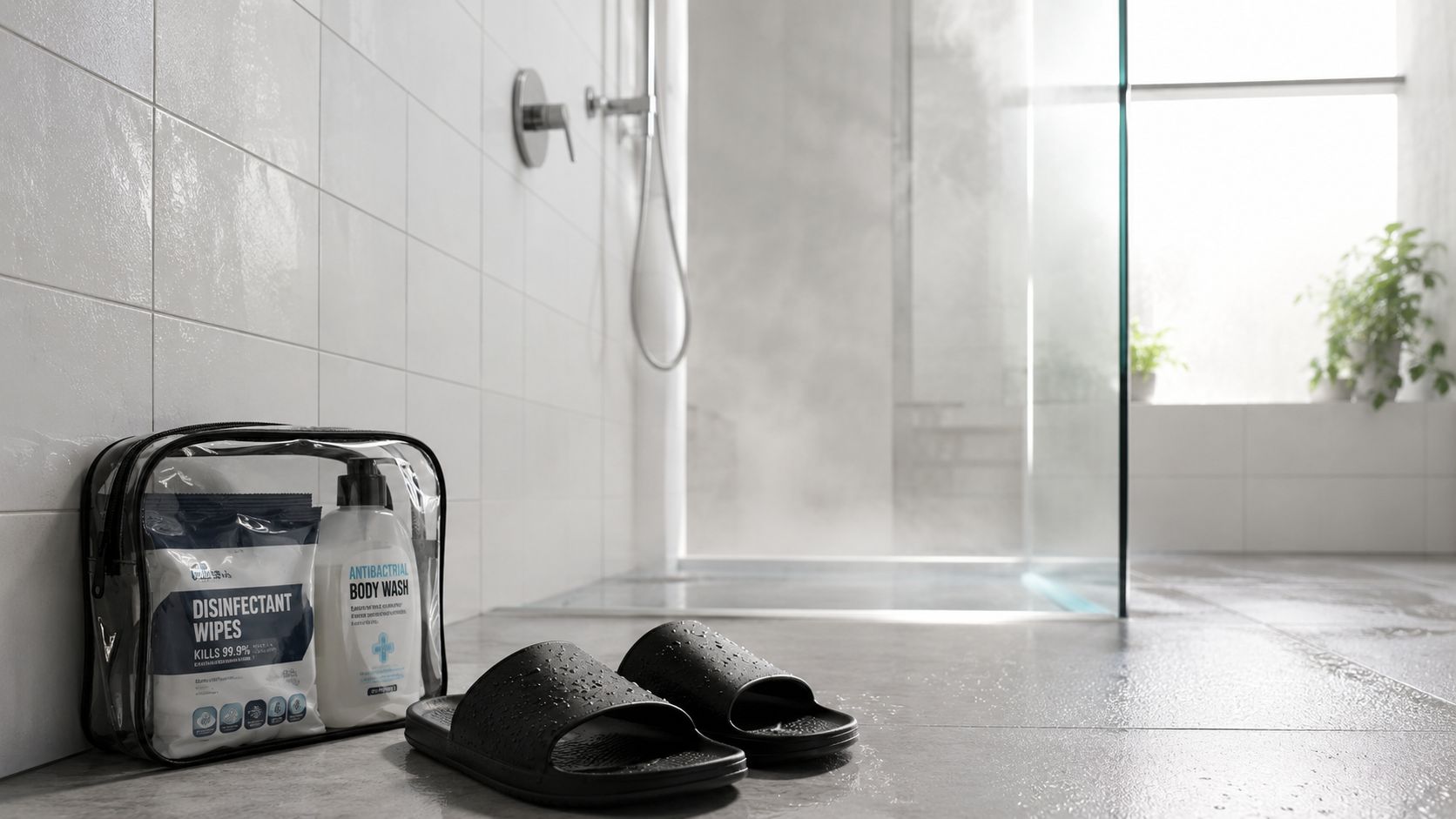
- Shower shoes or waterproof sandals: Put them on before you enter the shower area, not once you're already standing on wet tile.
- Your own clean towel: Shared or forgotten towels create unnecessary problems. You want a dry towel that has stayed separate from your shoes and used clothes.
- Soap or body wash: Keep it simple and portable. If you're trying to build a more consistent post-workout cleanup habit, this modern self-care routine offers useful ideas for choosing products that fit an everyday gym bag.
- Disinfecting wipes: These are practical for wiping down a locker handle, bench edge, faucet, or shelf before use. They're also useful before and after handling your phone or toiletry bag in a shared space. For a fuller approach, this guide to disinfectant wipes for gym equipment explains where wipes fit into a broader gym hygiene routine.
- Waterproof bag or wet pouch: This keeps damp clothes and used shower items from touching clean clothing on the way home.
- Fresh clothes and socks: Clean skin doesn't stay clean for long if you pull sweaty gear back on.
Why wipes belong in the kit
Many people think of wipes as something you use only on machines. That's too narrow. In the locker room, your main challenge is surface management.
Pack with intent: Every item in your bag should either create a barrier, remove contamination, or keep clean things separate from used things.
That's the whole defense kit. Simple gear, clear purpose.
A Step-by-Step Guide to Showering Safely
A safe gym shower routine works best when you follow the same order every time. You don't need to obsess over every surface. You just need a repeatable sequence that keeps clean items clean and reduces unnecessary contact.

Before you enter the stall
Start at your locker, not at the shower.
Set your clean towel and fresh clothes where they won't touch the floor. Keep your bag off wet tile if possible. Put on your shower shoes before you walk into the communal area. Don't carry them in your hand and wait until the stall.
If you touch locker handles, bench edges, or your phone while changing, clean your hands before you touch your face or your toiletries. Good technique matters here, and this refresher on proper hand washing technique is worth revisiting because rushed hand cleaning often misses the point.
Inside the shower
Once you're in the stall, keep the routine short and controlled.
Try not to place soap bottles, razors, or towels on the floor. If there's a shelf, use it only if it looks clean and dry enough to trust. If not, hold what you need or use a pouch with a hanging loop. Rinse, wash, and move on. Lingering in a communal shower increases contact with shared surfaces without adding any hygiene benefit.
A few habits make a big difference:
- Keep footwear on the whole time. Don't step out of it to rinse your feet.
- Avoid touching walls and fixtures more than necessary. Wet hands spread residue fast.
- Don't shave or do extended grooming there if you can avoid it. More time and more tools mean more contact points.
Dry your feet thoroughly before stepping out, especially between the toes. Moisture you carry out of the stall keeps the risk going.
After the water stops
In this context, many people accidentally undo their good habits.
Dry off completely before walking back into the shared area. Put used items straight into your waterproof bag. Change into clean clothes right away instead of sitting around in a damp towel. If your bag, phone, or toiletries touched questionable surfaces, deal with them once you're back in a cleaner setting.
A well-run facility helps too. From an operations standpoint, gym showers work best when shared surfaces are sanitized routinely and ventilation is maintained to suppress mold and bacterial buildup, lowering the conditions that let microbes persist and grow (facility hygiene and ventilation guidance for gym showers).
A decent shower space usually looks and feels like this:
- Floors drain properly: Standing water doesn't linger.
- Air moves well: The room doesn't feel stale and swampy.
- High-touch points look maintained: Controls, benches, and walls aren't visibly grimy.
- General upkeep is obvious: The space feels managed, not neglected.
If those signs are missing, your safest move may be to skip the shower that day.
When You Should Absolutely Skip the Gym Shower
Sometimes the safest shower at the gym is the one you don't take.
If you have an open cut, scrape, blister, or fresh tattoo, communal showering isn't worth it. Broken skin gives microbes an easier entry point. The same caution applies if you're dealing with a current skin problem, irritation, or any area that's already inflamed.
You should also skip it if the shower area looks poorly maintained. Visible grime, persistent standing water, bad ventilation, or a generally neglected locker room are all fair reasons to wait until you get home. If you forgot your shower shoes, that alone is enough to change plans.
Skipping is common, not strange
A 2014 study found that 53% of boys and 68% of girls said they never shower after PE, showing that skipping a post-exercise shower is relatively common, especially when facilities or circumstances aren't ideal (2014 study on showering after PE)).
That doesn't prove gym showers are unsafe across the board. It does show that many people already make situational decisions about when a communal shower feels practical or acceptable.
Good reasons to wait
- You have broken skin: Protect it.
- You forgot core gear: No shower shoes, no safe routine.
- The room looks neglected: Trust what you see.
- You're immunocompromised or medically vulnerable: A home shower may be the better option when you can choose.
Going home a little sweaty is sometimes the smarter public health decision.
Conclusion Shower Safely with a Smart Hygiene System
The best way to think about a shower at the gym is not as a yes-or-no rule. It's a system.
You assess the environment. You use barriers. You manage surfaces. You keep clean items away from wet communal spaces. When those pieces come together, the gym shower becomes much easier to experience without unnecessary stress.
The simple system to remember
Here's the version I'd tell a friend:
- Bring the right gear: Shower shoes, your own towel, soap, a waterproof bag, and clean clothes.
- Control the routine: Move through the space with purpose, keep contact limited, and dry thoroughly.
- Read the room: If the shower looks poorly maintained or you're missing essential gear, skip it.
That's what confidence looks like in a communal setting. Not denial of risk, and not fear. Just practical control.
A safe gym shower routine is built before you turn on the water.
If you also use other shared recovery spaces, the same thinking applies. This guide from Fitness GM on how to use a sauna at the gym is a useful companion because saunas raise many of the same questions about shared surfaces, personal barriers, and smart facility habits.
Keep your system simple enough to follow when you're tired. If you do that, disinfecting wipes, shower shoes, and a few solid habits will carry most of the workload for you.
If you want more evidence-based guidance on hygiene, surface contamination, and infection prevention, visit VirusFAQ.com.
Leave a Reply