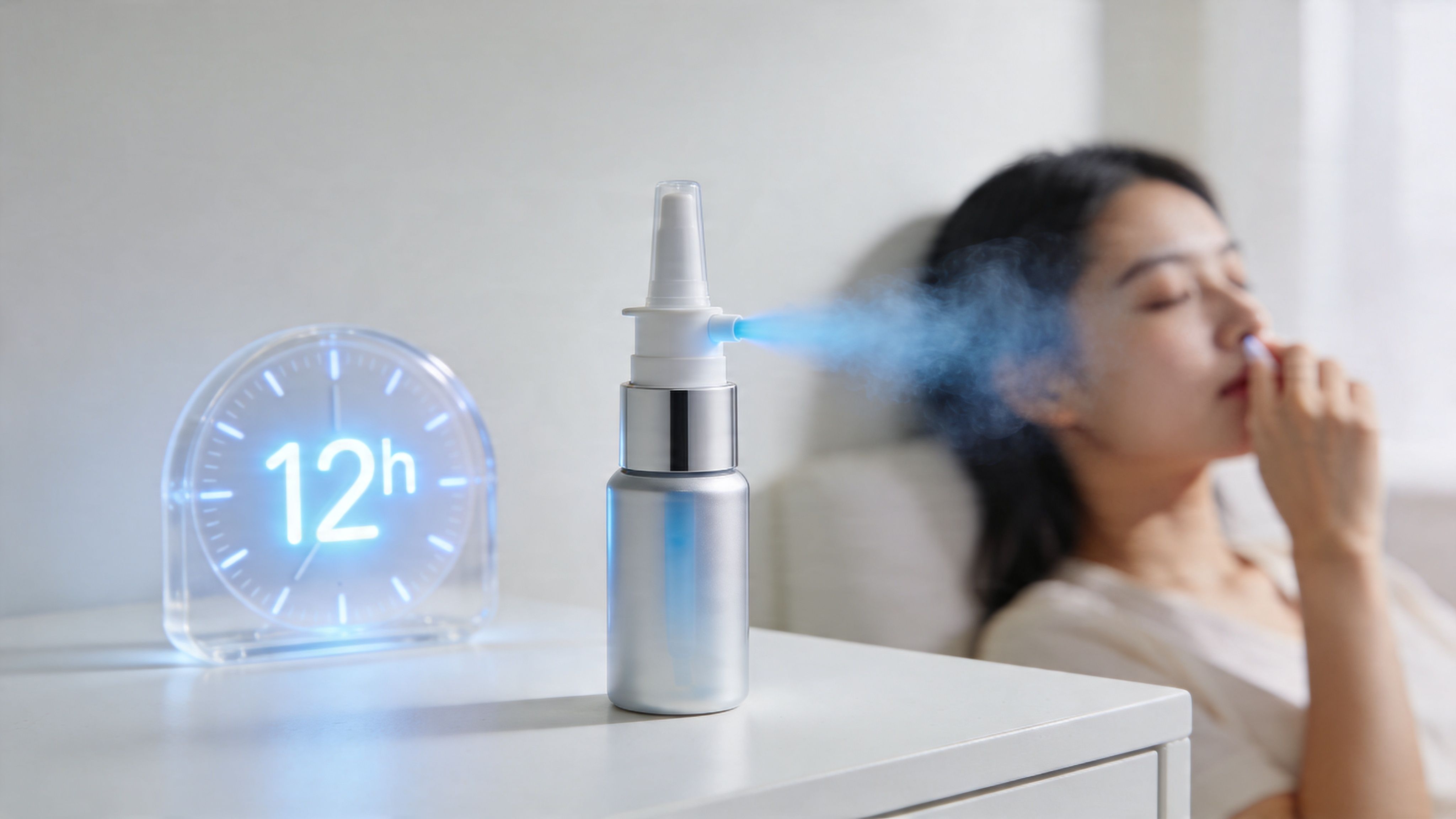
You wake up at 3 a.m. with a cold, your nose completely blocked, your mouth dry, and that heavy pressure behind your eyes that makes sleep feel impossible. By morning, you've already tried a quick fix once or twice, but the relief faded before breakfast. If this sounds familiar, you're exactly the kind of person who starts looking for a 12 hour nasal decongestant.
For many people with a viral illness such as a common cold or flu, congestion isn't the most dangerous symptom. It is, however, one of the most exhausting. Breathing through your nose becomes hard. Sleep gets worse. Sinus pressure builds. Your ears may even feel plugged. At that point, a longer-acting decongestant can feel less like a convenience and more like a way to get through the day.
Used correctly, these medicines can help you function while your immune system does the harder work of clearing the virus. Used carelessly, they can create new problems, especially if you pick the wrong product or ignore the label.
There's also a bigger public health angle. Viral respiratory illnesses spread easily in homes, schools, and workplaces. Symptom relief matters, but so does prevention. If you're sick enough to keep reaching for tissues, you're also in the phase where it's smart to clean high-touch surfaces, wash your hands often, and avoid passing that virus to someone else.
The Long-Haul Fight Against Viral Congestion
A bad viral cold often doesn't behave like a short inconvenience. It drags.
One day it's a scratchy throat. The next day your nose swells shut, your head feels packed with cement, and every few hours you realize the medicine you took earlier has worn off. That cycle is what drives many people toward a 12 hour nasal decongestant. They aren't looking for a miracle cure. They're looking for enough breathing room to sleep, work, or care for their family.

Why viral congestion feels so relentless
With viral illnesses such as rhinovirus infections and influenza, the problem isn't just mucus. The lining inside the nose becomes swollen and inflamed. That swelling narrows the air passages, so even a small amount of mucus can make you feel completely blocked.
Patients often tell me, "I can handle the runny nose. I can't handle not being able to breathe at night."
That's an important distinction. If your nose feels packed tight rather than drippy, a decongestant may help more than a product aimed mainly at runny nose or sneezing.
Relief matters, but so does limiting spread
When you're sick, comfort and prevention go together. If congestion keeps you awake, you're more fatigued and less likely to keep up with the simple things that reduce spread. Those basics still matter:
- Clean your hands often: Viruses move from tissues, doorknobs, phones, and faucets to the next person's face.
- Disinfect shared surfaces: If several people use the same bathroom or kitchen, wiping down high-touch spots lowers the chance of sharing more than soup.
- Rest and contain the mess: Keeping tissues nearby and throwing them away promptly sounds obvious, but it reduces how much contaminated material ends up around the house.
A decongestant treats symptoms. It doesn't kill the virus causing them.
That mindset helps. A 12 hour product can make breathing easier, but it works best as one part of a broader plan: rest, fluids, hygiene, and realistic expectations.
How 12-Hour Decongestants Provide Lasting Relief
Not all decongestants work the same way. This difference often confuses many shoppers.
Some products work locally inside the nose, such as medicated nasal sprays. Others work through the bloodstream, such as oral pseudoephedrine tablets. Both can reduce congestion, but they differ in speed, convenience, and side effects.
What they're doing inside your nose
The core idea is simple. Congested nasal tissue is swollen because tiny blood vessels are widened and leaky. A decongestant tells those vessels to tighten up.
A useful analogy is a garden hose with a swollen sponge around it. The hose isn't blocked from the inside. The sponge around it is squeezing the space. A decongestant shrinks that swollen tissue so air can move again.
For pseudoephedrine-based 12 hour products, that effect comes from α1-adrenergic receptor activation in the nasal mucosa, which raises intracellular calcium and causes vasoconstriction. That narrowing reduces blood flow and fluid leakage, which helps open the nose and can also improve sinus drainage and relieve pressure in blocked Eustachian tubes, as described in this mechanism explanation of nasal decongestants.
Oral versus topical products
Here's the practical distinction patients usually care about most:
| Type | How it works | Main advantage | Main drawback |
|---|---|---|---|
| Oral extended-release tablet | Absorbed into the bloodstream and reaches nasal tissue from inside the body | Longer-lasting convenience | More whole-body side effects |
| Topical nasal spray | Applied directly inside the nose | Fast local relief | Can be overused if you're not careful |
If you've ever taken a tablet and thought, "This takes longer, but it lasts," that's the oral route in action. If you've used a spray and felt relief quickly, that's the direct local route.
What "extended-release" actually means
Extended-release doesn't mean stronger in a dramatic way. It means the medicine is formulated to release more slowly over time.
Consider these two options:
- Immediate-release: all the medicine becomes available relatively quickly
- Extended-release: the medicine is released in stages so relief lasts longer
That slower release is why a 12 hour nasal decongestant tablet can be appealing during a viral illness. You don't have to think about redosing as often, especially overnight or during work.
Practical rule: If a product says extended-release, swallow it exactly as directed. Don't crush or chew it.
That small instruction matters because the tablet is designed to release medicine gradually. Changing the tablet changes the delivery.
The Science Behind The 12-Hour Claim
You wake up with a cold, your nose is completely blocked, and you want one dose that will carry you through work, school pickup, or a night of sleep. That is the practical promise behind a 12-hour decongestant. With pseudoephedrine extended-release products, that promise is based on how the tablet is built and how the drug moves through the body.
A common example is a 12-hour product that contains 120 mg of pseudoephedrine HCl per extended-release caplet for adults and children 12 years and older, with directions to take one caplet every 12 hours and no more than 240 mg in 24 hours, according to the SUDAFED Sinus Congestion 12 Hour product information.

Why the effect can last for hours
A stuffed nose during a viral illness happens because the lining of the nose becomes inflamed and swollen. Rhinovirus, influenza, and similar viruses trigger that swelling as part of the body's defense response. Pseudoephedrine does not fight the virus itself. It narrows swollen blood vessels in the nasal passages, which can open breathing space while your immune system does the infection-clearing work.
Extended-release tablets work like a timed faucet rather than a bucket dumped all at once. The medicine is released gradually, so blood levels rise over a longer stretch instead of peaking quickly and fading quickly. That slower delivery is the science behind the 12-hour label.
Food can change how quickly the drug reaches peak levels, but the larger point is simpler than the pharmacology terms. The tablet is designed to spread delivery over time. That is why many people describe oral 12-hour pseudoephedrine as slower to start than a nasal spray, yet longer-lasting once it begins to work.
What “12 hours” really means during a cold or flu
This point causes a lot of confusion. A 12-hour claim does not mean 12 hours of identical relief from minute one to minute 720. It means the formulation is intended to provide decongestant effect across that dosing window.
Real-world relief varies because viral congestion varies. On day 2 of a bad cold, the nose may be so inflamed that even a well-formulated decongestant gives only partial improvement. On a milder day, the same medicine may feel dramatically more effective.
That difference matters in 2026 because many shoppers are trying to sort out one big question: which decongestants work. The FDA review that challenged oral phenylephrine did not erase the role of oral pseudoephedrine. They are different drugs with different evidence, and mixing them up has added to pharmacy shelf confusion.
Why one person gets strong relief and another barely notices
Drug levels are only part of the story. Your symptoms during a viral infection depend on how much swelling is present, whether mucus is thick, whether sinus pressure is building, and how sensitive your body is to stimulant-like effects.
Pseudoephedrine can feel very helpful for the blocked, swollen nose of a cold or flu. It may do less for symptoms driven more by thick secretions, throat irritation, cough, fever, or body aches. It can also feel unpleasant to some patients because it has body-wide effects, not just nose-only effects.
A few factors change the experience:
- Severity of nasal inflammation: heavier swelling usually means less dramatic relief
- Individual sensitivity: some people feel clear-headed breathing, others feel jittery or notice a faster heartbeat
- The actual cause of symptoms: viral congestion may improve, but a decongestant will not treat the virus or replace rest, fluids, and time
If you want a clearer picture of what your body is doing during a cold or flu, this explanation of the immune response to viral infection helps connect the symptom to the biology. Congestion medicine lowers the burden of symptoms. Your immune system still has to clear the infection.
The larger context most labels do not explain
For viral illnesses, symptom relief and prevention belong in the same conversation. A 12-hour decongestant may help you breathe more comfortably through a rhinovirus cold or influenza, but it does nothing to reduce spread on its own. Hand hygiene, cleaning commonly touched surfaces, and avoiding close contact when you are actively sick still matter.
That broader context also helps explain why a medicine can be useful even though it is not antiviral. Relief has value. It can make sleep easier, reduce pressure, and help you function while the illness runs its course. The science behind the 12-hour claim is real. The limits are real too.
Safe Use Guidelines and Potential Risks
You have a bad cold, your nose is blocked, and the promise of 12 hours of relief sounds simple. The part that is not simple is safety. Long-acting decongestants can help during rhinovirus colds and flu, but they work best when you use them like a timed tool, not like a background medicine you keep taking without checking the label.
That matters even more during viral season, when people often mix a decongestant with a cough syrup, pain reliever, or "multi-symptom" product and accidentally repeat the same drug.
The dosing rule that matters most
For adults and children 12 and over, 12-hour pseudoephedrine is dosed at 120 mg every 12 hours, not to exceed 240 mg in 24 hours. Short-acting forms are 60 mg every 4 to 6 hours. Use in children under 12 requires caution, and it is not recommended for children under 4 because of the risk of serious side effects, according to the Mayo Clinic guidance on pseudoephedrine.
A practical way to read that rule is this: one 12-hour tablet should not be "stacked" with another pseudoephedrine product just because the boxes use different marketing words. "Sinus," "cold and flu," and "pressure" can still point to the same active ingredient.
Where people get into trouble
The common mistakes are predictable.
- Accidental doubling: taking a 12-hour decongestant, then later using a combination cold medicine without checking the ingredient list
- Poor timing: taking it late in the day, then feeling restless or too alert to sleep
- Using it with the wrong health conditions: especially if you have high blood pressure, heart disease, thyroid disease, glaucoma, trouble urinating from an enlarged prostate, or kidney problems
If you are not sure whether you are dealing with a routine virus or something that needs a different plan, this guide to viral vs bacterial infection symptoms can help sort out the pattern.
Who should stop and ask before using it
Pseudoephedrine narrows blood vessels to open the nose. That same effect can raise blood pressure, speed up the heart, or make you feel shaky. It can also interact with MAO inhibitors, and stimulants such as caffeine can make side effects more noticeable.
Safety check: Ask a pharmacist or clinician before using an oral decongestant if you have high blood pressure, heart rhythm concerns, kidney disease, glaucoma, thyroid disease, trouble urinating, or if you take stimulant-like medicines or an MAOI.
This is one reason the recent confusion around oral phenylephrine matters. After the FDA's review raised serious doubts about how well oral phenylephrine works, many shoppers started asking a reasonable question: if one oral decongestant may not work well, should I just take more of something else? The answer is no. Better choices start with the right active ingredient and the right dose, not with higher dosing.
Nasal sprays have a different risk
Fast relief can be tempting during a cold or flu, especially at night. Medicated nasal sprays often work quicker than oral tablets because they act right where the swelling is.
But overuse can backfire. After several days beyond label directions, some people develop rebound congestion, where the nose feels more blocked as the medicine wears off, so they spray again and get stuck in a cycle. Saline spray does not cause that problem, but it also does not shrink swollen blood vessels the way a medicated decongestant does.
A simple comparison helps:
- Oral pseudoephedrine: longer-lasting relief, but watch for whole-body side effects and ingredient overlap
- Topical medicated decongestant spray: quick local relief, but watch for rebound congestion if used too long
- Saline spray: helps moisture and mucus clearance, but does not act as a true decongestant drug
Children and teens need extra care
Children are more likely to have side effects from decongestants, and the margin for dosing mistakes is smaller. For that reason, the adult-style 12-hour pseudoephedrine schedule applies to people 12 and older under the guidance above.
Parents also run into a separate problem during viral illnesses. A child with a cold may be taking fever medicine, a nighttime cold product, or a cough medicine from the same cabinet. Before giving anything else, read the active ingredients line by line.
Relief matters. So does the bigger public health picture. A decongestant may help someone with flu or a rhinovirus cold breathe and sleep more comfortably, but it does not reduce viral spread. Hand washing, cleaning high-touch surfaces, and staying home when sick are still part of using symptom medicines responsibly.
Navigating Pharmacy Shelf Confusion in 2026
The decongestant aisle looks simple until you need it. Then every box starts to sound the same.
"Sinus." "Congestion." "Pressure." "12 hour." "Non-drowsy."
A sick person standing in front of those shelves can reasonably assume that all oral decongestants work about equally well. Right now, that's one of the most important assumptions to challenge.

Why the label can mislead you
Following a 2026 FDA proposal about oral phenylephrine, consumer confusion has grown because oral PE was found to be no better than placebo due to poor absorption, while pseudoephedrine remains an effective behind-the-counter oral option, and topical PE nasal sprays still work, as summarized in this report on the oral phenylephrine effectiveness debate.
That creates an awkward shopping reality. Two products may both say "decongestant," but one contains an oral ingredient that has been heavily questioned for effectiveness, while the other contains pseudoephedrine and is kept behind the pharmacy counter.
The fastest way to shop smarter
When you're choosing a 12 hour nasal decongestant, don't start with the marketing words on the front. Start with the active ingredient panel.
Look for the difference between these categories:
| What you see | What it usually means |
|---|---|
| Pseudoephedrine | Oral decongestant with evidence-based effectiveness for congestion relief |
| Phenylephrine by mouth | Oral product associated with major effectiveness concerns |
| Phenylephrine nasal spray | Topical product that can still work locally |
This is why two people can swear they used "a 12-hour decongestant" and had totally different results. They may not have taken the same kind of medicine at all.
The behind-the-counter issue
Many effective oral pseudoephedrine products aren't sitting openly on the shelf. You often have to ask for them at the pharmacy counter and show identification.
That extra step frustrates people, especially when they already feel miserable. It also leads some shoppers to settle for whatever is in reach. In practice, that can mean buying a multi-symptom product with oral phenylephrine and wondering why their nose never really opened up.
If you're buying an oral decongestant for a cold or flu and the front of the package sounds right but the active ingredient isn't pseudoephedrine, stop and read again.
Why this matters more during viral season
During a viral upper respiratory infection, many patients don't need a medicine cabinet full of products. They need one or two treatments that match their symptoms.
If your main complaint is blocked nasal passages and sinus pressure, ingredient accuracy matters more than brand familiarity. Product names such as Claritin-D, Zyrtec-D, or Alavert D XR may also include antihistamines, which can be useful in some situations but aren't automatically the best fit for every viral illness. The decongestant piece is often the primary objective.
Comparing All Congestion Relief Options
You wake up on day three of a cold. Your nose is completely blocked, your throat is irritated from mouth breathing, and the pharmacy shelf offers sprays, tablets, rinses, and multi-symptom boxes that all seem to promise relief. In that moment, the useful question is not "Which product is strongest?" It is "Which option matches the kind of congestion this virus is causing, and which one can I use safely?"
For colds caused by rhinovirus and for flu, congestion relief is supportive care. These medicines do not kill the virus. They buy comfort while your immune system does the work. That is why the right choice depends on your main symptom, how long you need relief, and whether you have medical reasons to avoid certain ingredients.

A side-by-side practical comparison
| Option | Best for | Main strength | Main concern |
|---|---|---|---|
| 12-hour topical decongestant spray | Severe nasal blockage needing direct local relief | Strong local action in the nose for longer stretches | Rebound congestion if overused |
| Short-acting topical spray | Fast relief for a shorter window | Quick local benefit | Same rebound concern, often easier to run into with frequent use |
| Oral pseudoephedrine | Daytime function or overnight coverage when longer relief matters | Longer-lasting whole-body effect | Jitteriness, blood pressure concerns, and drug interactions in some patients |
| Saline spray or rinse | Thick mucus, dryness, crusting, and general nasal care during a viral illness | Moisturizes and helps clear secretions without stimulant effects | Does not shrink swollen blood vessels the way a true decongestant does |
| Non-drug measures | Mild congestion or add-on symptom support | Low-risk comfort measures | Often not enough by themselves when swelling is severe |
Why oral and topical choices feel different
The difference is partly about where the medicine works. A topical spray acts mainly inside the nose, where swollen blood vessels are narrowing the airway. An oral decongestant works through the bloodstream, so the effect is less targeted and the side effects can be felt in other parts of the body too.
That helps explain why one patient says a spray opened the nose quickly, while another prefers an oral product for a full work shift or overnight coverage.
It also explains part of the confusion that followed the FDA's review of oral phenylephrine. Many shoppers heard "decongestants don't work" and assumed every product in the aisle had the same problem. They do not. The concern centered on oral phenylephrine, not every topical spray, not saline, and not oral pseudoephedrine.
Match the option to the problem you actually have
Use the symptom pattern as your guide:
- You are swollen shut and need direct nasal relief: A 12-hour topical spray may help most, especially before sleep, but only for the short labeled duration of use.
- You need coverage through classes, work, or travel: Oral pseudoephedrine may be a better fit if your health history makes it a safe option.
- You have thick mucus, dryness, or irritation more than true pressure: Saline often helps more than people expect because it improves clearance and moisture.
- You are sensitive to stimulant effects or have a complicated medication list: Pause before choosing an oral decongestant and ask a pharmacist or clinician.
A layered plan often works better than chasing one perfect product. Saline can clear mucus. A decongestant can reduce swelling. Humidified air, fluids, and rest improve comfort while the infection runs its course. For a patient-friendly overview of comprehensive blocked nose relief strategies, that resource adds practical non-drug ideas to the medication advice here.
Relief matters. Prevention still matters too.
Cold and flu viruses spread through hands, shared objects, and close contact. If one person in the home is sick, symptom treatment should sit next to basic prevention habits.
Helpful steps include:
- Cleaning shared touchpoints: Phones, remotes, light switches, and bathroom handles are easy places for viruses to hitch a ride.
- Handling tissues carefully: Use once, throw away, then wash or sanitize hands.
- Keeping the sleep area cleaner: Bedside tables, water bottles, and devices get touched often when someone is congested and tired.
That broader view matters because opening your nose is only one part of getting through viral season. The other part is reducing the chance that your cold becomes everyone else's cold. If congestion comes with a persistent or high fever, read more about when a fever becomes a reason to seek medical care.
Final Verdict When to Use Decongestants and When to See a Doctor
A 12 hour nasal decongestant can be a good tool when your viral illness is making it hard to breathe through your nose, sleep, or function. It is not the right answer for every patient, and it is definitely not the right answer to every kind of stuffy nose.
When a 12-hour product makes sense
It usually makes sense to consider one when:
- Your main symptom is blocked nasal breathing: You feel swollen shut, not just mildly sniffly.
- You need longer coverage: Work, sleep, or travel make frequent redosing impractical.
- You can use it safely: You don't have obvious reasons to avoid stimulant-like systemic effects.
- You've checked the active ingredient: You're choosing pseudoephedrine for oral relief, not assuming every "decongestant" label means the same thing.
When I'd tell a patient to pause
I'd be cautious if:
- Your blood pressure or heart history is complicated
- You have kidney disease
- You're already taking medicines with interaction potential
- You're shopping for a young child
- You keep needing medicated nasal spray day after day
At that point, getting personalized advice matters more than guessing. If you're in a setting where access is limited, information on how a UK online doctor prescription process works may help you understand remote-care options when self-treatment isn't enough.
Red flags that deserve medical attention
Self-care has limits. See a clinician promptly if you have:
- Shortness of breath: Congestion is annoying. Breathing trouble in the chest is different.
- Symptoms that are worsening instead of easing: Especially after several days of what seemed like a routine viral illness.
- A fever you're concerned about: This guide on when to worry about fever can help you judge when that symptom needs more attention.
- Severe side effects after taking a decongestant: Marked palpitations, chest discomfort, or feeling unusually unwell shouldn't be ignored.
- Persistent ear pain, facial pain, or pressure that feels disproportionate: Those symptoms may need a more specific evaluation.
- Confusion about what you've already taken: Bring the boxes or take photos of the labels and ask a pharmacist or clinician to review them.
The best decongestant plan is the one that relieves symptoms without creating a second problem.
Most viral congestion gets better with time, fluids, rest, and careful symptom treatment. If you choose a 12-hour decongestant, choose it with your eyes open. Read the ingredient. Respect the dose. Stop if side effects outweigh the benefit.
And if you're trying to stay informed about viruses, symptom patterns, and practical ways to reduce spread at home, VirusFAQ.com is built to help you do that with clear, evidence-based guidance.
Leave a Reply