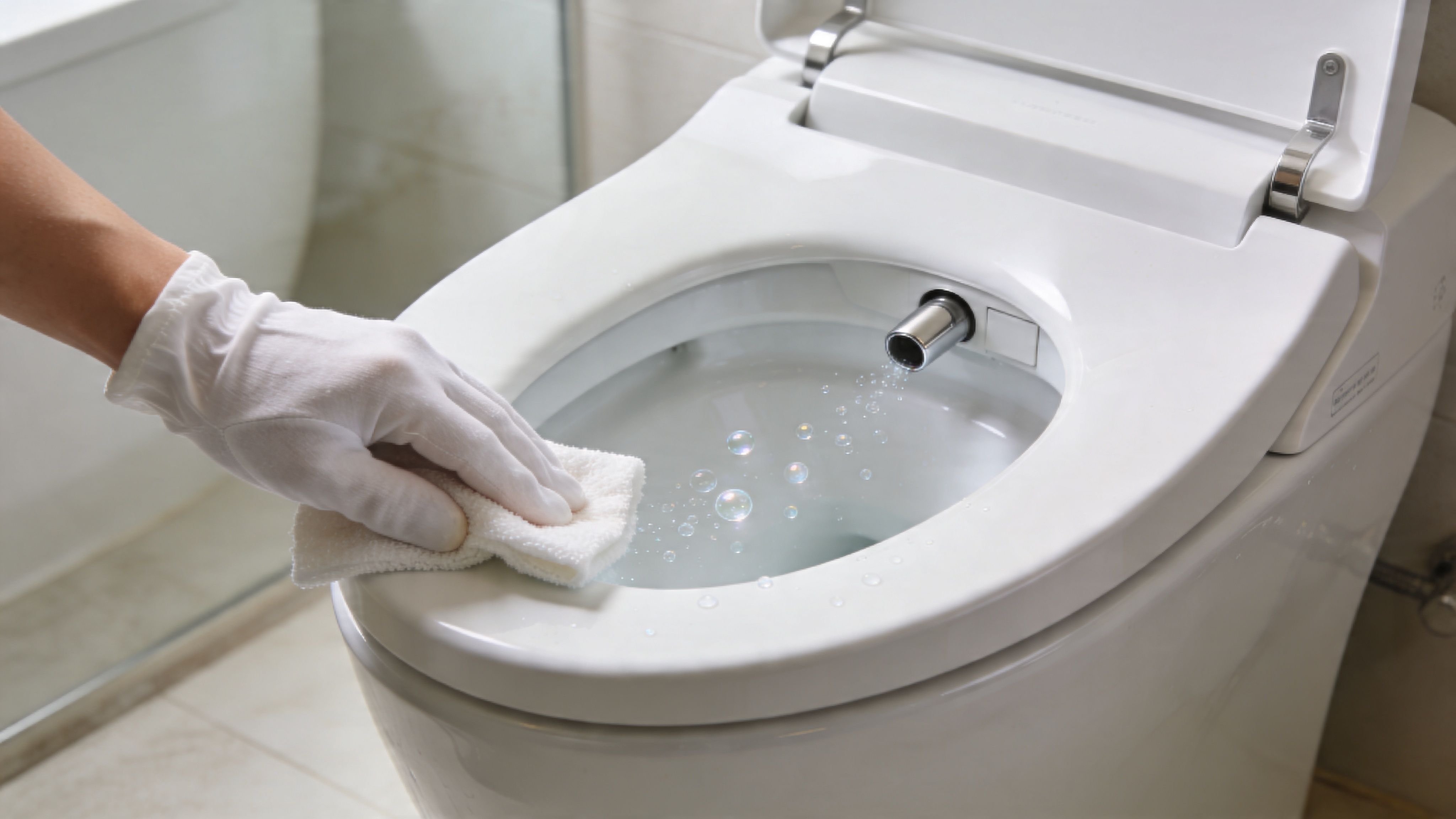
In 2020, many people stared at half-empty store shelves and realized how much of daily hygiene depends on a simple roll of paper. For a lot of households, a bidet toilet stopped looking like a luxury and started looking like a practical backup plan.
The Post-Pandemic Rise of the Bidet Toilet
A family runs out of toilet paper during a winter COVID surge. One person opens a shopping app to look for any brand in stock. Ten minutes later, the search has shifted to bidet seats, installation clips, and a new question that did not feel urgent before: if water cleans skin, could it also lower the mess and contact that come with wiping?
That change in attention was real. After the pandemic began, manufacturers reported stronger demand for bidet products. Horow’s history of the bidet notes that major brands saw sales climb in 2020 and stay high afterward.
Marketing around bidets often highlights comfort, convenience, and relief during supply shortages. Those benefits matter. Public health adds another layer. Any device used near human waste belongs in the same risk category as other high-touch bathroom surfaces: useful, but only safe when cleaned and handled correctly.
The appeal also reflects a cultural shift. In the United States, bidets were long treated as foreign or upscale. In France, early bidets were associated with wealth and private bathing routines. Over time, design changes and indoor plumbing turned them into practical fixtures, and electronic models became common in countries such as Japan. That history helps explain why many households met the product with curiosity first, then urgency.
The harder question is the one shoppers often skip. What happens after the purchase, when the nozzle, control panel, lid, flush area, and nearby surfaces enter the daily cycle of wet hands, toilet plume, and bathroom touch points?
A bidet toilet can improve personal cleaning. It can also become part of a chain of contamination if no one cleans it properly. Viruses do not care whether a surface looks modern or feels cleaner. They spread by contact opportunities. A contaminated button works like a doorknob after someone with dirty hands has touched it. Fine spray and splash work like glitter at a craft table. You may not see every particle land, but it can travel farther than expected and settle on the surfaces people touch next.
That matters more in homes with children, older adults, recent stomach illness, or anyone with a weakened immune system. It also matters after plumbing problems, because leaks, backflow concerns, or bowl damage can make cleaning harder and raise exposure risk. If the fixture itself is compromised, toilet bowl repair becomes part of hygiene, not just maintenance.
Public health work has shown the same pattern across many hygiene behaviors. People often confuse a cleaner feeling with lower infection risk. Broader public health awareness campaigns face this problem constantly. Adoption is only the first step. Safe routine use is what reduces risk.
Use a bidet toilet as a tool, not as proof of cleanliness. The public health question is not whether bidets are good or bad. It is whether the device, the surrounding surfaces, and the user’s habits break the chain of viral transmission or support it.
Understanding Bidet Toilets and How They Work
A bidet toilet is easiest to understand if you think of it as a small, targeted washing system built into or attached to a toilet. It uses fresh water to rinse the body after toileting. Some models are simple and mechanical. Others add warm water, air drying, heated seats, and user presets.

The three main types
People often use the phrase “bidet toilet” to mean several different products. That causes confusion at the shopping stage.
| Type | What it is | Best for | Common limitation |
|---|---|---|---|
| Integrated bidet toilet | A full toilet with bidet functions built in | Remodels and high-end upgrades | Higher cost, more complex installation |
| Bidet seat | A replacement toilet seat with built-in nozzle and controls | Most households wanting comfort features | Must match bowl shape and tank clearance |
| Bidet attachment | A simpler device installed under the existing seat | Budget-conscious buyers | Fewer features, more exposed parts |
An integrated unit is the most complete. A bidet seat is the most common compromise between convenience and cost. Attachments are basic, but they still give the core function: a controlled water spray.
What happens when you press the button
Inside most systems, the logic is simple:
- Water enters from the home supply.
- A nozzle extends or aligns under the user.
- Water sprays at adjustable pressure.
- Some units add warmth or pulse patterns.
- Some electric models finish with warm air drying.
A useful analogy is a handheld shower head reduced to a narrow, precise stream. The aim is targeted cleansing, not soaking the entire area.
The water source is the home’s clean water line, not used toilet bowl water. That distinction matters because many first-time buyers assume the toilet somehow recycles dirty water. It doesn’t.
The parts most people should know
You don’t need to understand every valve and fitting, but these parts matter:
- Nozzle: The spray outlet. This is the part that raises the most hygiene questions.
- Control panel or remote: High-touch surfaces that can collect contamination from hands.
- Seat base: The mounting point, where fit problems often begin.
- T-valve and hose: The plumbing connection that sends fresh water to the unit.
- Power cord: Present on electric seats and integrated smart toilets.
If your toilet already has leaks, movement, or seat instability, fix that before adding a bidet. An uneven base or damaged mounting area can make any accessory harder to secure. If you’re sorting out cracks, wobble, or mounting issues first, a practical primer on toilet bowl repair can help you identify the problem before installation.
Fit matters more than buyers expect
Many returns happen because people buy features first and measure later. That’s backwards.
To check whether a bidet seat will fit, measure your toilet bowl carefully. The distance from the seat bolt holes to the front edge should be over 18 inches for elongated bowls. Round bowls measure 16.5 to 17.5 inches. Standard bolt hole spacing is commonly 5.5 inches, and you also need 1.5 to 1.75 inches of clearance between the bolt holes and the tank, according to this BidetKing measurement guide video.
Measure before you compare models. The wrong shape might still mount, but it can look awkward, feel unstable, or interfere with nozzle placement.
A simple way to measure at home
Use a tape measure and check three points:
- Front length: From the midpoint between the seat bolts to the front rim.
- Bolt spacing: Across the two seat mounting holes.
- Rear clearance: From the bolts back to the tank.
Write the numbers down before shopping. Don’t trust visual guesses. A toilet that “looks standard” can still cause problems.
Where readers usually get confused
The biggest misunderstanding is thinking “round” and “elongated” refer only to style. They affect whether the seat lines up correctly.
The second misunderstanding is assuming one-piece toilets always fit because they look modern. Some one-piece models are exactly where fit issues become hardest, especially when the rear tank area curves into the bowl. That matters later, because poor fit isn’t just inconvenient. It can also affect how easy the unit is to clean.
The Unseen Threat of Viral Contamination
When considering a bidet toilet, water cleanliness is often a primary focus. Public health looks at a different question: what lands on the surfaces around that water system over time?
Viruses that spread through fecal contamination don’t need dramatic conditions. They need a route. In bathrooms, that route can involve hands, surfaces, droplets, and shared fixtures.

How contamination moves in a bathroom
The phrase fecal-oral transmission sounds technical, but the idea is simple. Microscopic material from stool gets onto a surface, hand, object, food, or mouth. That chain can be direct or indirect.
A bathroom gives pathogens many chances to travel:
- Hands touch the body, controls, flush handle, and door handle
- Droplets settle on nearby surfaces
- Shared fixtures collect repeated contact
- Moist environments help grime persist
For viruses such as norovirus and rotavirus, the concern isn’t that a bidet creates a brand-new pathway. The concern is that it adds more surfaces and crevices into an already contamination-prone setting.
The nozzle problem people underestimate
A bidet nozzle is meant to stay cleaner than the surrounding bowl area. Many models retract when not in use, and some rinse themselves. That helps, but it doesn’t eliminate contamination risk.
According to Bio Bidet’s FAQ material, self-cleaning nozzles can still harbor pathogens like E. coli if not properly sanitized, and viruses such as norovirus can persist on such surfaces. The same source notes that recent European regulations have pushed for antibacterial coatings on retractable nozzles because of concerns tied to poor fixture hygiene.
That’s the key public health distinction. “Self-cleaning” usually means the unit performs a rinse cycle. A rinse is not the same as disinfection.
Water can remove visible debris. It doesn’t reliably inactivate every virus on a touched or splashed surface.
Aerosolization in plain language
People hear the word aerosolization and think of smoke or perfume. Bathroom aerosolization is similar in one important way: tiny particles spread through the air and settle elsewhere.
If you spray perfume in one corner of a room, you smell it across the room because fine droplets travel. A toilet plume works on the same physical principle. Flushing can launch microscopic droplets upward and outward. You may not see them, but nearby surfaces can collect them.
That matters for a bidet toilet because the unit often sits directly in the splash and plume zone. Potential landing sites include:
| Surface | Why it matters |
|---|---|
| Nozzle housing | Close to the bowl and hard to inspect casually |
| Control buttons | Touched with hands before and after use |
| Seat underside | Exposed to splash and often missed during routine wiping |
| Side panel seams | Moisture and residue can collect in small gaps |
Why shared bathrooms raise concern
The risk picture changes when several people use the same fixture. One person may be healthy. Another may have vomiting or diarrhea from a viral illness and not realize they’re contagious yet.
In that setting, a bidet toilet can become what infection control calls a contaminated environmental surface. That doesn’t mean every use is dangerous. It means hygiene depends on whether people interrupt the chain with handwashing and surface cleaning.
This matters especially in:
- Family bathrooms
- Rental properties
- Hotel rooms
- Homes with caregiving needs
- Bathrooms used during active stomach illness
What a careful reader should take from this
A bidet doesn’t make viruses airborne in some unique new way. The bathroom already contains contamination risks. The bidet joins the list of surfaces that need attention.
That’s why public health advice has to be balanced. Water-based cleansing can support comfort and reduce abrasive wiping. But a bidet toilet still lives in the exact environment where fecal-oral pathogens circulate. If the nozzle, seat controls, and surrounding surfaces aren’t cleaned, the device can shift from hygiene aid to hygiene blind spot.
Evidence Check Does a Bidet Toilet Spread Viruses
People often want a yes-or-no answer. The evidence doesn’t support a simple one.
A bidet toilet does not automatically spread viruses just because it exists. But it also shouldn’t be treated as automatically hygienic because it sprays water. The safer conclusion is conditional: risk depends on maintenance, shared use, and the health status of the people using it.

What supports bidet use
There are good reasons people prefer bidets. Water can be gentler than repeated dry wiping. Some users with sensitive skin, irritation, or mobility limits find them easier to use consistently.
From a public health point of view, that matters because a hygiene tool people will use has value. A bidet may help some users clean more comfortably and thoroughly than toilet paper alone.
What limits the reassurance
The weak point is surface hygiene. The earlier evidence on nozzle contamination matters because the nozzle isn’t the only concern. Controls, seat edges, and the underside of the unit are all part of the touch-and-splash environment.
The concept of fomite transmission proves useful. A fomite is an object or surface that carries contamination from one person to another. If you want the formal public health framing, this overview of what is fomite transmission explains why ordinary objects can matter during outbreaks.
A practical risk matrix
Different homes face different levels of concern.
| Situation | Likely concern level | Why |
|---|---|---|
| One healthy adult, private bathroom | Lower | Fewer users and easier cleaning accountability |
| Shared family bathroom | Moderate | More hands, more contacts, more chances to skip cleaning |
| Recent stomach illness in the home | Higher | More chance of fecal contamination reaching surfaces |
| Immunocompromised user | Higher | Lower margin for hygiene lapses |
A healthy person using a well-maintained bidet in a private bathroom is not in the same situation as a chemotherapy patient using a poorly cleaned unit in a shared household.
The device itself isn’t the whole risk story. The cleaning routine, the user mix, and recent illness in the home matter more.
The most honest conclusion
A bidet toilet is best understood like a reusable kitchen tool. A clean cutting board helps food safety. A dirty cutting board defeats the purpose. The board isn’t “good” or “bad” on its own. Its safety depends on care.
The same applies here. If people clean high-touch surfaces, inspect the nozzle area, wash hands properly, and increase disinfection after illness, a bidet can fit well within a hygienic bathroom routine. If they rely on the word “self-cleaning” and stop paying attention, they create unnecessary risk.
That conclusion may feel less satisfying than a headline claim, but it’s more useful. Public health is often less about gadgets and more about behavior.
Your Bidet Cleaning and Disinfection Protocol
The safest bidet routine is boring, regular, and specific. That’s good news, because boring routines prevent transmission better than occasional deep cleans done after someone gets sick.

Daily tasks that matter most
Daily cleaning doesn’t need to be long. It needs to target the surfaces people touch.
- Wipe the control panel or remote: This is one of the highest-touch areas.
- Clean the seat surface: Include both the top and the underside if accessible.
- Wipe nearby touch points: Flush button, toilet handle, lid, and adjacent wall switch if close by.
- Use a disinfecting wipe when appropriate: Especially in shared bathrooms or if someone has gastrointestinal symptoms.
For virus prevention, the key point is contact time and product choice. A wipe only works if it’s an actual disinfecting product used according to its label. A dry tissue or quick swipe with plain water doesn’t perform the same job.
Weekly cleaning for the nozzle and hidden surfaces
Once a week, do a more deliberate clean.
- Turn off power if your model is electric, if the manufacturer’s instructions call for it.
- Extend or access the nozzle according to the unit’s cleaning mode.
- Wipe the nozzle gently with a soft cloth or disinfecting wipe that won’t damage the finish.
- Clean the nozzle housing and surrounding recesses.
- Wipe the seat hinges, mounting area, and side seams.
- Finish by washing your hands thoroughly.
If your model allows nozzle removal or manual extension, use that feature. Dirt collects where the eye doesn’t naturally go. That hidden buildup is exactly why “looks clean” and “is microbiologically clean” are not the same.
After illness, raise the standard
If anyone in the home has diarrhea, vomiting, or a suspected stomach virus, increase cleaning immediately.
| Area | What to do |
|---|---|
| Nozzle area | Disinfect carefully and inspect for residue |
| Controls and seat | Wipe after use and again during end-of-day cleaning |
| Flush surfaces | Disinfect because users often touch them with incompletely washed hands |
| Door handle and sink faucet | Include them in the same cleaning cycle |
Disinfecting wipes are especially practical for this purpose. They let you clean multiple high-touch surfaces quickly and consistently without carrying a dripping cloth around the bathroom.
In outbreak control, convenience matters. People are more likely to disinfect the full chain of touched surfaces when the tool is easy to grab and use.
Why product choice matters for viruses
Not all pathogens behave the same way. Some viruses are easier to inactivate than others. That means your cleaning product needs to be a disinfectant, not just a pleasant-smelling cleaner.
Look for products intended for disinfection on bathroom surfaces, and follow the stated instructions. If you want a broader guide to surface hygiene principles, this practical explainer on how to disinfect surfaces covers the difference between cleaning and disinfection in more detail.
Common mistakes that reduce protection
People often undermine their own routine in small ways:
- Using the self-clean cycle as a substitute for manual cleaning
- Forgetting the underside of the seat
- Skipping the control buttons
- Cleaning only when dirt is visible
- Reusing the same dirty cloth across the whole bathroom
A good rule is to think in layers. The visible bowl is one layer. The touched plastic surfaces are another. The hidden nozzle compartment is another. You need all three.
A simple household protocol
If you want a workable routine without overthinking it, use this:
- Every day: Wipe seat, controls, and nearby touch points.
- Every week: Manually clean nozzle area and mounting seams.
- After any stomach illness: Increase disinfection frequency and include all bathroom contact surfaces.
- Any time grime is visible: Clean immediately. Don’t wait for the weekly schedule.
This isn’t about creating fear around a bidet toilet. It’s about treating it like any bathroom technology that sits close to the source of contamination. The more advanced the unit, the more surfaces and crevices it usually adds. Good hygiene means matching that complexity with a steady routine.
Public Health Recommendations and Final Takeaways
A bidet toilet can support personal hygiene, comfort, and independence. It can also become a neglected surface in one of the most contamination-prone rooms in the home.
That tension is the primary public health message. The question isn’t whether bidets are “clean” or “dirty” by nature. The question is whether users maintain them in a way that interrupts transmission.
The recommendations that matter most
- Treat the bidet as a shared bathroom surface, not a self-sanitizing device
- Disinfect high-touch points regularly
- Increase cleaning after vomiting or diarrheal illness
- Be extra careful in homes with older adults, children, or immunocompromised people
- Don’t let comfort features distract from sanitation basics
For households, responsibility is simple. If you install a bidet toilet, you also accept the maintenance that makes it safe. That includes the nozzle area, controls, seat, and the nearby surfaces hands touch in sequence.
A clean bidet can be part of a hygienic bathroom. A neglected one can work against the very reason people bought it.
The best final rule is easy to remember: water helps clean the body, but disinfection protects the household.
Frequently Asked Questions About Bidet Safety
Can you get an infection from a bidet toilet?
It’s possible to encounter contamination from a poorly maintained unit, especially in a shared bathroom or after someone in the home has been sick. The bidet itself isn’t automatically dangerous. The problem is the same one seen with many bathroom fixtures: people touch them, splash reaches them, and they may not get disinfected often enough.
Risk matters more for people with weakened immune systems. For them, routine cleaning shouldn’t be optional.
Are bidets in hotels or gyms safe to use?
Use more caution in public or semi-public settings because you can’t verify the cleaning routine. Look at the visible condition of the seat, controls, and surrounding area. If the unit looks neglected, skip the bidet function and use standard precautions.
Many travelers keep disinfecting wipes with them for exactly this reason. A quick wipe of high-touch surfaces before use is a sensible step in shared spaces.
If you wouldn’t trust the cleanliness of the sink handle or door latch, don’t assume the bidet controls are cleaner.
Why won’t some bidet seats fit one-piece toilets?
One-piece toilets can be tricky because shape matters as much as size. Some have a French curve tank where the tank slopes into the bowl instead of meeting it at a flatter angle.
That design can block proper installation. According to BidetKing’s buyer guide, these toilets often don’t have the required 1.5 to 1.75 inches of flat clearance behind the bolt holes, which is why certain Kohler or TOTO models commonly create fit problems.
Is a self-cleaning nozzle enough?
No. A self-cleaning feature is helpful, but it usually means the nozzle rinses itself. Rinsing is not the same as fully disinfecting a surface that may collect contamination over time.
Manual cleaning still matters. Think of the self-clean cycle as maintenance support, not proof of safety.
Should immunocompromised people avoid bidets?
Not necessarily, but they should use them more carefully. A well-maintained bidet toilet in a clean private bathroom is different from a neglected or heavily shared one. For immunocompromised users, the safest approach is a strict cleaning routine, careful handwashing, and extra caution after any gastrointestinal illness in the household.
For more evidence-based guidance on viruses, transmission, and practical disinfection, visit VirusFAQ.com.
Leave a Reply