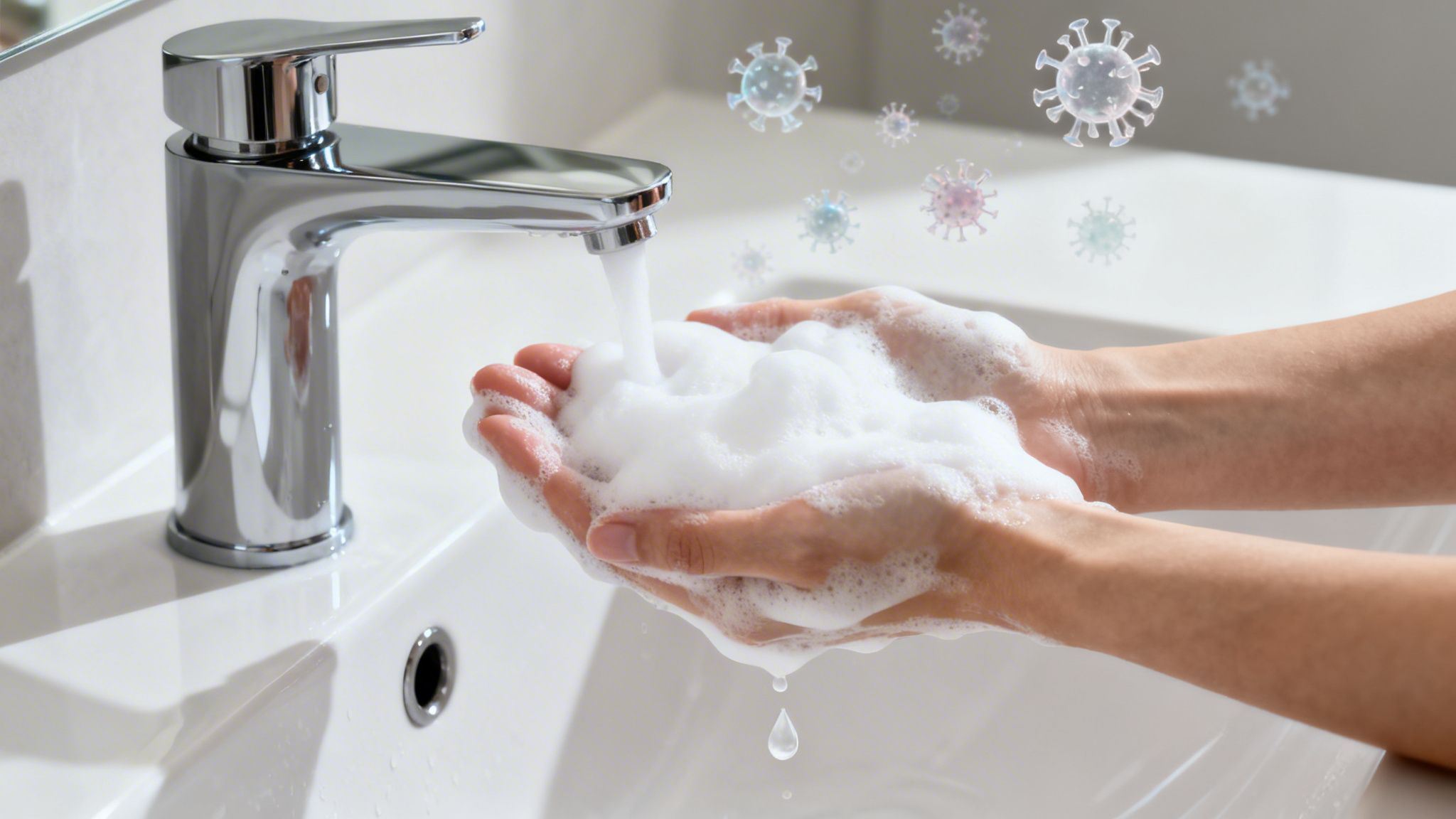
That satisfying puff of foam soap is a staple in our daily lives, from public restrooms to our own kitchen sinks. At its core, hand washing foam is simply liquid soap that's been mixed with air to create a rich lather before it even hits your hands. This pre-lathered design is what's made it such a go-to choice for quick and effective hand hygiene, a critical first step in preventing the spread of viruses from contaminated surfaces.
Why Foam Soap Became a Hand Hygiene Essential

The journey of foaming hand soap from a simple convenience to a key player in virus prevention isn't just about its pleasant feel. It’s a story rooted in practical science and human behavior. In a world hyper-aware of viral threats like Influenza A Virus (H1N1), Norovirus, and SARS-CoV-2, every detail of hand washing is getting a closer look. The big question is: can this light, airy soap really stand up to serious pathogens?
The answer is a solid yes, and it all comes down to a few key advantages. The pre-aerated foam spreads across your hands far more quickly and evenly than a glob of thick liquid soap. This means the powerful cleaning agents, known as surfactants, get to work right away, covering all the nooks and crannies of your skin from fingertips to wrists.
Encouraging Better Habits
One of the most surprising benefits of hand washing foam is how it nudges us toward better habits. Some studies suggest people are more likely to wash their hands for the recommended time when using foam because the lather is instant and feels like it's working. This is a huge win for getting kids to wash properly, as they often find foam more engaging.
Proper hand hygiene is a cornerstone of preventing the spread of infectious diseases. The physical act of washing with soap and water is one of the most effective ways to remove pathogens from the hands, interrupting the chain of infection.
Foaming soap dispensers also tend to release a measured dose, which cuts down on waste and ensures you're getting enough product for a thorough clean. This efficiency makes it a smart, economical choice for high-traffic places like schools, hospitals, and offices.
When you understand what is fomite transmission, it becomes crystal clear why clean hands are our first line of defense against picking up viruses from surfaces. While washing your hands is crucial, remember that disinfecting high-touch surfaces with appropriate wipes provides another vital layer of protection against viruses like Human Coronavirus or Rhinovirus that linger in our environment.
How Foam Lifts and Inactivates Viruses

To really get how hand washing foam takes down viruses, it helps to think of it as both a microscopic bulldozer and a chemical saboteur, all rolled into one. That light, airy foam isn’t just for show; its structure is built for a purpose. The pre-aerated bubbles spread across your hands in a flash, getting into all the nooks and crannies—under your nails, between your fingers—that liquid soap might miss at first.
This instant, even coverage is a huge advantage. It lets the soap's primary workhorses, called surfactants, get to work immediately. Surfactants are fascinating little molecules with a split personality: one end loves water (it's hydrophilic), and the other end loves fats and oils (it's lipophilic). This dual nature is the secret behind their virus-killing power.
A Two-Pronged Attack on Viruses
Foaming soap doesn't just rely on one method to clean your hands. It launches a two-pronged attack on germs through mechanical removal and viral inactivation. Both are critical for leaving your hands truly free of active pathogens.
Mechanical Removal: Think of the foam as a super-effective net. As you rub your hands together, the friction helps the surfactant molecules surround and trap bits of dirt, grime, and viruses inside millions of tiny bubbles. When you rinse, the water-loving ends of those molecules latch onto the running water, carrying all the captured gunk safely down the drain. This is particularly effective against non-enveloped viruses like Norovirus and Human Rotavirus.
Viral Inactivation: This is where things get clever. Many of the viruses we worry about most—like influenza viruses, coronaviruses (including SARS-CoV-2), Hepatitis B Virus (HBV), and Herpes Simplex Virus 1 (HSV-1)—are what’s known as "enveloped." This just means they're wrapped in a protective outer layer made of fat, or a lipid membrane. The fat-loving ends of the soap's surfactant molecules are irresistibly drawn to this fatty layer, wedging themselves into it and prying it apart.
Imagine the virus is a tiny water balloon. The surfactants act like microscopic pins that pop the balloon, spilling its contents and making it completely harmless.
Once that protective envelope is breached, the virus is officially inactivated. It can no longer attach to your cells to make you sick. This powerful combination of physically lifting germs away and chemically dismantling them makes foam soap a tough opponent for a whole range of viral threats.
This whole process is why scrubbing for 20 seconds and rinsing thoroughly are so important. You're not just washing—you're giving the surfactants the time and friction they need to find their targets, break them down, and wash them away for good. That dual action is what provides the scientific confidence that foam soap is doing its job every single time.
Comparing Foam Soap, Liquid Soap, and Hand Sanitizer
When you're at the sink or out and about, choosing the right hand hygiene product can feel like a critical decision. Each option—hand washing foam, traditional liquid soap, and alcohol-based hand sanitizer—has a specific job to do in your defense against viruses. Knowing their strengths and weaknesses is the key to making the smartest choice for any situation.
Soap and water, whether you prefer foam or liquid, are the undisputed champions for physically removing germs. Their power comes from the simple mechanical action of washing. The surfactants in the soap trap viruses like Influenza A Virus (H1N1) and SARS-CoV-2, and the friction from rubbing your hands together lifts them right off your skin. When you rinse, the water flushes them away for good.
This removal process is especially important for tough, non-enveloped viruses like Norovirus or Feline Calicivirus, which are notoriously resistant to alcohol-based sanitizers.
Effectiveness Against Different Viruses
The best choice between foam, liquid, and sanitizer often comes down to the specific viral threat you're facing. Each product interacts with different types of viruses in unique ways, so a one-size-fits-all approach isn’t always the most effective.
- Foam and Liquid Soap: Both are fantastic at physically removing a wide range of viruses, including those stubborn, non-enveloped ones like Human Rotavirus and Norovirus. They also dismantle the fatty outer layer of enveloped viruses like SARS-CoV-2 and Influenza viruses, making them a top-tier choice for almost any scenario.
- Hand Sanitizer: Alcohol-based sanitizers are great at inactivating enveloped viruses like Hepatitis C Virus (HCV). However, they aren't nearly as effective against non-enveloped viruses like Rhinovirus Type 14 because those pathogens lack the fatty outer layer that alcohol attacks. You can learn more about how hand sanitizer kills viruses and its limitations in our detailed guide.
Hand sanitizer is an excellent tool for on-the-go hygiene when soap and water aren't available. But if your hands are visibly dirty or you might have been exposed to something like Norovirus, nothing beats a thorough wash.
Hand Hygiene Product Comparison
To make the choice clearer, here’s a quick breakdown of how these three products stack up against each other.
| Feature | Hand Washing Foam | Liquid Soap | Hand Sanitizer |
|---|---|---|---|
| Primary Action | Physically removes germs | Physically removes germs | Inactivates germs |
| Best For | General handwashing, high-traffic areas | General handwashing | When soap & water are unavailable |
| Enveloped Viruses | Highly Effective (Removes & Inactivates) | Highly Effective (Removes & Inactivates) | Highly Effective (Inactivates) |
| Non-Enveloped Viruses | Highly Effective (Removes) | Highly Effective (Removes) | Limited to No Effectiveness |
| User Experience | Spreads easily, rinses quickly | Can be thick, requires more rinsing | Dries quickly, no water needed |
| Water Usage | Lower | Higher | None |
This table highlights that while sanitizers are convenient, nothing replaces the comprehensive cleaning power of washing with soap and water—whether it's foam or liquid.
Usage and User Experience
Beyond just killing germs, practical things like water usage and how a product feels can determine what's best for a particular environment. Foaming soap, for instance, has some unique advantages in busy settings.
Because it comes out of the dispenser already lathered, hand washing foam spreads easily across your hands and rinses off much faster than thick liquid soaps. This often cuts down on water consumption significantly—a major reason you see it so often in public restrooms, hospitals, and restaurants. For comprehensive protection, this hand washing routine should be complemented by regular surface cleaning with disinfecting wipes to eliminate pathogens from fomites.
In fact, foam is quickly becoming the go-to in places where controlled dispensing cuts waste and boosts hygiene. It's the fastest-growing part of the global hand wash market, projected to expand at an impressive 8.61% CAGR through 2030, leaving liquids and bars behind. You can see more details on this trend over at Grand View Research.
Ultimately, the best strategy is a combined one. Use hand washing foam or liquid soap whenever you can, and keep a reliable hand sanitizer with you for all the moments in between.
Mastering Your Hand Washing Technique with Foam
Even the best hand washing foam won't do its job if your technique is sloppy. A rushed wash is a wasted opportunity to get rid of viruses, so getting the steps right is one of the simplest and most effective ways to protect yourself and those around you.
The entire process, from turning on the tap to drying off, is a proven system for maximizing how well the foam traps and removes pathogens. Think of it as a methodical approach where each step sets up the next, making sure no part of your hands gets missed.
The Five Steps to a Perfect Foam Wash
A truly effective hand wash is more than just a quick rinse under the faucet—it's a deliberate process that needs a little time and attention to detail.
- Wet and Apply: Get things started by wetting your hands with clean, running water. To save water, turn off the tap before applying one full pump of foaming hand soap into your palm.
- Lather and Scrub: Rub your hands together to spread that light, airy foam everywhere. Make sure you get the backs of your hands, in between your fingers, and underneath your nails. Don't forget your thumbs and fingertips—these are the spots people miss most often.
- Time is Key: Keep scrubbing for at least 20 seconds. This is the non-negotiable amount of time the soap’s surfactants need to break down the protective outer layer of viruses like Influenza and SARS-CoV-2. An easy way to time it? Hum the "Happy Birthday" song from beginning to end, twice.
- Rinse Thoroughly: Turn the water back on and rinse your hands completely. You want to make sure all the soap, along with the dirt and germs it has trapped, is washed down the drain.
- Dry Completely: Dry your hands with a clean towel or an air dryer. This last step is crucial because damp hands can pick up and transfer germs much more easily. For a full breakdown, check out our guide on the proper hand washing technique.
This flowchart shows how the process for using foam soap compares to liquid soap and hand sanitizer.

As you can see, foam gives you an instant lather, which makes it easier to get full coverage right from the start. By following these steps every single time, you turn a simple habit into a powerful, science-backed defense against spreading viruses.
How to Choose the Right Foaming Hand Soap
Walking down the soap aisle can feel a bit overwhelming. With so many foaming hand soaps promising the best protection, how do you actually pick one that will keep your family safe from viruses? The trick is to look past the flashy marketing and focus on what's inside the bottle and how it fits your daily life.
First things first, check the label for key ingredients. All soaps use surfactants to lift germs off your skin, but some are kinder to your hands than others. If anyone in your house has sensitive skin, look for bottles that are “fragrance-free” or “dye-free,” since these common additives are often the culprits behind irritation.
Standard vs. Antibacterial Foam
One of the biggest points of confusion is whether to grab a standard foam soap or an antibacterial one. For just about every situation you'll encounter day-to-day, a standard foam soap is more than enough to get rid of viruses and bacteria. The FDA has even stated there isn’t enough solid science to prove that over-the-counter antibacterial soaps are any better at preventing illness than plain soap and water.
The real magic is in your handwashing technique. Scrubbing for at least 20 seconds is what gives the soap time to trap and remove germs. You don't need special antibacterial agents to destroy enveloped viruses like Avian Influenza Virus (H5N1) or SARS-CoV-2.
Choosing the right foaming soap is less about finding the strongest chemicals and more about picking a product that you and your family will actually use correctly and often. A gentle, effective foam that doesn't dry out your skin is usually the best bet for any household.
Making a Smart, Eco-Friendly Choice
Beyond what's in the soap, think about the dispenser and its impact. Many brands now offer large refill pouches, which is a fantastic way to cut down on plastic waste compared to buying a brand-new pump bottle every time. It’s not just a more sustainable choice—it’s also easier on your wallet in the long run.
Another smart move is to consider a touchless foam soap dispenser. This technology is quickly becoming a staple in modern hand hygiene because it gets rid of a major germ hotspot: the pump itself. It’s a perfect example of how technology is stepping up to meet our hygiene needs. In fact, the global market for these devices hit $1.74 billion and is expected to climb to $3.01 billion by 2034. Automatic dispensers are particularly great for public spaces, where they help slow the spread of viruses like influenza and norovirus. You can learn more about this growing market from Zion Market Research.
While hand washing is paramount, creating a hygienic environment requires a two-step approach: clean hands and clean surfaces. Pairing your hand washing routine with the regular use of disinfecting wipes on doorknobs, countertops, and electronics provides a comprehensive defense against viral transmission.
What Hand Foam Means for Global Public Health
The simple act of using foaming hand soap at your sink is bigger than you might think. It creates a ripple effect that goes far beyond your own bathroom or kitchen. When millions of us make effective hand hygiene a habit, that collective action becomes one of our most powerful defenses against widespread illness.
It’s this simple routine that helps stop large-scale outbreaks of viruses like influenza, norovirus, and coronaviruses in their tracks.
Think about it: widespread handwashing leads directly to healthier communities. When we cut down on how easily germs are transmitted, we see a real, measurable drop in the strain on our healthcare systems. Hospitals get fewer admissions for preventable illnesses, and clinics aren't as overwhelmed, which frees up doctors and nurses to handle the most critical cases.
The Bigger Picture: A Healthier Society and Economy
The benefits of good hand hygiene echo through our economy and daily lives, too. When fewer viral outbreaks happen, it means:
- Fewer Sick Days: Adults and kids miss less work and school, which keeps businesses productive and students from falling behind.
- Lower Healthcare Costs: It’s always cheaper to prevent an illness than to treat one. This saves money for everyone, from individual families to national health services.
- Safer Public Spaces: When we all practice good hand hygiene, it helps make schools, offices, and public transit safer for everyone—especially the most vulnerable among us.
Effective hand hygiene isn't just a personal chore; it's a collective investment in our community's resilience. Products like foaming hand soap give every single person a low-cost, high-impact way to contribute to global health.
The COVID-19 pandemic really drove this point home, cementing hand washing foam as a key part of hygiene practices around the world. That massive spike in awareness has also fueled major market growth.
According to market analysts, the global hand wash market—which is packed with foaming formulas—was valued at a hefty $4.15 billion and is projected to climb to $7.27 billion by 2032. You can dig into the numbers yourself in this report from Fortune Business Insights.
Answering Your Questions About Foaming Soap
Let's dig into some of the most common questions people have about foaming hand soap. We'll clear up any confusion and make sure you have the facts on what makes for great hand hygiene.
Is Foaming Soap as Good as Antibacterial Soap?
When it comes to getting rid of viruses and most bacteria, absolutely—foaming soap is just as effective. For both types of soap, the real work is done by the surfactants that lift germs off your skin and the friction from scrubbing that washes them away.
In fact, the FDA has stated there isn't enough scientific proof to show that over-the-counter antibacterial soaps are any better at preventing illness than just using plain soap and water. What really counts is your technique and washing for at least 20 seconds.
Does Foaming Soap Really Use Less Water?
Yes, and the difference can be pretty significant. Because the soap comes out of the pump already lathered, it rinses off your hands much more quickly than thick liquid soaps, which you have to work into a lather before you can even start washing them off.
Some studies suggest that switching to foam can cut water use by up to 45% with every wash. That makes it a much more sustainable choice, especially in busy places like schools or offices where the faucets are running all day.
Can I Just Dilute Liquid Soap to Make My Own Foam?
You can physically do this, but it’s not a great idea. The formulas used in dedicated foaming hand soap are precisely balanced to clean effectively while working perfectly with the dispenser’s pump.
When you dilute regular soap, you often end up with a watery, less effective cleaner that can’t get the job done right. Worse, it can clog or even break the delicate foaming mechanism over time.
For hygiene you can count on, stick with a proper foam soap refill. While a DIY approach is great for many things, effective handwashing isn’t a place you want to be cutting corners. Using the right product ensures you get the full virus-fighting power you need, every single time.
Leave a Reply