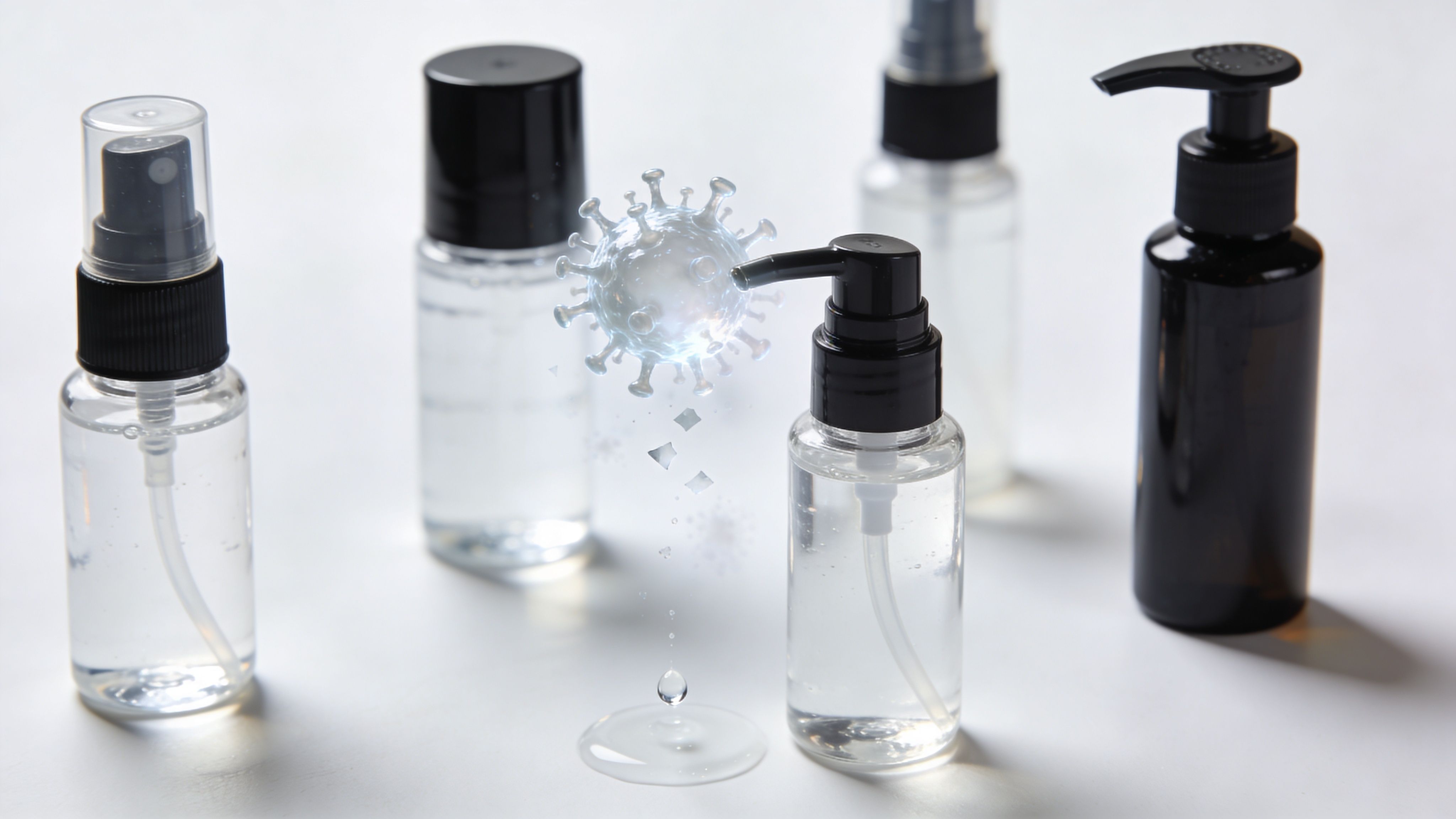
You probably have one within arm’s reach right now. A small bottle clipped to a bag, rolling around in a car console, tucked into a coat pocket, or sitting beside a laptop. The need for it often becomes apparent only after touching a door handle, using public transit, or walking out of a grocery store.
That’s what makes small hand sanitizer bottles so interesting from a public health standpoint. They feel simple. Squeeze, rub, done. But the full story is more complicated. The liquid matters. The bottle matters. The virus matters. And sometimes the setting matters most of all.
Used well, hand sanitizer is a practical tool for interrupting transmission when soap and water aren’t available. Used blindly, it can create false confidence, especially around viruses that resist alcohol or around contaminated surfaces that hands keep touching. The goal isn’t to dismiss sanitizer. It’s to use it with clearer judgment.
The Pocket-Sized Protector in Modern Life
A commuter taps a subway pole, checks a phone, grabs a coffee, then reaches for a tiny sanitizer bottle without even thinking. A parent hands one to a child after leaving the playground. A nurse keeps one nearby during a busy shift. These bottles became part of daily behavior because they remove friction. You don’t need a sink. You don’t need a towel. You just need a few seconds.

That convenience helps explain why demand can spike so fast in a health crisis. During the COVID-19 pandemic, U.S. sales surged over 1,000% in Q1 2020 compared with 2019, and an earlier H1N1 wave in 2009 pushed U.S. sales up by 70%. The CDC’s endorsement in 2002 also helped make small bottles standard in both healthcare and consumer settings, as described in this history of hand sanitizer demand and adoption.
Why these bottles became a habit
Small hand sanitizer bottles fit modern life because they match moments when people can’t stop to wash their hands. Airports, rideshares, classrooms, checkout lines, waiting rooms, and sports sidelines all reward speed.
A portable bottle also changes behavior in a subtle way. When hygiene is visible and reachable, people are more likely to use it. That’s part of why travel-sized products became so common, including the kind discussed in VirusFAQ’s article on mini Purell for travelers.
Practical rule: Convenience is a strength, but it can also hide limitations. A sanitizer bottle is easy to carry. That doesn’t mean it’s the right tool for every germ problem.
What people often assume, and where that goes wrong
Many readers treat hand sanitizer as a universal answer. If it’s in a bottle labeled for hygiene, they assume it works equally well against everything. That’s the first point of confusion.
Another common mistake is thinking the bottle’s size means it’s all about portability and branding. In reality, small bottles raise useful questions. Is the alcohol concentration high enough? Does the dispenser preserve the formula well? Are you using enough? And are you trying to solve a hand problem when the bigger risk is really a contaminated surface?
Those questions matter because sanitizer works best as one part of a broader hygiene strategy, not as a substitute for every other step.
The Science of Sanitizer How Alcohol Fights Viruses
To understand why small hand sanitizer bottles help in some situations and disappoint in others, start with one basic distinction. Some viruses are enveloped. Others are non-enveloped.
An enveloped virus has an outer fatty coating called a lipid envelope. Alcohol can disrupt that coating. When that outer layer falls apart, the virus loses its ability to infect effectively. That’s why alcohol-based sanitizers perform well against viruses such as coronaviruses and influenza viruses.
A non-enveloped virus doesn’t have that same fragile outer lipid layer. It has a tougher outer shell, and alcohol often has a harder time inactivating it. That single structural difference explains a lot of the confusion people have about sanitizer performance.
Why alcohol works
Think of alcohol as a chemical disruptor. It doesn’t “hunt germs” in a magical way. It damages structures that viruses and other microbes need to function. With enveloped viruses, the main target is that outer membrane. Alcohol also denatures proteins, which adds to its antimicrobial effect.
For this reason, public health guidance focuses on at least 60% alcohol in hand sanitizers. Below that level, the product may not perform as intended against many common viral threats. If you want a focused explanation of that threshold, VirusFAQ has a separate article on why 60% alcohol matters in hand sanitizer.
This visual sums up the chemistry in plain language:

Why the gel format mattered
Alcohol itself wasn’t a new disinfectant. Its germ-killing ability had been scientifically validated by 1875, and hospitals were recommending alcohol by the 1930s. What changed hand hygiene in everyday practice was portability.
In 1966, nursing student Lupe Hernandez is credited with inventing gel-based hand sanitizer by combining alcohol with a gelling agent, creating a portable option for healthcare workers. That history matters because the gel form made small hand sanitizer bottles practical for individual use rather than limiting alcohol antisepsis to larger clinical setups, as outlined in this history of gel-based hand sanitizer and Lupe Hernandez.
What’s inside the bottle
A typical alcohol-based sanitizer is more than alcohol alone. The formula usually includes:
- Alcohol as the active ingredient. This does the antiviral and antimicrobial work.
- Water, which helps the product spread and supports contact time rather than flashing off instantly.
- Skin-conditioning ingredients such as glycerin or similar emollients, which help reduce dryness with repeated use.
People often miss the role of contact time. If sanitizer evaporates before it covers the hand properly, its practical effect drops. That’s one reason proper use matters as much as the label.
Sanitizer works because chemistry meets technique. A strong formula used poorly won’t deliver the protection people expect.
The simple mental model
If you want a short way to remember it, use this:
| Question | What to ask |
|---|---|
| What virus am I worried about? | Enveloped viruses are more vulnerable to alcohol. |
| What’s in the bottle? | It should contain enough alcohol to be effective. |
| How am I using it? | Full coverage and rubbing until dry matter. |
| Are my hands actually the main problem? | If contamination is sitting on desks, carts, handles, or phones, hands are only part of the picture. |
That last question becomes important quickly. A hand product can only disinfect hands. It can’t clean a tray table, a bathroom latch, a classroom desk, or a shopping cart handle.
Anatomy of the Bottle Materials and Dispensing
A small sanitizer bottle looks trivial until you remember what it has to do. It has to hold a high-alcohol formula without degrading, leaking, or letting too much alcohol escape over time. It also has to dispense enough product for real hand coverage, not just a token drop.
That’s why bottle design is part chemistry, part engineering, and part user behavior.

Why HDPE and PET show up so often
Most small hand sanitizer bottles are made from HDPE or PET. HDPE is valued for its strong chemical resistance to alcohol, which helps prevent the bottle from degrading. PET is often chosen for travel-sized products because it offers clarity and a glossy look. The material choice also helps preserve the sanitizer’s more than 60% alcohol concentration and maintain structural integrity over a shelf life that can exceed 24 months, according to this overview of sanitizer bottle materials and shelf life.
That detail sounds technical, but the practical point is simple. If the bottle material isn’t compatible with alcohol, the container can fail before the sanitizer does.
The dispenser changes how people use the product
Not all caps and nozzles behave the same way. A pump gives a more controlled dose. A spray can spread product differently across the skin. A flip-top is simple and portable, but it depends heavily on how carefully the user dispenses and closes it.
Here’s a plain-language comparison:
| Bottle feature | Main advantage | Common tradeoff |
|---|---|---|
| Pump | More controlled dispensing | Bulkier in a pocket or bag |
| Spray | Fast, broad application feel | Users may under-rub after spraying |
| Flip-top squeeze bottle | Compact and familiar | Easy to use too little product |
What consumers should actually look for
If you’re choosing among several small bottles on a store shelf, focus less on branding and more on function.
- Check the alcohol content first. If it doesn’t clearly meet the effective threshold, move on.
- Look at the closure. A loose cap or messy opening can lead to leaks, evaporation, and half-hearted use.
- Think about where you’ll carry it. A desk bottle, a hospital pocket bottle, and a travel bottle don’t all need the same form factor.
- Notice whether the bottle encourages full-hand coverage. A design that dispenses too little can make people feel clean without using enough sanitizer.
A design lesson people miss
A clear PET bottle may look cleaner and more appealing. A sturdier HDPE bottle may be the better choice for repeated daily handling. Neither is automatically “best.” The right choice depends on whether the bottle protects the product and supports correct use.
Selection tip: A sanitizer bottle isn’t just packaging. It’s part of the delivery system. If it leaks, cracks, or dispenses poorly, the formula inside matters less.
When Hand Sanitizer Fails The Viruses It Cannot Stop
The biggest public misconception about sanitizer is that “kills germs” means “works well on every virus.” It doesn’t.
Alcohol-based sanitizer is a strong option against enveloped viruses such as SARS-CoV-2 because alcohol disrupts the lipid envelope those viruses depend on. But non-enveloped viruses are tougher. Their outer structure is more resistant, and that changes the outcome in real-world use.

Norovirus is the clearest example
Norovirus is one of the most useful viruses for teaching sanitizer limits because it spreads easily and causes a lot of confusion. People often respond to a stomach bug scare by using more sanitizer, when what they may need most is better handwashing and surface disinfection.
A 2024 CDC study found that standard sanitizer applications might achieve only a 20 to 30% reduction in norovirus, compared with 99% for enveloped viruses. That matters because norovirus is a leading cause of gastroenteritis, with 685 million cases annually worldwide, as described in this summary of sanitizer limits against norovirus.
Why this catches people off guard
Small hand sanitizer bottles are marketed through convenience. Pocket-size, clip-on, quick-drying, pleasant scent, no sink needed. None of those traits tells you whether the product is the right match for a specific virus.
When readers hear “virus prevention,” they often assume one behavior covers all situations. But a family dealing with a suspected norovirus outbreak at home faces a different problem than a commuter trying to reduce risk after touching public surfaces during respiratory virus season.
One involves a virus that alcohol handles relatively well on hands. The other may involve a virus that resists standard sanitizer use and can also contaminate surfaces aggressively.
The false sense of security problem
Sanitizer can fail in two ways. The first is biological. The virus itself may resist alcohol better than people realize. The second is behavioral. People use sanitizer and then stop taking more effective steps.
Common examples include:
- After cleaning up vomit or diarrhea exposure: Hand sanitizer isn’t the first choice. Hands may be contaminated with material that needs soap and water removal.
- In schools or cruise-ship style outbreaks: A mini bottle may feel reassuring, but shared surfaces need direct disinfection.
- When hands are visibly dirty or greasy: Dirt and organic material can interfere with contact between alcohol and the pathogens on skin.
If the outbreak is driven by a resistant virus and contaminated touchpoints, sanitizer can become a comfort ritual rather than the main control measure.
Hands are only one side of transmission
Many prevention plans break down when a person sanitizes their hands, then immediately touches a contaminated phone, bathroom latch, desk, cart handle, faucet, or steering wheel. The hands were treated. The environment wasn’t.
That doesn’t make sanitizer useless. It means the intervention has to match the route of transmission. For many respiratory viruses, hand hygiene can meaningfully reduce risk. For gastrointestinal viruses and messy, high-touch environments, you often need a combination of handwashing and surface disinfection.
Here’s a quick reality check:
| Situation | Better first move |
|---|---|
| You left a store and your hands aren’t visibly soiled | Alcohol-based sanitizer is reasonable |
| You’re dealing with suspected norovirus in a home or classroom | Soap and water for hands, plus disinfecting surfaces |
| Your hands are visibly dirty after eating, cleaning, or childcare | Wash with soap and water |
| A shared object is the concern | Clean or disinfect the object or surface directly |
The practical takeaway
Small hand sanitizer bottles are excellent for many everyday moments. They’re not broad-spectrum magic. If the threat includes hardy non-enveloped viruses or heavily contaminated surfaces, relying on sanitizer alone is a weak plan.
Proper Use for Maximum Virus Prevention
Poor technique wastes good sanitizer. The most common problem isn’t that people use the wrong bottle. It’s that they use too little, miss large parts of the hands, or stop rubbing too soon.
If you want sanitizer to work as intended, treat it like a short procedure, not a quick gesture.
What proper use looks like
Start with enough product to wet your hands thoroughly. Then rub it over all hand surfaces, not just the palms. That means the backs of the hands, between the fingers, around the thumbs, and across fingertips.
Keep rubbing until your hands are fully dry. Don’t wipe it off. Don’t shake it off. Drying is part of the contact time.
A simple routine looks like this:
- Apply enough sanitizer to cover both hands.
- Spread it across the palms first so you don’t lose product immediately.
- Work into the backs of the hands and between fingers.
- Cover thumbs and fingertips carefully. These are often missed.
- Rub until dry. If your hands dry almost instantly, you probably didn’t use enough.
The decision that matters most
The bigger skill is knowing when sanitizer is appropriate and when it isn’t.
Use sanitizer when your hands aren’t visibly dirty and soap and water aren’t available. Choose handwashing when your hands are soiled, greasy, or contaminated with bodily fluids. In homes, classrooms, and care settings, that distinction matters more than people think.
This becomes especially important after illness in the household. Good hand hygiene helps, but people also need a plan for high-touch surfaces. If you’re building that plan, these tips for home disinfection offer a practical checklist for the places families often miss.
Everyday advice: If your hands look dirty, feel sticky, or have been in contact with vomit, stool, food residue, or grime, skip the sanitizer and wash with soap and water.
Common mistakes that reduce effectiveness
Some errors are almost invisible because they feel reasonable in the moment.
- One quick drop: People often dispense less than they need because they’re trying to conserve the bottle.
- Palm-only rubbing: Pathogens don’t stay politely centered in your palm.
- Stopping while still wet: The alcohol needs time on the skin.
- Using sanitizer on dirty hands: Organic material can block proper action.
- Treating sanitizer as a surface cleaner: Hand sanitizer is for skin, not for desks, phones, counters, or bathroom fixtures.
A short comparison for daily life
| If this is true | Do this |
|---|---|
| No sink nearby, hands look clean | Use sanitizer carefully and completely |
| Hands are visibly soiled | Wash with soap and water |
| You’re in a shared indoor space with many touchpoints | Sanitize hands and address surfaces separately |
| Someone in the home has vomiting or diarrhea | Prioritize handwashing and surface disinfection |
The point isn’t perfection. It’s matching the tool to the situation.
The Hidden Risks of Refilling and Recycling
Refillable bottles sound responsible. Less plastic, less waste, less money spent replacing containers. The environmental logic is easy to understand, which is why many people prefer the idea.
But hygiene tools have a special problem. A container can look clean and still be a bad place to store a hand product if it’s been refilled carelessly.
Why refillables appeal to people
There’s a real reason refillables keep coming up in conversations about small hand sanitizer bottles. According to this overview of refillable mini sanitizer containers and contamination concerns, 78% of consumers prefer refillable containers to reduce plastic waste. That preference makes sense.
The problem is that a refillable bottle isn’t automatically a safe bottle.
The same source notes that a 2025 paper reported 40% higher bacterial counts in reused travel sanitizers, and improper refilling led to a 25% failure rate in maintaining the required more than 60% alcohol concentration. In plain terms, a badly refilled bottle may be both contaminated and too diluted to work as expected.
How refilling goes wrong
People usually contaminate refillable bottles through ordinary shortcuts. They top off old product instead of emptying and cleaning the container. They use a funnel that wasn’t sanitized. They leave residue around the opening. Or they mix products from different brands and assume the final result is close enough.
Those habits create two separate risks:
- Microbial contamination of the container
- Alcohol dilution below the effective threshold
That second point is easy to underestimate. A sanitizer that started strong can become less reliable if the concentration drops through improper refilling, residue, or mixing.
A refillable bottle only works if the refill process protects the formula. Convenience alone doesn’t protect the user.
Homemade and improvised mixes need caution
Some readers go a step further and try homemade sanitizer. That’s understandable during shortages, but it increases the margin for error. Measuring, mixing, storage, and bottle sanitation all matter. If you’re exploring that topic, VirusFAQ has a separate article discussing how people make homemade hand sanitizer.
For most households, the safer choice is usually a sealed commercial product rather than an improvised refill routine.
Recycling is sensible, but not simple
Small bottles create an environmental tension. Single-use packaging is convenient and hygienic, but very small plastic items can be harder to handle in real-world recycling systems. Caps, pumps, mixed materials, and leftover product complicate disposal.
That doesn’t mean you should ignore waste. It means hygiene products need a more careful decision process than ordinary containers.
A balanced approach looks like this:
| Goal | Safer habit |
|---|---|
| Reduce waste | Buy only what you’ll actually use before quality declines |
| Avoid contamination | Prefer sealed products over repeated casual refills |
| Handle empties responsibly | Follow local recycling guidance for small plastic containers and caps |
| Preserve efficacy | Don’t top off mystery residue or mix different leftover products |
The deeper lesson
Refill culture works best when users have strong cleaning protocols, compatible containers, and careful handling. Most casual users don’t have that system. They have a kitchen counter, a half-empty bottle, and good intentions.
That gap matters. In infection prevention, “probably fine” isn’t always fine.
A Practical Selection Guide for Every User
Choosing among small hand sanitizer bottles gets easier once you stop asking, “Which one is nicest?” and start asking, “What problem am I trying to solve?”
A clinician, a parent, and a traveler don’t use these products in the same way. Their environments differ. Their risks differ. Their backup options differ too.
For healthcare workers and clinicians
In clinical settings, speed and reliability matter. A bottle should dispense predictably, travel well in a pocket or bag, and make repeat use easy during a busy shift.
Good priorities include:
- Clear alcohol labeling
- A dispenser that supports fast, controlled use
- A bottle material that holds up to frequent handling
- A size that fits the workflow without encouraging underuse
Healthcare workers also know a critical boundary. Hand sanitizer is for hands. If a surface is contaminated, it needs a product designed for surface disinfection, not a few sprays of hand product on a paper towel.
For parents, educators, and school staff
This group often manages both access and behavior. Children may like the novelty of tiny bottles but use too little, spill them, or forget that sanitizer doesn’t replace handwashing.
Useful habits include:
- Store bottles out of children’s reach when not in use
- Teach full-hand coverage rather than a quick dab
- Use soap and water whenever hands are visibly dirty
- Address desks, toys, tables, and shared touchpoints separately
In classrooms and homes, the environment often drives spread. A child can sanitize perfectly, then touch a contaminated tabletop two minutes later.
For travelers and commuters
Travelers need portability, leak resistance, and speed. A bottle that fits a pocket or clips to a bag is practical, but portability shouldn’t crowd out basic quality checks.
Choose a product that:
- Clearly states alcohol content
- Closes securely in a bag
- Dispenses enough product for real coverage
- Fits the pace of frequent on-the-go use
Travel is also where people overestimate sanitizer’s role. Airports, train stations, hotel rooms, and rest stops involve many shared surfaces. Your hands matter, but so do tray tables, bathroom fixtures, armrests, and phones.
For travel, think in pairs: sanitizer for your hands, and a separate surface disinfecting option for the objects and touchpoints your hands keep returning to.
For the average daily user
If you just want one reliable bottle for errands, work, and routine outings, keep the checklist simple.
| What to check | Why it matters |
|---|---|
| At least 60% alcohol | Basic effectiveness threshold |
| Secure cap or pump | Helps prevent leaks and waste |
| Comfortable bottle size | Encourages carrying it consistently |
| No reliance on refilling shortcuts | Helps preserve product integrity |
One final selection principle
The best sanitizer choice is usually the one you’ll use correctly, in the right situations, without pretending it does jobs it can’t do. That means reading labels, respecting limits, washing hands when needed, and keeping a separate plan for contaminated surfaces.
For readers who want deeper virus-specific context, VirusFAQ.com publishes educational and scientific articles on transmission and prevention across different virus types, which can help when the right hygiene tool depends on the organism involved.
Small hand sanitizer bottles deserve their place in daily life. They’re useful, portable, and often effective when soap and water aren’t nearby. But they aren’t universal. They work well against some viruses, work poorly against others, and do nothing for contaminated surfaces unless you address those surfaces directly. The smartest hygiene routine uses sanitizer as one tool, not the whole toolbox.
Leave a Reply