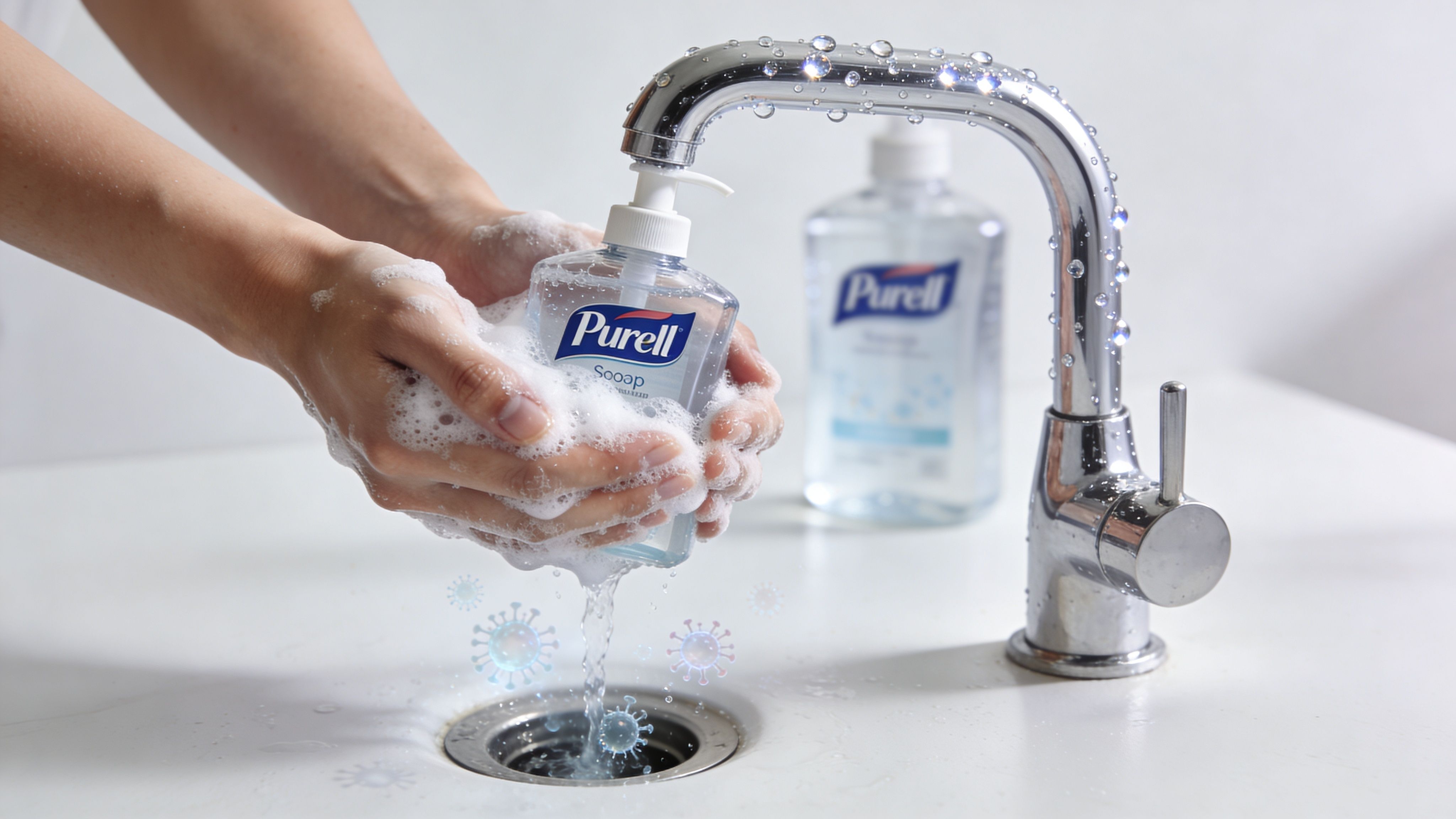
A stomach bug rarely announces itself politely. One person feels queasy, another starts wiping down the bathroom, and suddenly everyone in the house is wondering what they touched, what they ate, and whether washing their hands is enough.
That’s where confusion starts. People know handwashing matters, but many don’t know why soap works, when purell hand soap is a better choice than sanitizer, or why some viruses are much harder to deal with than others. The answer isn’t just “kill germs.” With soap, a lot of the benefit comes from breaking viruses apart or lifting them off the skin so water can carry them away.
Purell is often associated with hand sanitizer, but its hand soap deserves separate attention. That’s especially true if you care about viruses that alcohol sanitizers may not handle well, including tough stomach viruses that spread quickly in homes, schools, and clinics.
Why Handwashing Is Your First Line of Defense
A norovirus problem often begins before anyone knows there is a problem. Someone uses the bathroom, gives their hands a quick rinse, then opens the fridge, pours a drink, and hands a plate to someone else. An hour later, the kitchen has become a relay station. Hands carried the virus from one surface to the next.
That is why handwashing sits at the center of infection control. Your hands are the main transfer tool between your body, shared objects, food, and other people. Break that chain early, and you cut down the chance that one sick person turns into several.
This matters even more for stomach viruses. Alcohol sanitizer can be helpful in some situations, but it has a weak spot with tough, non-enveloped viruses such as norovirus. Soap and running water fill that gap because the goal is often physical removal. Friction loosens what is stuck to the skin, and rinsing sends it down the drain. If you want a practical comparison of formats, this guide to foam hand washing and coverage on the skin explains why technique matters as much as the product.
A simple way to understand it is to picture mud on a shoe. You do not need to chemically destroy every speck of mud for the shoe to become clean. You need enough rubbing, soap, and water to lift it off and carry it away. With many handborne viruses, especially the tougher ones, that mechanical removal is a large part of the benefit.
Why this habit matters in real life
Many exposures happen in ordinary moments. Preparing food after touching a bathroom handle. Helping a sick child, then answering your phone. Clearing a counter, then eating a snack with your fingers.
In each case, your hands are the checkpoint.
That is why public health advice keeps returning to handwashing. It works before infection has a chance to move from skin to mouth, from skin to food, or from skin to a shared surface. Purell hand soap fits into that routine because people are more likely to wash for the full amount of time when a soap feels comfortable enough to use repeatedly.
A common point of confusion
People often lump all hand hygiene into one category, but two different jobs are happening.
- Removal means lifting microbes off the skin so water can rinse them away.
- Inactivation means damaging a microbe so it can no longer infect you.
That distinction helps explain why handwashing remains the first response after using the bathroom, before eating, and during a stomach bug in the home. For some viruses, soap helps damage the outer structure. For tougher non-enveloped viruses, the bigger win is often that careful washing reduces how much virus stays on your hands.
It also points to the hygiene gap people miss. Clean hands do not automatically mean clean surroundings. If virus particles reached the faucet, doorknob, light switch, or phone before handwashing happened, those surfaces may still need separate attention.
How Soap Destroys and Removes Viruses
A good handwash does two jobs at once. It can damage some viruses, and it can lift many virus particles off the skin so water can carry them away. Which job matters more depends on the kind of virus.

Enveloped viruses are easier targets for soap
Influenza and SARS-CoV-2 are enveloped viruses. Their outer layer is made partly of lipids, which are oily molecules. Soap works on that layer much like dish soap works on cooking grease. One end of the soap molecule is attracted to water. The other is attracted to oils. That lets soap wedge into oily material, break it up, and help rinse it away.
For these viruses, the chemistry matters a great deal. Once the envelope is disrupted, the virus loses the outer structure it uses to infect cells. Rubbing and rinsing then remove the remaining material from your hands.
Water alone has a harder time with this because oils and water resist mixing. Soap acts as the middleman.
Non-enveloped viruses are tougher, but soap still helps
Norovirus creates a different problem. It does not have the same fatty envelope, so soap is usually not breaking apart an oily outer shell. That can confuse people, especially if they assume all viruses respond to soap the same way.
The better way to picture it is mechanical cleaning. Soap loosens the film on your skin that helps particles cling there. Rubbing reaches into fingerprints, nail folds, and tiny skin creases. Running water then flushes that material away. With norovirus, removal is often the main benefit.
That point matters because alcohol-based sanitizer can struggle with non-enveloped viruses. A person may sanitize carefully and still leave behind more risk than expected after a vomiting or diarrhea event. Handwashing helps close part of that gap on skin. It does not solve the whole problem if virus particles also landed on faucets, counters, phones, or door handles.
Why technique changes the outcome
Soap is only part of the process. Contact time and friction do real work.
A rushed wash can leave behind material that was loosened but never fully rinsed away. A careful wash gives soap time to spread across the hands, mix with skin oils and debris, and release what is stuck to the surface. If you want a more detailed explanation of how different lather styles behave during washing, see this guide to hand washing foam and how it works.
Three things work together:
- Soap chemistry helps detach oils, dirt, and microbes from skin.
- Friction reaches the spots people miss most, including fingertips, thumbs, and around nails.
- Rinsing removes what the soap and rubbing have lifted.
That combination explains why soap remains so useful even against hardier viruses. Sometimes the win is direct disruption. Sometimes it is plain physical removal. In both cases, the goal is the same: fewer infectious particles left on your hands, and less chance of carrying them to your mouth, food, or nearby surfaces.
Purell Hand Soap Efficacy Against Key Viruses
A realistic test is simple. You help a sick child in the bathroom, wipe a nose, rinse your hands quickly, and then reach for the refrigerator handle. The question is not whether Purell hand soap sounds reassuring on the label. The question is whether it can separate virus particles from the oily, sticky film that tends to trap them on skin.
For PURELL HEALTHY SOAP™ with CLEAN RELEASE™ Technology, the clearest product-specific claim is that it removes more than 99% of dirt and germs and is proven to outperform conventional soaps by 20-30% in total viable germ reduction, according to the PURELL HEALTHY SOAP product document. That matters because viruses do not sit on hands like dry dust on a tabletop. They are often mixed into sweat, skin oils, mucus, food residue, or stool particles. A soap that lifts that mixed residue more effectively gives rinsing a better chance to carry the contamination away.
The key point is practical. Purell hand soap works by cleaning, loosening, and rinsing contamination off the skin. For some viruses, that process also damages the virus itself. For others, removal is the main benefit.
How that plays out with different viruses
Virus structure changes the job soap has to do.
Enveloped viruses are wrapped in a fatty outer coat. Soap interacts well with that coat, much like dish soap breaking up grease on a pan. Once that outer layer is disrupted, the virus loses the structure it needs to infect cells. This group includes influenza and SARS-CoV-2.
Non-enveloped viruses are built differently. They lack that fragile lipid envelope and are generally harder for alcohol to inactivate. Norovirus is the example that matters most in daily life because it spreads efficiently through vomit, stool, contaminated hands, food, and shared surfaces. With viruses like norovirus, soap helps mainly by detaching particles from the skin so friction and water can wash them away.
A compact framework helps:
| Virus Type | Examples | How soap helps | Practical takeaway |
|---|---|---|---|
| Enveloped viruses | Influenza, SARS-CoV-2, HSV, HIV | Disrupts the fatty outer layer and removes residue from skin | Soap both damages the virus and washes it away |
| Non-enveloped viruses | Norovirus, rotavirus, rhinovirus | Loosens particles from skin so rubbing and rinsing can remove them | Careful washing matters more because removal does most of the work |
That difference explains a common point of confusion. A sanitizer can perform well against many enveloped viruses and still leave a weak spot with norovirus. Soap helps close that weak spot on hands because it does not depend on alcohol alone. It uses surfactants, friction, and running water to physically reduce what remains on the skin.
Why this matters for norovirus risk
Norovirus exposes what I would call the hygiene gap. You can wash your hands well and still have infectious particles on the faucet, toilet flush handle, countertop, phone, or doorknob. Hand soap addresses skin. It does not disinfect the room.
That is why Purell hand soap makes sense as one part of a response after vomiting, diarrhea, diaper changes, bathroom use, or food handling during a stomach bug outbreak. It improves your odds of getting virus off your hands. It does not replace surface disinfection, because non-enveloped viruses can persist on hard surfaces after the wash is over.
Another useful distinction is brand identity versus product role. Purell is widely associated with sanitizer, but the soap should be judged as a handwashing product. If you want the sanitizer side of that comparison, VirusFAQ covers it separately in this guide to Purell foaming hand sanitizer.
The practical bottom line is straightforward. Purell hand soap is most useful when contamination may be mixed with real-world mess, especially in situations where norovirus is a concern and mechanical removal matters more than an alcohol rub alone.
Soap Versus Sanitizer The Definitive Guide
You leave a public restroom, press the door handle, and reach for a bottle of sanitizer. In many everyday situations, that is a sensible move. But if your hands picked up stool particles, vomit residue, food grease, or other real-world mess, sanitizer can clean less than it seems to. Soap and water do a different job. They spread across the skin, loosen material that is clinging to small creases, and carry it away under running water.

The easiest way to compare them is by asking what problem you are trying to solve. Sanitizer is useful for rapid hand hygiene when your hands look clean and a sink is not nearby. Soap is better when contamination may be mixed with dirt, body fluids, food residue, or viruses that are harder to inactivate with alcohol alone.
When soap is the better tool
Choose soap and water in situations where removal matters more than speed:
- After using the restroom: Fecal-oral viruses spread in exactly this setting.
- When hands are visibly dirty or sticky: Soil and residue block contact and make any rub-on product less reliable.
- During a stomach bug outbreak: Norovirus is the classic example. Alcohol sanitizers can leave a hygiene gap here, while handwashing helps physically reduce what stays on the skin.
- Before preparing food and after caring for a sick person: You want washing, rinsing, and drying, not a quick coating of alcohol.
Soap takes longer, but that extra time is doing work. The lather spreads surfactants across the skin. Rubbing adds friction. Rinsing removes what has been loosened. That sequence matters most when the contamination is not just invisible microbes, but microbes mixed into organic material.
When sanitizer still makes sense
Sanitizer remains useful for clean-looking hands when you are between sinks. After touching an elevator button, card reader, shopping cart, or office door, an alcohol rub can lower risk until you can wash properly.
That convenience explains why sanitizer became common in hospitals, schools, offices, and travel settings. It is fast, portable, and easy to use. Those strengths are real. They just do not erase its weak spots, especially during vomiting and diarrhea outbreaks where non-enveloped viruses may be part of the picture.
A practical decision rule
Use this quick filter:
- Can you wash within a few minutes? Wash.
- Are your hands dirty, greasy, sticky, or contaminated with bathroom-related material? Wash.
- Is norovirus or another stomach virus a concern? Wash.
- Did you only touch a public surface and your hands still look clean? Sanitizer is reasonable as a temporary step.
If you want a refresher on the actual scrubbing sequence, review this guide to proper hand washing technique.
Bottom line: Sanitizer is useful for convenience. Soap is the full cleaning method, especially when norovirus risk or visible contamination changes the job from chemical inactivation to physical removal.
The Correct Handwashing Technique Step by Step
A good soap won’t rescue bad technique. Most missed contamination happens in the same places every time: thumbs, fingertips, between fingers, and under nails.

The sequence that works
Follow this order:
- Wet your hands first. Water helps spread the soap and starts loosening debris from the skin surface.
- Apply enough soap to cover all hand surfaces. If parts of your hands never get lather, they never get cleaned properly.
- Rub palms, backs of hands, between fingers, thumbs, fingertips, and wrists. Fingertips matter because they do most of the touching.
- Keep scrubbing for about 20 seconds. That gives the surfactants time to spread and gives friction time to reach small skin folds.
- Rinse thoroughly under running water. Rinsing completes the removal process.
- Dry with a clean towel or air dry. Wet hands transfer microbes more easily than dry ones.
Spots people forget
Many people wash the center of the palm and stop. That leaves high-contact zones behind.
Pay extra attention to:
- Thumbs: They grip handles, phones, and utensils.
- Fingertips and nails: They touch faces and food.
- Between fingers: These narrow spaces are easy to miss.
- Backs of hands: Often skipped during rushed washing.
If you want a fuller practical walkthrough, VirusFAQ also has a guide to proper hand washing technique.
Why the rinse is not optional
Some people focus only on lather. But lather without rinsing is like sweeping dirt into a pile and leaving it on the floor. Soap loosens and suspends material. Water carries it away.
Scrubbing loosens the contamination. Rinsing finishes the job.
That’s why short, rushed handwashing often underperforms. It’s not only that the soap had too little time. It’s that the user never fully removed what the soap lifted.
Your Hands Are Clean What About Your Environment
You finish washing after helping a child who feels sick. Your hands are clean. Then you turn off the faucet, pick up your phone, and open the refrigerator. If those surfaces were contaminated earlier, your clean hands just re-entered the same traffic loop.

That point matters most with viruses such as norovirus. As noted earlier, soap helps remove these tough, non-enveloped viruses from skin through friction, lather, and rinsing. Alcohol sanitizer often has a harder time with them. That leaves a hygiene gap. Your hands may be much cleaner, while the objects around you can still act like reservoirs that put contamination back where you started.
A simple way to picture the process is to treat hands and surfaces as two connected lanes of the same road. Handwashing clears one lane. Surface disinfection clears the other. If only one lane is addressed, transmission can keep moving through the room.
That is why outbreak control at home, in schools, and in shared bathrooms depends on both habits. Wash hands well after bathroom use, before eating, after cleaning vomit or diarrhea, and after touching laundry or trash. Then clean high-touch surfaces with an appropriate disinfecting product, especially when someone has stomach symptoms.
The overlooked surfaces are usually the small ones people touch without thinking:
- Faucet handles
- Toilet flush levers
- Door knobs
- Light switches
- Refrigerator handles
- Phones and tablets
- Remote controls
These objects matter because they sit at the intersection of hand contact and repeated use. A kitchen counter may get wiped daily, but a phone can travel from bathroom to table to couch many times in a few hours.
The same surface mindset shows up in other cleaning decisions around the home. People interested in maintaining cleanliness in areas like your shower are dealing with a similar principle. Surfaces that are easier to clean are easier to keep from accumulating residue and contamination over time.
Clean hands last longer in a clean environment.
Safety Allergy and Environmental Considerations
A hand soap only helps if people will keep using it after the fifth, tenth, or fifteenth wash of the day. The limiting factor is often skin comfort. Once hands become dry, tight, or irritated, technique usually slips first, then frequency.
That practical point matters more than brand history. What matters for readers is whether a soap cleans well enough for high-risk moments, yet stays mild enough for routine use at home, at school, or at work. Purell hand soap is often chosen for that middle ground. It is designed for repeated washing, not just occasional heavy-duty cleanup.
Sensitive skin adds another layer. Soap works by loosening oils, debris, and microbes so water can carry them away, but repeated washing can also strip parts of the skin barrier. Skin works like a brick wall. The cells are the bricks, and the natural oils are part of the mortar. If that mortar gets worn down, the wall leaks moisture and irritation starts faster.
People with sensitive skin usually want clear answers to three questions:
- Will it dry out my hands? Any soap can if washing is frequent enough, especially with hot water. A milder formula, lukewarm water, and hand cream after repeated washing usually make a bigger difference than brand alone.
- Does stronger germ control require harsh antimicrobial additives? No. For non-enveloped viruses such as norovirus, the main advantage of soap is physical removal from the skin, not alcohol and not necessarily antibacterial ingredients.
- Are fragrance-free or dye-free versions worth seeking out? Often yes, especially in shared spaces where one product has to work for children, staff, patients, or visitors with different sensitivities.
One point often confuses people. If soap removes viruses mechanically, why talk about the environment at all? Because clean hands can be re-contaminated within seconds by a faucet, phone, or door handle. That is the hygiene gap. Alcohol sanitizer can leave a weak spot with norovirus on hands, and handwashing does nothing for the contaminated objects nearby.
Environmental health also includes what circulates through the air and settles back onto surfaces. In that broader sense, resources on maintaining clean indoor air through duct cleaning can be useful, especially in buildings where dust control, cleaning routines, and shared-touch surfaces all affect how clean a space feels and functions.
The best choice is usually the product people can use correctly, often, and without dread. For many households and shared facilities, that means a hand soap gentle enough for repeated washing, followed by moisturizer when needed, plus separate attention to the surfaces that hands keep touching.
Leave a Reply