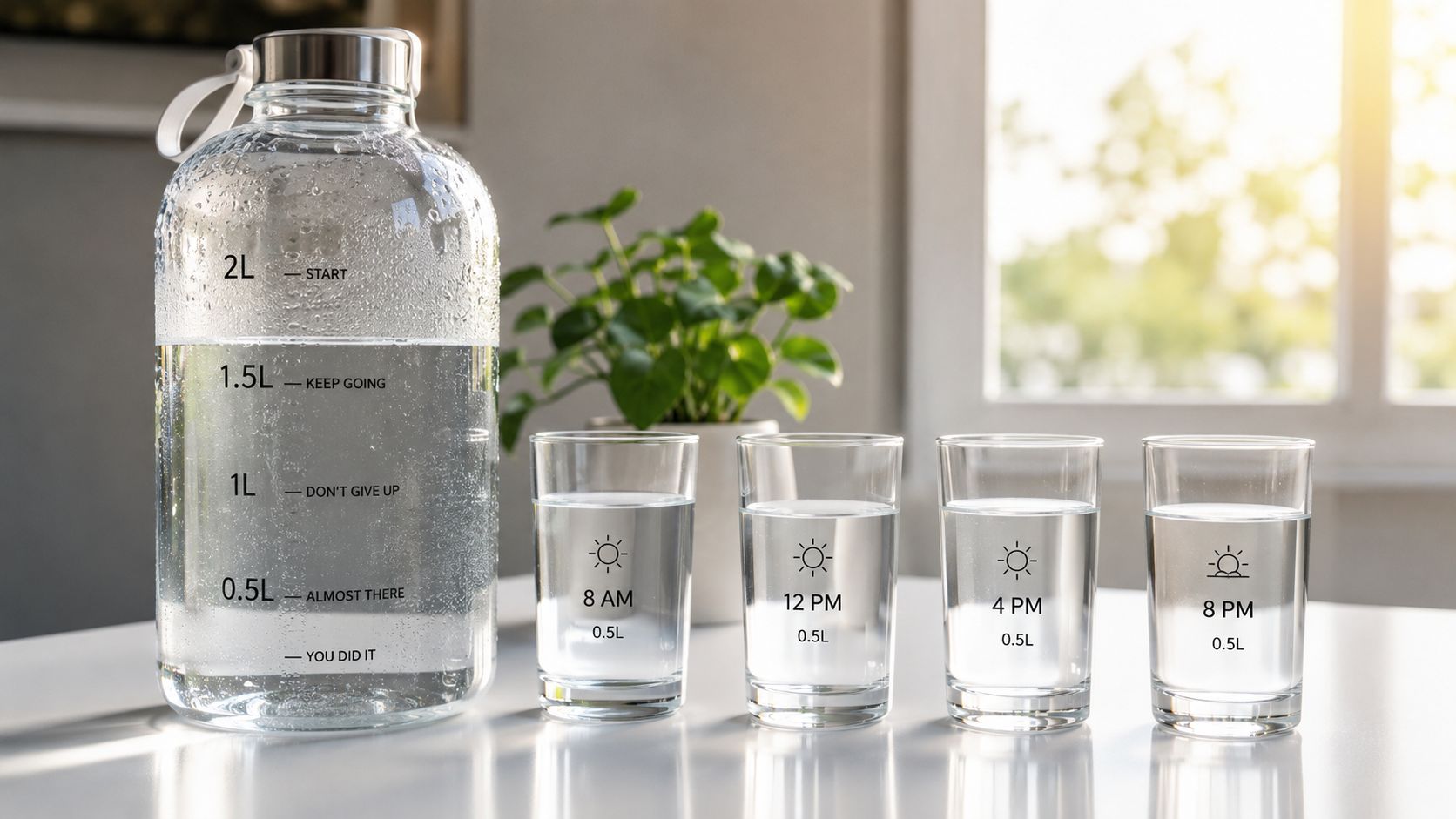
You wake up at 2 a.m. to check on someone with a fever. Their lips look dry. They say they're tired, maybe a little nauseated, and you ask the question almost everyone asks in that moment: How much water is enough? For many people, the automatic answer is 2 liters of water a day.
That advice sounds simple, which is why it sticks. It's easy to remember, easy to repeat, and easy to turn into a daily rule. But hydration doesn't work like a fixed fuel tank. A healthy adult at a desk, a runner outside in summer, and a person recovering from vomiting or diarrhea don't all need the same plan.
That matters in virus-related care. When people are dealing with influenza, SARS-CoV-2, norovirus, rotavirus, rhinovirus, or other infections, they often hear “drink more fluids” without much detail. Families caring for loved ones with fever or diarrhea may also wonder when plain water is enough, when electrolytes matter more, and when drinking too much too quickly can backfire.
In some situations, people also look beyond oral fluids and start understanding IV hydration therapy to learn how clinicians think about hydration support when someone can't drink enough comfortably. That context helps, even if most day-to-day hydration still happens with cups, bottles, soups, and normal meals.
Introduction to Hydration and 2 Liters
The phrase 2 liters of water has become health shorthand. People use it as if it were a universal target, like setting the thermostat to one exact temperature for every room in every house. It feels tidy. The body isn't.
Hydration depends on more than what you pour into a glass. It also depends on food, thirst, activity, weather, and illness. During viral infections such as norovirus, human rotavirus, influenza A, SARS-CoV-2, HSV-related illness with poor intake, or even a heavy cold from rhinovirus, the primary issue often isn't chasing a magic number. It's matching fluid intake to what the body is losing and tolerating.
Practical rule: A fixed number can be useful as a rough reference, but it shouldn't replace thirst, symptom tracking, and common sense.
Caregivers get tripped up here because “drink more” can mean very different things. Someone with a dry mouth and low appetite may do better with small, frequent sips. Someone eating normally may already be getting meaningful fluid from food. Someone with diarrhea may need fluids plus sodium, not just bottle after bottle of plain water.
That's why the useful question isn't “Is 2 liters always right?” The better question is, what does 2 liters mean in real life, and when does it help?
Understanding What 2 Liters Means
Before deciding whether 2 liters is too much, too little, or just right, it helps to picture it.

Common ways to visualize it
A liter is a metric unit of volume. Two liters is the amount you'd find in a large soda bottle labeled “2L.” That is a readily understood real-world example.
Here's how 2 liters of water translates into common kitchen terms:
| Measure | Approximate equivalent |
|---|---|
| Cups | ~8.5 cups |
| Fluid ounces | ~67.6 fluid ounces |
| Gallons | ~0.53 gallons |
If you're used to the “eight 8-ounce glasses” phrase, you can already see the mismatch. Two liters is slightly more than eight 8-ounce cups, not exactly the same thing. That small difference doesn't matter much for casual use, but it matters when families try to track fluid intake carefully during illness.
Why measurement matters at home
In home care, vague estimates create confusion fast. A “cup” might mean a coffee mug, a paper cup, or a large tumbler. Those are not interchangeable. If you're checking whether an older adult, a child, or a sick family member is drinking enough, measuring the container once removes a lot of guesswork.
Useful examples:
- A standard bottle: A bottle labeled 1 liter means two full bottles equals 2 liters.
- A medium mug: If it holds 8 ounces, you'd need about 8.5 cups to reach 2 liters.
- A hospital-style pitcher: These can look large enough to be “a day's worth,” but it's still worth checking the volume marking.
Two liters sounds abstract. A large soda bottle doesn't.
Where this helps most
Measurement becomes practical in places where people lose track of intake:
- During home recovery: Fever, fatigue, and congestion make people forget to drink.
- While camping or traveling: You can't rely on casual refills if water access is limited.
- During hospital discharge: Families often hear “keep up fluids” but need a concrete container plan.
Once you can visualize the amount, you can make a better decision about whether 2 liters is a target, an upper guide for the day, or more than you need.
Daily Hydration Needs Explained
For healthy adults, the biggest mistake is treating 2 liters of water as if it were a scientifically fixed prescription for everyone.

What the evidence actually says
A 2022 University of Roehampton London study reported that the popular recommendation to drink exactly 2 liters of water daily isn't backed by scientific findings and often exceeds typical requirements. The study noted that adults require between 1.5 and 1.8 liters per day, with thirst and water from food covering much of that need, as summarized in the Roehampton report on the two-liter recommendation.
That finding clears up a common misunderstanding. The body doesn't rely only on plain water. It also gets fluid from meals, fruit, vegetables, soups, and other drinks. So when someone says, “I only drank a few glasses today,” they may still have taken in a meaningful amount of water overall.
Why the myth keeps surviving
The eight-glasses rule is memorable, which gives it staying power. But simple rules often outlive the science behind them. In practice, healthy people usually do well when they pay attention to thirst, normal eating, and general signs of hydration rather than forcing themselves to hit one exact total.
A quick comparison helps:
- Rigid rule thinking: “I must drink 2 liters of plain water every day.”
- Body-based thinking: “I'll drink regularly, respond to thirst, and remember that food contributes too.”
People who want a broader nutrition framework can pair hydration habits with the basics of six types of nutrients, since eating patterns and fluid intake work together.
What to do in everyday life
A better daily approach looks like this:
- Use thirst first: For most healthy adults, thirst is a reliable guide.
- Count food as part of hydration: Soup, fruit, vegetables, and meals matter.
- Adjust to context: Heat, exercise, and dry indoor air can shift needs.
- Make access easy: If better-tasting water helps you drink comfortably, it can help to compare UK filter water options and choose a setup you'll use.
The key takeaway is simple. Two liters may be fine for some people, but it isn't a universal requirement.
Adjusting Intake During Viral Illness
Illness changes the hydration picture. A person with a normal appetite and no symptoms can often rely on thirst. A person with fever, vomiting, or diarrhea can't assume their usual routine still fits.

Why viral symptoms change the plan
Viruses such as norovirus, human rotavirus, influenza A, H1N1, H2N2, H5N1, human coronavirus, and SARS-CoV-2 can reduce intake and increase loss at the same time. A sore throat makes swallowing unpleasant. Fever increases sweat loss. Diarrhea strips away both fluid and electrolytes. Nausea limits how much someone can drink in one sitting.
That's why generic “drink more water” advice often falls short. It doesn't tell people what kind of fluid to use, how quickly to take it, or when plain water may not be enough.
The specific warning that matters here is this: drinking 2 liters blindly during acute viral gastroenteritis can be dangerous if electrolyte balance isn't maintained, potentially leading to hyponatremia, as discussed in this review of the 2-liter myth and illness context.
When diarrhea is active, replacing water alone may miss the bigger problem. Sodium loss matters too.
A practical illness approach
Instead of chasing one fixed daily total, use a symptom-based plan:
- For fever: Offer regular sips more often than usual.
- For diarrhea or vomiting: Consider fluids that replace electrolytes, not just plain water.
- For nausea: Small amounts taken slowly often work better than large glasses.
- For low appetite: Broth, oral rehydration solutions, and watery foods can help.
If you need a simple refresher on what balanced rehydration fluids are meant to do, this guide to saline solution basics helps frame why water alone isn't always the complete answer.
What caregivers should watch
A fixed bottle goal can be misleading during illness. What matters more is whether the person is keeping fluids down, urinating, and showing signs of improving hydration. Pale urine and easier swallowing are reassuring. Worsening weakness, very dark urine, confusion, or inability to drink call for medical advice.
Practical Measurement Tips for 2 Liters
If you decide to use 2 liters of water as a tracking tool, make it easy enough that no one has to do math all day.
Pick one container and stick with it
The simplest method is to choose a container with a known volume and use it for the whole day. A labeled 1-liter bottle is ideal because the counting is effortless. Two refills equals 2 liters. No guessing, no conversion chart taped to the fridge.
If you prefer cups or jars, measure them once with a kitchen measuring jug and write the amount on masking tape. This helps when different family members use different drinkware.
Good options include:
- A 1-liter bottle: Best for adults who like a clear daily target.
- A mason jar or tumbler: Useful at home if you label the volume.
- A bedside bottle: Helpful when someone has fever, cough, or fatigue overnight.
Build a rhythm instead of a rule
Many people fail at hydration tracking because they wait until evening and realize they're far behind. Spreading intake across the day works better.
Try a simple pattern:
- Morning: Drink after waking and with breakfast.
- Midday: Refill with lunch.
- Afternoon: Keep a bottle visible where you work or rest.
- Evening: Sip with dinner and after medication if needed.
A bottle you can see gets used. A bottle left in the car doesn't help anyone.
Make the setup match the situation
A child resting on the couch may do better with small cups and a straw. An older adult may prefer a light bottle that's easy to open. Someone returning to sports may need a sturdy bottle that won't spill in a bag, so it can help to avoid leaking sports bottles when choosing a daily carry option.
You don't need a complicated app. A marker line on a bottle, a sticky note on the fridge, or a short phone reminder is often enough to turn hydration from guesswork into a repeatable habit.
Recognizing Hydration Status and Cautions
The body gives feedback. The trick is knowing which signals to trust and which habits can create new problems.

Signs that hydration is on track
You don't need perfect precision to monitor hydration well. In day-to-day care, these clues are useful:
- Pale yellow urine: Often a reassuring sign.
- Steady energy: Severe thirst and fluid deficit often make people feel washed out.
- Normal skin turgor: Skin that returns to normal after a gentle pinch can be reassuring in context.
On the other hand, dark urine, dizziness, and headaches can suggest that intake hasn't kept up.
This matters when someone is sick and eating poorly. A person with influenza, hepatitis-related illness affecting appetite, or a stomach virus may say “I'm drinking” while still falling behind because the total amount is small or they're losing more than they replace. During recovery, food choices can help support fluid intake too, so practical ideas from best foods to eat when sick can make rehydration easier.
Why pace matters
There's also a safety issue on the other side. According to this summary of research on water intake and health outcomes, drinking an additional 2 liters of water per day has been proven to reduce kidney stone incidence by more than half within five years, but people should not drink more than 1 liter within a 2-hour period to avoid electrolyte imbalance.
That gives us an important distinction:
| Situation | Better approach |
|---|---|
| Daily intake over time | Steady, spread-out drinking |
| Trying to “catch up” fast | Avoid rapid large-volume drinking |
More water can help. More water faster isn't always safer.
For caregivers, that means pacing matters as much as total volume. A person doesn't need to gulp a large amount at once to “make up” for a dry afternoon. Smaller, repeated intake is usually the safer pattern.
Conclusion and Evidence-Backed Recommendations
The most useful way to think about 2 liters of water is as a reference point, not a commandment. For many healthy adults, that amount of plain water may be more than they need, especially because food and normal thirst already cover a lot. During illness, the situation changes again. Fever, poor intake, vomiting, and diarrhea can all shift what “enough” looks like.
A practical checklist helps:
- Use thirst and symptoms together: Don't rely on a number alone.
- Watch urine color: Pale yellow is usually more helpful than obsessing over a bottle total.
- Count fluids from food and drinks: Soup, fruit, and other liquids matter.
- Pace intake: Don't try to force large amounts quickly.
- Think electrolytes during stomach illness: Plain water isn't always the whole answer.
Caregivers should aim for steady encouragement, not pressure. Offer fluids often, use containers that are easy to measure, and pay attention to how the person is functioning, not just how much is left in the bottle.
If you want more practical, evidence-based guidance on viruses, recovery, and prevention for infections such as HIV-1, HBV, HCV, influenza strains, coronaviruses, norovirus, rotavirus, HSV, and rhinoviruses, explore more educational updates at VirusFAQ.com.
Leave a Reply