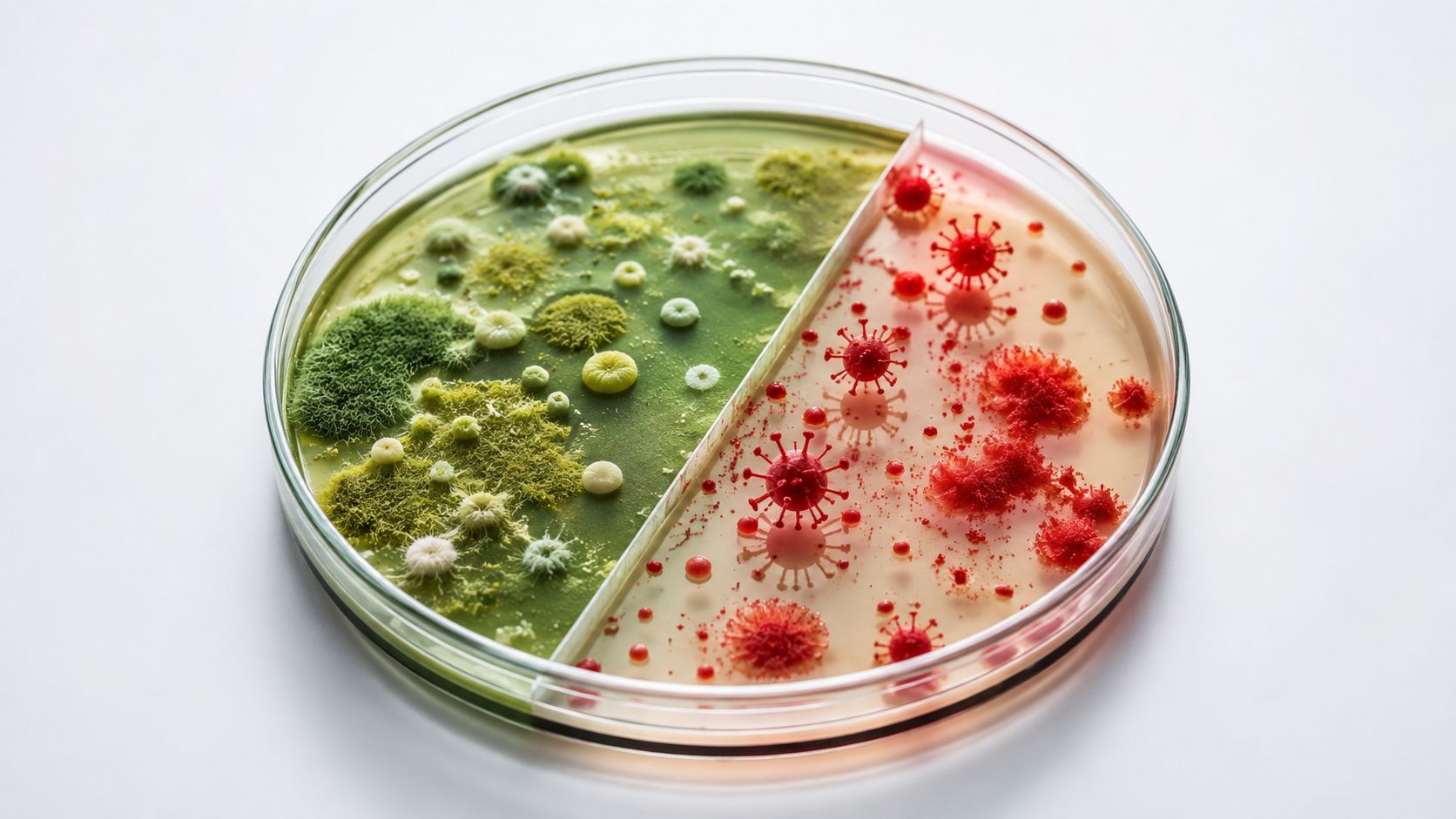
You finish a course of antibiotics, start feeling better, and then a few days later something new hits. Maybe it's relentless diarrhea, a white coating in the mouth, or a fever that seems different from the first illness. Or you recover from the flu, only to develop a deep cough and chest pain that feels worse, not better.
That pattern has a medical name: superinfection.
People often use the term loosely to mean “got sick again,” but the superinfection definition is more precise. It describes a second infection that arrives after the first one is already established. Sometimes the second invader is a different bacterium or fungus. In virology, it can mean a second viral strain entering cells that were already infected earlier. The timing matters. So does the biology.
The reason this matters isn't just word choice. A superinfection can change treatment, extend recovery, and raise the risk of resistant or opportunistic organisms taking over. For readers tracking viruses such as HIV-1, SARS-CoV-2, HBV, HCV, HSV-1, HSV-2, Influenza A viruses like H1N1 and H2N2, H5N1, norovirus, rhinoviruses, rotavirus, DHBV, BVDV, and other medically important pathogens, this concept helps explain why one infection sometimes becomes two linked problems.
Understanding the Double-Hit Infection
A lot of people first encounter the idea of superinfection without knowing the term. A child gets influenza, seems to turn a corner, and then develops what turns out to be bacterial pneumonia. An older adult is admitted for one infection, gets antibiotics, and later develops a fungal overgrowth. A person living with HIV acquires a second distinct HIV strain after the first infection is already established.
Those are all versions of a double-hit infection. The first hit changes the body's environment. The second hit takes advantage of that new environment.
When the first illness opens the door
The first infection doesn't always need to “weaken” the whole body in a dramatic way. Sometimes it damages a local barrier, like the lining of the nose, throat, lungs, or gut. Sometimes it shifts immune responses. Sometimes the treatment itself changes the normal balance of microbes that usually keep troublemakers in check.
Superinfection isn't just “still being sick.” It's a new infection layered onto an existing one.
That distinction helps explain why symptoms can suddenly change character. A sore throat that becomes severe sinus pain, a viral fever followed by productive cough, or antibiotic treatment followed by severe intestinal symptoms may signal that a different organism has entered the picture.
Why the term matters
Clinicians use this term because it affects decisions. They may need to ask whether the new illness is caused by the same pathogen, a different pathogen, or a treatment-related overgrowth. Public health teams care too, because superinfections can increase complications in hospitals and in people whose immune defenses are already under strain.
For patients, the practical takeaway is simple. If you feel ill again in a new way soon after or during treatment for another infection, don't assume it's normal recovery. A second process may be underway.
The Core Concept of Superinfection
The superinfection definition is about sequence. One infection happens first. Another follows after the first is already established. It isn't simultaneous, and it isn't always a return of the original illness.
A helpful way to picture this is to think of your microbiome as a healthy lawn. In a healthy lawn, thick grass leaves very little space for weeds. When someone takes a broad-spectrum antibiotic, it can act like a harsh weed killer sprayed over the whole yard. It may remove the unwanted growth, but it can also strip out the grass that normally keeps invasive weeds from spreading. Once that protective layer is disrupted, opportunistic organisms can move in fast.

The virology meaning
In virology, the term has a narrower technical meaning. A cell that was already infected by one virus later becomes infected again by a different strain of the same virus or by another virus. That delayed second event is what separates it from simultaneous coinfection, as outlined in Wikidoc's overview of superinfection.
Viruses don't just occupy space; they compete. The first virus may already be using the cell's machinery. A second virus entering later can alter that competition, interfere with replication, or in some situations be blocked entirely.
The clinical meaning
Outside pure virology, clinicians often use “superinfection” more broadly. In everyday medicine, it usually means a new infection that appears on top of an existing one, often after the original disease or its treatment has changed the body's defenses.
Common clinical patterns include:
- After a viral illness: influenza followed by bacterial pneumonia.
- After antibiotic treatment: normal gut or skin flora are disrupted, allowing organisms like Clostridioides difficile or Candida to take hold.
- During ongoing infection: a patient already dealing with one pathogen develops a second, separate infection before fully recovering.
The key idea to remember
A superinfection is not just “infection plus more symptoms.”
It's a new microbial event that happens later and often takes advantage of changes caused by the first illness or its treatment.
Practical rule: If the timeline has two stages, first one infection and then a distinct new one, you're in superinfection territory.
Superinfection vs Co-infection and Reinfection
These three terms get mixed up constantly because they all involve more than one infectious event. The easiest way to sort them out is by asking one question first: When did the second pathogen arrive?
Timing is the main dividing line
Co-infection means two infections occur at roughly the same time.
Superinfection means a later infection is added after the first one is already established.
Reinfection means you got infected again after recovering from an earlier infection, often with the same pathogen or a similar one.
That timing framework becomes especially important in HIV epidemiology. After seroconversion, a person who acquires a second genetically distinguishable HIV strain is considered to have a superinfection. If that second strain was acquired before seroconversion, it's classified as co-infection, as described in Wikipedia's summary of superinfection terminology.
Infection timing comparison
| Term | Timing of Infection | Pathogen(s) | Example |
|---|---|---|---|
| Co-infection | At the same time or close together at the start | Two pathogens, or two strains acquired together | A patient arrives already carrying two infectious agents |
| Superinfection | A second infection occurs after the first is established | Often a different pathogen, sometimes a different strain of the same virus | Flu followed later by bacterial pneumonia |
| Reinfection | A new episode after recovery from the earlier infection | Often the same pathogen again | Getting infected again after clearing the first episode |
Where readers usually get confused
People often call any “second infection” a superinfection. That's too broad. If both pathogens were present from the beginning, that isn't superinfection. If the original infection ended and months later the same pathogen returns, that may be reinfection instead.
Another source of confusion is the term secondary infection. In everyday conversation, people use it almost interchangeably with superinfection. In clinical writing, the meaning can vary by context. If you want a closer look at that overlap, VirusFAQ has a useful explainer on what secondary infection means.
A quick mental shortcut
Use this simple timeline:
- Same starting point: think co-infection
- Second pathogen during the first illness: think superinfection
- New episode after recovery: think reinfection
If timing is fuzzy, clinicians often look at symptom pattern, lab results, and whether the second organism is genetically distinct from the first.
That last point matters a lot in HIV, where genetic testing helps show whether the second virus is a new strain rather than just a mutation of the original one.
Common Examples in Viruses and Bacteria
Abstract definitions stick better when attached to familiar illnesses. Superinfection shows up in medicine in ways many people already recognize, even if they haven't heard the term.

Influenza followed by bacterial pneumonia
One classic example starts with the flu. A respiratory virus such as Influenza A (H1N1) can inflame and damage the airway lining. That makes it easier for bacteria that normally struggle to gain a foothold to move deeper into the lungs. The result can be a second illness with new fever, worsening cough, shortness of breath, and chest findings that don't fit simple recovery from the original virus.
This is one reason “I had the flu, then got pneumonia” isn't just a casual phrase. It often reflects a real biological sequence. The viral infection changed the terrain. The bacterial infection came next.
If you're trying to understand how viral damage in the lungs sets that up, VirusFAQ has a plain-language explainer on what causes viral pneumonia.
HIV superinfection
HIV gives a more technical but important example. A person with an established HIV-1 infection can later acquire a second, genetically distinct HIV strain. That is not just a laboratory curiosity. It can complicate immune control and treatment, especially if the incoming strain behaves differently from the first.
Research summarized by UCSF reports evidence of HIV superinfection in 2% to 5% of persons during the first year of infection, with approximately 95% of apparent cases occurring within the first three years according to UCSF's HIV superinfection page. That clustering suggests an early window in which the body has not yet built enough protection to reliably block a second distinct strain.
Bacterial and fungal examples after treatment
Not every superinfection starts with a virus. Some begin with treatment for a bacterial problem. A person receives antibiotics for one infection, then develops severe diarrhea from C. difficile or an overgrowth of Candida. In those cases, the first microbial battle and the treatment together create an opening for a different organism.
Common real-world examples include:
- Respiratory sequence: influenza followed by bacterial pneumonia
- Gut sequence: antibiotic treatment followed by C. difficile colitis
- Mucosal sequence: antibiotic exposure followed by oral or vaginal yeast overgrowth
- Chronic viral sequence: established HIV followed by infection with a second distinct HIV strain
A superinfection often feels like the illness has changed personality. The symptoms, the pattern, or the location suddenly shift.
That change in pattern is often the clue that a new pathogen has arrived rather than the original infection persisting.
The Hidden Cause Microbiome Disruption
Many people hear “superinfection” and immediately think “drug-resistant bug.” Resistance matters, but it doesn't tell the whole story. One of the most overlooked causes is microbiome disruption, also called dysbiosis.
Your body isn't sterile. The gut, skin, mouth, and airways are home to communities of organisms that help hold the line against invaders. They compete for nutrients, occupy physical space, and influence immune signaling. When that ecosystem is stable, opportunistic pathogens have a harder time breaking through.

Why antibiotics can trigger the next problem
Broad-spectrum antibiotics don't only target the organism causing the original infection. They can also wipe out protective microbes that were doing useful work in the background. That creates an ecological vacancy. Organisms such as Candida or C. difficile don't need a perfect opportunity. They just need less competition.
A useful analogy is a forest after a fire. The fire may remove one threat, but it also strips away the plants that were stabilizing the ground. Fast-moving opportunists then spread into the cleared space.
This is why the superinfection definition shouldn't be taught as only “a resistant organism survives treatment.” Sometimes the deeper story is that treatment changed the host environment enough to make a second infection possible.
What the risk data shows
The antibiotic class matters. In one study summarized in a clinical review, carbapenems were associated with a higher risk of superinfection than non-carbapenems, with a relative risk of 1.69 (95% CI 1.25 to 2.29, p<0.001) according to this discussion of what defines a superinfection.
That number doesn't mean carbapenems are “bad antibiotics.” They can be lifesaving. It does mean clinicians need to weigh benefits against collateral damage to the microbiome and the downstream risk of opportunistic infection.
Supporting recovery after disruption
Microbiome support isn't a replacement for medical care, and it isn't one-size-fits-all. But it's reasonable for patients to ask how to protect gut health when antibiotics are necessary. Diet, hydration, and in some cases probiotics may come up in that discussion. For a practical overview of the basics, Healtsy's probiotic guide is a helpful starting resource.
A few smart questions to ask your clinician include:
- Do I need this antibiotic: If the illness is viral, an antibiotic won't treat the cause.
- Can a narrower drug work: Narrower therapy may spare more of the normal microbiome.
- What warning signs matter: New diarrhea, white patches, or fresh fever during treatment deserve attention.
The hidden story in many superinfections is ecological. One organism didn't just resist treatment. The treatment changed the habitat.
Prevention and Management Strategies
Preventing superinfection starts before the second infection appears. The most effective approach is to reduce the chance that the first infection, or its treatment, creates an opening.

Prevention in daily life and healthcare
In hospital settings, timing helps define the problem. A new infection that appears 48 hours or more after admission or after 72 hours of antimicrobial therapy is classified as a superinfection, and in ICU settings Candida species accounted for 75.9% of these cases in the referenced review. That detail appears in the earlier linked clinical source and is one reason hospital prevention measures matter so much.
The strongest prevention habits are straightforward:
- Use antibiotics carefully. Take them when they're clearly indicated, not just because an illness feels severe.
- Prevent the first infection. Vaccination against infections such as influenza and HBV reduces the chance of the first event that can open the door to a second.
- Protect hands and surfaces. Good handwashing and appropriate surface disinfection reduce the chance that a vulnerable person encounters a new pathogen during recovery.
If you're interested in the hospital side of that problem, VirusFAQ has a practical guide on how to prevent nosocomial infections.
What management usually involves
Once a superinfection is suspected, treatment often changes in three directions:
- Identify the new organism. The team may need cultures, targeted testing, or in some viral cases genetic analysis.
- Adjust therapy. The original treatment may need to be narrowed, stopped, or supplemented depending on what is causing the second illness.
- Support recovery. Hydration, nutrition, symptom relief, and sometimes microbiome support become part of the plan.
Early reassessment matters. A patient who is getting worse on the “right” treatment may actually have the wrong diagnosis or an added infection.
One final point often gets missed. Prevention isn't only about what goes into the body. It's also about what's on hands, shared equipment, countertops, bathroom surfaces, and high-touch objects during illness. In homes, schools, and care settings, consistent cleaning and effective disinfecting wipes can help interrupt spread when someone is already vulnerable to a second infection.
Superinfection sounds like a specialist term, but the idea is practical. One infection changes the body. Another takes advantage. If you remember the sequence, the role of the microbiome, and the warning signs of a changing illness, the term becomes much easier to use correctly.
For more clear, evidence-based explainers on viruses, transmission, and prevention, visit VirusFAQ.com.
Leave a Reply