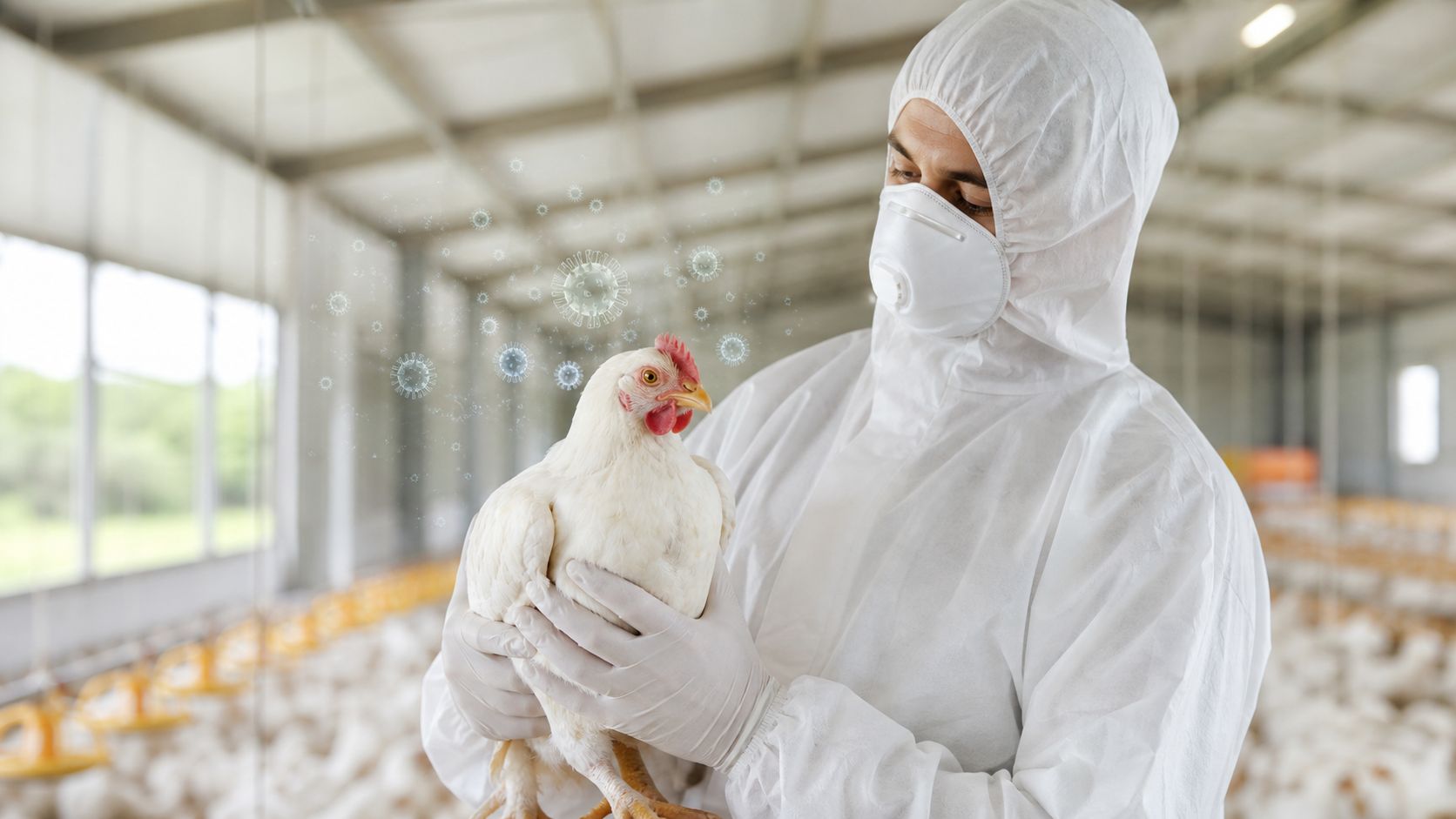
Over 900 confirmed human H5N1 cases have been reported globally since 1997, with more than 460 deaths. That combination, a comparatively rare human infection and a very high fatality rate once infection takes hold, is why avian flu human transmission gets so much attention from virologists, clinicians, and public health teams alike. The key question is not just whether the virus can infect people, but how it gets there, when it stops, and what conditions could let it spread more efficiently.
Avian influenza is an influenza A virus that normally circulates in birds, especially waterfowl and shore birds. Human infection is usually a spillover event from animals, not a human-to-human chain, which is why understanding zoonotic transmission matters so much. If you know where the virus comes from, how it crosses species, and why most exposures never become outbreaks, the rest of the risk picture makes a lot more sense.
For a basic definition of a host that carries and maintains a virus, see this explanation of a reservoir host. The bigger pattern is simple, even if the biology isn't. Exposure to infected animals drives most human risk, and the details differ sharply between poultry, wildlife, and the newer dairy cattle pathway.
Introduction to Avian Flu Human Transmission
A few human infections are enough to show why avian flu human transmission draws so much attention. The pattern is usually a spillover event from animals into people, not a virus that is already comfortable moving through human communities. Birds remain the main reservoir, but the virus can cross into humans after close contact with sick animals, contaminated materials, or environments where infected animals shed virus.
The harder part to grasp is that a spillover event can happen in more than one setting. Poultry exposure is the familiar route, but recent attention has also shifted to dairy cattle, where human infections suggest a distinct zoonotic pathway that many older summaries leave out. The reservoir host explanation helps frame this: a virus can persist in one animal population for a long time, then reach humans when people come into contact with that animal reservoir or its contaminated surroundings.
CDC surveillance describes human-to-human transmission of avian influenza A viruses as exceptionally rare, with no evidence of sustained spread to date. The same CDC report also notes a small number of probable limited, non-sustained events in people with close, unprotected contact with symptomatic cases, but those episodes did not continue into wider transmission.
The World Health Organization gives the same overall picture. Current zoonotic influenza viruses have not shown sustained human-to-human transmission, so contact with infected animals remains the main risk factor. That is why the question is not only whether the virus can infect a person, but whether the exposure involved an animal source, a contaminated setting, or an unusual cluster of close contact between people.
Practical rule: if the exposure did not involve an infected animal, a contaminated environment, or very close unprotected contact with a sick person in a rare cluster, the risk profile changes quickly.
This is the part that often causes confusion. The virus can be severe once infection occurs, yet it usually does not spread efficiently between people. That tension explains why public health teams watch animal cases so closely, and why understanding the different transmission pathways matters before any outbreak grows beyond a spillover event.
Virus Types and Zoonotic Transmission Mechanisms
Avian influenza is not one single virus. It is a group of influenza A subtypes that behave differently in birds and mammals. The human cases that draw the most attention include H5N1, H7N9, and H7N7, because these subtypes have crossed the species barrier under the right conditions. The CDC's surveillance of reported human infections tracks those spillover events and shows why these particular subtypes matter: the concern is not that every avian strain behaves the same way, but that some variants can enter human cells after an animal exposure.

A useful analogy is a lock and key. Bird viruses carry a key that fits bird receptors well, while human upper-airway receptors are a different lock, and that mismatch helps explain why spread between people is usually inefficient. The CDC technical report on H5N1 makes the same point about receptor binding and the limited efficiency of infection in the human upper airways. When an avian strain acquires changes that improve binding in mammals, spillover becomes more plausible, but plausible spillover is not the same as sustained transmission.
That distinction matters even more now that transmission pathways are being discussed beyond poultry alone. Dairy cattle exposure has become part of the risk conversation, because infected cows can create another route for zoonotic spillover when people work around milk, secretions, or contaminated barn environments. The exact route is still being defined, but the pattern is clear enough to show that avian flu human transmission is not limited to a single animal setting, it can emerge wherever a virus finds repeated contact with a suitable host.
For a broader framing of how these viruses change and adapt, see this overview of RNA viruses. Influenza A is an RNA virus, and RNA viruses change quickly enough that the public health picture can shift when a virus adapts to a new host. Even so, the same CDC technical report notes that the current barrier remains the same, limited efficiency in human upper airways, which is why human chains stop early instead of spreading widely.
Occupational and Environmental Risk Factors
A poultry worker walks into a shed, cleans trays, moves birds, and touches surfaces coated with dust and droppings. A veterinarian examines a sick cow, handles nasal or ocular secretions, and then disinfects the room before the next case. Those are very different jobs, but both can place a person near infectious droplets, aerosols, and contaminated surfaces.
The most important shift in recent years is that dairy cattle exposure now belongs in the risk conversation. The ECDC notes that the specific transmission risk from infected dairy cattle to humans remains poorly quantified, even though over 60 confirmed human cases have been linked to cow exposure in the U.S. since March 2024 (ECDC avian influenza FAQ). That doesn't mean the route is understood as well as poultry exposure, it means the exposure pattern is newer, messier, and still being defined.
For practical precautions in these settings, readers can review personal protective equipment guidance. The reason PPE matters is straightforward, close work creates close exposure. In barns, clinics, and markets, the virus doesn't need dramatic events, just repeated contact with the wrong fluid, the wrong surface, or the wrong animal at the wrong time.
Think in layers. Animal density, ventilation, handling frequency, and lack of eye or respiratory protection can stack risk far more than any single task on its own.
Backyard flock owners often assume they're safer because they're not in commercial agriculture. That's not a safe assumption. If sick birds are handled without protection, the exposure pattern can look a lot like occupational exposure, just on a smaller scale.
Evidence of Human to Human Transmission
The clearest lesson from person-to-person spread is not that it happens often. It is that, when it does happen, it usually appears in tightly linked settings where one infected person has close, prolonged contact with another. Human avian influenza A transmission is considered exceptionally rare, and there is no evidence of sustained transmission to date (CDC surveillance of reported human infections). The documented events have generally involved symptomatic index cases and people exposed without protection, often in households where repeated contact creates more chances for the virus to move from one body to another.
A useful way to read this evidence is to separate a one-time spillover from ongoing spread. A spillover is like a spark that reaches dry grass, while sustained transmission is the fire that keeps moving on its own. Avian flu has shown that sparks can happen, but it has not shown that it can keep burning through people without repeated animal exposure.
What the Sumatra cluster tells us
The household cluster in northern Sumatra remains one of the clearest examples. Statistical analysis confirmed human-to-human transmission of HPAI H5N1, with a secondary attack rate of 29% inside households and a p-value of 0.009 (PMC analysis of the Sumatra family cluster). That finding matters because it shows the virus can move between people when the conditions are right, especially in confined homes where care, shared air, and repeated physical contact all increase exposure.
The same analysis found no statistical evidence of transmission in Turkey, where p = 0.114 (PMC analysis of the Sumatra family cluster). For readers trying to judge the public health meaning of small clusters, that contrast is important. A limited cluster does not equal a pandemic. It shows that the virus can cross between people in some circumstances, while still failing to establish broader onward spread.
Surveillance findings reinforce that point. The CDC has reported that contact investigations and enhanced surveillance of recent laboratory-confirmed H5N1 cases in the United States found no human-to-human transmission and no mutations indicating resistance to neuraminidase inhibitors (CDC surveillance of reported human infections). That pattern, rare historical clusters on one side and no sustained chains in current surveillance on the other, is why avian flu is still treated mainly as a zoonotic threat rather than a virus that is spreading efficiently between people.
Clinical Symptoms and Health Implications
Human bird flu can begin like a routine respiratory illness and then worsen quickly. Symptoms vary by strain and by the person infected, but clinicians look for fever, cough, sore throat, eye symptoms, pneumonia, ARDS, and multi-organ failure in severe cases (Cornell Vet bird flu fact sheet). That spread of symptoms is part of what makes the disease hard to spot early, because the first signs can resemble seasonal flu before the lower-respiratory illness becomes obvious.
Why severity and spread are not the same thing
Severe illness does not automatically mean easy transmission. For human avian influenza, especially H5N1, historical reports have shown a high fatality pattern, with over 900 confirmed cases and more than 460 deaths reported globally from 1997 through early 2026, according to a clinical overview from Cleveland Clinic (Cleveland Clinic bird flu overview). Those figures are serious, but they describe what can happen after infection, not how readily the virus moves from person to person.
That distinction matters for interpreting public concern. A virus can spread poorly overall and still cause very severe disease in the people it does infect. For avian flu, that helps explain why early testing is recommended after a compatible exposure, even when there is no sign of broader community spread as noted earlier.
Clinical suspicion should rise when symptoms appear after close contact with infected birds or other animal sources, including poultry, dairy cattle, or live bird markets. A person in that situation should seek medical evaluation quickly, because bird flu can progress more aggressively than seasonal influenza and the early window for treatment decisions can be narrow.
Surveillance and Public Health Response
A single human case of avian flu can start with a missed signal in animals. That is why surveillance begins before any patient is identified, with monitoring in poultry, wild birds, and now emerging pathways such as dairy cattle that can bring the virus into new settings. Public health teams use those animal signals to guide testing, contact tracing, risk assessment, and communication so an isolated spillover does not turn into a wider event.

How the response works in practice
Surveillance works like an early-warning system in a factory. If one sensor is off, investigators check the equipment, the nearby workers, and the surrounding line before the problem spreads. In avian flu response, that means animal monitoring, laboratory confirmation, and follow-up of exposed people all have to move together.
That approach is especially important because current human cases can come from more than one animal source. Poultry remains the classic route, but dairy cattle have added a newer pathway that many guides still understate. Tracking those separate routes helps health officials see where exposure is happening, which settings need attention, and whether the pattern is staying limited to animal-to-human transmission.
Public health responders also look for signs that would suggest a change in transmission pattern. So far, the practical concern has been whether exposed people are developing illness after contact with infected animals or contaminated environments, rather than evidence of sustained spread between people. That is why exposed workers, household contacts, and others with close contact are monitored carefully after a suspected case is found.
The groups most often watched are the people who work around infected animals or their environments, including poultry workers, veterinarians, and live bird market workers. The same logic applies in dairy settings, where surveillance now has to follow a pathway that is still being defined. When monitoring is broad enough to include both poultry and cattle exposures, public health teams are better able to tell whether they are seeing scattered spillover events or something that needs a larger response.
WHO's framing also helps keep the response grounded. Infected animals remain the primary source of risk, and sustained human transmission has not been established for current zoonotic strains. Surveillance does not remove that risk, but it gives responders a clearer picture of where exposure is happening and how fast they need to act.
Prevention and Protection Strategies
The best prevention strategy is layered, not single-step. Engineering controls, safer work practices, and PPE all matter, but they work best when they're combined with surface disinfection and strict attention to contaminated clothing, tools, and hands. In high-risk animal settings, disinfecting wipes are useful because they let staff clean shared surfaces quickly between contacts, especially where wet cleaning is awkward or time-sensitive.

What to prioritize first
Respiratory and eye protection matter when people are working around sick animals or contaminated material. The evidence repeatedly points to close, unprotected exposure as the problem condition, which means goggles or face protection, gloves, and properly fitted respirators are not optional extras in a high-risk setting (CDC surveillance of reported human infections).
Administrative controls matter too. Limiting unnecessary contact, separating clean and dirty zones, and training workers to recognize symptoms in animals can lower exposure before anyone reaches for PPE. For veterinarians and farm workers, that means knowing when to stop a task, change gloves, clean surfaces, and move to a lower-risk workflow.
Practical rule: if a surface, tool, or stall has been in contact with a sick animal, treat it as contaminated until it's been cleaned and disinfected.
Backyard flock owners should borrow the same habits, even if the scale is smaller. Don't handle sick birds bare-handed, don't touch your face during cleanup, and don't assume a quick rinse is enough. The safest routine is the one that reduces direct contact, reduces airborne exposure, and breaks the chain of contamination every time.
FAQs and Myth Busting
Can casual contact in public spread bird flu? Based on current evidence, that's not the usual pattern. The documented risk centers on infected animals or contaminated environments, not brief everyday contact with strangers (WHO avian and other zoonotic influenza fact sheet)).
Can pets spread it? The risk is still being defined, but domestic animal exposure matters, especially in veterinary settings and when animals have had contact with raw animal products or infected environments. The key point is that animal-to-human exposure is the concern, not casual household contact by itself.
Do you need a respirator instead of a surgical mask? In high-risk animal work, eye and respiratory protection are part of the precaution set because the relevant exposures are close and often involve droplets or aerosols. For food safety, the practical message is simpler, avoid contact with sick animals and contaminated materials, and follow established handling and hygiene practices for poultry and dairy products.
If you work around poultry, cattle, or sick animals, review your protection plan now, not after a suspected exposure. Visit VirusFAQ.com for more practical virus prevention guides, then talk with your veterinarian, occupational health team, or local public health office about the specific controls that fit your setting.
Leave a Reply