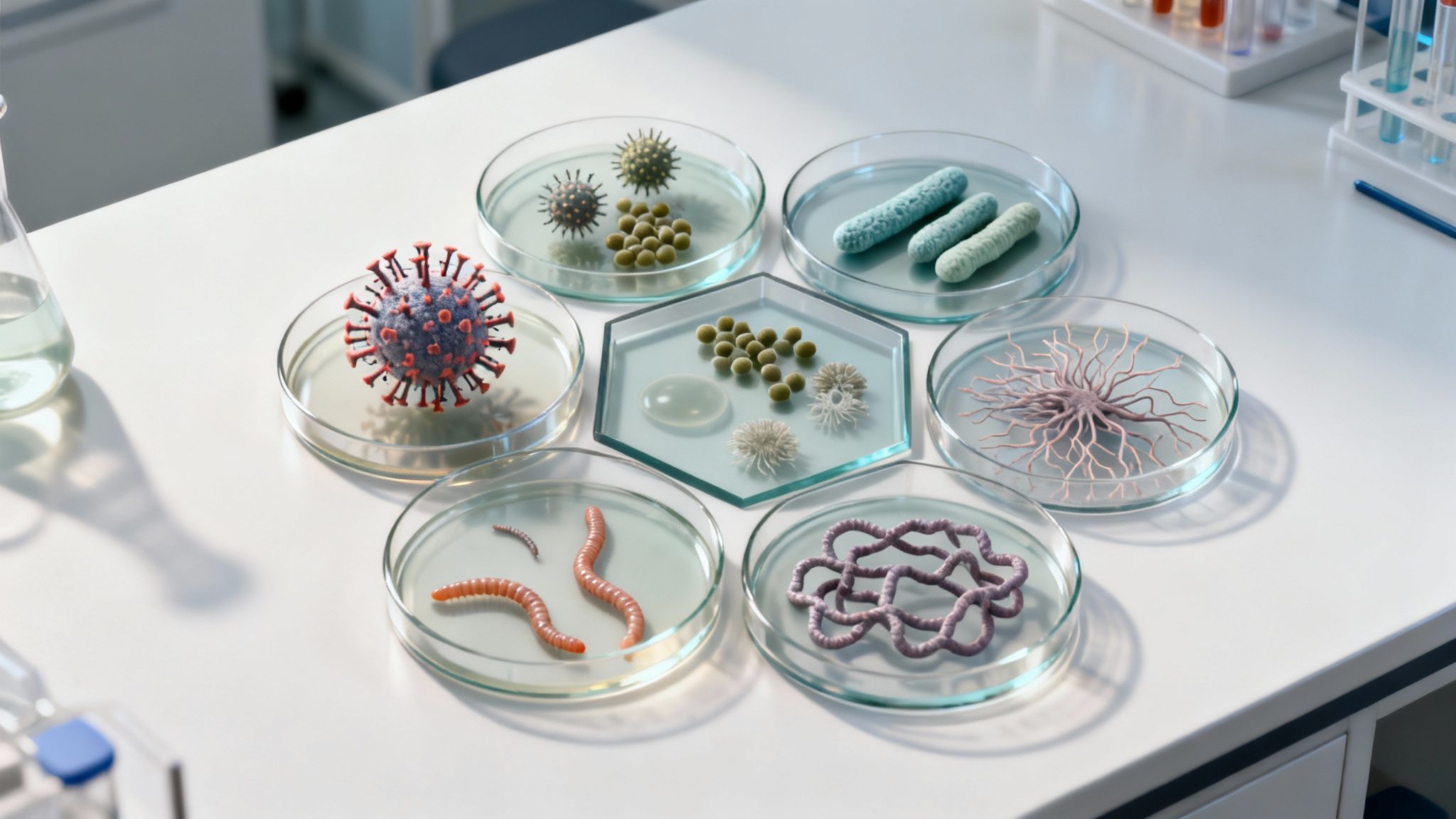
The world is teeming with microscopic organisms, most of which are harmless or even beneficial. However, a specific group known as pathogens has the ability to cause disease, ranging from a mild cold to life-threatening illnesses. Gaining a clear understanding of these agents is the crucial first step toward effective prevention, control, and maintaining a healthy environment. This guide provides a comprehensive yet accessible overview of the 6 types of pathogens, detailing their unique biological structures, common methods of transmission, and the specific diseases they are responsible for.
We will explore each category in detail, from well-known adversaries like viruses and bacteria to the less commonly understood fungi, protozoa, helminths, and the enigmatic prions. For each type, you will find practical information on how they spread, including through direct contact, airborne droplets, or contaminated surfaces, reinforcing the critical role of proper hygiene and disinfection in our daily routines.
Whether you are a student of biology, a healthcare professional seeking a concise reference, or simply a curious individual aiming to safeguard your health, this roundup offers essential insights. Delving into this topic will equip you with the foundational knowledge needed to better protect yourself, your family, and your community from the invisible forces that constantly impact global well-being.
1. Viruses: The Master Hijackers
Viruses are the smallest and most numerous of all types of pathogens, existing in a unique gray area between living organisms and non-living chemical structures. They are essentially genetic code, either DNA or RNA, wrapped in a protective protein coat called a capsid. As obligate intracellular parasites, viruses cannot reproduce on their own; they must invade a living host cell and hijack its internal machinery to create countless copies of themselves, often destroying the cell in the process.
This replication strategy, combined with their ability to mutate rapidly, makes viruses a persistent and ever-evolving threat to human health. Their very structure dictates how they spread and how we can effectively combat them. For a deeper dive into their fundamental differences from other microbes, you can explore the distinctions between viruses and bacteria. You can get more information on the difference between a virus and bacteria on VirusFAQ.com.

How Viruses Spread and What They Cause
Viral transmission is highly varied. Respiratory viruses like SARS-Related Coronavirus 2 (SARS-CoV-2) and Influenza A Virus (H1N1) spread through airborne droplets, while others like Norovirus, a common cause of severe gastroenteritis, are notorious for their rapid spread via contaminated food, water, and surfaces. Bloodborne viruses such as Human Immunodeficiency Virus Type 1 (HIV-1) and Hepatitis C Virus (HCV) are transmitted through contact with infected bodily fluids. Other significant pathogens include Herpes Simplex Virus 1 (HSV-1) and Hepatitis B Virus (HBV).
Key Insight: A critical, often underestimated, factor in viral spread is their ability to persist on inanimate surfaces (fomites). Non-enveloped viruses like Rhinovirus Type 14 (the common cold) and Feline Calicivirus are particularly hardy and can remain infectious for days, while enveloped viruses like Influenza A2/305/57 Virus (H2N2) can survive for many hours. This highlights the vital role of environmental hygiene.
Actionable Prevention and Control Measures
Given their parasitic nature and environmental resilience, a multi-layered defense is the most effective strategy against viral pathogens.
- Practice Meticulous Hygiene: Frequent and thorough handwashing with soap and water or an alcohol-based hand sanitizer is fundamental to removing viruses you may have picked up from surfaces.
- Surface Disinfection: Regularly clean and disinfect high-touch surfaces like doorknobs, light switches, phones, and countertops. Using EPA-approved disinfecting wipes effective against a broad spectrum of viruses, including both resilient non-enveloped and fragile enveloped types, is crucial for breaking the chain of transmission.
- Maintain Vaccinations: Vaccines are a cornerstone of public health, preparing your immune system to fight specific viruses like influenza, measles, and HPV.
- Use Respiratory Etiquette: During outbreaks, wear a mask in crowded indoor spaces and always cover coughs and sneezes to prevent the spread of respiratory droplets.
- Stay Informed: Follow credible public health sources for up-to-date information on circulating viral threats like Avian Influenza Virus (H5N1) and recommended precautions.
2. Bacteria: The Self-Sufficient Invaders
Bacteria are single-celled, prokaryotic microorganisms that represent one of the most widespread types of pathogens on Earth. Unlike viruses, bacteria are fully living organisms capable of reproducing on their own through a process called binary fission, allowing them to multiply rapidly in the right environment, which can include the human body, food sources, or environmental surfaces. While thousands of bacterial species are harmless or even beneficial to human health, pathogenic bacteria cause disease by invading tissues, producing harmful toxins, or triggering destructive inflammatory responses.
Understanding the independent nature of bacteria is crucial. They don't need a host cell to replicate, which means they can thrive on surfaces and in contaminated food or water for extended periods, creating significant transmission risks. Their cellular structure also makes them susceptible to antibiotics, a key treatment method that is ineffective against viruses.

How Bacteria Spread and What They Cause
Bacterial pathogens spread through diverse routes. Foodborne bacteria like Salmonella and certain strains of E. coli cause severe gastrointestinal illness when contaminated food is improperly handled or cooked. Respiratory bacteria, such as Mycobacterium tuberculosis (the cause of tuberculosis), spread through airborne particles. Direct contact is another major route; Staphylococcus aureus, famous for causing skin infections and its resistant MRSA form, can be transmitted from person to person or via contaminated objects. Other significant pathogens include Streptococcus pyogenes (strep throat) and Vibrio cholerae (cholera).
Key Insight: A major challenge in modern medicine is the rise of antibiotic resistance. Bacteria can evolve defenses against the drugs designed to kill them, often due to the misuse or overuse of antibiotics. This makes infections like those caused by MRSA or drug-resistant tuberculosis increasingly difficult to treat and underscores the importance of non-pharmaceutical prevention methods.
Actionable Prevention and Control Measures
Preventing bacterial infections relies on interrupting their pathways of transmission and growth, which often involves a focus on hygiene and sanitation.
- Practice Food Safety: Follow the core principles of clean, separate, cook, and chill. Wash hands and surfaces often, avoid cross-contamination between raw and cooked foods, cook to proper temperatures, and refrigerate foods promptly.
- Prioritize Surface Disinfection: Since bacteria can survive and multiply on surfaces, regular disinfection is vital. Using EPA-approved disinfecting wipes designed to kill pathogenic bacteria on high-touch areas like kitchen counters, bathroom fixtures, and electronic devices eliminates reservoirs of infection.
- Proper Wound Care: Clean any cuts or scrapes thoroughly with soap and water and apply an antiseptic to prevent bacteria like Staphylococcus from entering the body and causing an infection.
- Use Antibiotics Responsibly: Only take antibiotics when prescribed by a doctor for a bacterial infection. Always complete the full course as directed, even if you start to feel better, to ensure all pathogenic bacteria are eliminated.
- Ensure Water Sanitation: Support and utilize safe water sources for drinking and hygiene, a critical measure in preventing diseases like cholera and typhoid fever.
3. Fungi: The Opportunistic Invaders
Fungi are a diverse kingdom of eukaryotic organisms, including yeasts, molds, and mushrooms, that play a vital role in decomposition but can also act as significant types of pathogens. As eukaryotes, their cells are more complex than bacteria, containing a true nucleus and organelles, which makes treating their infections a unique challenge. While many fungal encounters are harmless, pathogenic fungi can cause diseases ranging from superficial skin irritations to life-threatening systemic infections, particularly seizing opportunities in individuals with weakened immune systems.
These organisms reproduce through spores, which can be inhaled or land on the skin, initiating an infection. Their resilience and distinct biology mean they are unaffected by traditional antibiotics, requiring specialized antifungal medications for treatment. For a broader understanding of what defines a pathogen and how fungi fit into this classification, you can get more information on what a pathogen is on VirusFAQ.com.
How Fungi Spread and What They Cause
Fungal pathogens spread in various ways, often through environmental exposure. Aspergillus fumigatus, a common mold, releases spores into the air that can be inhaled, causing aspergillosis in immunocompromised patients. Dermatophytes like Trichophyton species, responsible for athlete's foot and ringworm, thrive in warm, moist environments and spread through direct contact or contaminated surfaces in communal areas like locker rooms.
Other fungi are opportunistic, like Candida albicans, a yeast that normally lives on the skin and inside the body without causing harm. However, disruptions to the body’s natural balance can lead to overgrowth, causing oral thrush or vaginal yeast infections. The emerging multidrug-resistant yeast Candida auris is a serious global threat, spreading rapidly in healthcare settings and causing severe invasive infections.
Key Insight: Environmental control is paramount in preventing fungal infections. Many pathogenic fungi, such as molds, thrive in damp, poorly ventilated buildings. The presence of mold spores in the air can pose a significant occupational health risk, especially in construction, agriculture, and office environments with water damage. Understanding effective workplace mould management is crucial for mitigating this invisible threat.
Actionable Prevention and Control Measures
A proactive approach focused on hygiene and environmental management is the best defense against pathogenic fungi.
- Maintain Personal Dryness: Fungi thrive in moisture. Keep skin, especially in areas like feet and skin folds, clean and dry to prevent infections like athlete's foot.
- Practice Environmental Hygiene: Regularly clean and disinfect surfaces, especially in damp areas like bathrooms and kitchens, to control mold growth. Using disinfecting wipes that are effective against fungal pathogens can help eliminate spores from high-touch surfaces.
- Ensure Proper Ventilation: Improve airflow in indoor spaces to reduce humidity and discourage mold proliferation. Consider using HEPA filters to capture airborne fungal spores.
- Avoid Barefoot Contact: Wear appropriate footwear in communal showers, pools, and locker rooms to protect against dermatophyte infections.
- Be Cautious in High-Risk Environments: Immunocompromised individuals should take extra precautions, such as avoiding areas with high dust and soil exposure like construction or excavation sites, where fungi like Histoplasma can be present.
4. Protozoa: The Complex Microscopic Predators
Protozoa are single-celled eukaryotic organisms, making them significantly larger and more complex than bacteria or viruses. As one of the major types of pathogens, these microscopic predators are often parasitic, thriving by deriving nutrients from a living host. Many have intricate life cycles that can involve multiple hosts and environmental stages, making their transmission patterns particularly challenging to interrupt.
Their complexity allows them to develop sophisticated mechanisms for evading the host's immune system, leading to chronic and often severe diseases. These organisms are most prevalent in tropical and subtropical regions, where they cause widespread illness and mortality. Understanding how our immune system identifies and fights these invaders is key to appreciating their impact. You can learn more about the body's defense mechanisms by exploring the diagram of the immune system on VirusFAQ.com.
How Protozoa Spread and What They Cause
Protozoal transmission routes are diverse and often linked to environmental factors and vectors. Many are vector-borne, such as Plasmodium species, which cause malaria and are transmitted by Anopheles mosquitoes. Others, like Trypanosoma brucei, the cause of African sleeping sickness, are spread by the tsetse fly.
Contaminated water is another major pathway. Giardia lamblia, notorious for causing severe diarrheal disease (giardiasis) in travelers and campers, and Cryptosporidium are transmitted through the fecal-oral route when individuals consume contaminated water or food. Proper sanitation is critical, as these hardy protozoan cysts can survive in the environment for long periods.
Key Insight: Unlike many viruses that are destroyed by standard chlorination, the protective cysts of protozoa like Giardia and Cryptosporidium are highly resistant to chemical disinfectants. This resilience makes multi-barrier water treatment methods, including advanced filtration and UV light, essential for public water safety.
Actionable Prevention and Control Measures
Preventing protozoal infections requires a combination of personal protective measures, environmental management, and sanitation.
- Practice Vector Control: In regions where malaria or leishmaniasis are endemic, use insecticide-treated bed nets and apply DEET-based insect repellents to exposed skin.
- Ensure Water and Food Safety: When traveling or in areas with questionable water quality, drink only boiled, filtered, or bottled water. Avoid raw vegetables and peel all fruits.
- Maintain Environmental Hygiene: While many protozoa spread via vectors or water, cysts from pathogens like Giardia can contaminate surfaces. Thorough cleaning of bathroom fixtures, changing tables, and food preparation areas with appropriate disinfecting wipes can help prevent household transmission.
- Take Prophylactic Medication: If traveling to a malaria-endemic area, consult a healthcare provider about taking antimalarial prophylactic drugs before, during, and after your trip.
- Wear Protective Clothing: When in areas with biting flies or mosquitoes, wear long-sleeved shirts and long pants to minimize skin exposure.
5. Helminths (Parasitic Worms): The Macroscopic Invaders
Unlike the microscopic pathogens discussed so far, helminths are large, multicellular parasitic worms that can often be seen with the naked eye. As one of the major types of pathogens, they represent a significant global health burden, infecting over a billion people, primarily in regions with inadequate sanitation and limited access to clean water. These complex organisms, which include roundworms, tapeworms, and flukes, establish residence within a host's body, typically in the intestinal tract, blood, or tissues, where they feed and reproduce.
Their large size and intricate life cycles, which can involve multiple hosts, distinguish them from other infectious agents. While helminth infections are less likely to cause acute, fatal diseases compared to many viruses or bacteria, they are a primary cause of chronic morbidity, leading to conditions like malnutrition, anemia, and impaired physical and cognitive development, especially in children.
How Helminths Spread and What They Cause
Transmission routes for helminths are diverse and often linked to environmental contamination. Intestinal worms like Ascaris lumbricoides (roundworm) and Trichuris trichiura (whipworm) spread through the fecal-oral route when eggs present in human feces contaminate soil, food, or water. Hookworms (Necator americanus) penetrate the skin directly, typically when a person walks barefoot on contaminated soil.
Other helminths have more complex life cycles. Taenia solium (pork tapeworm) is transmitted by consuming undercooked pork containing larvae, which can lead to a dangerous brain infection called neurocysticercosis. Schistosoma species (blood flukes) are acquired through skin contact with fresh water contaminated with parasitic larvae released from specific freshwater snails.
Key Insight: The impact of helminths is profoundly environmental. The entire transmission cycle for many species, from egg excretion in feces to larval development in soil or water, depends on poor sanitation. Breaking this cycle is as much a matter of engineering and infrastructure as it is a medical challenge, underscoring the interconnectedness of public health and environmental hygiene.
Actionable Prevention and Control Measures
Preventing helminth infections requires a combination of public health initiatives, environmental management, and individual behavioral changes.
- Improve Sanitation and Hygiene: The most critical step is ensuring access to clean water and proper sanitation facilities like latrines to prevent fecal contamination of the environment. Handwashing with soap and water, especially before handling food and after using the toilet, is essential.
- Practice Food and Water Safety: Thoroughly cook all meat, particularly pork and beef, to kill any encysted larvae. Wash fruits and vegetables with safe water before consumption.
- Environmental Control: In areas where soil-transmitted helminths like hookworm are endemic, wearing shoes can prevent larvae from penetrating the skin.
- Participate in Deworming Programs: In high-risk regions, mass drug administration (deworming) programs, often targeting schoolchildren, are a highly effective public health tool for reducing the overall burden of infection in a community.
- Surface and Object Hygiene: While not a primary route, helminth eggs can contaminate surfaces and objects. Using disinfecting wipes to clean household surfaces, toys, and food preparation areas can help reduce the risk of ingestion, adding a crucial layer of protection against fecal-oral transmission.
6. Prions: The Misfolded Protein Threat
Prions represent one of the most mysterious and formidable types of pathogens, uniquely defined as infectious proteins. Unlike all other infectious agents, prions are devoid of genetic material like DNA or RNA. They are essentially misfolded versions of a normal protein, called prion protein (PrP), found on the surface of cells, especially in the brain. When these abnormal prions enter the body, they trigger a catastrophic chain reaction, inducing normally folded PrP proteins to misfold into the pathogenic form. This accumulation leads to the formation of amyloid plaques, causing severe brain damage and creating a characteristic sponge-like (spongiform) appearance in the tissue.
These diseases are universally fatal, rapidly progressive, and currently have no cure, making them a significant, albeit rare, public health concern. The abnormal stability of prions also makes them exceptionally resistant to conventional sterilization methods, posing unique challenges for infection control in medical settings.

How Prions Spread and What They Cause
Prion diseases, or transmissible spongiform encephalopathies (TSEs), can arise sporadically, be inherited genetically, or acquired through infection. In humans, the most common form is sporadic Creutzfeldt-Jakob Disease (CJD), which appears without any known risk factor. Familial forms, such as Fatal Familial Insomnia, are caused by inherited genetic mutations. Acquired forms can result from consuming contaminated meat, as seen with variant CJD (vCJD), which is linked to bovine spongiform encephalopathy ("mad cow disease").
In animals, Chronic Wasting Disease (CWD) is a growing concern, affecting deer, elk, and moose populations across North America. The transmission of prions between species, although rare, is a documented phenomenon that underscores the importance of robust surveillance and control measures.
Key Insight: Prions are extraordinarily resilient. They can withstand extreme heat, radiation, and harsh chemical treatments that would destroy viruses and bacteria. This incredible stability means that standard decontamination procedures are often ineffective, requiring specialized protocols to prevent iatrogenic (medically-acquired) transmission through contaminated surgical instruments.
Actionable Prevention and Control Measures
Due to their extreme resistance and the lack of treatment, prevention is the only effective strategy against prion diseases. This requires strict protocols in healthcare, agriculture, and wildlife management.
- Implement Strict Infection Control: Healthcare facilities must follow stringent guidelines for sterilizing surgical instruments used on patients with suspected CJD. This often involves single-use instruments or specialized high-temperature autoclaving and chemical soaks.
- Avoid High-Risk Tissues: Public health guidance strongly advises against consuming brain or spinal cord tissue from livestock, particularly in regions where BSE has been reported. Hunters in CWD-endemic areas should have their game tested before consumption.
- Utilize Powerful Surface Decontamination: For surfaces potentially contaminated with prions, standard disinfectants are insufficient. Decontamination requires prolonged exposure to specific chemical solutions like sodium hydroxide or sodium hypochlorite, followed by autoclaving. Using specialized disinfecting wipes designed for high-risk biological materials can be part of a broader safety protocol in research or clinical settings.
- Support Surveillance Programs: Active monitoring of animal populations for diseases like CWD and BSE is crucial for preventing transmission to humans. Reporting any suspected cases to public health authorities helps track and control the spread.
- Consider Genetic Counseling: Individuals with a family history of prion diseases like Fatal Familial Insomnia may consider genetic counseling to understand their risk and make informed health decisions.
Comparison of 6 Pathogen Types
| Pathogen | Implementation complexity 🔄 | Resource requirements ⚡ | Expected outcomes ⭐ / 📊 | Ideal focus areas 💡 | Key advantages ⭐ |
|---|---|---|---|---|---|
| Viruses | High — obligate intracellular replication; rapid mutation complicates control. | Moderate–High — molecular diagnostics, vaccines, antivirals, cold chain for vaccines. | Variable — ranges from self-limited to pandemic-level morbidity/mortality; high transmission potential. | Vaccination, surveillance, respiratory hygiene, outbreak response. | Vaccines and targeted antivirals exist for many; strong research base. |
| Bacteria | Moderate — replicate independently; many diagnostic and treatment pathways available; resistance adds complexity. | Low–Moderate — antibiotic therapy, culture/PCR labs, sanitation and infection control. | Often treatable; risk of resistant strains and healthcare-associated outbreaks. | Antibiotic stewardship, hygiene, food/water safety, wound care. | Effective antibiotics, reliable culture-based diagnostics, stable vaccine options for some. |
| Fungi | Moderate–High — eukaryotic biology limits drug targets; environmental spores complicate control. | Moderate — specialized antifungals, prolonged therapy, lab culture/antigen tests. | Often localized in healthy hosts; systemic infections severe in immunocompromised with higher mortality. | Antifungal therapy, hospital infection control, environmental moisture control. | Many superficial infections respond to topical agents; diagnostics available. |
| Protozoa | High — complex life cycles and vectors; stage-specific interventions required. | Moderate–High — antiprotozoals, vector control, diagnostics; vaccine development ongoing for some. | Can cause high endemic morbidity/mortality (e.g., malaria); potential for chronic disease. | Vector control, bed nets, water treatment, traveler prophylaxis. | Effective drugs and public-health interventions (nets, vector control) reduce burden. |
| Helminths (worms) | Moderate — complex life cycles but amenable to population-level control; reinfection risk persists. | Low–Moderate — inexpensive anthelmintics, sanitation, mass drug administration logistics. | Chronic morbidity (malnutrition, anemia) common; large-scale programs reduce burden effectively. | Mass deworming, sanitation improvements, school-based programs, food safety. | Affordable, effective treatments and proven large-scale control strategies. |
| Prions | Very High — protein-only agents, no nucleic acid; resistant to standard sterilization; diagnosis/challenge severe. | High — specialized decontamination, single-use instruments, referral diagnostics (RT-QuIC). | Invariably fatal once symptomatic; rare but rapid neurodegeneration and high individual impact. | Strict infection control, avoid high‑risk tissues, surveillance and specialist referral. | Extremely rare incidence; improving diagnostic assays and established control protocols for exposures. |
From Knowledge to Action: Your Role in Pathogen Prevention
Navigating the microscopic world of pathogens can feel overwhelming. We've journeyed through the distinct characteristics of the 6 types of pathogens, from the simple yet formidable structure of viruses and bacteria to the complex life cycles of helminths and the baffling nature of prions. This exploration reveals a fundamental truth: while these agents are incredibly diverse in their biology and the diseases they cause, our power to combat them stems from a unified set of proactive principles. Understanding their differences isn't just an academic pursuit; it's the bedrock of effective personal and public health strategies.
The primary takeaway is that interrupting the chain of transmission is our most potent weapon. Each pathogen, whether it’s a fungus lurking in damp environments or a virus like Influenza A Virus or SARS-CoV-2 aerosolized in a cough, has a pathway it must travel from host to host. Our daily choices directly impact the integrity of these pathways.
Key Takeaways: From Theory to Practice
Recalling our deep dive into these microscopic threats, several core strategies emerge as universally effective:
- Hygiene as a First Defense: The simple act of thorough handwashing with soap and water remains the single most effective way to remove or inactivate a vast array of pathogens, including bacteria like E. coli and viruses like Norovirus (Norwalk Virus).
- Vaccination as a Shield: Modern medicine has provided us with powerful immunological tools. Staying current on vaccinations for diseases like influenza, Hepatitis B Virus (HBV), and tetanus primes your immune system to recognize and neutralize specific viral and bacterial threats before they can establish an infection.
- Conscious Consumption: Many pathogens, from protozoa like Giardia lamblia to helminths, enter our bodies through contaminated food or water. Practicing safe food handling, such as cooking meats to the proper temperature and washing produce, creates a critical barrier against ingestion-based transmission.
Putting Your Knowledge into Action
Transforming this understanding into a robust defense plan involves integrating simple, consistent habits into your everyday life. The goal is to build layers of protection that collectively reduce your risk of exposure and transmission.
For pathogens that spread via contaminated surfaces, a category that includes many dangerous viruses and bacteria, proactive disinfection is crucial. High-touch areas in our homes, schools, and workplaces, such as doorknobs, light switches, and countertops, can become reservoirs for infectious agents. Regularly and thoroughly cleaning these surfaces with disinfecting wipes specifically formulated to kill germs is an essential, actionable step. This simple practice significantly lowers the environmental load of pathogens, reducing the likelihood of them being transferred to your hands and then to your body.
Crucial Insight: While scientists and healthcare professionals work in highly controlled environments, often utilizing specialized equipment like biological safety cabinets to handle hazardous materials safely, the principles of containment and decontamination scale down to our daily lives. Your kitchen counter is your personal lab bench; keep it clean.
Ultimately, mastering the concepts surrounding the 6 types of pathogens empowers you to make informed decisions that protect not only your own health but also the well-being of your community. By embracing these preventive measures, you shift from being a potential host to an active participant in the fight against infectious disease. This collective vigilance creates a healthier, more resilient society for everyone.
Leave a Reply