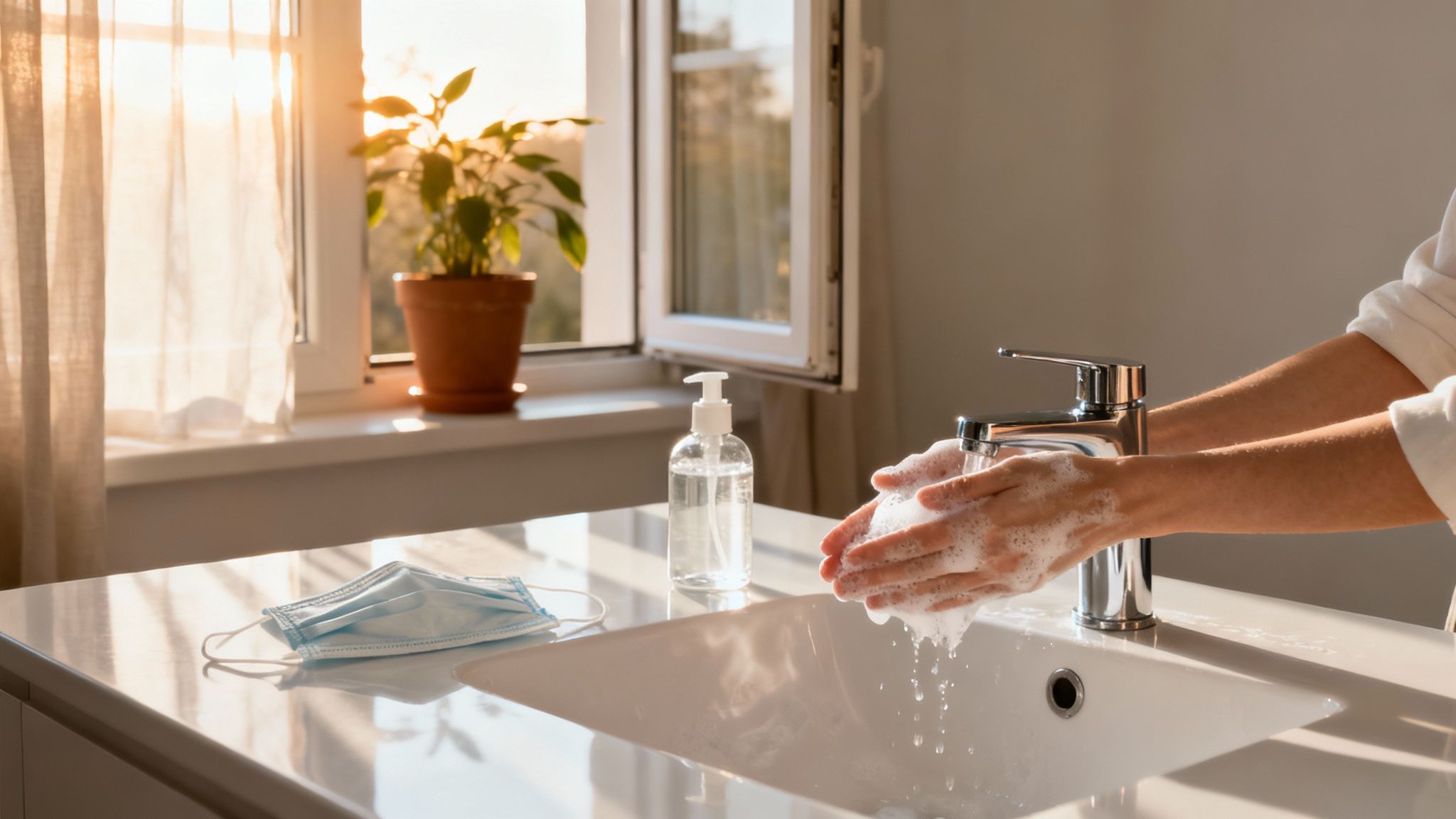
When it comes to staying healthy, it really boils down to a few core ideas: keeping yourself clean, keeping your space clean, and being proactive about your health. Think of it less like a magic bullet and more like building a solid defense system. These consistent, smart habits create multiple barriers that make it much harder for common viruses like Rhinovirus Type 14 or Influenza A Virus (H1N1) to get a foothold.
The Foundations of Staying Healthy
Knowing how to prevent getting sick isn’t about finding one perfect solution. It’s about building a resilient foundation for your well-being, and your daily actions are the most powerful tools you have.
This guide will walk you through the practical, real-world strategies that form your personal defense system. We'll cover the core pillars that protect you, from mastering everyday hygiene to making informed health decisions that strengthen your body from the inside out.
Building Your Layers of Protection
Think of staying healthy as a multi-layered strategy. Each habit you adopt adds another layer of defense against pathogens, whether it's Norovirus (Norwalk Virus) or the more severe SARS-Related Coronavirus 2 (SARS-CoV-2). No single layer is foolproof, but when you stack them together, they create a formidable barrier.
Here are the key protective layers to focus on:
- Personal Hygiene: This is your first line of defense. It’s all about consistent handwashing and breaking that habit of touching your face, stopping germs right at the source.
- Environmental Cleanliness: Regularly disinfecting high-touch surfaces in your home and workplace—think doorknobs, keyboards, and remote controls—eliminates viruses like Hepatitis B Virus (HBV) or Feline Calicivirus before they have a chance to spread.
- Proactive Health Choices: This is where the inside-out work happens. A balanced diet, getting enough sleep, and regular exercise all contribute to a stronger, more responsive immune system.
The impact of these basic practices is massive. Global health data shows that better access to water, hygiene, and sanitation has been a primary driver behind 1.4 billion more people living healthier lives. It’s a powerful reminder of how fundamental cleanliness stops the spread of communicable diseases. Learn more about these global health statistics on WHO.int.
The Role of Diet and Lifestyle
What you eat is a huge piece of the puzzle. Beyond just avoiding junk, adopting smart dietary patterns gives your body the fuel it needs to function at its best. If you want to learn more about how nutrition directly supports your body’s ability to resist illness, check out these clean eating principles. A well-nourished body is simply better equipped to fight off infections from the get-go.
Ultimately, all these pieces work together. Washing your hands is crucial, but it’s even more effective when you’re also keeping your environment clean and supporting your immune system. By weaving these practices into your daily routine, you build a robust defense that helps keep you healthy all year long.
To make this even easier, here's a quick checklist to help you stay on track with the most important daily actions.
Your Daily Health Protection Checklist
This simple table breaks down the core daily actions you can take to minimize your risk of getting sick. Think of it as your quick-reference guide for personal and environmental hygiene.
| Action Area | Key Practice | Why It Matters |
|---|---|---|
| Personal Hygiene | Wash hands with soap and water for 20 seconds, especially after being in public. | Removes pathogens from your hands, which are the primary vehicles for transmission. |
| Avoid touching your eyes, nose, and mouth. | Prevents germs from your hands from entering your body through mucous membranes. | |
| Environmental Hygiene | Wipe down high-touch surfaces (doorknobs, phones, keyboards) daily. | Eliminates viruses like Human Rotavirus and bacteria that can survive on surfaces. |
| Lifestyle Choices | Aim for 7-9 hours of quality sleep per night. | Sleep is critical for a strong immune response; without it, your body can't fight effectively. |
| Eat a balanced diet rich in fruits, vegetables, and lean protein. | Provides the essential vitamins and minerals your immune system needs to function. |
By making these simple actions a non-negotiable part of your day, you're not just reacting to illness—you're actively building a stronger, more resilient foundation for your health.
Mastering Personal Hygiene to Ward Off Germs
Think about it: your hands are the number one way germs get around. This makes good personal hygiene your first and most powerful line of defense against getting sick. A quick rinse under the tap just won't cut it against stubborn pathogens. Real protection comes from building mindful habits that feel like second nature, starting with how you wash your hands.
Effective handwashing isn't just a routine; it's a science. The simple mix of soap, friction, and time works wonders to break down and wash away viruses and bacteria. Many common enveloped viruses, like Human Coronavirus and Influenza A2/305/57 Virus (H2N2), are wrapped in a fatty outer layer. Soap is brilliant at dissolving this layer, basically deactivating the virus.
This one simple act is one of the most reliable ways to avoid getting sick. But for it to really work, you have to do it right and do it often.
The Art and Science of Handwashing
Proper handwashing is a deliberate process. You need warm water and soap to get a good lather, but the real magic is in the friction and time. You should be scrubbing your hands for at least 20 seconds—that’s about how long it takes to sing "Happy Birthday" through twice.
That timeframe is critical. It gives the soap enough time to break down germs and ensures you get into all the nooks and crannies where they love to hide.
Make sure you don't miss these common spots:
- Between your fingers
- Under your nails
- The backs of your hands
- Your wrists
Focusing on these areas seriously boosts the effectiveness of every single wash. For a full breakdown of the best way to do it, you can learn more about the proper hand-washing technique in our detailed guide.
When Hand Sanitizer Is Your Best Ally
Soap and water are the gold standard, but let's be realistic—they aren't always available. When you're on the go after touching a gas pump, grabbing a shopping cart, or holding a handrail on the bus, an alcohol-based hand sanitizer is your next best option.
For a sanitizer to do its job against most germs, it needs to have at least 60% alcohol. Squeeze a generous amount into your palm and rub your hands together, making sure to cover every surface until they feel completely dry. Don't wipe it off; letting it air dry gives the alcohol enough time to kill the pathogens.
Remember, hand sanitizer is a great substitute in a pinch, but it doesn't replace a good handwashing. It can't cut through visible dirt or grime and might not work as well against small, non-enveloped viruses like Norovirus. Always wash your hands with soap and water as soon as you get the chance.
This visual shows how simple, layered actions—like good hygiene and keeping your space clean—create a clear path to better health.

As the chart highlights, personal hygiene is the foundational first step. It supports a clean environment, which in turn supports your overall health.
Breaking the Face-Touching Habit
One of the sneakiest ways we get sick is by touching our faces—something most of us do without even thinking about it. Viruses on your skin can't harm you until they find a way in. Your eyes, nose, and mouth are direct portals for pathogens like Rhinovirus Type 39 and Herpes Simplex Virus 1 (HSV-1) to enter your body.
Even if you're a diligent hand-washer, you can easily pick up germs between washes. By making a conscious effort to keep your hands away from your face, you shut down one of the main highways for infection. It’s a tough habit to break, but it’s one of the most impactful things you can do to stay healthy.
Another key part of personal hygiene is what experts call "respiratory etiquette." When you feel a cough or sneeze coming on, cover your mouth and nose with your elbow or a tissue. This simple move stops respiratory droplets from flying into the air, protecting everyone around you from germs you might be carrying—even before you realize you're sick.
Creating a Healthier Home and Workspace
Your personal habits are a huge part of staying healthy, but the places where you spend most of your time—your home and office—are just as important. Building an environment that actively fights germs is one of the most powerful things you can do to prevent getting sick. This isn't just about tidying up; it's about being smart and deliberate with how you clean and disinfect the spots where germs love to hide.

First things first, it's crucial to understand that cleaning and disinfecting are two different jobs. Cleaning gets rid of visible stuff like dirt, dust, and grime. Disinfecting, on the other hand, uses chemicals to kill pathogens like viruses and bacteria—the threats you can't even see.
For a space to be truly healthy, you need to do both. Always start by cleaning a surface to remove the physical debris. This simple step allows your disinfectant to get to work without any interference, ensuring you're actually killing germs instead of just pushing them around.
Identifying High-Touch Hotspots
Germs don't move on their own; they catch a ride on the things we touch all the time. Just think about your daily routine and all the surfaces you and others touch without a second thought. These are the hotspots that need your attention.
In your home, the usual suspects are:
- Doorknobs and cabinet handles: Everyone in the house touches these multiple times a day.
- Light switches: Another universal touchpoint that’s easy to overlook.
- Remote controls and game controllers: These shared items can harbor a surprising amount of germs.
- Faucets and toilet flush handles: Key areas in the bathroom where pathogens can easily linger.
The workplace has its own list of hotspots, often with even heavier traffic. Keep an eye on shared equipment like the office coffee pot, microwave buttons, and refrigerator doors. Your own desk is another critical zone—your keyboard, mouse, and especially your smartphone are crawling with germs. In fact, studies have shown the average phone is dirtier than a toilet seat.
Here's a simple habit that makes a huge difference: make sanitizing these surfaces part of your end-of-day routine. A quick wipe-down with a quality disinfecting wipe can significantly lower the viral load from threats like Hepatitis C Virus (HCV) or Duck Hepatitis B Virus (DHBV), reducing everyone's risk of getting sick.
Choosing the Right Tools for the Job
Once you've zeroed in on the hotspots, you need the right tools. When you're shopping for a disinfectant, look for products proven to be effective against a broad spectrum of viruses, including both enveloped viruses like Human Immunodeficiency Virus Type 1 (HIV-1) and more resilient non-enveloped viruses. The product label is your best friend here—it tells you which pathogens it kills and, most importantly, the required "dwell time." That’s the amount of time the surface needs to stay wet for the disinfectant to actually work.
For daily upkeep, you can't beat convenience. Disinfecting wipes are perfect for this. They combine the cleaner and disinfectant into one easy step, making it simple to sanitize your desk, phone, or doorknobs on the fly. Keeping a container at your desk and another in the kitchen ensures you can stay on top of things without any fuss.
For a deeper dive, check out our detailed guide on how to sanitize your home.
To help you build a solid routine, here's a practical schedule for disinfecting the most common high-touch surfaces.
High-Touch Surface Disinfection Schedule
| Surface | Frequency | Recommended Product |
|---|---|---|
| Smartphones & TV Remotes | Daily | Disinfecting Wipes or 70% Isopropyl Alcohol Solution |
| Doorknobs & Light Switches | Daily | Disinfecting Spray or Wipes |
| Kitchen & Bathroom Faucets | Daily | Disinfecting Cleaner or Wipes |
| Keyboards & Computer Mice | Daily or every other day | Electronics-safe Disinfecting Wipes |
| Kitchen Countertops | After each use | Food-safe Disinfecting Spray or Wipes |
| Shared Office Equipment | Before and after each use | Disinfecting Wipes |
This table provides a great starting point. The key is consistency—making disinfection a regular habit is what truly keeps germs at bay.
The Power of Fresh Air
Beyond wiping down surfaces, never underestimate the simple power of good old-fashioned fresh air. When you're cooped up inside, airborne pathogens can build up in stagnant air, which increases the risk of transmission for everyone in the room.
Just opening the windows for 15-20 minutes a day can make a world of difference. This simple act of "airing out" a space does two things: it dilutes the concentration of any airborne viruses, and it flushes out indoor pollutants, bringing in fresh oxygen. If you're in an office where you can't open a window, a good air purifier with a HEPA filter can do a similar job by capturing those tiny viral particles right out of the air.
Vaccinations: Your Immune System's Secret Weapon
While keeping your hands and surroundings clean is your first line of defense, vaccinations work from the inside out. Think of them as a boot camp for your immune system. They teach your body to recognize and fight off specific, dangerous invaders without you ever having to get sick from the actual disease.
This proactive training is one of the most powerful tools in modern medicine. A vaccine introduces a harmless piece of a virus or a weakened version of it, letting your immune system build a "memory." If you're ever exposed to the real pathogen later, your body knows exactly what to do and launches a fast, overwhelming defense.
How Vaccines Train Your Body for Battle
Vaccines kick your adaptive immune system—the part of your body that creates targeted antibodies—into gear. When you get a vaccine for a virus like Influenza A Virus (H1N1) or SARS-CoV-2, your body learns to spot the virus's unique calling cards. It then produces specialized proteins called antibodies, custom-built to shut down that specific threat.
This process creates what’s called immunological memory. Should you run into the real virus weeks, months, or even years later, your body doesn't have to start from scratch. It ramps up antibody production almost instantly, stopping the infection before it can make you seriously ill. It's an incredibly efficient way to prepare for a fight you hope never comes.
Vaccinations aren't just about protecting yourself; they're about protecting the community. When enough people are vaccinated, it creates "herd immunity," which shields the most vulnerable among us—infants, the elderly, and people with compromised immune systems who can't get vaccinated themselves.
Staying on Top of Your Shots
It's a common misconception that vaccines are just for kids. In reality, staying up-to-date on your immunizations is a lifelong job. Viruses evolve, and our natural immunity can fade over time, which is why boosters and annual shots are so important.
A few key examples:
- The Annual Flu Shot: Influenza viruses are constantly changing, which is why a new vaccine is developed each year to match the strains experts believe will be most common.
- COVID-19 Boosters: As new variants of SARS-CoV-2 pop up, updated boosters are recommended to keep your defenses tuned to the latest versions.
- Tetanus Boosters: Most adults should get a tetanus booster every 10 years to stay protected against a nasty bacterial infection.
It can feel like a lot to track, but a quick chat with your doctor can clear everything up. They can help you figure out exactly what you need based on your age, health, and lifestyle. To get a head start, check out our guide on the recommended immunization schedule for adults.
Why Vaccination Programs Matter Globally
High vaccination rates are what keep dangerous, once-common diseases at bay. Recent global events have shown just how fragile this progress can be. The World Health Organization has warned that childhood vaccination coverage hasn't fully bounced back to pre-pandemic levels, leaving dangerous gaps in protection worldwide. It’s a stark reminder that public health infrastructure is essential for ensuring everyone has access to these life-saving tools. Learn more about these global health statistics on WHO.int.
Building a Health Plan That's Right for You
General recommendations are a great starting point, but your personal health strategy should be tailored to you. Certain situations call for a more customized approach to vaccinations and other proactive treatments.
It's a good idea to talk with a healthcare provider if you:
- Have a chronic condition like asthma, diabetes, or heart disease.
- Have a compromised immune system from an illness or medication.
- Are planning to travel internationally, as some destinations require specific vaccines.
- Are pregnant or planning to become pregnant.
Your doctor can offer personalized advice, like recommending a higher-dose flu vaccine for older adults or prescribing preventative medications before you travel. By working with a professional, you can build a robust health plan that puts the full power of modern medicine to work for you.
Building a Resilient Immune System from the Inside Out

While washing your hands and disinfecting surfaces are your first lines of defense, your body’s internal resilience is just as critical. A strong immune system isn’t about a single magic pill or a miracle food; it’s the result of consistent, healthy choices you make every single day.
Think of it like training an internal army. The food you eat, the sleep you get, and how you handle stress are the resources that equip your troops to fight off invaders like Avian Influenza Virus (H5N1) or Herpes Simplex Virus 2 (HSV-2). By focusing on these core areas, you can build a much more robust defense system.
Fueling Your Body's Defenses Through Nutrition
The nutrients from your food are the literal building blocks for your immune cells. A diet that’s low in key vitamins and minerals can leave your defenses sluggish and unprepared to take on common threats like Rhinovirus or Influenza.
Certain nutrients are absolute powerhouses for immune health. Making a conscious effort to include foods rich in these vitamins and minerals is one of the most practical things you can do to stay healthy.
Here are a few key players to add to your grocery list:
- Vitamin C: A well-known antioxidant that helps immune cells do their job. You'll find it in citrus fruits, bell peppers, strawberries, and broccoli.
- Vitamin D: Absolutely crucial for activating your immune defenses. Your body can make it from sunlight, but you can also get it from fatty fish like salmon and fortified milk.
- Zinc: Essential for developing and activating T-cells, a type of white blood cell. Good sources include lean meats, chickpeas, lentils, and pumpkin seeds.
If you want to take a deeper dive into how specific nutrients fortify your body's defenses, it's worth exploring guides on choosing the right vitamins for immune support. Even small, consistent dietary upgrades can make a huge difference over time.
The Non-Negotiable Role of Quality Sleep
You simply cannot out-supplement a lack of sleep. It’s during those deep-rest hours that your body ramps up the production of cytokines—proteins that target infection and inflammation. When you're sleep-deprived, you produce fewer of these critical defenders, leaving you far more vulnerable to any virus you encounter.
Aiming for 7-9 hours of quality sleep per night is one of the most effective immune-boosting habits you can adopt. If you struggle with this, focus on your "sleep hygiene": create a dark, cool room, put screens away an hour before bed, and try to stick to a consistent sleep-wake schedule.
Think of sleep as your immune system's nightly reset and recharge. Without it, your body's ability to mount an effective defense is significantly impaired, making you much more likely to get sick after exposure to a virus.
Managing Stress and Movement
Chronic stress does more than just drag you down mentally; it actively suppresses your immune response. High levels of the stress hormone cortisol can dial back your body's production of protective white blood cells. Finding healthy outlets—whether it’s meditation, deep breathing, or a walk in nature—is a direct investment in your physical well-being.
Likewise, regular, moderate exercise is fantastic for your immune system. It boosts circulation, which helps immune cells travel through your body more efficiently to find and fight infections. Try to get about 150 minutes of moderate activity, like brisk walking or cycling, each week. Just don't overdo it—extreme over-exertion can actually have the opposite effect.
Habits That Weaken Your Defenses
Just as some habits build you up, others can tear your defenses down. Smoking, for instance, is devastating to the respiratory system’s natural defense mechanisms, making you an easier target for infections like influenza and other respiratory viruses. It’s no surprise the WHO has a global target to reduce tobacco use by 30% to cut down on noncommunicable diseases.
Excessive alcohol can also impair the function of your immune cells and disrupt your gut health, which plays a massive role in your overall immunity. Being mindful of these habits helps remove the obstacles that might be holding your body back from protecting itself.
Common Questions About Staying Healthy
Even with the best game plan, life throws curveballs. Knowing how to handle real-world scenarios is what keeps you and your family safe when germs are making the rounds. This is where we tackle the common "what if" questions that pop up when you start putting these healthy habits into action.
We'll clear up the confusion around things like cleaning products and how to best protect vulnerable loved ones. Let's get into the practical details that really make a difference.
Soap Versus Hand Sanitizer: What's the Difference?
This is a big one. Is hand sanitizer just as good as a thorough hand-washing? While sanitizer is a fantastic tool to have in your pocket, it’s not a perfect replacement for soap and water.
Here’s the deal: washing with soap and water physically lifts dirt, grime, and germs off your skin and sends them down the drain. It’s a clean sweep.
An alcohol-based hand sanitizer (make sure it's at least 60% alcohol) kills germs on contact but doesn't actually remove them from your hands. It also has a tough time cutting through visible dirt or grease and is less effective against stubborn, small non-enveloped viruses like Norovirus, the notorious stomach bug.
The bottom line is simple: if you can get to a sink, always choose soap and water. Think of hand sanitizer as your reliable backup for when you can’t, like after touching a gas pump or grabbing a shopping cart.
How Long Do Viruses Actually Survive on Surfaces?
Knowing how long a virus can stick around helps you focus your cleaning efforts where they matter most. The lifespan of a pathogen depends a lot on the virus itself and the type of surface it lands on.
Here’s a quick rundown of some common culprits:
- Influenza Viruses: These can hang out on hard surfaces like stainless steel and plastic for up to 48 hours. On softer spots like clothing, they usually only last a few hours.
- Rhinoviruses (Common Cold): These are surprisingly tough. They can stay infectious on indoor surfaces for several days, although their power to make you sick drops off sharply after the first 24 hours.
- SARS-CoV-2: Research has shown this virus can be detected on surfaces like plastic and stainless steel for up to 72 hours.
This is exactly why wiping down high-touch surfaces every day—doorknobs, light switches, phones, keyboards—is such a powerful habit. A quick pass with a disinfecting wipe can stop these germs in their tracks, preventing the spread of many viruses, including Bovine Viral Diarrhea Virus (BVDV) in relevant settings.
Taking Extra Steps for High-Risk Households
When you live with young kids, an elderly parent, or someone with a weakened immune system, adding a few extra layers of protection is a must. These folks are not only more likely to get sick, but they can also face much more serious complications.
First, dial up your cleaning and disinfection routine. Don't just wipe down doorknobs. Get in the habit of sanitizing shared items like the TV remote, fridge handle, and faucet taps more often, especially if someone has the sniffles. It's also a great idea to improve ventilation by cracking a window or running an air purifier with a HEPA filter.
It's also about reinforcing good habits with everyone at home. For little ones, you can turn handwashing into a fun game with songs or bubbly soap. For older adults, it might mean gentle reminders and keeping hand sanitizer in easy-to-reach places. And when there's a lot of illness going around, it's smart for anyone at high risk to skip large crowds and wear a good-quality mask in public indoor spots. These small tweaks go a long way in creating a safer home.
Leave a Reply