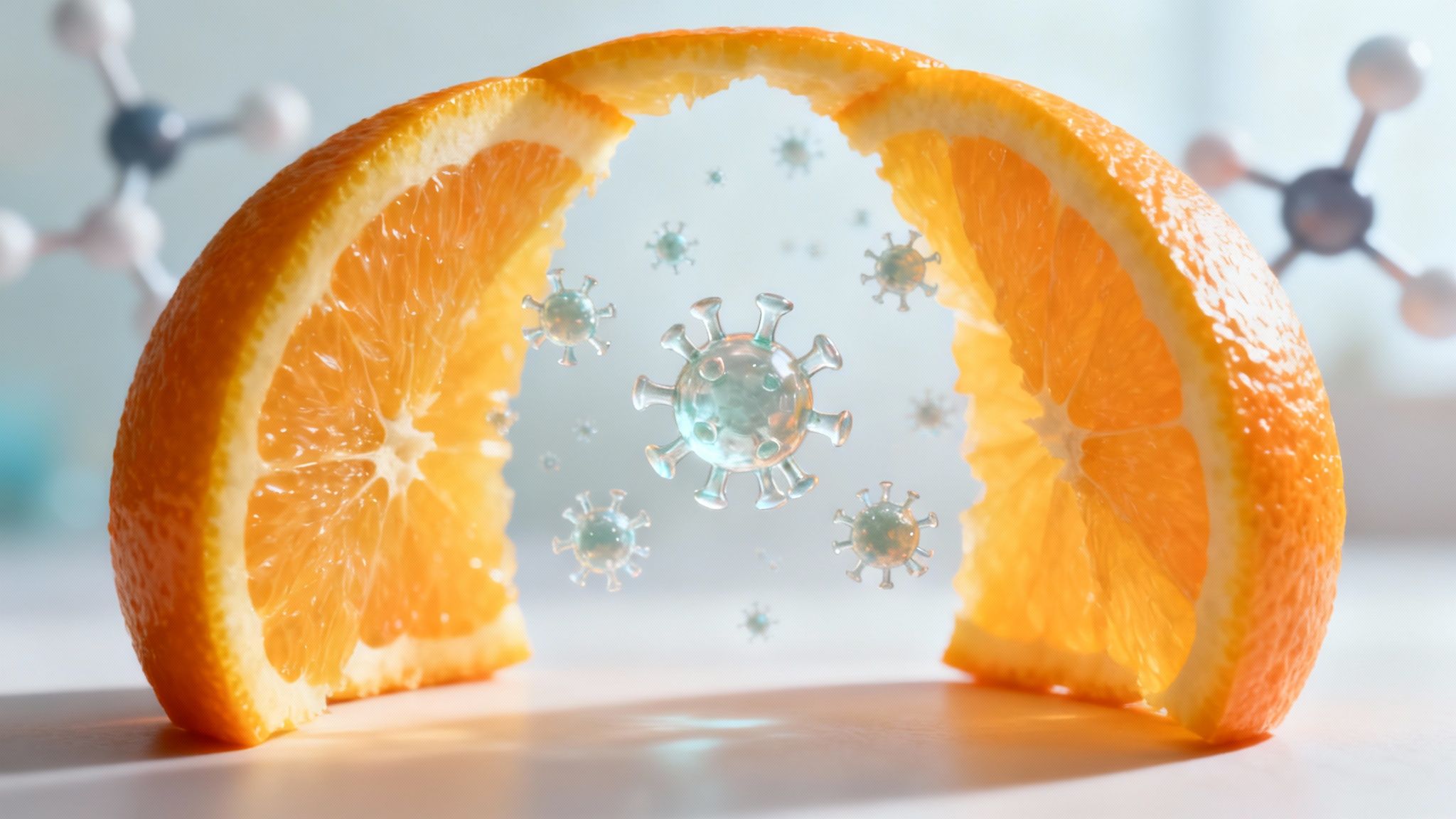
For decades, the idea that vitamin C can stop a cold in its tracks has been a cornerstone of home remedies. Grabbing a supplement or a big glass of orange juice at the first hint of a sniffle is almost a cultural reflex.
But where did this powerful belief come from, and what does the science actually say about it today?
The Enduring Belief in Vitamin C

The conviction that vitamin C is a cold-buster can be traced back to one hugely influential, if controversial, figure: Nobel laureate Linus Pauling. Back in the 1970s, he made the bold claim that taking large daily doses could dramatically cut your chances of getting sick.
This idea completely captured the public’s imagination. It transformed vitamin C from a simple nutrient into the go-to supplement for immune support. Pauling himself advocated for taking 1,000 mg every day, suggesting it could slash cold incidence by about 45%.
Some early research, like a big 1972 trial, seemed to back him up, showing a 30% reduction in days people were laid up with a cold when taking vitamin C.
From Theory to Cultural Practice
Pauling’s work essentially created a new playbook for self-care. He positioned a single nutrient as a powerful shield against one of the most common human illnesses. The message was simple, empowering, and it resonated.
Millions of people started high-dose vitamin C supplementation, making it a non-negotiable part of their wellness routine. This habit quickly became a key part of how we manage seasonal sickness at home.
The cultural embrace of vitamin C for colds proves a powerful point: a compelling idea from a prominent figure can shape public health habits for generations, sometimes running ahead of the conclusive science.
Don't Forget the First Line of Defense: Hygiene
While the debate over vitamin C’s effectiveness rages on, it's crucial to remember how cold viruses, such as Rhinovirus Type 14 and Rhinovirus Type 39, actually get around. These tiny pathogens are transmitted through:
- Airborne droplets when someone coughs or sneezes.
- Contaminated surfaces where viruses can hang around for hours.
This is why, regardless of what supplements you take, good old-fashioned hygiene is your best proven defense. Thorough hand washing and using disinfecting wipes on doorknobs, phones, and keyboards are fundamental, evidence-based strategies to stop viruses before they ever get a chance to infect you. While exploring various home remedies for viral infections can be useful, nothing beats these basic practices.
How Vitamin C Powers Your Immune Defenses
To really get why there’s so much debate around vitamin C and colds, we have to look at what it actually does inside the body. Think of your immune system as a highly trained army. Vitamin C is the indispensable support crew—it keeps the troops armed, energized, and ready for battle.
One of its most important jobs is acting as a powerful antioxidant. When your immune cells attack invaders like a cold virus, they produce a bunch of highly reactive molecules called free radicals. This is kind of like the ‘friendly fire’ on a battlefield; it helps take down the enemy, but it can also damage your own cells in the process.
That's where vitamin C comes in. It swoops in to neutralize these free radicals, protecting your immune cells from their own collateral damage so they can keep fighting effectively.
Fueling the Frontline Soldiers
Beyond just protecting the troops, vitamin C is also crucial for producing and mobilizing your immune system’s frontline soldiers: the white blood cells. These cells, especially the ones called neutrophils, are tasked with hunting down and destroying pathogens.
Vitamin C actually builds up in high concentrations inside these cells, essentially fueling their ability to move toward an infection and gobble up viruses. Without enough of it, the army’s response is just slower and less aggressive. For a better look at how all these pieces fit together, check out our detailed diagram of the immune system.
This chart breaks down how vitamin C directly gives key immune functions a boost, from neutralizing threats to ramping up cellular activity.

The data makes it pretty clear: vitamin C seriously improves the efficiency and power of our immune cells on multiple fronts. This biological foundation is exactly why it’s always at the center of any discussion about fighting off common colds.
Prevention vs. Shortening Colds: The Real Evidence

This gets us to the heart of the matter: Can taking vitamin C actually stop you from getting sick in the first place? The science is pretty clear on this, and it draws a sharp line between preventing a cold and just making it less miserable.
For most of us, the idea that vitamin C prevents colds is, frankly, a myth. While it’s a powerhouse for your immune system, a daily supplement doesn’t act like some invisible shield against viruses. It’s better to think of it as stocking your body’s armory—it doesn’t stop the fight from happening, but it definitely helps you win it faster.
And that distinction is everything. Instead of chasing the impossible goal of never getting sick, the evidence points toward a much more realistic—and proven—benefit.
The Real Win: Shorter, Milder Colds
So, vitamin C might not keep you from catching a cold. But the data shows, time and again, that it can help you get back on your feet faster. This is where its immune-boosting power really comes into play, delivering a benefit you can actually feel.
Massive studies that have pooled data from thousands of people make this relationship clear. Research confirms that taking more than 80 mg of vitamin C every day doesn't really lower the number of colds you get.
However, that same research found a consistent, modest reduction in how long a cold sticks around—shortening it by up to 14% in some groups. You can see the breakdown of these vitamin C findings and dig into the extensive data yourself.
The takeaway? Regular vitamin C intake isn't about dodging illness. It's about minimizing the hit. You're essentially equipping your immune system to clean up the infection more efficiently.
This means fewer days of feeling awful and a quicker return to your life. For most people, that alone is worth it, especially when you're dealing with one of the most common virus infections out there.
Let's break down what the research really tells us about prevention versus duration for the average person.
Vitamin C Efficacy: Prevention vs. Duration
This table summarizes the key scientific findings on regular vitamin C supplementation for the general population.
| Metric | Finding for General Population | Key Takeaway |
|---|---|---|
| Cold Prevention | No significant effect. Daily supplementation does not meaningfully reduce the chances of catching a cold. | Don't expect vitamin C to act as a shield against getting sick. |
| Cold Duration | Modest reduction. Shortens cold duration by 8% in adults and 14% in children. | The real benefit is getting over your cold faster once you have it. |
| Cold Severity | Slightly less severe symptoms. Colds may be milder and less disruptive. | You might feel a bit less miserable while you're sick. |
Ultimately, the evidence consistently points to vitamin C being a tool for managing a cold's impact, not preventing it entirely.
What Does This Look Like in Real Life?
Okay, but what does a percentage actually mean when you’re stuck on the couch with a box of tissues? Let’s make it practical.
- For adults, an 8% reduction might trim about half a day off a week-long cold.
- For kids, the effect is stronger. A 14% reduction could shorten a 10-day cold by more than a full day.
That might not sound like a miracle cure, but anyone who’s dragged themselves through a nasty cold knows that getting back even one day of feeling human is a huge win. The key, according to the research, is consistency—you have to take it every day, not just when you start to feel a tickle in your throat.
Finding the Right Dose for Cold Support
So, we know vitamin C can help shorten a cold. The next logical question is, how much do you actually need to take? There isn't a single magic number here—the best dose really depends on whether you're aiming for general daily health or trying to actively fight off a cold.
For everyday wellness, the Recommended Dietary Allowance (RDA) is your baseline. That’s about 90 mg for men and 75 mg for women. This amount is enough to prevent a deficiency and keep your basic bodily functions running smoothly. But when you’re sick and looking for that cold-shortening effect, the research points to a much higher intake.
Most studies that found a real reduction in cold duration used daily doses anywhere from 200 mg all the way up to 2 grams (2,000 mg). This higher amount is what’s needed to fully load up your immune cells, giving them the extra fuel they need to tackle the infection head-on.
The More You Take, the Better (to a Point)
It turns out there’s a pretty clear dose-response relationship, especially in kids. Put simply, taking more vitamin C generally leads to better results.
One major review of studies on children found that a daily dose of just 0.2 grams (200 mg) cut the length of a cold by 13.6%. When they upped that dose to 1 gram a day, the reduction jumped to 18%. And at a 2-gram daily dose? Colds were shortened by a significant 25%. If you want to dive into the data yourself, you can explore the research on vitamin C dosing for colds from the American Academy of Family Physicians.
While higher doses seem to work better for shortening a cold, it’s not an "all-you-can-take" situation. There’s a point where more isn't better, and you need to stick to safe limits.
How to Stay Safe and Avoid Side Effects
Vitamin C is water-soluble, which is good news. It means your body just gets rid of what it doesn’t use through urine. This makes it quite safe, but there’s still an upper limit. For adults, the established safe upper intake level is 2,000 mg (2 grams) per day.
Pushing past that limit won’t give you any extra cold-fighting benefits. Instead, it’s likely to cause some unpleasant digestive issues like diarrhea, nausea, or stomach cramps. By sticking within that evidence-backed therapeutic range, you can get all the benefits without any of the discomfort.
Getting Your Daily Dose From Foods and Supplements

When it comes to boosting your vitamin C levels, you have two main options: getting it from your diet or turning to supplements. While both get the job done, a "food-first" approach is almost always the best place to start.
It's simple, really. Whole foods give you more than just a shot of ascorbic acid. When you bite into a crisp bell pepper or a juicy kiwi, you're also getting fiber, other antioxidants, and a whole host of nutrients that work together. It’s a package deal that supports your overall health in ways an isolated supplement just can't match.
Power Up With Vitamin C Rich Foods
And no, you don't have to chug orange juice all day. Plenty of everyday fruits and vegetables are absolutely packed with vitamin C, making it pretty easy to work them into your meals.
- Red Bell Peppers: A single medium pepper can deliver well over 150 mg of vitamin C.
- Kiwis: One kiwi packs around 70-90 mg, easily covering your daily baseline needs.
- Broccoli: Just a cup of chopped broccoli gives you about 80 mg of this powerhouse nutrient.
- Strawberries: One cup of these berries serves up nearly 90 mg.
Let’s take a look at a few other excellent sources you can add to your grocery list.
Top Dietary Sources of Vitamin C
| Food Source | Serving Size | Approximate Vitamin C (mg) |
|---|---|---|
| Red Bell Pepper (raw) | 1 medium | 152 |
| Orange | 1 medium | 70 |
| Kiwi | 1 medium | 71 |
| Green Bell Pepper (raw) | 1 medium | 96 |
| Broccoli (cooked) | 1 cup, chopped | 102 |
| Strawberries (sliced) | 1 cup | 98 |
| Brussels Sprouts (cooked) | 1 cup | 97 |
| Cantaloupe (cubed) | 1 cup | 59 |
As you can see, hitting your daily targets through food is not only possible but also delicious. When your main goal is simply to keep your immune system in good shape, a diet centered around these foods is a fantastic strategy.
When Supplements Make Sense
While food is the foundation, supplements have a clear role to play—especially when you're aiming for the higher, therapeutic doses that have shown promise for cold support. Frankly, it’s tough to get 1,000-2,000 mg of vitamin C every day from food alone without eating an enormous amount of fruit and vegetables.
That's where supplements come in. They offer a direct, convenient way to reach those higher levels. They're also a practical backup plan for anyone with dietary restrictions or nutritional gaps.
For most people, a basic ascorbic acid supplement is both effective and affordable. You’ll see other forms on the shelf, like buffered vitamin C or formulas with bioflavonoids, but the real key to shortening a cold is getting a high enough dose of ascorbic acid consistently. What matters most is picking a supplement that hits your dosage goal and remembering to take it regularly.
Common Questions About Vitamin C and Colds
When it comes to vitamin C, there's a lot of noise out there. Let's tackle some of the most common questions and separate the science from the old wives' tales so you can make this work for you.
Can I Just Take Vitamin C When I Start Feeling Sick?
This is probably the biggest myth of all. While it feels proactive, waiting until you have a scratchy throat to load up on vitamin C doesn't do much. The real magic happens with regular, daily intake.
Think of it like this: you can't build a strong fortress in the middle of a siege. Your immune system needs a consistent supply of vitamin C to stay resilient and ready. Most studies show that its ability to shorten a cold comes from keeping those levels topped up before you ever get sick. Starting a high dose after the fact has shown inconsistent results at best.
Is Natural Vitamin C From Food Better Than a Supplement?
Chemically speaking, the ascorbic acid in a supplement is identical to what's in an orange. Your body can't tell the difference, and your immune cells will put it to work either way.
Some "natural" supplements tout extra plant compounds like bioflavonoids, but the heavy lifting against colds is done by the ascorbic acid itself. What truly matters are dosage and consistency, not whether the vitamin came from a lab or a lemon.
The bottom line for fighting off colds is simple: Get a sufficient, consistent dose of ascorbic acid. The source is far less important than the amount you take and how regularly you take it.
Will Vitamin C Stop the Flu or Other Viruses?
While vitamin C is a cornerstone of good immune health, it’s not a silver bullet. There’s no solid evidence that it can prevent serious viruses like Influenza A (H1N1), SARS-CoV-2, or Norovirus. Its most researched benefit is tied specifically to the common cold, which is usually caused by rhinoviruses.
For protection against a wider range of serious illnesses, you need to stick with proven strategies. These are your real frontline defenses:
- Vaccinations for viruses like the flu.
- Diligent surface hygiene, especially using disinfecting wipes on high-touch surfaces.
- Proper, frequent handwashing with soap and water.
These methods are designed to stop viruses from getting into your body in the first place, offering a much broader and more reliable shield than any single nutrient can.
Leave a Reply