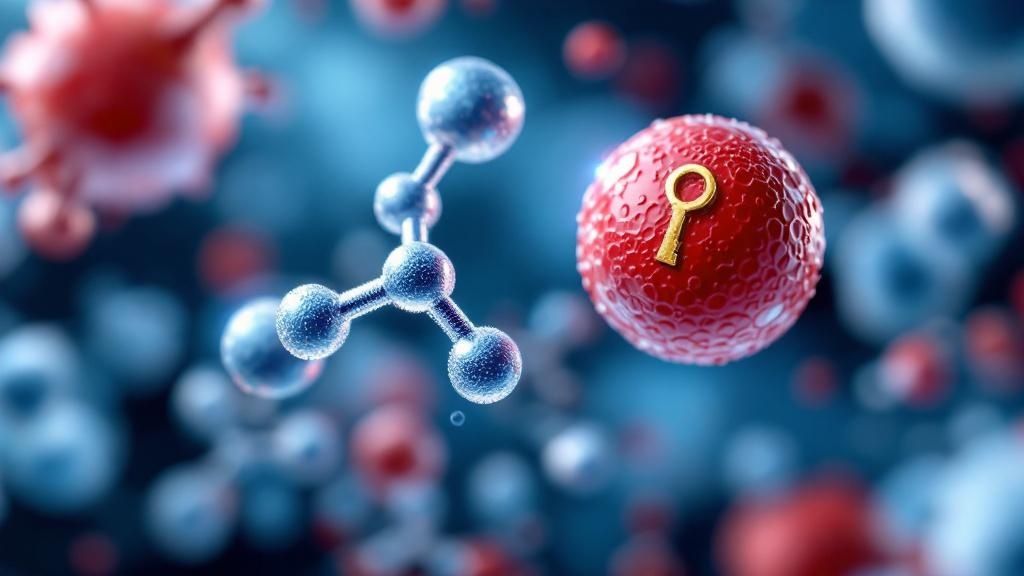
Picture this: your body is a fortress, and it's under constant siege from microscopic invaders like bacteria and viruses. So, what’s the secret to its defense? It all comes down to the incredible partnership between antibodies and antigens.
Think of antigens as the unique uniforms worn by enemy soldiers (the pathogens). Antibodies, on the other hand, are your fortress's elite security agents, specifically trained to spot, track, and neutralize anyone wearing that exact uniform.

Your Immune System’s Secret Agents
This elegant defense system is the bedrock of your health, a silent battle raging at a scale you can't even see. When a virus like Influenza A (H1N1) or SARS-CoV-2 breaches your defenses, it shows up wearing its specific antigens. Your immune system, instantly recognizing these foreign markers, flags them as a threat and launches a full-scale counterattack.
The response is both swift and incredibly precise. Specialized cells get to work, churning out antibodies that are perfectly shaped to lock onto the invading antigens. Understanding this fundamental process is the key to knowing how your body fights off infections, how vaccines work their magic, and why you get sick from some germs but not others.
The Historical Roots of Immunology
This isn't a new concept. The scientific journey started way back in 1796 with Edward Jenner's groundbreaking smallpox vaccine, which proved that a little exposure to a weaker pathogen could build powerful immunity.
Fast forward to 1900, when scientist Paul Ehrlich proposed his "side-chain theory." It was an early but brilliant model for how cells bind to invaders, paving the way for our modern understanding of antibody specificity. This foundational science is still evolving, and you can discover more about the history of antibody research and what the future holds.
This intricate lock-and-key system, fine-tuned over millennia, is what allows your body to create a "memory" of past invaders. Once a pathogen is defeated, your immune system keeps a detailed file, ready to deploy the right antibodies in record time if that same enemy ever dares to show its face again.
A Proactive Approach to Health
Even though your immune system is a remarkable defender, it's not invincible—it can be overwhelmed. A simple but powerful way to give it an edge is by reducing your exposure to pathogens on common surfaces. The fewer invaders it has to fight, the stronger and more prepared it will be. Using disinfecting wipes to clean high-touch areas is a practical first line of defense that supports your body's internal army.
Of course, supporting your body's natural defenses from the inside out is just as vital. You can explore some of the best ways to boost your immune system naturally in our in-depth guide. This article will walk you through exactly how your internal security force operates, from identifying threats to neutralizing them for good.
Understanding Antigens: The Invader's ID Badge
To really get a handle on the battle raging inside our bodies, we first need to get a clear look at the enemy. Think of antigens as the molecular "ID badges" worn by every single substance that enters your body, from a harmless fleck of pollen to a dangerous virus. They’re the signals your immune system reads to decide if something is a friend or a foe.

These markers are usually unique proteins or sugars found on the surface of a pathogen. For instance, the Influenza A virus (H1N1) has specific surface proteins that your body instantly recognizes as foreign. And of course, there's the now-famous spike protein on SARS-CoV-2—the virus behind COVID-19—which is a key antigen that kicks off a full-blown immune response.
Foreign Invaders Versus Internal Threats
Most of the time, your immune system is busy dealing with foreign antigens, which come from outside your body. These are the ID badges on viruses like Norovirus, bacteria, fungi, and even certain toxins. When these invaders show up, your body knows they don’t belong and springs into action.
But the system isn't perfect. Sometimes, it makes mistakes. In autoimmune diseases, the immune system gets confused and incorrectly identifies the body’s own healthy cells as threats. It starts targeting autoantigens—your own cellular ID badges—which leads to an attack on your tissues. This distinction is the critical difference between a healthy immune response and an autoimmune disorder.
An antigen’s specific molecular shape is what makes it recognizable. Just a small, distinct portion of the antigen, known as an epitope, is enough for an antibody to lock onto and sound the alarm.
The microscopic world around us is absolutely teeming with these foreign antigens. They are on countless surfaces we touch every day, from doorknobs to countertops. Every single touch is a potential introduction of a new threat to your immune system.
To put this in context, let's look at some common viral troublemakers and the specific antigens that help our bodies spot them.
Common Viral Antigens and Their Associated Viruses
This table highlights specific antigen examples from common viruses, illustrating how these molecular markers are used by the immune system to identify different pathogens.
| Virus | Key Antigen(s) | Role of the Antigen |
|---|---|---|
| Influenza Virus | Hemagglutinin (HA) and Neuraminidase (NA) | These surface proteins allow the virus to attach to and enter host cells. They are the primary targets for antibodies. |
| SARS-CoV-2 (COVID-19) | Spike (S) protein | The infamous spike protein binds to ACE2 receptors on human cells, enabling viral entry. It is the main target for vaccines. |
| Human Immunodeficiency Virus (HIV) | gp120 and gp41 | These envelope glycoproteins are crucial for the virus to bind to and fuse with human immune cells (specifically CD4+ T cells). |
| Hepatitis B Virus (HBV) | Hepatitis B surface antigen (HBsAg) | This surface protein is a key marker used in diagnostic tests to detect an active HBV infection. |
These examples show just how specific the immune system's targeting system is. It's not just "fighting a virus"; it's identifying and attacking a very particular molecular signature.
A Constantly Shifting Target
One of the biggest challenges for your immune system is that some viruses are masters of disguise. The influenza virus, for example, is constantly changing its surface antigens through a process called "antigenic drift." These slight modifications mean the ID badge from last year's flu virus looks just different enough to fool your defenses this year.
This is exactly why you can get the flu more than once and why the flu vaccine has to be updated annually. Each new shot trains your body to recognize the latest antigenic signatures. On the other hand, viruses like Herpes Simplex Virus 1 (HSV-1) are much more stable, which is why your body can maintain long-term immunity once it learns to recognize their antigens.
Understanding this dynamic makes one thing crystal clear: reducing your exposure to these viral markers is a powerful first step in staying healthy. By regularly using disinfecting wipes, you can eliminate pathogens from your environment—effectively clearing the battlefield before the fight even begins. This simple act lessens the burden on your immune system, allowing it to save its resources for the threats it can’t avoid.
Meet the Antibodies: Your Personal Defense Force
If antigens are the invader’s ID badge, then antibodies are your immune system’s highly specialized, custom-built security force. These incredible proteins, also known as immunoglobulins (Ig), are the true heroes of the story, designed with one single-minded mission: find and neutralize specific threats.

Think of an antibody as a microscopic, Y-shaped grappling hook. That shape isn't just a coincidence; it’s a brilliant piece of biological engineering where every part has a critical job to do.
The two arms at the top of the Y form the antigen-binding site. This is the “business end” of the antibody, shaped with incredible precision to lock onto one specific antigen—just like a key fits a single lock. Meanwhile, the base of the Y, called the Fc region, acts like a beacon, signaling to other immune cells that it has captured an intruder and needs backup.
The Elegant Y-Shaped Structure
Our understanding of this structure didn't happen overnight; it’s built on decades of painstaking research. Groundbreaking work in the mid-20th century finally revealed that antibodies are made of two identical heavy chains and two identical light chains, all coming together to form that classic Y-shape.
By 1969, scientists had mapped the entire amino acid sequence of a human IgG antibody—a monumental achievement that has since guided countless medical breakthroughs. You can learn more about these pivotal molecular discoveries and how they shaped modern medicine.
This elegant design is exactly what makes the relationship between antibodies and antigens so powerful. It allows a single antibody to both neutralize a threat directly and rally a much larger defensive response.
The Five Classes of Antibodies
Your body doesn’t just make one type of antibody. It produces several different classes, each with a specialized role, almost like different units in an army.
- IgM (The First Responders): These are the first antibodies to show up at the scene of a new infection. They're big and clunky but great at grabbing pathogens and clumping them together, making them easy targets.
- IgG (The Veteran Soldiers): As the most common antibody in your blood, IgG provides the bulk of your long-term protection. These are the "memory" antibodies that patrol your system long after an infection is gone, ready to launch a fast attack if the same invader, like Herpes Simplex Virus 2 (HSV-2), ever comes back.
- IgA (The Gatekeepers): Found in mucosal linings like your gut and respiratory tract, IgA antibodies are your first line of defense at the body's entry points. Their job is to stop pathogens before they even get a foothold.
- IgE (The Allergy Alarms): Primarily involved in allergic reactions, IgE antibodies are the ones that react to things like pollen or dust. They also play a role in fighting off parasitic infections.
- IgD (The Strategic Advisors): We still have more to learn about IgD, but they're found on the surface of B cells (the antibody factories) and are thought to help get them fired up to start producing all the other antibodies.
While your body is a powerful antibody factory, it can become overwhelmed when faced with a high number of invaders. An army can only fight so many battles at once.
This is where simple, preventative hygiene becomes so important. Reducing the number of viral antigens on surfaces with disinfecting wipes lessens the initial assault, giving your antibody defense force a crucial advantage to win the fight and keep you healthy.
The Lock and Key: A Perfect Antibody-Antigen Match
The way antibodies and antigens interact is a stunning example of molecular precision. It’s often compared to a lock and key—each antibody (the key) is shaped to fit perfectly into one specific part of an antigen (the lock). This incredible specificity is what prevents your immune system from accidentally attacking your own healthy cells.
But this critical connection doesn't happen just anywhere on the antigen. Instead, the antibody zeros in on a tiny, specific region called an epitope. An invader like the Human Rotavirus might have several different epitopes on its surface, which means your body can create multiple types of antibodies to attack it from all sides.
The Immune Response, Step by Step
When a pathogen like Rhinovirus Type 14 gets into your body, it doesn't just trigger an instant alarm. It sets off a sophisticated and highly coordinated defense—a carefully orchestrated sequence of events designed to build a powerful and targeted counter-attack.
The journey from detection to destruction happens in a few key phases:
- Antigen Identification: A specialized immune cell, known as a B cell, bumps into the invader. Its surface receptors instantly recognize a specific epitope on the antigen.
- Activation and Proliferation: Once a B cell finds its perfect match, it gets activated. It immediately starts to multiply, creating an army of identical clones all programmed to recognize that exact same epitope. This process is called clonal expansion.
- Antibody Production: These activated B cells then mature into plasma cells, which are essentially high-volume antibody factories. They start churning out thousands of antibodies per second, releasing them into your bloodstream to hunt down the invaders.
This simple flowchart shows just how your immune system ramps up its defenses, going from a single recognition event to a full-scale antibody assault.

As the infographic shows, the immune system is incredibly efficient. It scales up its response by cloning the exact B cell needed for the job, wasting no time or resources.
Neutralizing the Threat
Once released, these antibodies swarm the pathogens. Their goal is twofold. First, they can directly neutralize the threat. For a virus like Feline Calicivirus, antibodies can physically block the parts of the virus it uses to enter and infect your cells, effectively disarming it on the spot.
Second, the antibody acts like a bright, flashing tag, marking the invader for destruction.
The base of the Y-shaped antibody signals other immune cells, like phagocytes—the "cleanup crew" of your immune system. These cells arrive, engulf the tagged pathogen, and destroy it completely.
This highly specific lock-and-key system is your body’s best defense, but it works most effectively when it isn't overwhelmed by a massive number of invaders. By using disinfecting wipes to reduce the number of initial 'keys' (antigens) in your environment, you prevent them from ever finding a 'lock' inside your body. It's a proactive step that lightens the load on your immune system, giving it a critical head start in any potential battle.
How We Use Antibodies and Antigens in Medicine
Our knowledge of the intricate dance between antibodies and antigens isn't just for textbooks—it's one of the cornerstones of modern medicine. By harnessing this natural defense system, scientists have developed incredible tools to diagnose and treat diseases, turning a fundamental biological process into life-saving technology.
This application is probably most visible in the world of diagnostics. If you've ever taken a rapid test for a virus like SARS-CoV-2, you've seen this science in action. Those tests are built to detect specific viral antigens—the invader's "ID badge"—giving you a quick yes-or-no answer about an active infection.
On the flip side, other diagnostic tests look for antibodies in your blood. Finding antibodies against something like the Hepatitis B Virus (HBV) tells doctors your body has already built a defense, signaling a past or current infection, or even a successful vaccination.
Creating Guided Missiles for Disease
Beyond just diagnosing, the antibody-antigen relationship has opened the door to a powerful class of treatments: monoclonal antibodies. Think of these as lab-engineered "guided missiles"—antibodies designed to target one single, specific epitope with absolute precision.
This field took a massive leap forward in 1975 when Georges Köhler and César Milstein figured out how to produce huge quantities of these identical antibodies. The very first one approved for patients, muromonab-CD3, was introduced in 1986 to help prevent the rejection of kidney transplants. Since then, the market has exploded, becoming a game-changer in treating cancers, autoimmune disorders, and severe viral infections. You can read more about these milestones in immunology that reshaped medicine.
By creating antibodies that target cancer cell antigens or block inflammatory signals, researchers can design treatments that attack diseases at their source while minimizing damage to healthy tissues.
The Role of Prevention in a Clinical Setting
This deep understanding of how our bodies identify and neutralize pathogens also reminds us just how important basic hygiene is. In hospitals and clinics, preventing the initial spread of antigens is priority number one. This is why the principles of hospital-acquired infection prevention are so critical for patient safety—they focus on stopping invaders before the immune system ever has to get involved. A key part of this strategy is the meticulous use of disinfecting wipes on surfaces and equipment to break the chain of transmission.
The practical applications are vast and continue to grow. From rapid at-home tests that detect the antigens of viruses like Influenza A2/305/57 (H2N2) to complex antibody therapies for chronic conditions, we are constantly finding new ways to use the immune system's own playbook against its toughest adversaries.
Common Questions About Antibodies and Antigens
The relationship between antibodies and antigens can bring up a lot of questions. Getting a handle on the answers is a great way to understand exactly how your immune system works, why vaccines are so effective, and even how simple habits can keep you healthy. Let's break down some of the most common ones.
What Is the Difference Between Natural and Vaccine-Induced Immunity?
This is a big one. Both a natural infection and a vaccine do the same thing: they teach your immune system to recognize an antigen and remember it for the future.
The real difference is safety. A natural infection means you're fighting a live, fully-armed pathogen, like the Hepatitis C Virus (HCV). That battle can lead to serious illness, long-term complications, or worse.
Vaccines, on the other hand, give your body a safe "training manual." They introduce something harmless, like a small piece of a virus's surface protein or a weakened version of the microbe itself. This lets your body build up a powerful immune response—complete with memory cells and antibodies—without ever having to face the real danger.
Why Does the Flu Vaccine Change Every Year?
The influenza virus is a master of disguise. It's constantly making tiny genetic changes through a process called antigenic drift. These small mutations alter the shape of its surface antigens, the very things your antibodies are trained to recognize.
Think of it like a thief changing their coat and hat to avoid being spotted. Because the virus's molecular "ID badge" looks a little different each flu season, the antibodies you made last year might not be a perfect match anymore. Scientists have to constantly track these changes to update the annual vaccine, making sure your immune system is ready for the most common strains circulating that year, including variants like Avian Influenza Virus (H5N1).
Your immune system's strength is remarkable, but it's not infinite. It functions best when it isn't constantly fighting on multiple fronts. Reducing the number of invaders it has to face is a key strategy for maintaining health.
This idea—minimizing your body's workload—is a huge part of staying well.
How Does Disinfecting Surfaces Help My Immune System?
Your immune system is tough, but it can get overwhelmed if it has to fight too many invaders at once. This is often called a high "pathogen load." Viruses like Norovirus (Norwalk Virus) and Rhinovirus Type 39 are notorious for surviving on surfaces for hours or even days, just waiting for someone to touch them.
When you use a disinfecting wipe, you're essentially clearing the battlefield before the fight even starts. You're wiping out those pathogens before they get a chance to enter your body.
This simple act takes a huge burden off your immune cells. It lets them save their energy for any germs that do manage to sneak past your defenses. It’s a powerful, proactive step that supports your body’s natural ability to protect you. For more detailed strategies, you can read our complete guide on how to prevent viral infections and protect yourself effectively.
Leave a Reply