Eighty-nine countries and territories had documented evidence of autochthonous, or locally acquired, mosquito-borne Zika virus transmission by December 2021, according to the World Health Organization's Zika virus fact sheet. That figure changes how we should think about Zika. It isn't only a travel concern or a disease of the past epidemic. It remains a transmission problem shaped by mosquito ecology, sexual exposure, pregnancy, and travel-related importation.
The most important practical distinction is that Zika doesn't spread through one route alone. Mosquito bites drive most infections, but sexual, congenital, and blood-borne transmission also matter. A returning traveler might feel well, live far from an active outbreak, and still need to discuss exposure with a partner, especially if pregnancy is being planned.
The sections below explain how each route works, why the infectiousness window can be difficult to interpret, and how layered prevention can reduce risk without creating unnecessary fear.
The Global Reach of Zika Virus Transmission
By December 2021, documented mosquito-borne transmission had reached every inhabited continent except Antarctica, with the Eastern Mediterranean the only WHO region without documented locally acquired transmission at that point. This geographic reach reflects the environments where Aedes mosquito vectors can survive, rather than a uniform level of risk everywhere.

The affected footprint includes tropical and subtropical areas of the Americas, Africa, Southeast Asia, and the Western Pacific. The virus was first discovered in Uganda in 1947, and its later spread has followed places where competent Aedes populations can persist. Temperature, rainfall, housing conditions, and containers that hold water all influence whether mosquitoes can maintain transmission near people.
Why low case counts don't eliminate concern
A quiet surveillance year does not prove that transmission conditions have vanished. Fewer infected people may make spread sporadic, yet a traveler can still bring the virus into an area where local mosquitoes are able to acquire and pass it on. Public health teams therefore monitor human infections alongside mosquito distribution and breeding conditions.
Four pathways deserve separate attention:
- Mosquito-borne transmission: An infected Aedes aegypti or Aedes albopictus mosquito can pass Zika to another person through a bite.
- Sexual transmission: Vaginal, anal, and possibly oral sex, as well as shared sex toys, can transmit the virus. Transmission may occur even when the infected person has no symptoms, according to CDC guidance on how Zika spreads.
- Congenital transmission: An infected pregnant person can pass Zika to the fetus, where infection may affect development.
- Blood-borne transmission: Infected blood can pose a risk to transfusion recipients, which is why blood services apply safeguards in relevant settings.
The same exposure can create different decisions for different households. A traveler may return home feeling well and no longer face an immediate local mosquito threat, yet still need to discuss sexual precautions with a partner. Couples planning pregnancy should treat travel history as relevant information and seek current medical guidance before deciding when to conceive.
Environmental hygiene supports mosquito control, although cleaning surfaces does not replace bite prevention or sexual precautions. Removing standing water, keeping containers covered, and following practical advice on preventing mosquitoes around your home can reduce the places where mosquitoes breed and the opportunities for local transmission.
Mosquito Vectors and the Primary Transmission Route
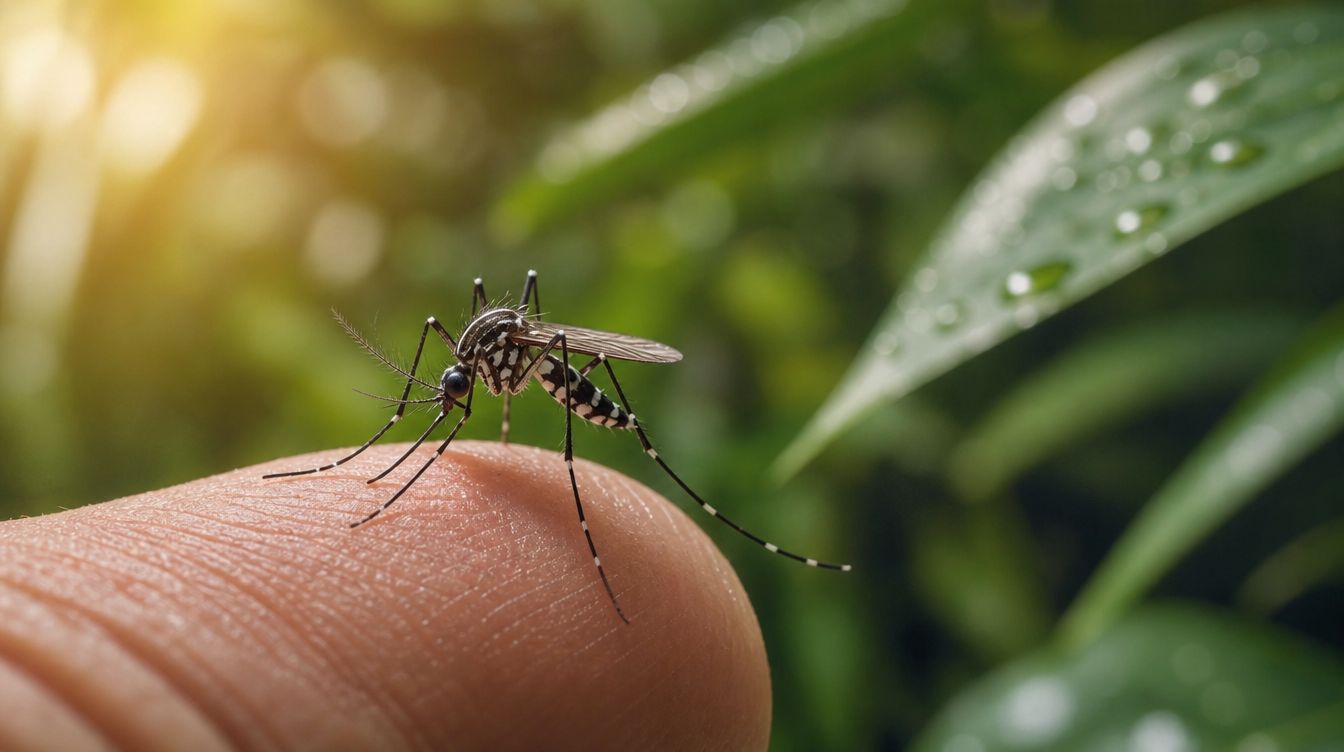
Among the many mosquito species worldwide, two are the primary vectors for Zika virus transmission: Aedes aegypti and Aedes albopictus. The CDC identifies mosquito bites as the main route. Their feeding and breeding habits therefore shape practical prevention more than general advice to avoid bites.
These mosquitoes commonly bite during daylight, indoors or outdoors. They can reproduce in small artificial containers near homes, including objects that collect rainwater. A neighborhood does not need wetlands or a large body of water to support transmission. A neglected bucket, flowerpot, or similar container may provide enough habitat.

How the mosquito-human cycle works
The cycle starts when a mosquito bites a person whose blood contains Zika virus. The virus develops inside the mosquito before it can be passed through a later bite. The infographic places this interval at 8 to 12 days, although environmental conditions can change the timing.
A person bitten by an infectious mosquito may not feel ill right away. The human incubation period is commonly described as 3 to 14 days. Symptoms alone cannot show whether exposure occurred, so a traveler who feels well should not use that feeling as the only basis for later health decisions.
An uninfected mosquito can acquire Zika by biting an infected person during the infectious phase. After the virus develops inside its body, that mosquito may transmit it onward. Transmission often increases during and after rainy seasons, when small containers and other sites fill with water and create more breeding opportunities.
Prevention follows vector behavior
Because these mosquitoes bite during the day, protection should begin early:
- Repellent: Use an EPA-registered product containing DEET, picaridin, or oil of lemon eucalyptus according to its label.
- Clothing: Wear long sleeves and trousers when possible, especially outdoors during daylight.
- Source reduction: Empty, cover, or remove containers holding standing water around homes.
- Screens and nets: Use window and door screens. Travelers can consider bed nets when sleeping spaces are not adequately screened.
Practical rule: Day-biting mosquitoes require protection before breakfast, not only after sunset.
Environmental hygiene supports vector control. Emptying water-holding containers and cleaning frequently touched household surfaces can reduce breeding opportunities and maintain a healthier living space, although surface disinfection does not replace bite prevention. For context on how another mosquito-borne infection spreads, see West Nile virus transmission. Layered measures remain important because no licensed Zika vaccine is currently available.
Sexual Transmission and the Infectiousness Gap
Sexual transmission is less common than mosquito-borne spread, but it creates a risk that travelers and their partners may overlook after returning to a non-endemic area. CDC documents transmission through vaginal, anal, and possibly oral sex, as well as through shared sex toys. Transmission can occur from someone who has no symptoms, and documented patterns include male-to-female, male-to-male, and female-to-male transmission, as described in CDC sexual transmission guidance.

RNA detection isn't the same as infectious virus
The difficult question isn't whether Zika can remain detectable. It's whether the material detected can still cause infection.
A systematic review found Zika RNA in semen as late as 188 days after symptom onset, while infectious virus was isolated up to 69 days, according to the CDC-published systematic review summary. RNA testing can detect genetic material even when that material no longer represents replication-competent virus. Therefore, a positive RNA result and proven infectiousness aren't interchangeable findings.
WHO guidance also reports a median duration of 40 days for Zika RNA detection in semen, with a maximum of 370 days in case reports and series WHO laboratory and testing guidance. These findings explain why public health recommendations use conservative time windows rather than treating every detectable RNA fragment as proof of ongoing infectiousness.
For couples planning pregnancy, current CDC-aligned precautions are practical rather than speculative:
- After possible exposure involving a male partner: Use condoms or abstain for at least three months after symptom onset or the last possible exposure.
- After possible exposure involving a female partner: Use condoms or abstain for at least two months after symptom onset or the last possible exposure.
- If pregnancy is possible or desired: Discuss travel history and exposure with a healthcare professional before attempting conception.
Those timelines account for uncertainty. A person may not know the exact infection date, may never develop symptoms, and may receive a test that detects RNA without proving infectious virus. The safest decision is to follow current public health guidance and obtain individualized advice when pregnancy planning is involved.
Pregnancy Risks and Congenital Transmission
Pregnancy changes the stakes of Zika exposure because the virus can move from maternal circulation across the placenta and affect fetal development. Research summarized in evidence on Zika-related placental and fetal brain injury describes placental infection and injury followed by spread toward the fetal circulation and brain.
The fetal nervous system is especially vulnerable to infection. Zika can target developing neural cells, and congenital infection has been associated with microcephaly, intracranial calcifications, ocular abnormalities, and other neurological complications. The severity and exact outcome vary, so an exposure isn't a diagnosis, but it does justify prompt clinical evaluation.

Planning before conception
A person doesn't need to feel ill for fetal risk to matter. Asymptomatic infection can still create concern during pregnancy, which is why travel decisions, mosquito protection, and sexual precautions should be part of preconception planning.
The practical approach includes:
- Reviewing exposure: Tell a clinician about travel to an area with Zika risk, mosquito bites, symptoms, and a partner's possible exposure.
- Following waiting periods: CDC guidance recommends women wait at least two months and men wait at least three months after symptom onset or the last possible exposure before attempting conception.
- Monitoring an exposed pregnancy: Clinicians may consider serial ultrasounds and, where appropriate, amniocentesis to evaluate fetal development and infection-related concerns.
Pregnancy planning doesn't require panic or isolation. It requires accurate timelines and a conversation with a qualified healthcare professional. Readers seeking broader context about infection during pregnancy can also review viral infection during pregnancy.
Blood Transfusion and Other Secondary Pathways
Blood-borne transmission differs from mosquito bites and sexual exposure. It is biologically plausible and matters to blood services, although it does not usually drive everyday community spread.
Transmission through blood transfusion was confirmed during the Brazil outbreak. Affected regions strengthened nucleic acid testing, or NAT, and the FDA issued guidance for blood banks in U.S. territories. The practical lesson is clear: a route may be uncommon for the public yet require strict controls in a clinical system. NAT detects viral RNA, much like finding a footprint, but detection alone does not establish that infectious virus remains present. Blood services therefore apply testing and donor policies within the relevant exposure setting.
| Transmission Route | Relative Risk Level | Key At-Risk Population | Primary Mitigation Strategy |
|---|---|---|---|
| Mosquito bite | Primary | People in areas with competent Aedes vectors and travelers | Repellent, protective clothing, source reduction, and vector control |
| Sexual contact | Secondary but clinically important | Partners of infected or potentially exposed travelers, especially couples planning pregnancy | Condoms or abstinence during recommended waiting periods |
| Blood transfusion | Uncommon, setting-specific | Blood recipients in areas with relevant transmission | Donor screening and NAT where indicated |
| Laboratory exposure | Rare, occupational | Laboratory personnel handling concentrated virus | Biosafety procedures and appropriate protective equipment |
| Organ transplantation | Theoretical or limited-evidence concern | Transplant recipients and clinical teams | Donor assessment and specialist guidance |
| Casual contact, respiratory droplets, breastfeeding | Not shown as established routes | General public | Avoid stigma and focus on documented pathways |
Laboratory-acquired infections are rare but have been documented among researchers handling high-concentration viral cultures. Biosafety level 2 practices and institutional procedures reduce occupational exposure. Laboratory safety depends on controlled procedures, protective equipment, and careful handling of concentrated material.
Organ transplantation remains a theoretical concern with limited evidence. Transplant teams assess donor history and recipient circumstances within the broader clinical context.
Casual contact, respiratory droplets, and breastfeeding have not been shown to transmit Zika. Viral material detected in a bodily fluid does not automatically prove an everyday transmission route. That distinction also matters for travelers returning home and couples planning pregnancy: a laboratory signal may prompt medical advice, but it does not by itself describe current infectiousness. Surface cleaning supports general household hygiene, while mosquito control and sexual precautions address the documented pathways.
Layered Prevention Strategies That Work
No single action blocks every route of Zika virus transmission. A practical plan combines mosquito protection, environmental management, sexual precautions, and community measures. The aim is to interrupt transmission at several points, like using more than one lock on the same door.
Start with the bite
During daytime hours, use an EPA-registered repellent containing DEET, picaridin, or oil of lemon eucalyptus. Follow the label, apply it to exposed skin as directed, and wear long clothing when practical. Travelers can also consider permethrin-treated clothing and bed nets, especially in accommodation with poor screening.
Remove mosquito breeding sites near the home. Empty or cover buckets, tires, plant saucers, gutters, and other containers that collect water, and ask neighbors or property managers to address shared areas. Aedes mosquitoes need only small neglected containers, not a large pond.
Keep household hygiene in perspective
Zika is not primarily spread through contaminated surfaces. Cleaning frequently touched surfaces with an EPA-registered disinfectant still supports broader household pathogen reduction. Follow the label, respect the stated contact time, and never mix cleaning chemicals.
Organizations handling disinfectants or sterile supplies may need formal quality controls. The discussion of sterility assurance levels for wholesalers helps distinguish product assurance and controlled handling from ordinary household cleaning. For routine home prevention, surface disinfection complements mosquito control rather than replacing it.
Protect partners and involve the community
After possible exposure, follow current CDC recommendations about condoms or abstinence during the relevant waiting period. This precaution applies even when the exposed person feels completely well. Detecting viral RNA is not the same as proving that infectious virus remains present, so couples planning pregnancy should discuss travel or exposure history with a clinician rather than interpret a laboratory signal alone.
Municipal larviciding, screened windows and doors, and surveillance systems can help identify transmission and direct mosquito control. Travelers returning from an exposure area should prevent mosquito bites for three weeks after return, as CDC guidance notes, reducing the chance that a local mosquito acquires the virus from an infected traveler. Practical guidance on dengue fever prevention and mosquito control offers related household measures that support this broader prevention plan.
Common Misconceptions About Zika Spread
“Zika is only a tropical concern.” The virus follows Aedes ecology, but travel can move infections into places where competent vectors are present. Risk depends on exposure history, mosquito distribution, and current public health guidance, not just on a person's home address.
“A person without symptoms can't transmit Zika.” That isn't reliable. CDC states that sexual transmission can occur from an asymptomatic infected person, so waiting periods shouldn't be based only on fever, rash, or joint pain.
“Hugging, sharing utensils, or sitting near someone spreads Zika.” These casual contacts haven't been shown to transmit the virus. The documented routes involve mosquitoes, sexual exposure, congenital transmission, and specific blood-related circumstances.
“A negative blood test proves there's no risk.” Testing has limits. RNA appears in different bodily materials for different periods, and a negative result may not answer every question about past exposure or sexual transmission. A clinician should interpret test timing, symptoms, travel, pregnancy status, and partner exposure together.
The most useful response is neither complacency nor panic. Protect against daytime mosquito bites, remove standing water, discuss travel exposure before pregnancy, and seek medical advice when sexual or congenital transmission is a concern.
If you've recently traveled to an area with Zika risk, are planning a pregnancy, or have questions about partner protection, contact a healthcare professional and bring your travel dates, symptoms, and exposure details. For more clear, evidence-based explanations of viruses and practical prevention, visit VirusFAQ.com.
Leave a Reply