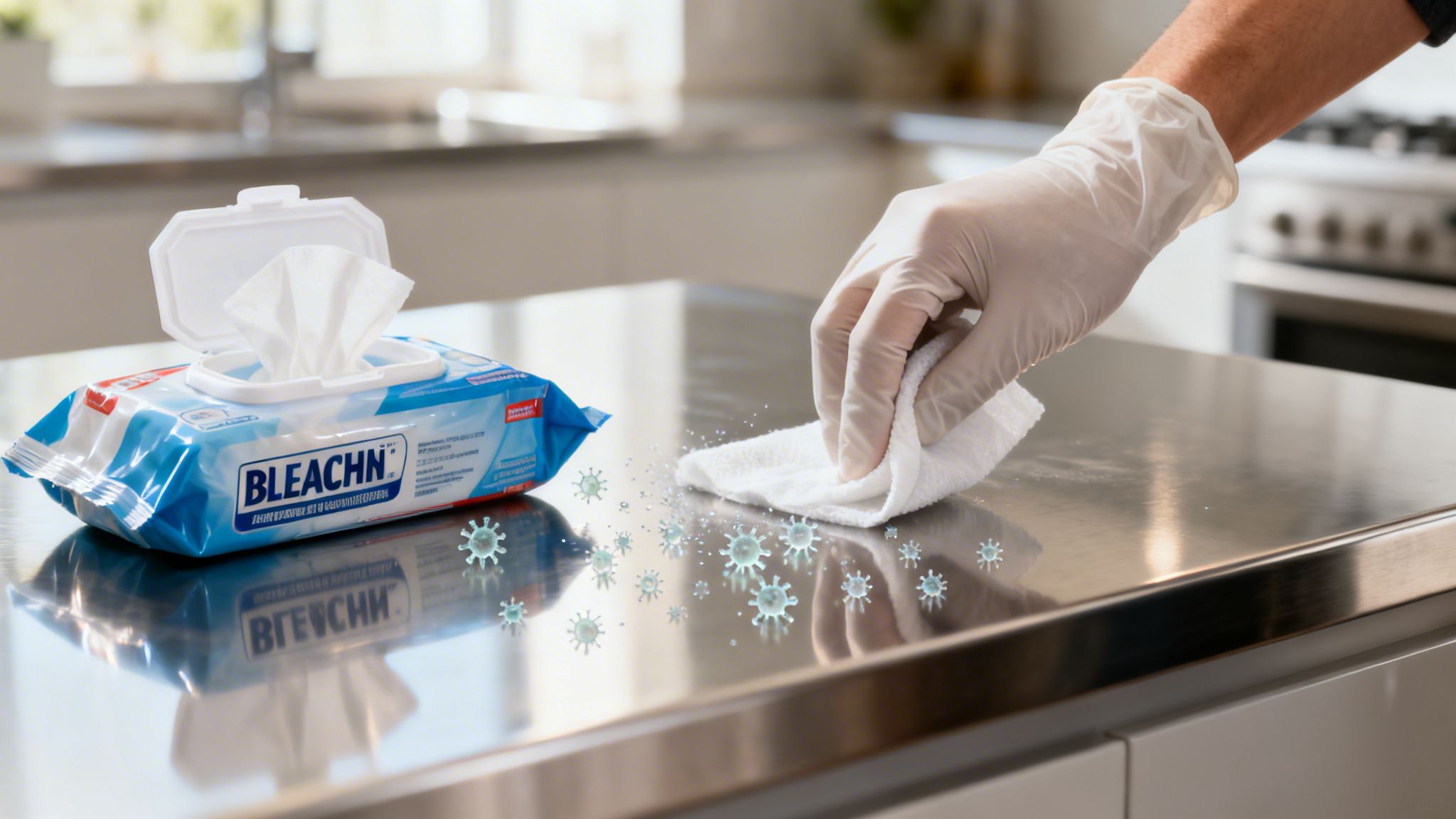
When you need to get serious about killing germs, bleach is the gold standard for a reason. Bleach disinfectant wipes pack the power of this trusted chemical into a convenient, ready-to-use cloth, giving you a powerful tool against the invisible threats lurking on everyday surfaces.
They're your first line of defense against some of the toughest viruses and bacteria out there, including persistent pathogens like Human Immunodeficiency Virus Type 1 (HIV-1), Influenza A Virus (H1N1), and SARS-Related Coronavirus 2 (SARS-CoV-2).
Why Bleach Wipes Are a Go-To for Disinfection
Bleach's journey from the laundry room to the front lines of infection control speaks volumes about its power. The active ingredient, sodium hypochlorite, has become a cornerstone of hygiene in homes, hospitals, and schools—and for good reason.
Unlike some cleaners that only target a narrow range of germs, bleach wipes offer broad-spectrum protection. They are proven to destroy a huge variety of pathogens, from enveloped viruses like Hepatitis C Virus (HCV) to incredibly resilient non-enveloped viruses like Human Rotavirus. This makes them the go-to for stopping serious pathogens that spread on the surfaces we touch all day long.
From Whitening Clothes to Saving Lives
For decades, bleach was just for keeping whites white. But once scientists discovered its incredible ability to kill microorganisms, its role completely changed. It went from a laundry staple to a critical tool for public health. Now, that same power is available in a simple wipe, bringing professional-grade disinfection into your hands.
You'll find them used everywhere for a reason:
- In Homes: Perfect for wiping down doorknobs, light switches, and kitchen counters, especially when someone is sick with an illness like influenza caused by the H1N1 virus.
- In Hospitals: Essential for terminal cleaning of patient rooms to stop the spread of dangerous pathogens and prevent healthcare-acquired infections (HAIs).
- In Public Spaces: Used to sanitize shopping carts, gym equipment, and office desks to cut down on community spread of viruses like Human Coronavirus.
The strategic use of bleach is a proactive approach to preventing infections before they can occur. Because it can inactivate harder-to-kill pathogens, every facility should have bleach in its cleaning arsenal.
Taking on Tough Viral Threats
The real value of bleach wipes is their ability to neutralize some of the most resilient and dangerous viruses we face. This guide will walk you through exactly how they work, from the science behind the wipe to its real-world application. We'll cover their effectiveness against major viral threats, including:
- SARS-CoV-2: The virus that causes COVID-19.
- Influenza: Including common strains like Influenza A2/305/57 Virus (H2N2).
- Norovirus (Norwalk Virus): A notoriously tough stomach bug that’s very hard to kill.
- Herpes Simplex Virus: Such as HSV-1 and HSV-2.
- Hepatitis B Virus (HBV) and Hepatitis C Virus (HCV): Bloodborne pathogens of significant concern.
By understanding how to use these wipes correctly, you can make sure you're getting the full protective benefit from every one. We'll cover everything from the right contact times for different viruses to the safety steps that keep you and your surfaces protected.
How Bleach Wipes Eradicate Viruses on Contact
When you swipe a surface with a bleach disinfectant wipe, you're kicking off a swift, aggressive chemical assault on any viruses present. This isn't just about wiping away germs; it's a microscopic demolition job. The active ingredient, sodium hypochlorite, is a tiny wrecking crew designed to completely dismantle pathogens from the inside out.
Think of a virus as a simple but effective machine built to do one thing: invade your cells and make copies of itself. To do this, it needs two key parts: a protective outer shell and the genetic code (its DNA or RNA) tucked safely inside. Bleach wipes are engineered to obliterate both, ensuring the virus isn't just moved around but is utterly destroyed.
This takedown is all thanks to a powerful chemical reaction called oxidation. In simple terms, the sodium hypochlorite in the wipe effectively "steals" electrons from the molecules that form the virus. This theft throws the virus's entire structure off balance, causing it to literally fall apart and become harmless.
The Science of Oxidation
Oxidation is what gives bleach its legendary germ-killing power. As you wipe, the sodium hypochlorite mixes with the water in the wipe to form hypochlorous acid. This acid immediately gets to work, attacking the proteins and fats that make up the virus’s outer defenses.
For enveloped viruses like SARS-Related Coronavirus 2 (SARS-CoV-2) and the Influenza A Virus (H1N1), that outer defense is a soft, fatty layer. Oxidation dissolves this fatty envelope like a harsh detergent cuts through grease, leaving the virus's core completely exposed.
But the attack doesn't end there. The bleach then moves in on the virus's most critical component: its genetic material. By oxidizing the RNA or DNA, the bleach scrambles the virus's replication instructions, permanently disabling its ability to cause infection.
This is why bleach wipes are a cornerstone of any serious disinfection strategy, providing a powerful defense in homes, hospitals, and everywhere in between.

Destroying Both Enveloped and Non-Enveloped Viruses
One of the biggest advantages of bleach is its ability to take down a wide range of viruses. Viruses are often grouped into two categories based on their structure.
Enveloped Viruses: This group includes common culprits like SARS-CoV-2, Human Immunodeficiency Virus Type 1 (HIV-1), Hepatitis B Virus (HBV), and Herpes Simplex Virus 1 (HSV-1). They're wrapped in a fragile, fatty outer layer called an envelope, which is easily broken down by disinfectants like bleach.
Non-Enveloped Viruses: These are the tough guys of the virus world. They lack that soft outer layer and are protected by a hard protein shell called a capsid. This makes them notoriously difficult to kill. Classic examples are the large non-enveloped Human Rotavirus and small non-enveloped viruses like Norovirus (Norwalk Virus) and Rhinovirus Type 14, the latter being a cause of the common cold.
Bleach is one of the few disinfectants strong enough to crack the tough defenses of non-enveloped viruses. Its oxidative power is potent enough to break down their sturdy protein capsid, which is why health authorities consistently recommend bleach-based products for tackling outbreaks of Feline Calicivirus, a surrogate for the even tougher Norovirus.
This dual-action capability makes bleach wipes a go-to choice for complete disinfection. You can get a deeper look at this process in our guide on how bleach kills germs. It’s this robust action that gives you confidence you're covered, whether you're fighting Avian Influenza Virus (H5N1) or a nasty stomach bug.
This whole process is also why "contact time" is so critical. The surface has to stay visibly wet for the time listed on the label to give the chemicals enough time to finish their demolition work. A quick, dry swipe just won't cut it. True disinfection means letting the science do its job.
Real-World Efficacy Against Common Viruses
The science behind how bleach wipes work is one thing, but how do they actually hold up against the viruses we all worry about? The evidence is overwhelming: when used correctly, these wipes are a powerhouse for destroying a whole range of germs on hard surfaces.
But their success comes down to one crucial detail: contact time. This is the amount of time a surface has to stay visibly wet with the disinfectant to actually kill the virus. A quick, dry swipe just pushes germs around; real disinfection takes a little bit of patience.
Tackling the Toughest Viruses
Not all viruses are created equal. Some, like the flu, are relatively fragile. Others, like the notorious Norovirus, are built like microscopic tanks and are much harder to kill. The good news is that bleach is strong enough to handle all of them. Let's look at how it performs against three major viral threats.
SARS-CoV-2 (The COVID-19 Virus)
As an "enveloped" virus, SARS-Related Coronavirus 2 is surrounded by a fragile, fatty outer layer. This makes it especially vulnerable to bleach's oxidative attack. The sodium hypochlorite quickly breaks down that protective layer, exposing the virus's core and destroying it.
- Required Contact Time: For most standard bleach wipes, the recommended contact time to kill SARS-CoV-2 is impressively short—often just 30 seconds to 1 minute.
- Why It Works: By dissolving the virus's protective envelope, the bleach solution stops it from being able to infect human cells. This fast action is why bleach wipes became a go-to for sanitizing doorknobs, light switches, and countertops during the pandemic.
The ability to quickly neutralize SARS-CoV-2 on surfaces is a key part of a layered defense strategy. Regular disinfection of frequently touched areas helps break the chain of transmission in homes and public spaces.
Influenza Viruses (The Flu)
Much like SARS-CoV-2, influenza viruses like Influenza A Virus (H1N1) are also enveloped. This structural weak spot makes them an easy target for bleach. That's a good thing, because flu germs can survive on hard surfaces for up to 48 hours, making surface cleaning a vital part of flu prevention.
When someone in your house has the flu, using bleach wipes on shared surfaces like remote controls, refrigerator handles, and bathroom fixtures is a proven way to help keep it from spreading to everyone else.
- Required Contact Time: The contact time for killing influenza viruses is typically 30 seconds to 2 minutes. Always check your product's label to be sure.
Norovirus (The Unwanted Guest)
Norovirus is in a class of its own. It's a small "non-enveloped" virus, meaning it doesn't have that weak fatty layer. Instead, it’s protected by a tough protein shell (a capsid), making it incredibly durable and resistant to many common disinfectants.
This is the virus that causes severe stomach flu and can survive on surfaces for days or even weeks. It’s one of the main reasons public health experts consistently recommend bleach.
- Required Contact Time: Because it's so tough, Norovirus needs a longer contact time. Most bleach wipes require the surface to stay wet for 3 to 5 minutes to ensure it's completely killed off.
That longer time is non-negotiable. If you're dealing with a Norovirus outbreak, you absolutely must make sure the surface stays saturated for the full time listed on the label to stop the spread.
A Summary of Bleach Wipe Performance
To help you keep these critical details straight, here is a quick look at how bleach disinfectant wipes stack up against these key viruses.
Bleach Wipe Effectiveness Against Key Viruses
| Virus Name | Virus Family | Required Contact Time (Typical) | Effectiveness Level |
|---|---|---|---|
| SARS-Related Coronavirus 2 | Enveloped Coronavirus | 30 Seconds – 1 Minute | High |
| Influenza A Virus (H1N1) | Enveloped Orthomyxovirus | 30 Seconds – 2 Minutes | High |
| Norovirus (Norwalk Virus) | Non-Enveloped Calicivirus | 3 – 5 Minutes | High |
| Hepatitis B Virus (HBV) | Enveloped Hepadnavirus | 1 – 5 Minutes | High |
| Rhinovirus Type 39 | Non-Enveloped Picornavirus | 1 – 5 Minutes | High |
As you can see, bleach disinfectant wipes are a reliable choice for your cleaning arsenal. They deliver a high level of effectiveness against both everyday viruses and the notoriously hard-to-kill ones.
The secret is simply matching the right contact time to the virus you're targeting, giving the bleach solution enough time to do its job. As long as you follow the label instructions, you can be confident you're protecting your space.
How to Use Bleach Disinfectant Wipes the Right Way
You might think using a bleach disinfectant wipe is as simple as swiping and tossing. But there's a big difference between just wiping a surface and actually disinfecting it.
The secret isn’t complicated. If you want to eliminate tough viruses like Influenza and Norovirus instead of just spreading them around, you need to follow the right steps. It all comes down to starting with a clean slate and giving the bleach enough time to work its magic.

The Step-by-Step Guide to True Disinfection
To get the most virus-killing power out of every wipe, follow these simple but critical steps. This method ensures the sodium hypochlorite can do its job without grime getting in the way.
Pre-Clean First: If a surface is visibly dirty with dust, crumbs, or spills, you have to clean it first. Grab a separate cloth with soap and water or an all-purpose cleaner to remove the gunk. Wiping a dirty surface directly with a bleach wipe just won't work as well.
Wipe It Down: Pull a fresh bleach wipe from the canister and thoroughly coat the hard, non-porous surface. The goal is to make the surface visibly wet. Don't be shy here—a damp surface is a working surface.
Heed the Contact Time: This is the most crucial part. Check the product label for the required contact time—the amount of time the surface must stay wet to kill germs. It could be as little as 30 seconds for SARS-CoV-2 or up to 5 minutes for stubborn viruses like Norovirus. If it starts to dry, wipe it again.
Air-Dry and Rinse (If Needed): Once the contact time is up, let the surface air-dry. For any surface that touches food (like countertops and high chairs) or a child’s mouth, you must rinse it with clean water after it has dried to remove any chemical residue.
This process gives the bleach the perfect opportunity to break down and destroy viruses at a molecular level.
Critical Safety Precautions to Remember
Bleach is a serious chemical, and using it safely is just as important as using it correctly. Keep these precautions in mind every time you handle bleach disinfectant wipes to protect yourself, your family, and your home.
Protect Your Skin: Always wear gloves. Bleach is harsh and can cause dryness, irritation, or even chemical burns with repeated contact. Disposable gloves are your best friend here.
Get Some Airflow: Use wipes in a well-ventilated space. Crack a window or turn on a fan to help disperse the fumes, which can be irritating, especially for people with asthma or sensitivities.
Rinse Food-Contact Surfaces: After disinfecting and letting the surface dry, always rinse kitchen counters, cutting boards, and high chairs with fresh water. No one wants a side of bleach residue with their meal.
Store Wipes Correctly: Keep the container sealed tight. This prevents the wipes from drying out and losing their potency. Store them in a cool, dark place, far out of reach of children and pets.
The golden rule of chemical safety: Never mix bleach products with other cleaners, especially anything containing ammonia. This combination creates toxic chloramine gas, which is extremely dangerous if inhaled.
By making these safety steps a habit, you can use bleach wipes with confidence. For those curious about the science, our guide on making a disinfectant solution with bleach breaks down how different concentrations work. When it comes to creating a healthier space, proper use and safety go hand-in-hand.
Which Surfaces Are Safe for Bleach Wipes
Bleach disinfectant wipes are a powerhouse for killing viruses, but their strength is a double-edged sword. Using them effectively isn't just about how you wipe—it's about where you wipe. If you're not careful, you could end up damaging your home in the process of disinfecting it.
The secret is to stick to hard, non-porous surfaces. Think of materials that are sealed, smooth, and waterproof. These surfaces won't soak up the bleach solution, allowing it to sit on top and do its job without causing harm.

Approved Surfaces for Disinfection
These are the materials where bleach wipes can be used without a second thought, making them perfect targets during cold and flu season or when trying to control the spread of viruses like Duck Hepatitis B Virus (DHBV) or Bovine Viral Diarrhea Virus (BVDV) in relevant settings.
- Sealed Countertops: Properly sealed laminate, granite, and quartz can handle bleach just fine.
- Glazed Ceramics and Tile: This covers most bathroom tiles, toilets, and kitchen backsplashes.
- Stainless Steel and Chrome: Go ahead and wipe down kitchen sinks, faucets, and the outside of your appliances.
- Hard Plastics: Things like light switches, plastic toys, and high chairs are ideal candidates.
- Glass: You can disinfect windows and glass tables, but you might want to follow up with a glass cleaner to get rid of any streaks.
Surfaces to Avoid with Bleach Wipes
Just as important is knowing which surfaces to steer clear of. The active ingredient in bleach, sodium hypochlorite, is corrosive and can cause discoloration, pitting, or other permanent damage on the wrong materials.
Do not use bleach disinfectant wipes on:
- Porous or Unsealed Wood: The bleach will soak right into unfinished, unsealed, or even painted wood, causing it to warp and discolor.
- Natural Stone: Materials like marble, travertine, and some types of granite are porous and can be etched or dulled by the bleach.
- Aluminum and Copper: These softer metals can react with bleach, leading to corrosion and pitting over time.
- Fabric and Upholstery: Bleach is famous for removing color, and it will do exactly that to your carpets, clothes, and furniture.
- Cell Phones and Electronics: Never use a wet wipe of any kind, especially a bleach wipe, directly on electronics. Moisture can seep inside and fry the sensitive components.
The single most important rule? When in doubt, test first. Find a small, hidden spot—like the underside of a countertop or the back of a fixture—and give it a wipe. Wait to see if any damage appears before you tackle the whole surface.
Protecting Your Surfaces and Yourself
Knowing the difference between safe and unsafe materials is the key to making disinfection a seamless, stress-free part of your routine. This isn't just about home maintenance; it's about confidently creating a healthier environment.
By following these simple rules, you can use bleach wipes to their full potential. You'll knock out tough pathogens like Influenza and Norovirus while keeping your home and belongings looking their best.
Bleach Wipes Aren't Just a Trend—They're a Fixture in Modern Health
Think back a few years. Disinfecting wipes were something you might have used occasionally, but today, they’re a staple in most homes, offices, and schools. This isn't just a passing fad; it's a direct response to a deeper public understanding of how easily viruses like Influenza A (H1N1) and SARS-CoV-2 jump from surfaces to people.
The numbers back this up. The global market for cleaning and disinfecting wipes sat at USD 6.57 billion in 2024, but it's expected to climb to a massive USD 9.75 billion by 2034. This surge is driven by new, lasting cleaning habits we all picked up during recent health crises. For a closer look at these market shifts, you can dig into the full cleaning wipes market analysis.
Convenience Is King
Let's be honest: a big reason these wipes have stuck around is pure convenience. Sure, you can mix your own bleach solution from a concentrate. But that means finding a bottle, measuring correctly, diluting it with water, and grabbing a separate cloth. Bleach disinfectant wipes cut out all that friction. You get a pre-measured, perfectly concentrated wipe, every single time.
This simplicity is what makes consistent disinfection possible. When someone gets sick, the last thing you want to do is start a chemistry project. Being able to grab a wipe and quickly sanitize doorknobs, remotes, and faucets can genuinely help stop a cold or flu from running through the entire family.
The easier you make a healthy habit, the more likely people are to actually do it. Bleach wipes turn a multi-step chore into a quick, simple action, weaving proactive disinfection right into the fabric of daily life.
The Innovation Race in Disinfection
This booming demand has lit a fire under manufacturers. They’re pouring money into research and development to make products that are not only stronger but also safer and more pleasant to use. We're already seeing the results of this innovation boom.
- Lightning-Fast Kill Times: New formulas are designed to neutralize tough viruses like SARS-CoV-2 and Influenza in as little as 30 seconds. Disinfecting is now faster and more efficient than ever.
- Better Surface Compatibility: Companies are engineering wipes that are hard on germs but much gentler on surfaces, so you have less to worry about when cleaning countertops, fixtures, and electronics.
- Less Harsh Odors: One of the biggest complaints about bleach has always been the smell. Modern wipes often use lighter scents or new odor-masking technologies to make the experience much more tolerable.
Every time these products get a little bit better, they become more integrated into our daily routines, cementing their role in how we keep our spaces healthy.
A Permanent Tool in Our Health Toolkit
All the signs point to one clear reality: disinfecting wipes, especially powerful bleach disinfectant wipes, are here for the long haul. They’ve moved from being a reactive tool we grab when someone is already sick to a proactive one for maintaining a healthier environment all year.
This shift reflects a permanent change in how we think about germs and viruses. By giving us a reliable, easy, and effective way to break the chain of infection on the surfaces we touch every day, these wipes have earned their spot as an essential for protecting our homes from everything from the common cold to stubborn threats like Norovirus.
Common Questions About Bleach Disinfectant Wipes
Even if you’ve got a handle on the science, a few questions always seem to pop up when it comes to using bleach disinfectant wipes. Getting straight, no-nonsense answers is key to using them effectively and, more importantly, safely.
Let’s clear up some of the most common uncertainties so you can disinfect with confidence and stop viruses like Influenza A Virus (H1N1) and Norovirus in their tracks.
Can I Reuse a Bleach Disinfectant Wipe?
Absolutely not. Bleach wipes are strictly a one-and-done tool.
Think of it this way: once you’ve wiped a surface, the wipe has done its job. The bleach has been used up, and the wipe is now loaded with the very germs you were trying to get rid of. Reusing it would just spread contamination from one spot to another, completely defeating the purpose of disinfecting.
Are Bleach Wipes Safe Around Children and Pets?
You need to be careful here. The active ingredients can be irritating to skin and lungs while the surface is still wet. It’s always best to keep kids and pets away from the area until everything is completely dry.
For any surface a child’s mouth or a pet might touch—think high chairs, toys, or even countertops—there’s a crucial extra step. After the disinfectant has fully dried, rinse the surface with clean water. This removes any leftover chemical residue.
Safety hinges on proper use. Always ensure good ventilation by opening a window or using a fan, and store the container securely out of reach of children and pets.
Do Bleach Disinfectant Wipes Expire?
Yes, they do, and that date on the package really matters. Sodium hypochlorite, the active ingredient in bleach, naturally breaks down over time, losing its power to kill germs.
Using an expired wipe is like trying to clean with a dud. You’re simply not getting the virus-killing protection you count on against pathogens like Herpes Simplex Virus 2 (HSV-2) or Rhinovirus Type 14. Always check the expiration date on the package before you buy or use the wipes to make sure they’re at full strength.
Leave a Reply