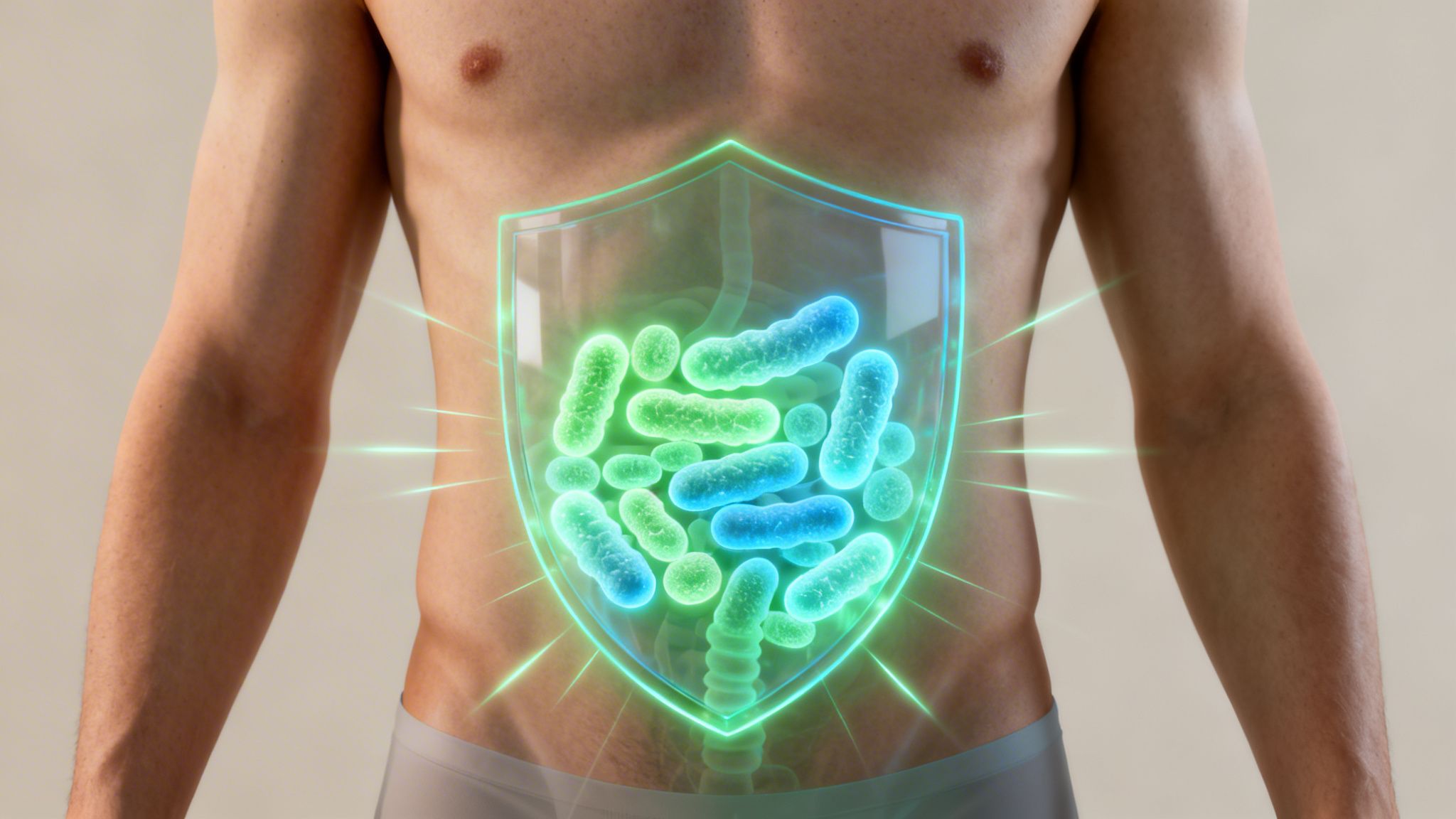
When you’re looking for the best probiotics for immune health, the secret is to focus on specific, science-backed strains. Formulas featuring names like Lactobacillus rhamnosus GG, Bifidobacterium lactis BB-12, and Lactobacillus plantarum are a great place to start, as they have solid clinical studies behind them showing they can reduce how often we get sick and for how long.
Your Gut Is Your Body’s First Line of Defense
Think of your gut as a highly-trained border patrol unit, constantly screening everything that comes into your body. This bustling internal city, your gut microbiome, is home to trillions of microorganisms that form your primary defense against outside invaders, including common viruses like Human Rotavirus or Norovirus.
When your microbiome is healthy and balanced, it creates a physical barrier that makes it tough for harmful pathogens to get a foothold. It’s like a well-tended garden—when the good plants are thriving, there’s just no room for weeds (pathogens) to grow. A strong internal barrier is your first step in fending off viruses, but good external hygiene, like using disinfecting wipes on high-touch surfaces, is just as critical for reducing your exposure to threats like Norovirus (Norwalk Virus) in the first place.
The Microbiome and Immunity Connection
The link between your gut and your immune system is incredibly direct and powerful. In fact, roughly 70% of your immune system is located right there in your gut. This close proximity means your gut bacteria and immune cells are in constant communication.
A balanced internal community helps train your immune system to tell the difference between friend and foe. This ensures it mounts a smart, effective response when a real threat like an Influenza A Virus (like H1N1) or Rhinovirus shows up. But if that delicate balance gets disrupted, you can be left more vulnerable to infections.
A well-regulated gut microbiome doesn't just block pathogens; it actively calibrates your entire immune response, ensuring your defenses are primed and ready without overreacting. This foundational strength is key to building lasting resilience.
Why Probiotics Are a Critical Tool
This is where probiotics come in. They are live, beneficial bacteria that help reinforce your gut's natural defenses, especially when things like antibiotics, stress, or a poor diet have weakened them. Introducing specific probiotic strains is like sending in specialized reinforcements to back up your border patrol.
By boosting the population of good bacteria, you’re supporting several key immune functions:
- Strengthening the Gut Barrier: Probiotics help tighten the connections between the cells in your gut lining, preventing pathogens from "leaking" into your bloodstream.
- Producing Antimicrobial Substances: Many good bacteria create compounds that directly fight off harmful microbes.
- Modulating Immune Cell Activity: They influence how your immune cells behave, helping to dial down unnecessary inflammation while sharpening the response to actual threats. You can learn more about how this system works in our guide on how innate immunity works.
To really get a handle on how probiotics can help, it's useful to know what your own microbial community looks like. You can get a deeper understanding of this complex ecosystem by learning What Is A Gut Microbiome Test. This context makes it much clearer how adding specific probiotics can support your body's defenses against all sorts of challenges.
How Probiotics Train Your Immune System
If you think of your gut as the body’s border patrol, then probiotics are the elite trainers for your immune system. They don’t just add more soldiers to the fight; they fundamentally improve how your existing immune army operates. They make your defensive cells smarter, stronger, and more efficient at spotting and neutralizing threats—from common viruses like the cold-causing Rhinovirus Type 14 to more aggressive ones like Influenza A.
This training happens through direct interaction. Certain probiotic strains communicate with immune cells clustered in your gut lining, in areas known as Peyer's patches. This interaction is like a training simulation, teaching your immune system to recognize patterns associated with harmful invaders without you ever getting sick.
Enhancing Your Viral Defenses
One of the most powerful ways probiotics train your immune system is by ramping up the production of specific antibodies. When probiotics stimulate the immune cells in your gut, they trigger the release of Immunoglobulin A (IgA).
IgA is your body’s front-line antibody, found in the mucosal linings of your respiratory and digestive tracts. Think of IgA as a dedicated security team stationed at every entry point, ready to neutralize viruses like SARS-Related Coronavirus 2 (SARS-CoV-2) on contact before they can even get a foothold. A healthy supply of IgA is crucial for stopping infections before they start.
The infographic below shows how the gut’s immune defenses intercept pathogens before they can spread to the rest of the body.

This highlights the gut's critical role as a gatekeeper, where a strong defense can stop viral threats at the earliest possible stage.
Here's a closer look at the key ways probiotics get your immune system ready for a fight.
How Key Probiotic Actions Support Immune Defense
| Probiotic Action | Immune System Effect | Benefit Against Viruses |
|---|---|---|
| Strengthens the Gut Wall | Reinforces the tight junctions between intestinal cells, making the barrier less permeable. | Prevents viruses and other pathogens from "leaking" from the gut into the bloodstream. |
| Increases IgA Production | Stimulates B-cells in the gut lining to produce more Immunoglobulin A (IgA). | Neutralizes viruses at mucosal surfaces (like the nose, throat, and gut) before they can invade cells. |
| Balances T-Cell Activity | Modulates the ratio of aggressive (Th1) to calming (Treg) T-cells. | Ensures a strong, swift attack on infected cells without causing excessive, damaging inflammation. |
| Competes with Pathogens | Takes up space and consumes nutrients, making it harder for harmful microbes to grow. | Reduces the overall load of bad bacteria and viruses in the gut, giving the immune system less to worry about. |
Ultimately, these actions work together to create a more resilient and responsive immune system.
Balancing the Immune Response
A well-trained immune system isn’t just about being aggressive—it's also about control. An overactive immune response leads to chronic inflammation, while an underactive one leaves you vulnerable. Probiotics are masters of balance, especially when it comes to regulating your T-cells.
T-cells are like the generals of your immune army, directing the entire battle. Probiotics help maintain the right balance between different types of T-cells:
- Helper T-cells (Th1): These are the aggressive ones, activating responses to kill infected cells.
- Regulatory T-cells (Tregs): These act as peacekeepers, telling the immune system to stand down once a threat is gone to prevent friendly fire.
By fostering this balance, probiotics ensure your immune response is swift and powerful when needed, but also controlled and precise. You can learn more about the direct link between probiotics and immunity.
Probiotics act as immune modulators, not just boosters. They fine-tune your body's defense mechanisms, preventing both dangerous under-reactions to viruses and harmful over-reactions that cause inflammation.
This is why a daily intake of the right probiotic strains acts as a continuous training regimen. It reinforces the gut barrier, sharpens antibody production, and keeps your immune cells calibrated and ready for whatever comes their way.
Immune-Boosting Probiotic Strains Backed by Science
Walking down the probiotic aisle can be overwhelming. With dozens of bottles all claiming to be the best, how do you choose? When your goal is to support your immune system, the trick is to ignore the flashy marketing and zero in on specific, named strains that have real science behind them.
Think of it like hiring for a job. You wouldn't just hire a "person"—you'd look for an expert with a specific skill set and a proven track record. It's the same with probiotics. You want the specialists, the ones with names like Lactobacillus rhamnosus GG and Bifidobacterium lactis BB-12. These aren't just random letters and numbers; they're unique identifiers for microbes that have been put to the test in clinical research.
Let's meet the "heavy hitters"—the strains with the strongest evidence for helping your immune system, so you can read labels with total confidence.
Lactobacillus rhamnosus GG (LGG)
Lactobacillus rhamnosus GG, or LGG for short, is one of the most studied probiotic strains on the planet. Its reputation is built on solid ground, with decades of research showing how it supports both the gut lining and the immune cells that live there.
This strain is a true powerhouse. It's particularly good at sticking to the intestinal wall, where it helps reinforce your gut's natural barrier. By strengthening this "border wall," LGG makes it much harder for unwanted pathogens to slip through and enter your system.
Multiple studies have linked LGG to a reduction in both the frequency and length of upper respiratory tract infections, especially in children. It works by encouraging the production of key immune cells and antibodies, essentially keeping your body’s defense team on high alert.
Bifidobacterium lactis BB-12
Next up is another champion of immune support: Bifidobacterium lactis BB-12. This one is famous for its resilience. It's tough enough to survive the harsh, acidic trip through the stomach, arriving alive and ready to work in the intestines.
Research shows that B. lactis BB-12 is a great immune modulator. It helps ramp up your body's response to viral threats by boosting the activity of Natural Killer (NK) cells—a type of immune cell that acts like a first responder to find and destroy infected cells.
Bifidobacterium lactis BB-12 has been shown in studies to improve the body's immune response to vaccination, suggesting it helps "prime" the immune system to react more robustly and effectively when it encounters a threat.
This makes it a fantastic ally during cold and flu season. Some studies have found that people taking BB-12 who did get sick experienced less severe symptoms and recovered faster.
Lactobacillus plantarum
Lactobacillus plantarum is a versatile and hardy strain you'll find in many fermented foods like sauerkraut and kimchi, as well as in supplements. What makes it stand out is its ability to produce its own antimicrobial compounds that directly fight off harmful bacteria and viruses.
It essentially acts like a bouncer for your gut, creating an environment where beneficial microbes can thrive while troublemakers are kept in check. It's not just about protection; it's about actively improving the neighborhood.
Beyond its direct action, L. plantarum also helps balance inflammation. It can help regulate the signals that either dial immune activity up or down, ensuring your body mounts a strong defense without causing the kind of excessive inflammation that does more harm than good.
Practical Takeaways for Your Probiotic Search
When you're comparing products, your goal isn't just to find a bottle that says "probiotic." It's to find one that lists these evidence-backed strains right on the label.
- Look for the full name: A quality product will list the genus (Lactobacillus), species (rhamnosus), and strain (GG). This level of detail shows the company is using a specific, well-researched microbe.
- Strain diversity can be a plus: Some formulas combine multiple hard-hitting strains, like LGG and BB-12, to offer broader immune support.
- Don't forget food: While supplements are a direct route, incorporating probiotic-rich foods like yogurt, kefir, and other fermented products also contributes to a healthier gut and immune system.
By focusing on these specific strains, you're no longer guessing—you're making an informed choice based on solid science. Of course, probiotics are just one piece of the puzzle. You can explore more great habits in our guide on ways to boost your immune system naturally.
When Good Bacteria Might Not Be Better
When it comes to probiotics and your immune system, the old "more is better" attitude doesn't quite fit. While these beneficial microbes can do a world of good, piling them on isn't always the answer. In fact, sometimes it can throw your body's natural ecosystem out of whack.
This is the probiotic paradox: the idea that even the "good guys" can cause problems if they show up at the wrong time or in the wrong context. It’s not just a theory, either. Researchers are starting to pinpoint specific situations where probiotics might do more harm than good, getting in the way of your body's own amazing ability to heal itself.
The Problem of Probiotic Interference
Think about what happens after you take a round of antibiotics. Your native gut microbiome, the community of microbes that’s uniquely yours, gets hit hard. But it’s resilient. It has a "memory" and will naturally try to bounce back to its original state.
Here's where the paradox comes in. If you introduce a massive dose of just a few specific probiotic strains right after, they can sometimes interfere with that natural recovery. Instead of helping, they can temporarily take over the gut, slowing down the return of the diverse and robust community that was there before.
It’s like trying to reforest a jungle by planting thousands of a single type of pine tree. Sure, it looks green for a while, but you lose all the rich biodiversity that made the ecosystem strong in the first place.
The goal isn’t to replace your microbiome—it’s to support it. True gut health comes from restoring the incredible diversity of your native microbial community, not just flooding it with a few powerful strains.
This is a critical distinction, especially when your immune system is already working overtime. The last thing you want is to accidentally block your body’s own recovery team.
Probiotics and Medical Treatments
This potential for interference is a serious concern for people undergoing certain medical treatments, especially ones that need the immune system to be firing on all cylinders. A great example is cancer immunotherapy, where a patient's own immune system is enlisted to fight cancer cells. The effectiveness of these treatments often depends on having a diverse and healthy gut microbiome.
In a striking preliminary study from 2019, researchers at MD Anderson Cancer Center followed 46 patients with metastatic melanoma who were starting immunotherapy. They found that the patients taking over-the-counter probiotics were 70% less likely to respond to the treatment. It's a powerful reminder that while a healthy, fiber-rich diet supports a strong immune response, adding commercial probiotics might disrupt that delicate, life-saving balance. You can read more about these cautionary findings on how probiotics could impact the immune system.
Who Needs to Be Extra Cautious
This isn't to say you should avoid probiotics altogether. For most healthy people, they're perfectly safe. But it does mean we need to be smart and personal about how we use them. Some groups, in particular, should be extremely careful.
Always talk to a healthcare professional before starting a probiotic supplement if you fall into one of these categories:
- Those with Compromised Immune Systems: People with conditions like Human Immunodeficiency Virus Type 1 (HIV-1), those on chemotherapy, or individuals taking immunosuppressant drugs could be at a higher risk of infection from the very bacteria meant to help them.
- Critically Ill Patients: In an ICU or other hospital setting, probiotics are typically avoided. There’s a risk the bacteria could enter the bloodstream and cause a serious infection.
- Individuals with a History of Severe Gut Issues: If you have Short Bowel Syndrome or have recently undergone major intestinal surgery, your gut barrier might be weakened, which increases the potential risks.
At the end of the day, finding the best probiotics for immune health is about more than just grabbing a popular brand off the shelf. It’s about understanding your own body and recognizing that sometimes, the best move is to focus on supporting the microbiome you already have through diet and lifestyle. And when in doubt, always talk to your doctor first.
A Practical Guide to Selecting Your Probiotic
Alright, you’ve got the science down. You know which strains matter and why. But how do you take that knowledge and apply it in the real world, standing in front of a confusing wall of supplement bottles?
It can feel overwhelming, but a few key things will help you cut through the marketing noise and choose a product that actually works.

The first thing you’ll probably notice on any label is a number that looks like a high score: CFU, or Colony Forming Units. This tells you how many live, active bacteria are packed into each dose.
Decoding CFU and Dosage
Think of CFUs as the number of friendly bacterial reinforcements you’re sending into your gut. For general immune health, studies tend to use dosages between 5 billion and 50 billion CFU per day.
But here’s a crucial detail: a bigger number isn't always better. A bottle might scream "100 billion CFU" on the front, but that often only refers to the amount at the time of manufacturing. If the strains aren't stable or the product sits on a warm shelf, very few of those microbes will be alive when you actually take them.
What you really want to see is a guarantee of "potency through expiration" or "viability at expiration." This means the company is confident the stated CFU count will still be alive and kicking when you need it.
The effectiveness of a probiotic is determined by the right strains at an adequate dose, not just the highest CFU count on the shelf. Quality and strain specificity trump sheer quantity every time.
Choosing a product with a clinically studied dose of L. rhamnosus GG or B. lactis BB-12 is a far smarter move than just grabbing the bottle with the biggest number. And remember, probiotics are just one piece of the puzzle. Other micronutrients are also essential for a strong defense, which we cover in our guide to the best vitamins for immune support.
Look for Third-Party Certification
The supplement world is a bit like the Wild West—quality control can be all over the place. That’s why third-party certifications are your best friend. These independent groups test products to make sure what's on the label is actually in the bottle and that it’s free from nasty contaminants.
When you're scanning a label, keep an eye out for seals from organizations like:
- NSF International: This seal confirms that the product contains what it says it does, in the amounts listed, and is free of contaminants.
- U.S. Pharmacopeia (USP): This mark verifies the product’s purity, potency, and that it was made according to strict quality standards.
- Good Manufacturing Practices (GMP): While this is a baseline FDA requirement, seeing a "cGMP" (Current Good Manufacturing Practices) seal shows the manufacturer is committed to quality.
A third-party seal is a clear sign that a company has invested in transparency and quality control. It’s one of the easiest ways to gain peace of mind.
Choosing the Right Probiotic Format
Probiotics come in a few different forms, and the best one for you usually boils down to what fits your lifestyle.
1. Capsules and Tablets
This is the most common and convenient option. Many have a special coating or use delayed-release technology to protect the bacteria from stomach acid, ensuring they make it to your intestines alive.
2. Powders and Sachets
Powders are super flexible. You can mix them into a cool drink, smoothie, or yogurt, which makes them a great choice for kids or anyone who hates swallowing pills.
3. Probiotic Foods and Drinks
Don’t forget about food! Yogurt, kefir, kimchi, and kombucha are fantastic natural sources. While they offer a diverse range of bacteria, the specific strains and CFU counts aren't standardized. Think of them as a great addition to your diet, but not always a replacement for a targeted supplement.
To make things even easier, here’s a quick checklist you can use next time you’re shopping for a probiotic.
Probiotic Product Evaluation Checklist
This table breaks down exactly what to look for on a probiotic label to ensure you're getting a high-quality product that can support your immune health.
| Evaluation Criterion | What to Look For | Why It Matters |
|---|---|---|
| Strain Specificity | Look for the full strain name, like Lactobacillus rhamnosus GG, not just the genus and species. | Different strains do different jobs. A specific strain name indicates the product contains the exact microbe studied in clinical trials. |
| CFU Count and Viability | A dose between 5-50 billion CFU with a "viability at expiration" guarantee. | This ensures enough live bacteria reach your gut to be effective, not just at the time of manufacturing. |
| Third-Party Testing | Seals from organizations like NSF, USP, or cGMP certification. | Provides independent verification of the product's purity, potency, and quality. |
| Delivery System | Features like delayed-release capsules, enteric coating, or microencapsulation. | Protects the fragile bacteria from stomach acid so they can survive the journey to your intestines. |
| Allergens & Fillers | A clear list of ingredients. Check for common allergens like dairy, soy, or gluten, and avoid unnecessary fillers. | Ensures the product is safe for you to consume and free from junk ingredients that don't add value. |
Ultimately, choosing a great probiotic isn't about finding the fanciest bottle. It's about being a savvy shopper—verifying the strains, checking the CFU guarantee, looking for quality seals, and picking a format that you'll actually use. Do that, and you’ll be making a smart choice to support your body's natural defenses.
Your Questions About Probiotics and Immunity, Answered
Even after you get the basics down, a few practical questions always pop up. Here are some clear, straightforward answers to the most common things people ask about using probiotics to support their immune system.
What’s the Best Time of Day to Take a Probiotic?
This really depends on the specific product you’re using. A common piece of advice is to take probiotics on an empty stomach, maybe 20-30 minutes before a meal. The idea is that stomach acid is lower when you haven't eaten, giving the friendly bacteria a better shot at making it to your intestines alive.
But here’s the thing: many modern probiotics come in special capsules with enteric coatings or delayed-release technology. These are designed to shield the microbes from stomach acid no matter when you take them. Your best bet is always to check the label. The manufacturer knows their strains and formulation, so follow their specific instructions for the best results.
What's the Difference Between Probiotics and Prebiotics?
It’s easy to get these two mixed up, but the difference is simple when you think of your gut as a garden.
- Probiotics are the live seeds or plants—the actual beneficial bacteria you introduce to your system.
- Prebiotics are the fertilizer. They're a type of dietary fiber that you can't digest, but your good gut bacteria absolutely love to feast on.
Foods like garlic, onions, bananas, and whole grains are packed with prebiotics. They provide the fuel your existing good bacteria need to multiply and flourish. For a truly effective immune-support strategy, you need both. Probiotics add good microbes, and prebiotics feed them.
Are There Any Side Effects to Watch For?
For most healthy people, probiotics are incredibly safe. When you first start, though, you might notice some mild, temporary side effects. This is just your gut microbiome adjusting to the new arrivals.
You might experience a little:
- Gas
- Bloating
- Mild stomach upset
These symptoms almost always go away on their own within a few days. If they stick around or feel severe, it’s best to stop taking the probiotic and check in with your doctor.
A brief adjustment period is totally normal. Think of it as your internal ecosystem recalibrating as the new, helpful residents move in and get settled.
This initial phase just shows how dynamic your microbiome really is. And while you’re building up your internal defenses, it’s smart to reduce threats from the outside. Keeping surfaces clean with disinfecting wipes, especially during cold and flu season, is a simple habit that works hand-in-hand with your body’s efforts to fight off pathogens like Human Rotavirus or Norovirus.
Can Children Take Probiotics to Boost Their Immunity?
Yes, absolutely. Specific probiotic strains have been studied extensively in kids and are considered both safe and effective for supporting their immune health. Research shows strains like Lactobacillus rhamnosus GG (LGG) and Bifidobacterium lactis BB-12 can help reduce how often and how long kids suffer from common illnesses like respiratory infections and tummy bugs.
Of course, the dose has to be right. Probiotic products made for children have a lower CFU count that’s appropriate for their smaller bodies. And just like with any supplement for a child, you should always talk to a pediatrician first to make sure it’s the right call for their individual health needs.
How Long Does It Take for Probiotics to Start Working?
This is the classic "it depends" answer. The timeline for feeling the benefits of probiotics varies a lot from person to person, depending on the state of your gut health, your diet, the specific strains you’re taking, and the dose.
Some people notice digestive improvements in just a few days or a week. But for immune benefits, you have to play the long game. The effect of probiotics on your immune system is more about a gradual strengthening over time, not an overnight fix. You'll likely need to take them consistently every day for at least four to eight weeks before you might see a difference, like getting sick less often.
Patience and consistency are everything. Taking a probiotic isn't a quick fix; it's a long-term commitment to keeping your immune system resilient and ready for action.
Leave a Reply