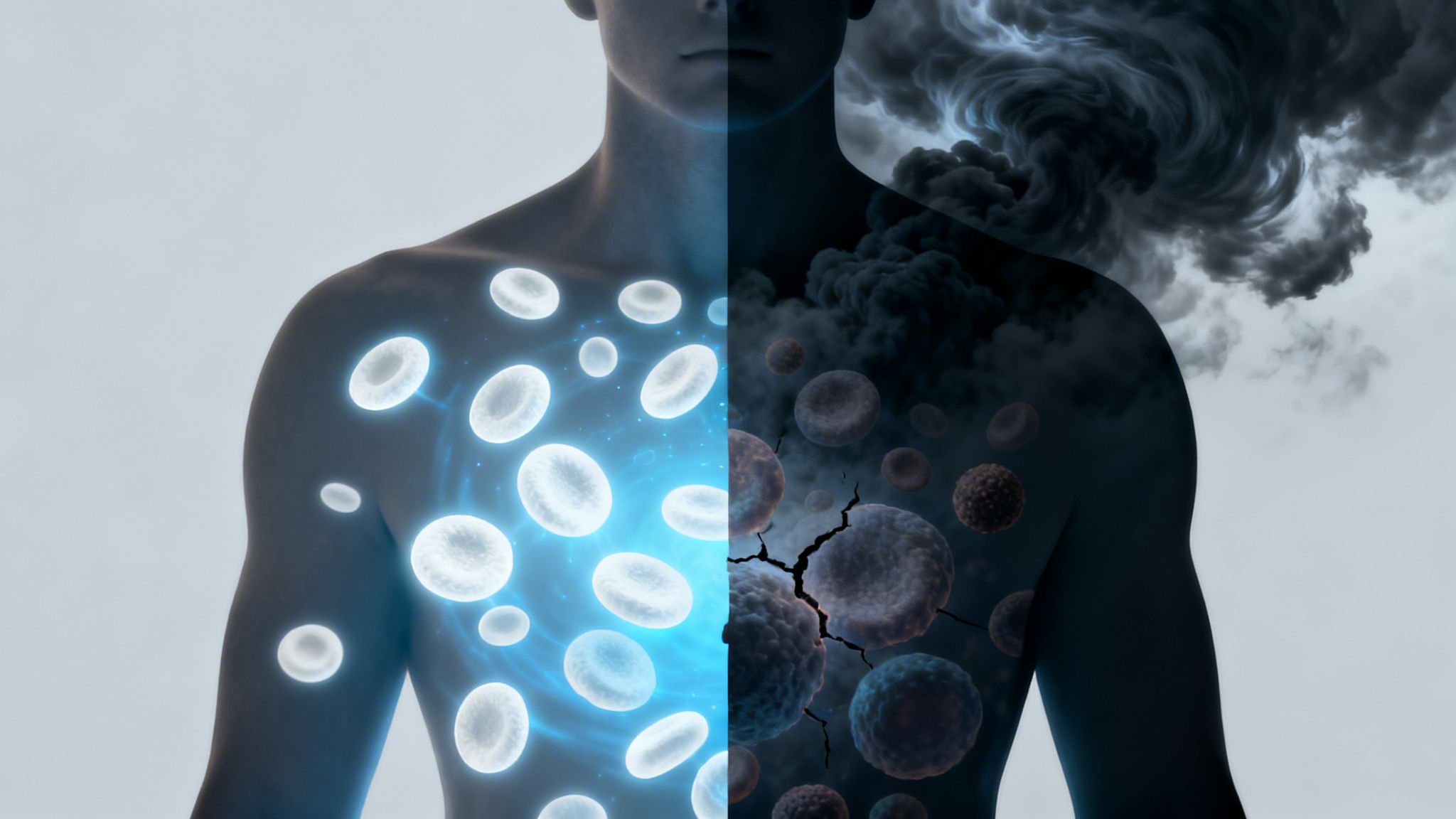
Yes, stress absolutely can weaken your immune system, and it’s not just a feeling of being "run down."
When we talk about chronic, long-term stress, we're talking about a biological process that systematically dismantles your body's natural defenses. It's a measurable physiological shift that genuinely leaves you more vulnerable to catching whatever virus is going around, whether it's the common cold (Rhinovirus) or something more serious like Influenza A.
How Your Mind and Immune System Are Connected
The idea that your mental state is directly tied to your physical health isn't just a wellness trend—it's a field of science called psychoneuroimmunology. It’s a long word for a simple concept: your brain (psycho-), your nervous system (neuro-), and your immune system (immunology) are in constant communication.
Think of it like an internal command center. When you’re under prolonged stress, your brain continuously sends out alarm signals. Over time, these signals essentially tell your immune system to power down, leaving your frontline defenses weak and disorganized. This creates an environment where viruses like Herpes Simplex Virus 1 (HSV-1) or even SARS-CoV-2 can more easily take hold.
This connection is why managing your stress is one of the most powerful things you can do for your physical health. Understanding how this process works is the first step to building a more resilient defense against viruses. This mind-body link impacts every part of your body's defense network, which you can learn more about in our guide on how innate immunity works.
Key Immune Defenders and the Impact of Stress
Chronic stress doesn't just hit one part of your immune system; it creates a cascade of problems that undermine your ability to stay healthy.
Here’s a quick look at how it targets your key immune soldiers:
- T-Cells: These are your specialized "search-and-destroy" cells that hunt down and kill virus-infected cells. Stress lowers their numbers and makes them less effective.
- Natural Killer (NK) Cells: Think of these as your immune system's vigilant sentinels. They're critical for wiping out infected cells before an infection can spread. Stress impairs their ability to spot and attack these threats.
- Antibodies: These proteins are your memory bank, recognizing and neutralizing viruses you've encountered before. Chronic stress can slow down their production, weakening your long-term immunity.
To put it all together, let’s look at how these pieces fit.
How Stress Impacts Your Immune Defenses at a Glance
This table breaks down the main ways chronic stress compromises your immune system, leaving you more open to viral infections.
| Immune Component | Function | Impact of Chronic Stress |
|---|---|---|
| T-Cells | Target and destroy virus-infected cells. | Reduces their number and combat effectiveness. |
| Natural Killer (NK) Cells | Act as rapid-response guards, killing infected cells. | Impairs their ability to recognize and attack threats. |
| Antibodies (Immunoglobulins) | Identify and neutralize specific viruses. | Slows down their production, weakening memory immunity. |
| Cytokines | Act as immune system messengers. | Causes dysregulation, leading to chronic inflammation. |
| Cortisol (Stress Hormone) | Suppresses immune function to save energy. | Chronically high levels lead to widespread immune suppression. |
As you can see, stress doesn't just cause one issue—it creates a system-wide vulnerability that viruses are all too ready to exploit.
The bottom line is simple: A consistently stressed mind leads to a suppressed immune system. By disrupting communication and weakening your cellular defenders, chronic stress opens the door for viruses to gain a foothold and make you sick.
The Science of How Stress Sabotages Your Immunity
Ever wonder why a brutal week at work often ends with a nasty cold? It’s not just bad luck. To understand the connection, we need to look at your body’s built-in “stress alarm system,” a circuit known as the HPA axis (hypothalamic-pituitary-adrenal axis).
This system is designed for short-term survival. When the alarm sounds, it floods your body with hormones—most importantly, cortisol.
In small, temporary doses, cortisol is your friend. It sharpens your focus and gives you a jolt of energy to handle an immediate threat. But when stress becomes a constant companion, that alarm never shuts off. Your body is left marinating in high levels of cortisol, and what was once a helpful response starts to become destructive.
Sustained cortisol acts as a powerful suppressor of your immune system. It’s like telling your best soldiers to stand down right before a battle.
Cortisol's Attack on Your Immune Soldiers
Your immune system is an army of specialized cells that hunt down and destroy viral threats. Chronic stress, thanks to all that excess cortisol, directly undermines these frontline defenders. The sabotage happens on two main fronts, hitting both major branches of your adaptive immunity.
As this diagram shows, there’s a direct line from ongoing stress to a weakened immune shield.

This isn't just a concept; it’s a biological reality. Two key players get hit especially hard:
- Cellular Immunity: This branch is led by your T-cells. Their job is to seek and destroy cells that have already been infected by a virus, like influenza or SARS-CoV-2. Cortisol blunts their ability to multiply and attack, giving viruses more freedom to replicate.
- Humoral Immunity: This arm is responsible for pumping out antibodies that neutralize viruses before they can even get inside your cells. Cortisol dampens this entire process, making it harder for your body to fight off both new and familiar invaders.
This isn’t just a theory—the science is solid. A landmark meta-analysis reviewing over 300 studies confirmed that chronic stressors consistently suppress both cellular and humoral immunity. This drop in T-cell activity and antibody production leaves you significantly more vulnerable to common viruses.
The Paradox of Inflammation
To make matters even more complicated, chronic stress also promotes a state of low-grade, body-wide inflammation. This might sound like the immune system is overactive, but it’s more like a state of confused chaos.
Think of it this way: While your immune system is busy dealing with this constant, low-level inflammation, it becomes less efficient at mounting a swift, powerful response against an actual viral threat. It’s distracted, dysregulated, and ultimately less effective at its real job—protecting you from pathogens like norovirus or rhinovirus.
Understanding the role of stress hormones is key to seeing the full picture. The constant presence of cortisol essentially rewires your body’s defense priorities, leaving you exposed.
For a closer look at how your body is supposed to defend itself, check out our deep dive on the immune response to viral infection.
Acute vs. Chronic Stress: A Tale of Two Immune Responses
Not all stress is the bad guy. To really get a handle on the whole "can stress weaken my immune system?" question, you have to understand the huge difference between short-term (acute) stress and the long-term, grinding kind (chronic) stress. Your body treats these two scenarios completely differently.
A quick jolt of acute stress, like the jitters before a big presentation, can actually give parts of your immune system a temporary power-up. Think of it like hitting the nitro boost in a race car—it's great for a short burst of speed, but you can't drive like that all the time. This classic "fight or flight" response is designed to get you ready for immediate physical danger, which includes getting immune cells ready for a potential injury.
The real danger isn't the stress itself, but how long it sticks around.
The Short-Lived Boost of Acute Stress
When you're hit with a short-term stressor, your body floods with adrenaline. This gets certain immune cells, especially Natural Killer (NK) cells, fired up and sent out on patrol through your bloodstream. The thinking here is to have your defenses on high alert, ready to tackle immediate threats like a cut that could get infected.
It's a smart survival trick, but it comes with a trade-off. While some defenses are ramped up, others are put on the back burner. A massive meta-analysis found that brief, intense stressors—like public speaking or doing math problems on the spot—cause a major spike in those NK cells. But at the same time, this response can dial down the activity of other specialized immune soldiers, like T-cells, by 10-17%. It's a complex shuffle of resources, even in the short term. You can read the full research on these immune shifts here.
This delicate balance shows that while a momentary stress response might seem helpful, it starts to mess with your immune function almost right away.
When Quick Stress Becomes a Chronic Problem
The real trouble starts when these short bursts happen over and over, or when the source of the stress just never lets up. An engine that’s constantly redlining is going to break down. When your body is stuck in a cycle of "fight or flight" without enough time to cool down, it starts showing the same wear and tear as full-blown chronic stress.
This is where your immune system gets thrown out of whack. The constant presence of stress hormones, especially cortisol, flips the switch from a temporary alarm to a state of long-term suppression and inflammation.
This shift from a brief alert to a permanent state of emergency is where your risk of getting sick really climbs. In fact, we're now seeing just how quickly this can happen. A 2022 study at Mount Sinai found that when mice were exposed to SARS-CoV-2 while under acute stress, the virus replicated two to three times faster than in the mice that weren't stressed.
This is a huge takeaway: even short, intense stress can crack open a window of opportunity for viruses. When that stress becomes a daily thing, those windows just stay open, leaving your immune system compromised and struggling to do its job.
How a Stressed Body Becomes a Target for Viruses
The link between a stressed-out mind and a weakened immune system isn’t just some wellness theory—it has real, tangible consequences for your health. When chronic stress keeps your immune defenses down, your body essentially rolls out the welcome mat for viral invaders. What might have been a minor exposure can quickly turn into a full-blown infection.
This explains a lot. It’s why that overworked colleague is always catching something, or why so many students get sick right after the stress of final exams.
This isn't about being vulnerable to just one or two specific bugs, either. A body worn down by stress is more susceptible to a whole range of common viruses. Study after study shows that people who report high levels of stress don't just get sick more often; they also tend to have worse symptoms and take longer to get back on their feet.
A Higher Risk for Common Viral Infections
When your immune system is running on fumes, it just can't put up a good fight against the germs you run into every single day. The result? You’re far more likely to get sick from things a healthy immune system would have easily shrugged off.
- Rhinovirus (The Common Cold): Researchers have drawn a straight line between high psychological stress and a greater chance of developing cold symptoms after being exposed to the virus.
- Influenza (The Flu): A suppressed immune response means your body is less effective at fighting off the flu virus, whether it's H1N1 or H2N2. This can lead to a more severe illness that hangs around for longer.
- Norovirus (Stomach Flu): This nasty, highly contagious virus is even harder to fend off when stress has already put your immune system at a disadvantage, often leading to more intense stomach issues.
Think of your body as a fortress. Chronic stress doesn't just exhaust the soldiers (your immune cells); it basically leaves the front gates unlocked. This makes it a whole lot easier for viruses like rhinovirus and influenza to breach your defenses and set up camp.
Waking Up Viruses That Are Already There
Beyond just making you an easier target for new infections, stress can actually reactivate viruses that are already lying dormant inside your body. That's right—many viruses, once they infect you, never truly leave. They just hide out in your cells, waiting for a moment when your immune system's guard is down.
A perfect example is the Herpes Simplex Virus 1 (HSV-1), the culprit behind cold sores. A huge number of people carry HSV-1 without ever knowing it. But what’s a classic trigger for a flare-up? A period of intense stress.
The stress hormones weaken the immune control that normally keeps the virus locked away, allowing it to "wake up" and cause those familiar blisters. A cold sore is a clear, visible sign of your immune system losing its grip, all because of stress.
Practical Steps to Protect Your Immune System From Stress
Knowing that stress can ding your immune system is one thing. Doing something about it is another. The best approach is to build up your internal defenses while simultaneously reducing the number of external threats you face.
Think of it as shoring up your castle walls while also limiting the number of invaders trying to get in. This one-two punch gives your body the resilience it needs to handle viral challenges.

Let’s be realistic: you can’t eliminate stress completely. That’s an impossible goal. But you can absolutely build habits that buffer your body from its worst effects. When you actively manage stress, you’re telling your body to dial down the cortisol, which lets your immune cells get back to their real job: protecting you.
Strengthen Your Internal Army
Your daily habits are your most powerful weapons against the physical toll of stress. You don't have to overhaul your entire life; focusing on a few key areas can make a huge difference in how well your immune system performs under pressure.
- Prioritize Quality Sleep: Getting 7-9 hours of sleep is non-negotiable. It's not a luxury—it’s when your body produces and releases cytokines, the essential proteins that coordinate your fight against infection and inflammation.
- Embrace Consistent Movement: Regular exercise is one of the best stress-busters out there. It helps flush bacteria from your lungs and gets your immune cells circulating more efficiently, making them better at spotting and neutralizing viruses.
- Practice Mindfulness: Techniques like meditation or simple deep breathing exercises are a direct counter-attack to the body’s "fight or flight" response. Even 10-15 minutes a day is enough to help lower cortisol levels and calm inflammation.
A huge piece of this puzzle involves learning How to Reduce Cortisol Levels Naturally. It's one of the most direct ways to stop stress from sabotaging your immune health.
Reduce Your Exposure to External Threats
While you’re strengthening your defenses from the inside, it’s just as critical to limit the number of germs your body has to fight off in the first place. Smart hygiene becomes your first line of defense, especially when you know stress has left your immune system a bit stretched.
A weakened immune system means you have less room for error. Reducing your exposure to pathogens gives your body a fighting chance, preventing an infection from taking hold in the first place.
This isn’t about living in a bubble. It's about smart, simple habits that create a protective barrier and lighten the load on your already-taxed immune cells.
Here are a few basics that go a long way:
- Frequent Hand Washing: It sounds simple, but using soap and water is still one of the most effective ways to physically remove viruses like influenza and rhinovirus from your hands.
- Disinfect High-Touch Surfaces: Think about it: your phone, keyboard, and doorknobs are magnets for germs. Wiping these down regularly with a quality disinfecting wipe can drastically cut your risk of transferring viruses like Norovirus or Human Rotavirus to your eyes, nose, or mouth.
- Nurture Social Connections: This might seem out of place, but strong social ties are a fantastic buffer against stress. Feeling connected and supported has a real, measurable impact on immune function.
When you combine these internal and external strategies, you create a robust, well-rounded plan for staying healthy. To dive deeper into supporting your body's natural defenses, you can learn how to boost your immune system in our detailed guide.
Got Questions About Stress and Immunity? We've Got Answers.
Let's clear up a few common questions about how stress and your immune system are connected. Think of this as your quick-reference guide to putting what you've learned into practice.
How Quickly Can Stress Weaken My Immune System?
This really comes down to whether we're talking about a short-term scare or long-term pressure. An immediate, short-lived stressor can trigger immune changes in just a few minutes. But the truly damaging suppression from chronic stress can start weakening your defenses in a matter of weeks, making you more susceptible to whatever bug is going around.
It's not an overnight collapse. Instead, picture it as a slow, gradual drain on your body's resources. When cortisol levels stay high day after day, they slowly chip away at your immune cells' ability to do their job properly.
Can Lowering My Stress Help Me Get Over a Cold Faster?
While managing stress isn't a magic cure for a cold, it absolutely gives your immune system a fighting chance to work more efficiently. When you're sick, your body is already in overdrive trying to fight off the virus.
Piling high stress on top of that is like asking your internal army to fight a war on two fronts. By dialing back the stress, you lower those disruptive cortisol levels and let your immune system focus all its energy on one thing: clearing the infection. This can definitely help you feel better, faster.
The Bottom Line: Stress management won't make a virus vanish, but it creates the ideal internal environment for your immune system to launch a strong, focused counter-attack.
Are Some People More Vulnerable to Stress-Related Immune Issues?
Yes, absolutely. The way stress hits the immune system isn't the same for everyone. A few key factors can dial the impact up or down, making some of us more sensitive than others.
Everyone's biological context is unique, shaped by a few things:
- Genetics: Your DNA plays a role in how your stress-response system (the HPA axis) and immune cells react to stress hormones. Some people are just naturally more reactive.
- Overall Lifestyle: Things like diet, exercise, and sleep quality build a strong foundation of resilience—or they can create underlying vulnerabilities that stress easily exploits.
- Pre-existing Conditions: Anyone dealing with a chronic health issue, from HIV-1 to Hepatitis B Virus (HBV), already has an immune system that's working overtime. Adding stress to that load makes them far more sensitive to its negative effects.
Leave a Reply