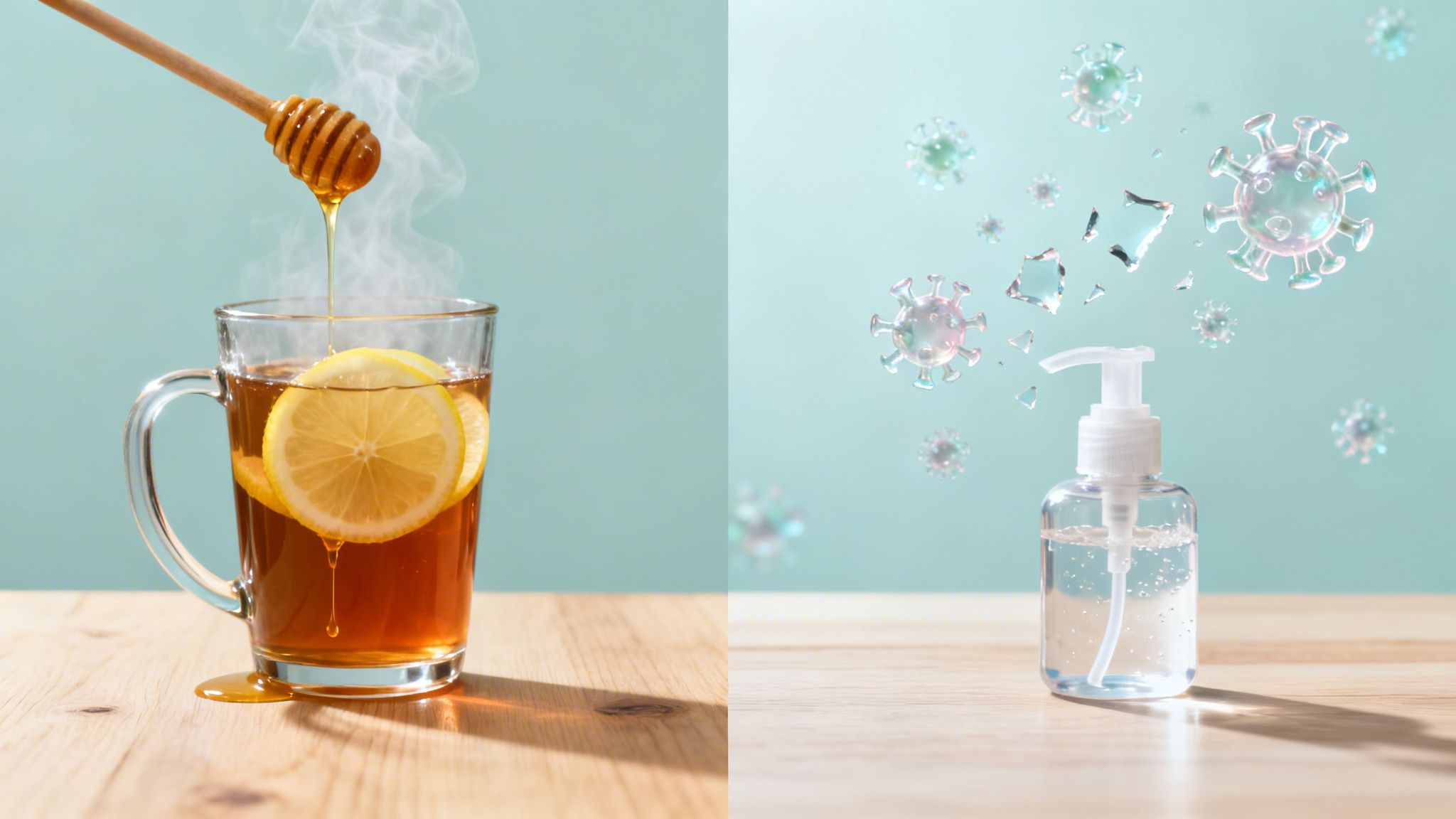
When you're feeling under the weather, reaching for a hot toddy feels like a classic remedy. And while a warm, soothing drink can certainly take the edge off a sore throat, the old wives' tale that alcohol can cure a cold is a total myth.
The real relationship between alcohol and the common cold is far more complicated—and fascinating. It’s a story of two completely different outcomes, all depending on how much you drink.
The Surprising Connection Between Alcohol and Colds
The whole debate over drinking when you're sick can be confusing. It pits what we've always heard against what the science actually says.
On one hand, it's widely known that heavy drinking hammers your immune system, leaving you wide open to infections from viruses like Rhinovirus or even Influenza. But on the other, some compelling research points to a strange, counterintuitive link: moderate drinking might actually lower your risk of getting sick in the first place.
To really get a handle on this, you have to think of alcohol's effect on your immune system as two separate paths. One where a little bit might help, and one where a lot definitely hurts.
This diagram breaks down that split perfectly.

As you can see, the path forks. Moderate drinking seems to correlate with a dip in cold risk, while heavy drinking sends that risk soaring.
Exploring the Evidence
This isn't just a theory. Researchers have been looking into this for a while.
A landmark 1993 study delivered some surprising results. It found that non-smokers who drank moderately—up to three or four drinks a day—actually had a lower risk of catching a cold after being exposed to cold viruses. That potential benefit vanished for smokers, though. The researchers were also quick to point out that this is not a recommendation to start drinking to avoid colds, given alcohol's other well-known health risks.
The bottom line is simple: how much you drink can dramatically shift your odds of getting sick. A little bit might not hurt your defenses, but heavy drinking actively sabotages your body's ability to fight off a virus.
This guide will break down all the important angles, including:
- How alcohol messes with your immune system's front-line soldiers.
- The science behind why moderate drinking might protect you from a cold.
- Why drinking when you’re already sick is always a bad idea.
- The completely different role of disinfecting alcohol in killing cold viruses like Rhinovirus Type 14 on doorknobs and counters.
How Alcohol Sabotages Your Immune System's Defenses
Think of your immune system as a highly trained security team protecting your body's fortress. When a virus like Rhinovirus Type 39 or even SARS-CoV-2 attacks, this team is supposed to identify the threat, coordinate a rapid response, and neutralize the invaders.
Now, imagine throwing alcohol into the mix. It’s like a saboteur that distracts the guards, cuts the communication lines, and weakens the fortress walls.

This isn't just a metaphor—it's what’s happening on a cellular level. Both chronic heavy drinking and even a single night of binge drinking can seriously undermine your body’s defenses, giving a cold virus a much easier path to infection.
Weakening the First Responders
Your immune system’s first line of defense includes specialized cells like macrophages and dendritic cells. These are the sentinels, constantly patrolling your body to find and engulf invaders before they have a chance to multiply.
When you drink too much, alcohol directly interferes with how these critical cells work. It's like telling your security team to take a coffee break right as an intruder climbs the wall. The macrophages get sluggish and aren't as good at "eating" the viruses.
That initial delay gives viruses a critical head start. Instead of being wiped out quickly, they get a window of opportunity to replicate and spread, paving the way for a full-blown infection. To see how these cells fit into the bigger picture, you can explore the complete diagram of the immune system.
Scrambling the Communication Lines
A good immune response depends on crystal-clear communication. Immune cells release signaling proteins called cytokines that act like urgent battlefield messages, directing other cells to the site of the infection and telling them what to do.
Alcohol throws a major wrench into this system. It messes with the normal production and balance of cytokines, which can lead to two big problems:
- A Delayed Alarm: The "call for backup" message gets lost in transit. As a result, not enough immune cells show up to fight the infection effectively.
- A Confused Overreaction: Sometimes, alcohol can trigger an excessive inflammatory response. This friendly fire can damage your own tissues and actually make your cold symptoms feel much worse.
Both binge drinking and chronic alcohol abuse can alter the gut microbiome—the community of healthy bacteria in your intestines. This community plays a surprisingly large role in regulating immune function, and disrupting it further weakens your body's ability to fend off pathogens.
Damaging Your Physical Barriers
Beyond the cellular chaos, alcohol also harms the physical barriers that are supposed to keep viruses out in the first place. Your entire respiratory tract, from your nose down to your lungs, is lined with a delicate mucous membrane and tiny, hair-like structures called cilia.
Think of these cilia as a microscopic escalator, constantly sweeping mucus, trapped viruses, and other gunk up and out of your airways. But alcohol can damage these fragile structures, essentially paralyzing them and making them less effective at clearing out pathogens.
This gives viruses like Rhinovirus an easier entry point. The protective wall is compromised and the clean-up crew is offline, leaving your lungs far more vulnerable to infection. While alcohol can weaken these defenses, learning how to improve your immune system naturally can help you build them back up.
Exploring the Science of Moderate Drinking and Colds
Now that we’ve covered how heavy drinking can sabotage your immune system, it might seem odd to hear that some research hints at the opposite effect for moderate drinking. This counterintuitive idea has sparked a lot of debate and curiosity, suggesting the relationship between alcohol and colds is far more complex than we once thought.
The theory isn't that alcohol is some kind of health tonic. Instead, it’s that certain compounds or even behaviors tied to moderate drinking might offer a slight defensive edge. It’s a fascinating corner of immunology research that’s worth a closer look.
What Does Moderate Drinking Mean?
Before we dive into the science, we need to be crystal clear on what "moderate" actually means. This isn’t about having a few drinks whenever the mood strikes. Health organizations have very specific guidelines, and this is the definition researchers use in their studies.
Generally, it breaks down like this:
- For women: Up to one standard drink per day.
- For men: Up to two standard drinks per day.
A "standard drink" is about 12 ounces of beer, 5 ounces of wine, or 1.5 ounces of spirits. Staying inside these guardrails is the entire basis for the potential effects seen in the research.
Unpacking the Research Findings
Several observational studies have tried to connect the dots between drinking habits and how often people get sick. One large study pointed out that while 55.4% of people had at least one cold in the last year, there's some evidence that moderate drinkers might catch fewer of them. You can get more of the epidemiological evidence on Medical News Today.
But here’s the catch: that potential benefit completely vanishes—and actually reverses—with heavy or long-term drinking, which we know suppresses immune function and jacks up infection risk.
Important Caveat: It’s critical to remember these studies only show a correlation, not causation. Just because moderate drinking and fewer colds were seen together doesn't prove the alcohol itself was the direct cause of protection.
Other lifestyle factors common among moderate drinkers could be the real heroes here. Still, researchers have tossed around a few theories to explain a direct link. One of the most prominent ideas involves the anti-inflammatory properties of certain compounds, especially polyphenols found in red wine.
These compounds might help keep the immune response in check, preventing the over-the-top inflammation that makes cold symptoms feel so miserable. In theory, this more controlled response could help the body handle a virus more efficiently without causing a bunch of friendly fire damage to its own tissues.
A Word of Caution
These findings are interesting, no doubt, but they absolutely should not be taken as a green light to start drinking for health benefits. The vast majority of health experts are on the same page about this: the potential risks of drinking alcohol far outweigh any tiny, unproven benefit for fending off a cold.
What’s more, the protective effect researchers saw was often strongest in non-smokers, which tells you that other healthy habits play a massive role. The goal isn’t to start using wine as a shield against viruses. It’s about understanding the full, complicated picture of how alcohol interacts with our bodies. This science is a point of interest, not a health advisory.
Why Drinking Alcohol While You're Sick Is a Bad Idea
If you're already down for the count with a cold, reaching for a beer or a glass of wine is one of the worst things you can do. The thought of a comforting hot toddy might be tempting, but alcohol actively works against your body's efforts to get better. Any temporary relief you might feel is quickly wiped out by a handful of nasty effects that can drag out your sickness and make you feel even more miserable.
Think about it this way: when you're sick, your body is already working overtime to fight off the infection. Pouring alcohol into the mix is like trying to run a marathon with weights strapped to your ankles—you’re just making an already tough job that much harder.

It Leads to Dehydration
One of the most immediate problems is dehydration. Alcohol is a diuretic, a substance that makes you pee more often. This flushes essential fluids out of your body much faster than usual.
Staying properly hydrated is absolutely critical when you have a cold. Water and other fluids help thin out mucus, making it easier for you to clear your stuffy nose and chest. Dehydration does the exact opposite, thickening that mucus and making your congestion and sore throat feel way worse.
It Sabotages Restorative Sleep
When you're fighting off a bug, sleep is your body's number one recovery tool. It's during those deep, quiet hours that your immune system really gets to work, producing the T-cells and cytokines it needs to hunt down and destroy viruses.
Sure, a drink might make you feel drowsy enough to nod off, but the quality of that sleep takes a nosedive. Alcohol is notorious for disrupting the REM cycle, which is the most restorative stage of sleep. This means you'll probably wake up more throughout the night, leaving you feeling groggy and even more exhausted the next day—slowing your recovery way down.
It Can React Dangerously with Medications
This one is serious. Mixing alcohol with common over-the-counter cold medicines can be a dangerous game. Many of the multi-symptom remedies out there contain ingredients like acetaminophen (the active ingredient in Tylenol) or ibuprofen (found in Advil), both of which are processed by your liver.
Combining alcohol and certain medications puts immense strain on your liver, which is already working to process both substances. This can increase the risk of liver inflammation and, in severe cases, lead to lasting damage.
It's also crucial to understand specific drug interactions, which you can learn more about in guides on alcohol and medication safety. Always, always read the warning labels on any medicine you take. To be safe and help your body heal, just skip the alcohol entirely until you're back on your feet.
Using Disinfecting Alcohol to Prevent Colds
While drinking alcohol can weaken your immune system from the inside, a different kind of alcohol acts as a powerful defender on the outside. We’re not talking about beer or wine, but the isopropyl or ethyl alcohol you find in hand sanitizers and disinfecting wipes. This is your first line of defense against catching a cold in the first place.
Every time you touch a contaminated surface—a doorknob, your phone screen, a shopping cart—viruses like Rhinovirus, Norovirus, or even Rotavirus can easily hop onto your hands. A quality disinfecting wipe is a proven way to stop that virus dead in its tracks before it ever reaches your eyes, nose, or mouth.

How Alcohol Destroys Cold Viruses
The science here is refreshingly straightforward. Viruses, including the ones that give you a common cold, are wrapped in an outer shell made of proteins and sometimes fats. You can think of this shell as the virus's armor, keeping its infectious genetic material safe and ready to invade your cells.
Alcohol is a solvent, and it’s exceptionally good at dissolving this protective layer. It breaks down the proteins and fats, causing the virus to literally fall apart and become harmless. Once its structure is compromised, the virus can no longer attach to or enter your cells, completely neutralizing the threat.
For an alcohol-based hand sanitizer or wipe to be effective, it must contain at least 60% alcohol. This concentration is the sweet spot for destroying most common viruses quickly and efficiently.
This simple but powerful mechanism is why hand washing and disinfecting wipes are cornerstones of public health advice. Study after study has shown that using these products regularly significantly cuts down on the spread of respiratory infections. Our hands are the number one vehicle for transmitting viruses, so keeping them and our surfaces clean is a game-changer.
Applying Alcohol for Maximum Protection
To get the most out of disinfecting alcohol, you have to be strategic. Focus on the high-touch surfaces you encounter every single day. Making this a regular habit with a reliable disinfecting wipe creates a protective barrier between you and the countless germs circulating in your environment.
Here are the key areas to target:
- Personal Devices: Your smartphone, keyboard, and mouse are germ magnets. Give them a daily wipe-down, especially if you use them out in public.
- High-Traffic Surfaces at Home: Think doorknobs, light switches, remote controls, and refrigerator handles. These get touched by everyone in the house, all day long.
- On the Go: When you're out and about, be mindful of ATM keypads, gas pump handles, and public transit railings. A quick wipe of these surfaces can make all the difference.
So, while beverage alcohol and colds have a complicated relationship inside your body, the role of disinfecting alcohol is simple and clear. It’s one of your most reliable tools for external protection. To dig deeper into this, check out our detailed guide on whether alcohol wipes are effective at killing germs. By proactively zapping viruses from your hands and surroundings, you can dramatically cut your risk of getting sick.
Frequently Asked Questions About Alcohol and Colds
The connection between a glass of wine and a stuffy nose can feel confusing, especially with all the old wives' tales out there. Let's clear the air and tackle the most common questions about alcohol and colds so you can make smart choices to feel better, faster.
Can Drinking Alcohol Directly Cause a Cold?
No, you can't get a cold directly from drinking alcohol. Colds are caused by viruses—most often rhinoviruses, such as Rhinovirus Type 14—that you have to catch from another person or a contaminated surface.
But here’s the important part: alcohol does make you more vulnerable to catching a cold if you're exposed. Think of your immune system as a security alarm for your body. Heavy drinking is like hitting the snooze button on that alarm, making it much easier for a virus to sneak past your defenses and set up shop.
Does Red Wine Help a Cold More Than Other Drinks?
This is a popular one. Some research has looked into the antioxidants in red wine, called polyphenols, to see if they offer any special protection. These compounds do have anti-inflammatory properties, which might explain the weak link some studies found between moderate drinking and getting fewer colds.
However, no alcoholic drink is a magic cure or a good preventative for a cold. The alcohol itself still dehydrates you and disrupts your sleep—two things that actively work against your recovery. You’re much better off sticking to proven remedies like rest and plenty of fluids.
The bottom line is that the potential harms of alcohol during an illness far outweigh any theoretical benefits from the polyphenols in wine.
How Long Should I Wait to Drink After a Cold?
It's best to wait until you feel completely back to normal and have finished taking any over-the-counter cold medications. Your body needs time to rehydrate and get its immune system back to full strength, and that takes resources.
Drinking too soon can set you back or just drag out your recovery. A good rule of thumb is to wait at least 48 to 72 hours after your last symptom disappears. This gives your system the break it needs to fully reset without the extra work of processing alcohol. To get a better handle on how long you might be passing the virus to others, you can learn more about how long colds are contagious in our guide.
What Should I Do Instead of Drinking Alcohol?
When you’re sick, your body is begging for three things: hydration, rest, and nutrients. Swapping out alcohol for things that actually support your recovery can make a huge difference in how quickly you bounce back.
Try focusing on these instead:
- Hydrate constantly: Keep a steady flow of water, herbal tea with honey, or clear broths. This helps thin out mucus and is a lifesaver for a sore throat.
- Prioritize rest: Sleep is when your body does its best repair work. Give it the downtime it needs to mount a strong immune response.
- Use surface disinfectants: While you’re recovering, remember the best way to use alcohol is for prevention! Wiping down doorknobs, remotes, and your phone with a good disinfectant wipe helps stop the virus from spreading to everyone else in your home.
Leave a Reply