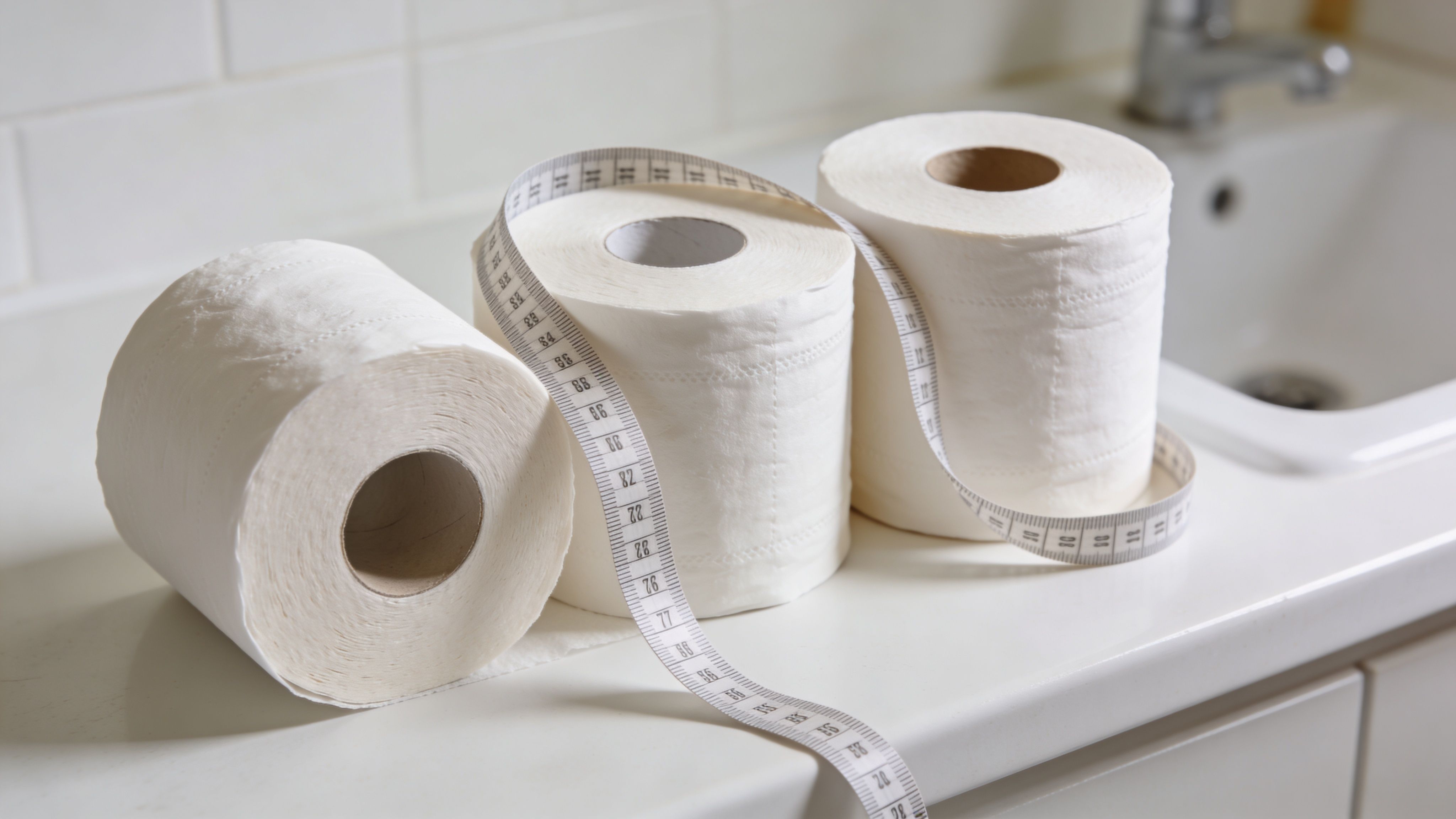
You buy a new pack of toilet paper, slide a roll onto the holder, and it won’t turn. The roll rubs against the wall, the dispenser arm pops loose, and the first few pulls tear into clumps. This is often filed under “minor bathroom annoyance.”
It isn’t just that.
In a bathroom, small usability failures often turn into hygiene failures. When a roll sticks, people touch the paper more, touch the holder more, and often steady themselves against nearby surfaces while trying to get a clean pull. If hands are not fully clean yet, or if the next user touches the same surfaces, the bathroom picks up extra contamination points. That matters for any setting where you’re trying to reduce surface spread of common viruses.
The Hidden Hygiene Risk of the Wrong Toilet Paper Roll
A poorly fitting roll changes behavior. Instead of pulling once and moving on, you tug repeatedly. You press the roll. You grip the dispenser. You touch the wall, cabinet, or tank lid when the holder shifts. That sequence creates extra hand-to-surface contact in one of the highest-touch rooms in the home.
That’s the part many buying guides miss. Toilet paper sizes affect more than convenience. They influence how cleanly the product dispenses, how often users touch shared surfaces, and how likely paper is to tear during use.
If you want a refresher on how contaminated objects can help spread illness, this guide on fomite transmission explains the mechanism in plain language. Bathrooms are classic examples because the same few surfaces get touched over and over.
Where people get confused
Many shoppers assume “bigger roll” means “better value” and stop there. But a larger roll that jams can be less hygienic in practice than a smaller one that spins freely. The same goes for paper that feels soft in the package but shreds easily during use.
A bathroom product does its job best when it works without struggle.
That point becomes even more important for people with irritation or painful wiping. If someone is already dealing with discomfort, repeated tearing or rough paper can make the problem worse. For readers looking for care advice related to anal fissures, gentler products and less friction can make daily hygiene easier.
Why this belongs in a public health conversation
Bathrooms are full of shared touchpoints. Faucet handles, flush levers, light switches, door knobs, dispensers. Toilet paper sits in the middle of that contact chain. When the roll fits well and dispenses easily, users handle less. When it doesn’t, they handle more.
That’s why understanding toilet paper sizes is part of infection control at home, not just a shopping detail.
Decoding Standard Toilet Paper Measurements
A toilet paper package can look precise while hiding the details that affect hygiene. Words like “double,” “mega,” and “ultra” are marketing shortcuts. The measurements that shape real-world use are sheet size, ply count, roll diameter, and core diameter.

Sheet size and ply count
Sheet size means the length and width of one sheet. Brands do not always make sheets the same size, even when the package looks similar on the shelf. That matters because a larger, stronger sheet often covers the hand better and needs fewer folds. A smaller sheet can push people to bunch, layer, or pull extra paper, which increases handling before the task is finished.
In hygiene terms, that extra handling matters. More pulling and adjusting can mean more contact with the roll, the holder, and nearby surfaces, especially if the paper tears under tension.
Ply count tells you how many layers each sheet has. A single-ply sheet is thinner. Two-ply and three-ply sheets are thicker and usually feel sturdier. More layers can reduce tearing, but they also add bulk to the roll, which affects how well it fits the holder and how easily it turns.
A simple comparison helps here. Sheet size is like the size of a paper towel square. Ply count is like the towel’s thickness. You need enough of both for the product to work cleanly without forcing extra grabs and adjustments.
Roll diameter and core diameter
Roll diameter is the distance across the full roll. This is the outer size you can see. It affects clearance inside a holder and determines whether the roll spins freely or rubs against the arm, wall, or cabinet.
Core diameter is the size of the cardboard tube in the center. It has to sit properly on the spindle. If the core is too tight, the roll can drag. If the fit is sloppy, the roll can wobble and pull unevenly.
That may sound minor, but bathroom hygiene often depends on small points of friction. A roll that turns cleanly is used with fewer touchpoints. A roll that sticks invites repeated pulling, regripping, and contact with the fixture. In a shared bathroom, those extra touches can add to the chain of surface contamination that helps viruses move from hand to object and back again.
Practical rule: If the core sits poorly on the holder or the outer roll rubs nearby surfaces, the label matters less than the fit. That roll is likely to create more handling than necessary.
Quick reference guide to standard roll dimensions
| Dimension | Standard Roll | Double Roll | Mega Roll |
|---|---|---|---|
| Sheet size | Often similar across household rolls | Often similar across household rolls | Varies by brand |
| Core diameter | Usually made for common home holders | Usually made for common home holders | May vary |
| Roll diameter | More likely to fit residential fixtures | Larger than standard | More likely to create clearance issues |
| Total paper | Basic household amount | More than standard | Marketed for longer use between changes |
A simple way to think about bathroom fit
Your holder works like a dispenser, not just a storage peg. It needs enough room for the roll to spin without scraping. In smaller bathrooms, nearby walls, vanities, or tight fixture placement can reduce that clearance more than people expect. If you are planning a remodel or trying to solve cramped placement, guides on powder room dimensions can help you assess spacing around the toilet area.
Bulk buying adds another layer. A case of the wrong size does not just waste shelf space. It can lock a household into weeks or months of awkward dispensing and more frequent contact with bathroom surfaces. Before stocking up, compare the product’s measurements with both storage space and fixture fit. A guide to buying hygiene products in bulk can help you make that comparison with fewer surprises.
Why Your New Mega Roll Might Not Fit
The marketing is easy to understand. Buy a bigger roll, replace it less often, make fewer trips to the store. The problem starts when that bigger roll meets a holder that was designed for an ordinary residential size.

Most residential toilet paper holders perform best with rolls up to 5 inches in diameter, while Mega and Jumbo rolls can range from 4.5 to 12 inches, creating a common mismatch that leads to dispensing problems and more hand-to-surface contact, according to this overview of standard, mega, and jumbo rolls.
What friction does in real use
When an oversized roll barely fits, it drags instead of spinning. Users pull harder. The paper tears before a full sheet comes free. Then they grip the loose end, touch the side of the roll, and often reposition the spindle.
That pattern matters in shared bathrooms because every extra touch creates another opportunity to leave contamination behind or pick it up. Viruses that spread through surface contact don’t care whether the original problem was “bad bathroom design” or “wrong toilet paper size.” They only need a sequence of touch events.
Signs the roll is too large
Look for these clues:
- The paper shreds on the first pull because the roll can’t rotate cleanly.
- The roll rubs the wall or housing instead of turning freely.
- The holder arm slips out when people tug harder than usual.
- Users touch the roll itself repeatedly to unwind paper by hand.
Any one of those means the product and the dispenser aren’t working together.
If a roll has to be hand-guided every time, the dispenser is no longer reducing contact. It’s adding contact.
Why homes and public spaces solve this differently
Commercial bathrooms usually don’t rely on the small spring-loaded holder common in homes. They use enclosed systems, larger dispensers, or folded formats because the fixture is chosen to match the product. In homes, people often do the reverse. They change the product and keep the fixture.
That’s why a “mega” upgrade can backfire.
If you’re comparing bathroom dispensing systems more broadly, especially where touch reduction matters, looking at wet wipe dispensers can sharpen your thinking about how packaging and hardware affect contact points.
The Story of Shrinkflation and Hygiene Compromises
Toilet paper didn’t suddenly become confusing. It was made confusing over time, partly because the package still looks familiar even when the contents have changed.

In the 1970s, a standard roll of single-ply Charmin had 650 sheets measuring 4.5 by 4.5 inches. By 2013, a two-ply roll had just 82 sheets, with dimensions shrinking to as little as 3.92 by 4 inches, a surface area reduction of nearly 26%, according to The Hustle’s reporting on toilet paper shrinkflation.
Why smaller sheets change hygiene behavior
A smaller sheet can still work. The problem appears when a smaller sheet is also weaker, narrower, or more likely to tear in use. Then people adapt. They bunch more sheets together. They pull extra length. They wipe again because the first pass felt inadequate.
That adaptation has two hygiene consequences.
- More handling during use means more chances for hands to contact the roll.
- More paper pulled per visit leaves more loose paper edges and more touched surfaces around the holder.
Those aren’t abstract concerns. Product design changes how people behave in the bathroom.
The hidden compromise in “same aisle, same product”
Shrinkflation works because many shoppers compare package appearance and shelf price faster than they compare sheet dimensions. But toilet paper isn’t just a commodity. It’s a barrier product. Its job is to create separation between skin and waste while allowing a user to clean effectively and discard the material safely.
When that barrier gets smaller, users often compensate with technique. That may solve the immediate problem, but it can increase mess and contact around the dispenser area.
Smaller paper can shift the workload from the product to the user. In hygiene terms, that’s rarely an improvement.
A practical response is simple. If a roll tears often or feels too skimpy, don’t treat that as a harmless quality preference. Treat it as a signal to clean nearby bathroom surfaces more consistently, especially the holder, flush area, and anything hands may touch during re-gripping.
Navigating Commercial and International Size Differences
A roll that works well at home can fail in a clinic, school, or airport restroom for a simple reason. The bathroom system is doing two jobs at once. It has to supply paper, and it has to limit how many surfaces users touch while their hands may still carry microbes.
That design choice matters for hygiene. Viruses and other pathogens can move from hands to dispensers, stall latches, roll edges, and nearby walls. A poorly matched paper format often creates extra contact points, especially in busy restrooms where dozens or hundreds of people use the same fixture.
Household versus commercial systems
Home bathrooms usually rely on an exposed roll on a simple holder. That setup is familiar and easy to refill, but it leaves the paper edge and the roll surface open to repeated handling. If the roll is too large for the fixture, it may drag, stop, or require users to tug harder, which increases hand contact around the holder.
Commercial systems are built around a different problem. They are meant to serve many users while reducing maintenance and limiting direct contact with the paper supply. That is why you often see jumbo-roll dispensers, enclosed housings, coreless systems, or folded-sheet dispensers.
Each format changes user behavior in small but important ways:
- Household rolls fit standard home fixtures and prioritize comfort.
- Jumbo commercial rolls stay in service longer and are often shielded inside a dispenser.
- Folded sheet dispensers release paper one portion at a time, which can reduce grabbing and over-handling.
- Coreless or enclosed systems remove or cover parts that users would otherwise touch repeatedly.
A dispenser works like a traffic control point. If it meters paper cleanly, people touch less. If it jams, drags, or dispenses unevenly, people start pulling, re-gripping, and touching surrounding surfaces more often.
A wider historical and global perspective
Toilet paper has never followed one worldwide template. Formats vary by country, building type, plumbing system, dispenser design, and maintenance routine. Some markets favor compact household rolls. Others rely more heavily on larger commercial formats or folded tissue in public settings.
Even the long history of toilet paper shows that size has always reflected context, status, and use patterns, as summarized in Wikipedia’s history of toilet paper. The useful lesson is practical. There is no single “normal” size that works everywhere.
That helps explain a common point of confusion. A traveler may find that a roll bought abroad feels narrower, fits loosely, or does not work well with a local holder. The issue is often not product quality alone. It is a mismatch between paper dimensions, core style, and dispenser design.
Why this matters for hygiene planning
For a household caring for children, older adults, or guests, and for any small business managing a shared restroom, roll size is part of infection control. The goal is not only to keep paper available. The goal is to make clean use easier and messy workarounds less likely.
The best system is the one that dispenses reliably, fits the fixture, and minimizes unnecessary touching. In hygiene terms, good fit is good containment.
A Practical Guide to Buying and Stocking for Better Hygiene
Good toilet paper buying starts with measurement, not branding. If you know your dispenser space, your household’s comfort needs, and your tolerance for maintenance, you can avoid most of the common problems.

A key gap in hygiene practice is failing to consider how product design affects use. A toilet paper sheet that is too small or thin may compromise pathogen containment, as discussed in this article on tissue design and hygiene protocols. That means “cheapest acceptable paper” isn’t always the safest choice.
Measure before you buy
Start with the dispenser, not the package.
- Check side clearance around the holder. Look for the nearest wall, vanity, cabinet, or recessed housing edge.
- Measure the space available for roll diameter so you know how much room the roll has to rotate.
- Look at the spindle or holder shape and whether it works best with a standard cardboard core.
If the holder is already tight with your current roll, a larger format probably won’t improve anything.
Read the package like a tool label
Marketing names are inconsistent. “Mega” doesn’t tell you enough. Instead, look for the measurements and contents that predict real use.
- Sheet dimensions: Larger sheets can reduce over-pulling if they stay intact.
- Ply count: More layers may feel better, but the roll may also become bulkier.
- Roll diameter: This is the fit number many shoppers overlook.
- Core compatibility: If the tube doesn’t sit properly on the holder, daily use becomes clumsy.
Buy for function, then comfort
Some households focus only on softness. Others focus only on cost. Hygiene usually sits between those two.
A practical buying choice does three things at once:
- Dispenses easily
- Holds together during use
- Doesn’t force repeated touching of shared surfaces
That balance matters more than catchy packaging language.
Buying rule: Choose the roll that people can use cleanly on the first pull, not the one that sounds biggest on the shelf.
Stock without turning storage into a mess
Bulk buying can help, but only if storage stays dry, orderly, and easy to clean. Don’t cram loose rolls into dusty corners beside cleaning tools or bathroom trash. Keep reserve rolls where wrappers stay intact and where the stack won’t pick up splash or grime from routine bathroom use.
A simple stocking routine works well:
- Keep one active backup nearby so no one handles the almost-empty roll excessively.
- Store the rest outside the immediate splash zone if the bathroom is small.
- Rotate older packs forward so packaging doesn’t degrade in damp storage.
Clean the holder like it matters
It does.
The dispenser arm, shelf above the roll, nearby wall, and flush-touch surfaces should be cleaned regularly. In a shared bathroom, a disposable disinfecting wipe is often the easiest way to clean those small hard surfaces quickly and consistently. The job is simple enough that it’s easy to skip. That’s exactly why it should become routine.
When toilet paper sizes, dispenser fit, and surface cleaning all work together, the bathroom becomes easier to use and easier to keep sanitary.
Conclusion: Why Toilet Paper Size Is a Matter of Public Health
Toilet paper sizes sound trivial until you watch how people use the product. A roll that doesn’t fit leads to tugging, tearing, and extra contact with shared bathroom surfaces. A sheet that’s too small or too flimsy can force people to compensate with more handling. Both problems increase the chances of surface contamination in a room that already carries a heavy hygiene burden.
The details matter. Core diameter affects whether the roll mounts properly. Roll diameter affects whether it turns or sticks. Sheet size and ply affect whether the paper performs cleanly during use. Those aren’t just shopping specs. They shape behavior.
That’s the public health lesson hidden in an ordinary household product. Better bathroom hygiene doesn’t start only with handwashing, though handwashing remains essential. It also starts with choosing products that reduce friction, reduce repeated touching, and support effective cleaning on the first try.
Bathrooms are one of the most practical places to interrupt virus spread. Small choices help. A roll that fits. Paper that holds together. A holder and nearby surfaces cleaned often enough that yesterday’s contact doesn’t become today’s exposure.
If you want more evidence-based guidance on how viruses spread and how to reduce risk at home, visit VirusFAQ.com. The best prevention habits are often the least dramatic. They’re the ones you can repeat every day.
Leave a Reply