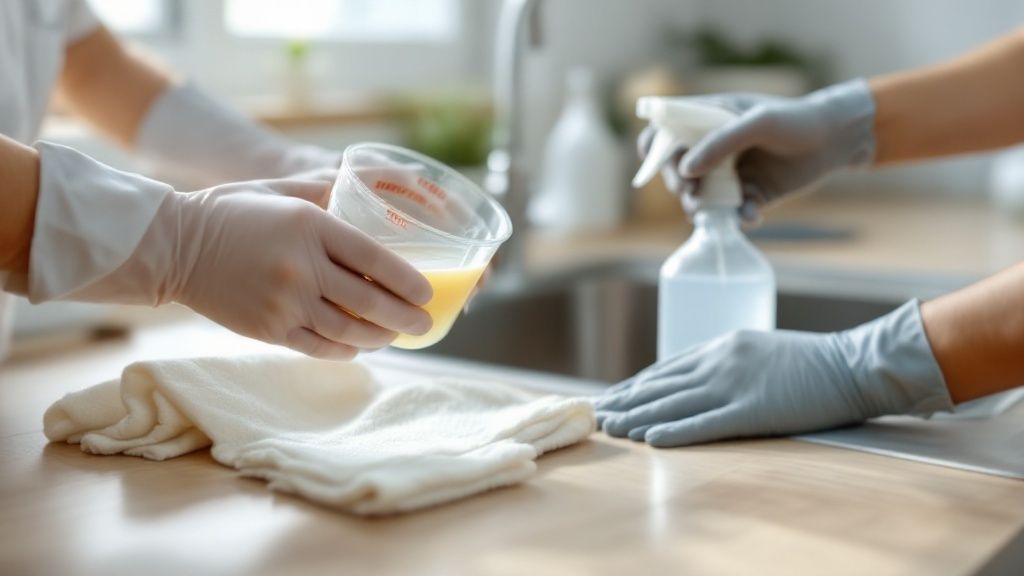
When you need to kill germs, bleach is one of the most powerful and affordable tools in your arsenal. Its active ingredient, sodium hypochlorite, is a beast when it comes to destroying the proteins and nucleic acids that make up dangerous pathogens. That's why it's been a trusted sanitizer in homes and hospitals for generations.
Why Bleach Is a Disinfection Powerhouse

Before you start mixing, it's good to know why bleach works so well against microscopic threats. The magic is in its active ingredient, sodium hypochlorite, a chemical compound that’s exceptionally good at obliterating viruses, bacteria, and fungi on contact.
When you add water to bleach, a chemical reaction creates hypochlorous acid. This acid is the real workhorse here—it quickly oxidizes and dismantles the essential building blocks of germs, neutralizing them on the spot. It’s a simple but brutal mechanism that stops pathogens dead in their tracks.
Tackling a Broad Spectrum of Viruses
One of the biggest advantages of bleach is its versatility. It doesn't just work on one or two types of viruses; it's a broad-spectrum killer effective against some of the toughest germs out there.
Bleach is a go-to for fighting:
- Enveloped Viruses: Think of viruses like SARS-Related Coronavirus 2 (SARS-CoV-2), Human Immunodeficiency Virus Type 1 (HIV-1), or Influenza A Virus (H1N1). They have a protective outer fatty layer, but bleach easily dissolves this envelope, causing the virus to fall apart.
- Non-Enveloped Viruses: These are the tough guys of the virus world because they don't have that vulnerable outer layer. But even notoriously resilient pathogens like Norovirus and Rhinovirus Type 14 (the common cold) can't stand up to the oxidizing power of sodium hypochlorite.
In the world of disinfectants, bleach is often considered a top-tier option due to its broad-spectrum kill capability. According to the Spaulding classification scheme used in healthcare, bleach is categorized as an intermediate-level disinfectant, strong enough to handle challenging pathogens like C. diff spores.
A Longstanding Ally in Public Health
Bleach isn't some newfangled invention; its role in public health is deeply rooted in history. It’s been a cornerstone of sanitation and disease prevention for over a century. Since mass production ramped up in the early 1900s, it became the go-to disinfectant for everything from kitchens to operating rooms.
During major outbreaks like the 1918 influenza pandemic and, more recently, COVID-19, the demand for bleach skyrocketed. Why? Because people knew it worked, and it worked fast.
This long track record speaks volumes about its reliability. While store shelves are full of fancy cleaning products, bleach remains the trusted choice for serious disinfection. It's crucial to understand the difference between just cleaning a surface and actually disinfecting it. You can dive deeper into that topic in our detailed guide on disinfection and antiseptics. This knowledge helps ensure you're not just making things look clean, but truly making them safe.
Mixing Your Bleach Solution for Maximum Effect
Getting the concentration right is the most critical step when you’re using bleach to disinfect. A solution that’s too weak won’t do much against tough pathogens like the Hepatitis B Virus (HBV) or Norovirus. On the other hand, a mix that’s too strong can damage surfaces and create some pretty nasty fumes.
So, let's walk through how to mix the perfect batch every single time.
First things first, grab your bleach bottle and take a look. Not all household bleach is the same. You'll usually find either standard bleach (around 5.25% sodium hypochlorite) or a more concentrated version (around 8.25% sodium hypochlorite). Knowing which one you're working with is essential because it changes how much you’ll need to use.
Always start with cool water. This is a pro tip that a lot of people miss. Hot water can actually break down the sodium hypochlorite, making your solution less effective before you even get started. Also, give the expiration date a quick glance—bleach loses its kick over time, and an old bottle just won't cut it.
Crafting the Right Bleach Dilution
For most of your daily disinfecting tasks—think doorknobs, countertops, and light switches—a general-purpose solution is all you need. It’s simple to make.
- For Standard Bleach (5.25%): Mix 4 teaspoons of bleach into a quart (4 cups) of cool water.
- For Concentrated Bleach (8.25%): You'll need a bit less—about 2.5 teaspoons per quart of cool water.
Now, if you're tackling high-risk zones like a bathroom after someone's been sick, or cleaning up bodily fluids, you need to up the ante. A stronger mix is required to properly neutralize those more resilient germs.
This handy visual breaks down the simple steps for creating a standard dilution, which is a great starting point for general cleaning.

As you can see, the process is straightforward: measure, apply, wait, and rinse. Following these steps is the key to effective disinfection.
Here’s a quick-reference table to make things even easier. I keep a version of this taped inside my cleaning supply cabinet. It's a lifesaver when you need to mix a batch quickly and don't want to second-guess your ratios.
Bleach Dilution Ratios for Effective Disinfection
| Disinfection Purpose | Bleach Amount | Water Amount | Recommended Contact Time |
|---|---|---|---|
| General Surface Disinfection | 4 tsp (5.25%) or 2.5 tsp (8.25%) | 1 Quart | 5-10 minutes |
| Food-Contact Surfaces | 1 Tbsp (5.25%) | 1 Gallon | 2 minutes, then air dry or rinse |
| High-Risk/Biohazard Cleanup | 1/2 cup (5.25%) | 1 Gallon | 10+ minutes |
| Disinfecting Toys (non-porous) | 2 tsp (5.25%) | 1 Gallon | 5 minutes, then rinse thoroughly |
This table covers the most common scenarios you'll run into, from kitchen counters to more serious cleanups. Just remember to always let the surface air dry or rinse it with clean water after the contact time is up, especially for anything that will touch food or a child's mouth.
Essential Mixing Best Practices
Safety and effectiveness really do go hand-in-hand here. Always mix your bleach in a well-ventilated area. Just opening a window or turning on a fan makes a huge difference in avoiding those harsh fumes.
Remember this: a freshly mixed bleach solution is at its most powerful. Once diluted, sodium hypochlorite starts breaking down and loses much of its potency within about 24 hours. For the best results, always make a new batch for each cleaning job.
And the golden rule: never, ever mix bleach with other cleaning chemicals, especially anything containing ammonia. This can create toxic chloramine gas, which is a serious health hazard. Just stick to bleach and water. That’s all you need for a safe and powerful disinfectant.
Essential Safety Rules for Handling Bleach

While bleach is a champion disinfectant, its chemical power demands respect. Treating it casually is a mistake that can lead to skin irritation, respiratory issues, or worse. Following a few non-negotiable safety rules ensures you get all the benefits of bleach for disinfection without any of the risks.
First things first: personal protection. Sodium hypochlorite is corrosive, which means it can cause chemical burns on bare skin. Before you even twist open that bottle, you need to be wearing waterproof gloves. Standard rubber cleaning gloves or nitrile ones work perfectly.
Just as important is good ventilation. Bleach fumes can really irritate your eyes, nose, and throat, and the problem is much worse in small, enclosed spaces like bathrooms. Just cracking a window or flicking on an exhaust fan makes a huge difference by dispersing the fumes and giving your lungs a break. For a complete guide, check out our article on how to use personal protective equipment.
Never Mix Bleach with Other Cleaners
If you remember only one thing, make it this: Do not mix bleach with other household cleaners. This is the single most critical safety rule, because combining bleach with certain chemicals can trigger dangerous reactions and release toxic gases into your home.
- Bleach + Ammonia: This is the most infamous and hazardous mix. It creates toxic chloramine gas, which can cause severe respiratory damage, chest pain, and shortness of breath. You'd be surprised how many glass cleaners and all-purpose cleaners contain ammonia, so always read the labels.
- Bleach + Acid-Based Cleaners: When bleach meets acidic products—think toilet bowl cleaners or some glass cleaners—it releases pure chlorine gas. Even low-level exposure can cause violent coughing, breathing problems, and chemical burns to your lungs.
Imagine this scenario: you've just scrubbed the toilet with an acid-based cleaner. If you then pour bleach into the bowl without flushing a few times first, you are creating a hazardous chemical reaction right there. That chlorine gas can fill a small bathroom in seconds, turning a cleaning chore into a serious emergency.
Safe Storage and Accident Response
Proper storage is your first line of defense against accidents, especially in homes with children or pets. Keep bleach in its original container, always tightly sealed. Store it in a cool, dark place that's completely out of reach for curious kids or pets—a high cabinet with a childproof lock is perfect.
If an accident does happen, you need to act fast.
What to do if bleach gets on you:
- Skin Contact: Immediately start flushing the affected area with cool water for at least 15-20 minutes. Take off any clothing that got bleach on it.
- Eye Contact: This is more serious. Flush the eye with clean, lukewarm water for a full 15-20 minutes. Tilt your head so the water runs away from your other eye. After flushing, you need to seek immediate medical attention.
Applying Bleach Correctly on Different Surfaces

Once your bleach solution is perfectly mixed, the real work begins. How you apply it makes the difference between a surface that just looks clean and one that’s truly disinfected from nasty pathogens like Rhinovirus Type 39 or Herpes Simplex Virus 1 (HSV-1).
Before you even think about disinfecting, you have to clean the surface first. I know, it feels like an extra step, but trust me, it’s essential. Dirt and grime act like a shield, preventing the bleach from reaching the germs. A quick scrub with soap and water clears the way for the bleach to do its job effectively.
Mastering Application and Contact Time
When it comes to hard, non-porous surfaces—think countertops, doorknobs, and light switches—wiping is your best bet. Soak a cloth or paper towel in your diluted bleach, wring it out just enough so it's not dripping, and wipe down the entire surface. Spraying might seem faster, but it often leaves an uneven coat and can aerosolize the bleach, which you don't want to breathe in.
After you've wiped everything down, the most critical part is the contact time. This is the non-negotiable window where the surface must stay visibly wet with the bleach solution to actually kill the germs. If it dries too soon, the party’s over for the disinfection process.
For most household disinfecting jobs, you’re aiming for a contact time of at least 5 to 10 minutes. I always recommend setting a timer on your phone. It’s the only way to be sure you've given the bleach enough time to work its magic before you rinse or wipe the surface with clean water.
This waiting period is what ensures a true kill of viruses and bacteria. There’s a reason the global bleach market is projected to grow by roughly USD 408 million between 2024 and 2029—its power as a reliable disinfectant is unmatched. This growth points to a massive global uptick in hygiene awareness, a trend that really took off during recent pandemics. You can dive deeper into these market trends by checking out the full industry forecast.
Surfaces Where Bleach Is a No-Go
Bleach is a powerhouse, but it’s not for everything. Using it on the wrong material can cause irreversible damage, from ugly discoloration to straight-up corrosion. Knowing what not to clean with bleach is just as important as knowing what you can.
Here are a few common materials you should keep bleach far away from:
- Porous Surfaces: Wood, whether it's finished or not, will soak up bleach like a sponge, damaging its fibers and ruining the finish. The same goes for painted walls—bleach will strip the color right off.
- Natural Stone: If you have granite, marble, or quartz, keep the bleach away. These materials are porous and can be etched or discolored by harsh chemicals. Stick to pH-neutral cleaners made specifically for stone.
- Certain Metals: Bleach is a major no for aluminum, copper, and silver. It can also cause pitting and corrosion on stainless steel unless contact is extremely brief and followed by an immediate, thorough rinse.
For quick touch-ups or for those surfaces where bleach is off-limits, it’s smart to have a backup plan. Disinfecting wipes are a fantastic, convenient alternative for delicate items or for moments when mixing up a fresh batch of bleach just isn't practical. Think of them as a handy supplement to your deep-cleaning routine, perfect for wiping down your phone, cleaning up a quick spill, or handling sensitive electronics where a liquid solution is too risky. Understanding the limits of bleach for disinfection helps you protect your home while keeping it germ-free.
When to Choose an Alternative to Bleach
Bleach is an incredible, heavy-duty disinfectant, but it's not the perfect tool for every single situation. Knowing when to reach for something else is just as important as knowing how to use bleach correctly.
Certain materials, specific environments, and even simple time constraints can make other options a much smarter choice.
For example, delicate electronics like your phone or remote control are a definite no-go for a wet bleach solution. The same goes for porous surfaces like unsealed wood or reactive materials like certain metals and natural stones, which can be permanently damaged by sodium hypochlorite. In those cases, you need a different game plan.
Considering Other Disinfectants
When bleach is off the table, two of the most common and effective alternatives are alcohol-based solutions and hydrogen peroxide. Each one has its own strengths and is suited for different jobs.
- Isopropyl Alcohol: An excellent choice for electronics and other sensitive surfaces. Alcohol evaporates quickly without leaving a residue, making it perfect for wiping down keyboards, phones, and stainless-steel appliances.
- Hydrogen Peroxide: A less corrosive option than bleach that still packs a punch against bacteria and viruses. It's often favored for being gentler on surfaces and breaking down into just water and oxygen, making it an eco-friendlier choice.
Building a versatile cleaning toolkit means knowing how these options stack up. You can explore the specific uses and safety profiles in our detailed guide comparing hydrogen peroxide and rubbing alcohol. Understanding the alternatives ensures you always have the right disinfectant ready to go.
The Case for Convenience and Speed
Sometimes, the biggest obstacle to disinfecting isn't the chemical—it's the prep time.
Mixing a fresh batch of bleach solution isn't always practical for a quick cleanup, especially when you're on the go. This is where ready-to-use products really shine, offering a powerful combination of effectiveness and convenience.
The rise of alternative disinfection technologies is a recognized factor in the cleaning market. While bleach remains a dominant force, the demand for user-friendly, specialized, and safer alternatives continues to shape industry trends.
This competition is reflected in the global bleaching agents market, which was valued at around USD 908 million in 2024. The demand for a variety of solutions tailored to different scenarios is clear. You can dig deeper into these market dynamics in this global bleaching agents report.
This is exactly why disinfecting wipes have become such a staple in any modern cleaning arsenal. They offer a pre-measured, single-use solution perfect for wiping down a shopping cart handle, cleaning a spill in the car, or quickly sanitizing a doorknob.
Think of them as the perfect complement to your deep-cleaning bleach routine—not a replacement, but a practical tool for those everyday moments when convenience is king.
Got Questions About Using Bleach? Let's Clear Things Up.
Even when you know the basics, a few specific questions always seem to pop up when it comes to using bleach for serious disinfection. Getting the right answers is what builds the confidence you need to use this powerful tool the right way.
Let’s dive into some of the most common ones I hear.
One of the biggest questions is about how long a diluted bleach solution actually lasts. The second you mix bleach with water, its key ingredient—sodium hypochlorite—starts to break down. Light and air just speed up that process.
For that reason, you really should mix a fresh batch for every single cleaning job. It’s the only way to guarantee you have full disinfecting power. After about 24 hours, the solution has lost so much of its punch that you can no longer rely on it to kill the really tough germs, like Feline Calicivirus (the stand-in virus researchers use for the notoriously hard-to-kill Norovirus).
If you absolutely have to store it, use an opaque, airtight container. But honestly? Daily mixing is the gold standard for a reason.
Scented Bleach, Color-Safe Bleach, and Rinsing
Another point of confusion I see a lot is about the type of bleach to use. People often ask if they can just grab that scented or color-safe bottle they have under the sink.
The short answer is a hard no. You need to stick with standard, unscented household bleach. Here's why that's so important:
- Scented varieties often have a lower concentration of sodium hypochlorite to make room for the fragrance.
- Color-safe bleach isn't even bleach in the traditional sense. It typically uses hydrogen peroxide, which doesn't have the same virus-killing power as sodium hypochlorite.
To make sure you're actually killing viruses like Human Rotavirus or Hepatitis C Virus (HCV), always flip the bottle over and check the label. You're looking for 5.25% to 8.25% sodium hypochlorite.
Finally, do you need to rinse a surface after you've wiped it down with bleach? This one really depends on what you're cleaning.
Rinsing is non-negotiable for any surface that will touch food or a person's mouth. This is a critical safety step to remove any chemical residue that should never be ingested.
For general areas like floors, doorknobs, or most countertops (the ones you don't prep food on), you can usually let the bleach solution air dry after it has sat for the required contact time.
But for things like cutting boards, high chair trays, kitchen counters, and kids' toys, you must wipe or rinse the surface with clean water. After rinsing, let it air dry completely. That final step ensures the surface is both disinfected and safe.
Leave a Reply