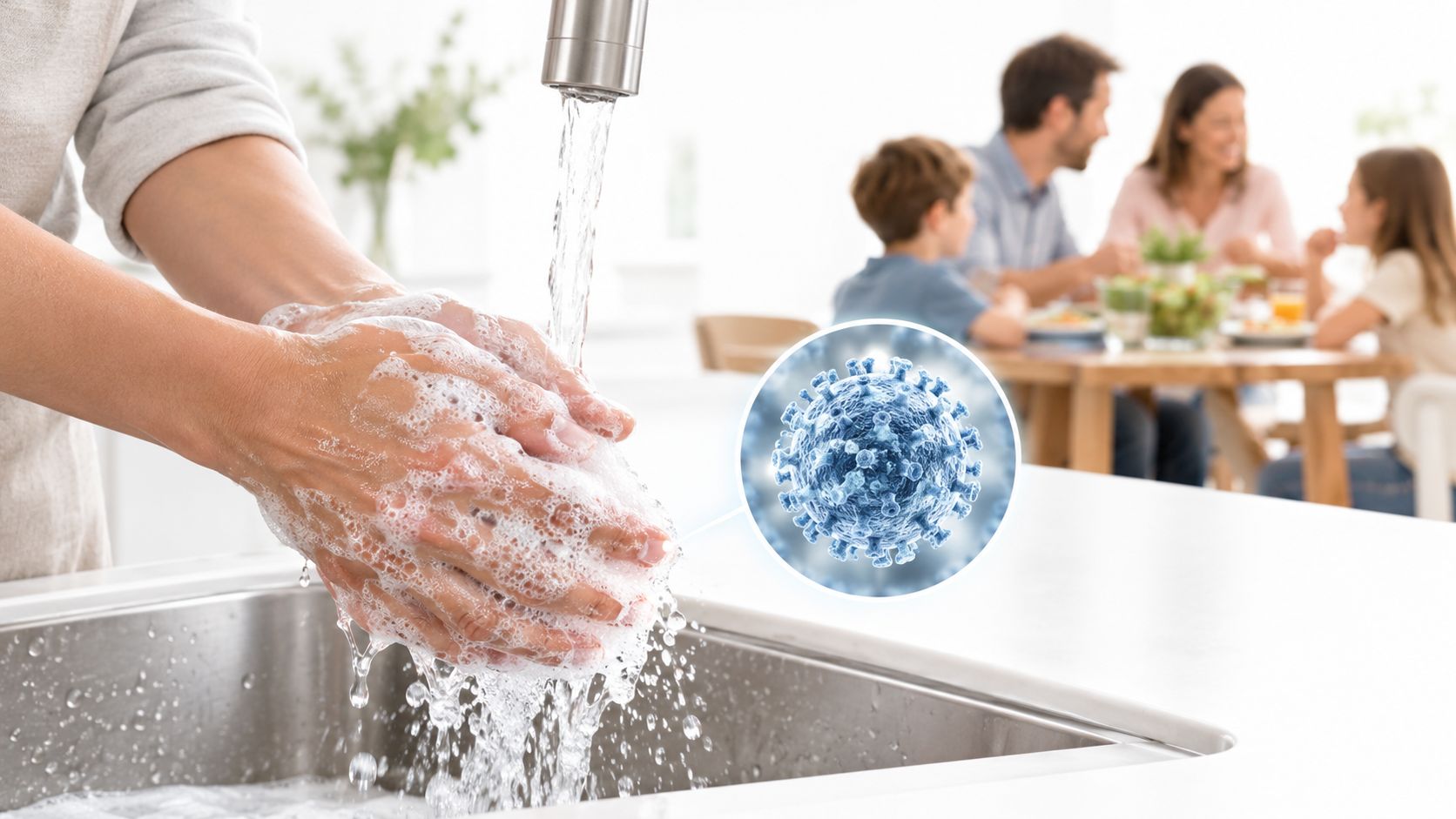
Norovirus is a highly contagious, non-enveloped RNA virus that inflames the stomach and intestines and causes sudden vomiting and diarrhea, infecting about 685 million people a year worldwide.
Someone in your household has just vomited, and you're wondering whether dinner was to blame or everyone else will be next. The immediate priorities are simple: help the sick person replace lost fluids, keep others away from contaminated areas, and use a disinfectant that works against norovirus.
What Norovirus Is and Why It Matters
Say a family member becomes sick during dinner. Someone helps them to the bathroom, another person wipes the table, and everyone continues touching the same taps and door handles. By Thursday, several relatives are ill, including someone who never ate that dinner.
That pattern helps answer what is norovirus in practical terms. It's a virus that causes acute gastroenteritis, meaning sudden inflammation of the stomach and intestines. Common symptoms include vomiting, watery diarrhea, nausea, and abdominal cramps.
People often call it stomach flu, but it isn't influenza. Influenza primarily affects the respiratory system, while norovirus primarily causes gastrointestinal illness.
A familiar illness with a serious burden
The World Health Organization estimates approximately 685 million cases and roughly 200,000 deaths annually worldwide, with mortality concentrated primarily in low-income countries. Young children are particularly vulnerable, especially where families lack reliable access to clean water, healthcare, and rehydration treatment.
In temperate regions, infections commonly increase during winter. However, a summer stomach bug can still be norovirus. The season doesn't rule it in or out.
Its name comes from the outbreak that led to its identification: a CDC historical review describes the 1968 elementary-school outbreak in Norwalk, Ohio, which gave Norwalk virus its name; that review also estimates 19–21 million US illnesses annually.
Norovirus at a glance
| Feature | Norovirus value |
|---|---|
| Virus family | Caliciviridae |
| Capsid type | Non-enveloped, with no lipid membrane |
| Genome type | Positive-sense, single-stranded RNA |
| Genome length | About 7.3–7.5 kilobases |
| Infectious dose | About 10–100 virions, with outbreak estimates as low as 18 particles |
| Incubation period | Typically 24–48 hours |
| Illness duration | Usually 1–3 days |
| Global burden | About 685 million cases and about 200,000 deaths per year |
| US burden | About 19–21 million illnesses per year |
For a household, the main concern isn't the virus's name or classification. It's how easily an ordinary caregiving task can expose another person. Understanding its biology helps explain why recognizing symptoms, replacing fluids, and cleaning correctly all matter.
How Norovirus Infects and Multiplies
Think of the capsid, the virus's outer protein shell, as a key approaching a set of locks. Certain sugars called histo-blood-group antigens help norovirus attach to susceptible tissues. They're attachment factors, not the entire machinery required for infection, so the lock-and-key comparison is useful but simplified.
A molecular review of norovirus biology describes its positive-sense, single-stranded RNA genome of approximately 7.3–7.5 kilobases, along with the capsid interactions and replication machinery that make infection possible.
The important word is positive-sense. Once released inside a suitable cell, the incoming RNA can serve directly as instructions for making viral proteins. The virus doesn't reproduce independently; it uses the infected cell's machinery.

From attachment to new virus particles
The process includes overlapping activities rather than a perfectly separated assembly line:
- Attachment and entry: The capsid interacts with compatible host molecules, and the virus enters a susceptible cell.
- RNA release: The viral genetic instructions become available inside the cell.
- Protein production: The cell makes a long viral protein chain, which is cut into proteins needed for replication.
- Genome copying: A viral enzyme makes a complementary RNA template, then uses it to produce more viral RNA.
- Assembly and shedding: Capsid proteins package new genomes into virus particles that can leave the infected host and reach others.
The copying enzyme, RNA-dependent RNA polymerase, lacks the proofreading capacity of many cellular polymerases. Copying errors create genetic variation. Some changes alter the capsid enough to help new strains evade existing immune recognition.
A deeper look at genes and susceptibility
The genome contains ORF1, ORF2, and ORF3, regions that encode different proteins. ORF1 produces the polyprotein used to make replication-associated proteins. ORF2 encodes the major capsid protein, while ORF3 encodes the minor capsid protein.
Replication also involves a negative-strand intermediate. This complementary copy acts as a template for new genomic RNA and shorter, subgenomic RNA used in viral protein production.
Host biology matters too. Secretor status, a genetically influenced pattern of antigen expression, affects susceptibility to different strains. Two people with similar exposure may therefore have different outcomes.
Not getting sick during one household outbreak doesn't mean you're immune to every norovirus strain.
Protection after infection isn't reliably durable or broad across strains. Changing capsids, differences between hosts, and incomplete post-infection immunity all complicate vaccine development.
Symptoms, Timing and How Long It Lasts
Norovirus often interrupts an otherwise ordinary day. You may feel well, develop nausea and cramps, and then suddenly need a bathroom. Vomiting and diarrhea can occur together, but not everyone has every symptom.
Low fever, headache, and body aches can accompany the stomach symptoms. Vomiting may ease before diarrhea does, and appetite can remain poor even after the worst has passed.
The CDC Yellow Book's norovirus guidance describes the characteristic abrupt gastrointestinal illness and the importance of preventing transmission around affected people. Symptoms alone, however, cannot identify the cause with certainty.
Match the pattern, not just the clock
Norovirus timeline from exposure to recovery
| Stage | Typical timing | What the person notices |
|---|---|---|
| Exposure | At contact with infectious material | Virus enters through the mouth from contaminated hands, food, surfaces, or vomiting-related particles |
| Incubation | Typically 24–48 hours, sometimes as short as 12 | Usually no symptoms while the virus multiplies |
| Sudden onset | End of incubation, usually abrupt | Nausea, forceful vomiting, watery diarrhea, cramps |
| Peak illness | Day 1 to day 2 | Vomiting often eases first; diarrhea may continue |
| Recovery | Day 2 to day 3 | Most people improve within 1–3 days |
| Shedding after recovery | Up to about 2 weeks, sometimes longer | Virus may still be shed; careful handwashing remains essential |
These are typical patterns, not deadlines. Persistent symptoms, severe pain, or difficulty drinking deserve attention even when the timing seems compatible with norovirus.
Norovirus and food poisoning aren't opposites. Norovirus can itself cause foodborne illness. Bacteria and foodborne toxins can also cause vomiting and diarrhea, sometimes with a faster onset than norovirus.
A cluster of sick household members suggests a transmissible infection, but it doesn't prove which germ caused it. Blood in the stool or severe localized abdominal pain shouldn't be dismissed as an ordinary stomach bug.
Feeling better and no longer shedding virus aren't the same thing.
Stay away from work or school for at least 48 hours after vomiting and diarrhea stop, and follow any stricter workplace or public-health rules. This is especially important for food handlers and people caring for vulnerable patients.
Young children, older adults, and people with weakened immune systems need closer observation because fluid loss can become serious. For a fuller explanation of recovery and lingering symptoms, see how long norovirus lasts.
How Norovirus Spreads From Person to Person
A little glitter on someone's hand can reach a phone, a door handle, and a kitchen counter before anyone notices. Norovirus contamination moves through a household in much the same way, except you cannot see it.
The key event is infectious material reaching someone's mouth. That may happen through food, drinking water, fingers, utensils, or particles dispersed during vomiting. The CDC's norovirus infection-control background cites an estimated infectious dose of approximately 10–100 virions, with outbreak estimates as low as 18 particles. Such a tiny dose helps explain why apparently clean hands and surfaces can still transmit infection.

Vomit carries special weight in this illness. Food gets attention in many outbreaks, yet vomit, surfaces, and shared air in a small room often drive person to person spread. The non-enveloped shell of the virus adds to the problem. Alcohol gels and general sprays often fail where chlorine or EPA-registered norovirus products work.
Vomiting can expose people who never shared a meal
When someone vomits, droplets and finer particles can spread into the surrounding environment. Some settle onto nearby objects. Others may reach the mouth directly or be inhaled and subsequently swallowed.
This exposure is different from ordinary breathing or talking. Norovirus does not behave like a long-range respiratory infection such as measles. There is also no universal distance that makes standing nearby completely safe. Move bystanders away rather than gathering around the sick person.
Keep uninvolved household members out of the cleanup area. Do not assume that avoiding the original meal eliminates their risk, because hands and shared objects transfer infectious material after the episode ends.
Norovirus transmission routes compared
| Route | Everyday example | Why it matters |
|---|---|---|
| Fecal-oral contact | Not washing hands after using the toilet | Tiny amounts of fecal contamination can carry enough virus to infect |
| Contaminated surfaces | Touching a doorknob or phone after contamination | Infectious material can remain after visible dirt is gone |
| Vomit aerosols | Vomiting in a shared room or bathroom | Particles settle nearby and can reach the mouth |
| Contaminated food | Ready-to-eat food handled by an infected cook | There is no later cooking step to inactivate the virus |
| Contaminated water or shellfish | Drinking untreated water or eating shellfish from polluted water | A shared source can expose many people |
| Direct person-to-person | Caring for a sick relative or sharing utensils | Hands and shared objects transfer infectious material |
The setting changes the opportunities for spread
At home, shared bathrooms and caregiving create repeated opportunities for exposure. In schools and care facilities, many people use the same rooms and equipment. A contaminated food item can expose people who otherwise never interact.
Travelers considering cruise ships should also check a cruise operator's illness-reporting procedures, since shared dining spaces and close living quarters make prompt reporting useful, though outbreaks are not unique to ships.
The dominant route depends on the setting and outbreak. Controlling food alone will not stop every transmission route. Hands, surfaces, and vomit cleanups need attention in the same plan. For examples of how these exposures connect, see how norovirus is transmitted.
Diagnosis, Treatment and When to Seek Care
Treatment centers on replacing fluids and salts while the illness runs its course. There isn't a routinely available norovirus-specific antiviral treatment or licensed vaccine. Antibiotics don't treat norovirus because they act against bacteria, not viruses.
Most uncomplicated cases are recognized from symptoms and the pattern of illness among contacts. Clinicians may use a stool PCR test to detect viral genetic material, particularly during outbreak investigations, in hospitals, or when confirming the cause would affect care.
You don't need to wait for a test result before addressing dehydration. Start with small, frequent sips rather than a large glass that may provoke more vomiting.
Make drinking manageable
A pharmacy oral rehydration solution replaces both water and electrolytes. Prepare powders exactly as directed; adding extra water or powder changes the intended balance.
- Offer small amounts frequently: A spoon or small cup can make fluid easier to tolerate.
- Continue appropriate feeding: Continue breastfeeding, and offer usual age-appropriate food as tolerated rather than forcing meals.
- Watch urine and alertness: Drinking something doesn't guarantee that fluid replacement is keeping up with losses.
- Ask before using medicines: Anti-diarrheal medicines aren't suitable for everyone, especially children or people with blood in their stool or significant fever.
A clinician may recommend an anti-nausea medicine when vomiting prevents drinking. Severe dehydration may require intravenous fluids.
Dehydration warning signs by group
| Group | Warning sign | What to do |
|---|---|---|
| Infants | No wet diaper for about 8 hours, or no tears when crying | Contact a doctor the same day; seek help sooner if the baby appears unwell |
| Young children | Dry mouth, unusual sleepiness, or vomiting that stops all fluids | Call a clinician promptly |
| Adults | Very little urine, dizziness on standing, or inability to keep fluids down for 24 hours | See a doctor; don't wait if symptoms are severe |
| Older adults and people with weak immune systems | Symptoms lasting more than 2–3 days, or any confusion | Seek medical care early; confusion needs urgent assessment |
| Anyone | Blood in vomit or stool, or severe belly pain | Seek urgent medical care |
These are warning signs, not waiting periods. Don't wait for a time threshold if someone is deteriorating, unusually drowsy, fainting, or unable to drink.
Most otherwise healthy people recover at home with supportive care. The important distinction is between an uncomfortable illness and fluid loss that the person can no longer replace.
How to Prevent Norovirus at Home
Before anyone becomes sick, make handwashing easy. Keep soap and clean towels beside sinks, and teach children to wash after using the toilet and before eating. Adults should also wash after changing diapers or handling soiled laundry.
Wash with soap and running water for 20 seconds, covering fingertips, thumbs, and between fingers. Alcohol hand sanitizer can supplement hand hygiene, but it isn't a reliable substitute against norovirus.
Separate caregiving from food preparation
If someone becomes ill, use a separate bathroom when possible. Otherwise, prioritize cleaning shared bathroom touchpoints and give the sick person their own towel.
- Keep food handlers away from food: Someone with vomiting or diarrhea shouldn't prepare meals for others, including ready-to-eat snacks. Fresh gloves don't make it safe for a sick person to cook.
- Reduce avoidable contact: Don't share drinks or utensils, and limit close contact with vulnerable relatives.
- Handle food carefully: Rinse produce and cook oysters and other shellfish thoroughly. Appearance and smell don't tell you whether shellfish contain norovirus.
- Prepare for cleanup: Keep disposable gloves, absorbent towels, waste bags, and a suitable disinfectant together, away from children.
For kitchen organization, Everti's guide can help you find products for a more hygienic kitchen. Storage tools and cleaning accessories are useful, but a disinfectant still needs a label claim against norovirus.
Household rule: Assign meal preparation to someone who is well, rather than asking the sick person to be extra careful.
Continue careful hygiene after recovery. Handle soiled laundry without shaking it, and wash your hands after moving it. If vomiting occurs, ordinary tidying isn't enough: the surrounding area needs deliberate cleaning and disinfection.
How to Clean Up Norovirus Safely and Why Cleaning Often Misses It
Norovirus has a tough, non-enveloped shell. Alcohol cannot break that shell apart the way it breaks the fatty coating on many other viruses. That is why alcohol gels and general-purpose sprays may fail to inactivate it reliably. Cleaning removes contamination; disinfection inactivates virus left behind. A surface that looks clean still needs the second step.
Investigators examining environmental swabs from healthcare-associated outbreaks found contamination on many high touch objects in patient rooms, including furnishings, bathroom fixtures, phones, and door handles. The pattern is described in a CDC evidence review that reports more than 200 environmental swabs from five healthcare-associated outbreaks found contamination on 36%, with many contaminated objects within 3–4 feet of the patient. Closeness raised the odds of contamination, but it did not create a cutoff. Spray from vomit can reach nearby surfaces, hands carry virus farther, and shared air in a small bathroom can spread fine particles.

Clean beyond the visible mess
Common mistakes include wiping only visible vomit, choosing a spray without a norovirus claim, ignoring soft furnishings, and overlooking contaminated laundry. Vomit and diarrhea leave virus across a wider zone than the stain. Wipe the whole area, then disinfect the whole area.
CDC's prevention guidance specifies 1,000–5,000 ppm available chlorine with at least five minutes of contact time. Bleach strength varies by product, so take the mixing ratio from your own bleach label for its sodium hypochlorite percentage. Do not use a fixed spoonfuls per gallon recipe from memory.
- Protect the area. Put on disposable gloves, keep children and pets away, and ventilate the room.
- Remove visible material with disposable towels and seal the waste in a bag.
- Clean with detergent to remove organic material, which can interfere with disinfection.
- Apply the chlorine solution or an EPA-registered norovirus disinfectant. Keep bleach-treated areas wet for the full label time. Other products need their own label contact time.
- Clean the affected area again with soap and hot water. Follow food-contact surface rinsing instructions.
- Handle laundry gently. Wash contaminated clothing and linens separately with detergent, using hot water and the longest suitable cycle, then machine-dry thoroughly.
Never mix bleach with ammonia, vinegar, acids, or other cleaners. Use suitable products for carpets and upholstery rather than applying bleach indiscriminately.
Disinfection options for vomit and diarrhea areas
| Option | How to use | Key check |
|---|---|---|
| Chlorine bleach solution | Mix fresh solution exactly as your product label directs for norovirus | Keep the surface wet for the recommended bleach contact time |
| EPA-registered norovirus disinfectant | Follow label dilution and contact time | Label must name norovirus |
| Disinfecting wipes | Use fresh wipes for separate surfaces and enough to keep each surface wet | Label must name norovirus and specify contact time |
| Soap and hot water | Use for the final cleaning after disinfection | Removes remaining residue; isn't a substitute for disinfection |
For room by room steps, see this detailed guide to how to disinfect norovirus on hard surfaces, soft fabrics, and laundry.
Before the next household illness, check your cleaning cupboard. Choose disinfecting wipes or another EPA-registered product whose label explicitly names norovirus, confirm its wet contact time, and keep gloves and waste bags alongside it.
Leave a Reply