You're standing in a clinic lobby, still replaying the moment a dog's teeth broke skin, a bat startled you awake, or a cat scratch looked too small to worry about. The urge is to downplay it, rinse quickly, and hope for the best. Rabies post exposure prophylaxis is the opposite of hoping. It's a tightly timed medical pathway built to stop virus movement before it reaches the brain, and the details matter because rabies is treated as a race against the clock, not a condition you wait to “see what happens” with.
What Rabies Post Exposure Prophylaxis Is and Why Timing Matters
A parent brings a child in after a bite from a neighbor's dog. A hiker notices a scratch from an unknown animal on a trail. Someone wakes up and finds a bat in the bedroom. In each case, the clinic isn't giving a single cure, it's starting a sequence of actions meant to block rabies before it can take hold.
A protocol, not a one-time shot
Rabies post exposure prophylaxis is a coordinated set of interventions. For a person who has never been vaccinated, CDC guidance uses immediate wound washing, one dose of human rabies immune globulin (HRIG), and a vaccine series on days 0, 3, 7, and 14. If the patient is immunocompromised, there's a fifth dose on day 28. Previously vaccinated people follow a shorter path, with two vaccine doses three days apart CDC rabies PEP guidance.
That timing reflects how rabies behaves. The protocol is built around the incubation period, before symptoms appear, because once symptoms start, the disease is almost always fatal. WHO guidance also uses a 0.5 IU/mL antibody threshold in serologic assessment, which shows how precisely this prevention strategy is calibrated CDC rabies PEP guidance.
Practical rule: if exposure is possible, the question is not “Was the bite bad enough?” The question is “What category was it, and how fast can the clinic start the right sequence?”
That's why PEP isn't just about vaccine stock. It's about speed, wound care, and finishing the series on schedule. The clinic is trying to generate passive protection immediately, then active immunity over the following days, while the virus is still confined to the entry site and nearby tissue.
How Exposure Categories Drive the Decision to Start PEP
WHO's exposure categories give the clearest decision path. The categories are simple enough to use in real life, but precise enough to keep people from overtreating harmless contact or under-treating a dangerous one WHO rabies vaccination guidance.
The three categories in plain language
Category I includes touching or feeding animals and licks on intact skin. No prophylaxis is required. A child who briefly petted a healthy-seeming dog and wasn't bitten is the kind of case that often brings relief after a proper history is taken.
Category II includes nibbling of uncovered skin or minor scratches and abrasions without bleeding. This calls for immediate vaccination. A superficial scratch from a stray cat fits here if the skin was broken but not bleeding.
Category III covers transdermal bites or scratches, saliva contamination of mucous membranes, licks on broken skin, and bat exposures. This needs immediate vaccination plus rabies immunoglobulin. A deep bite from an unknown dog or waking up with a bat in the bedroom belongs in this category WHO rabies vaccination guidance.
| WHO Rabies Exposure Categories and Required Response | ||
|---|---|---|
| Category | Type of Contact | Action Required |
| Category I | Touching or feeding animals, licks on intact skin | No prophylaxis required |
| Category II | Nibbling of uncovered skin, minor scratches or abrasions without bleeding | Immediate vaccination |
| Category III | Transdermal bites or scratches, saliva on mucous membranes or broken skin, bat exposure | Immediate vaccination plus rabies immunoglobulin |
Why the category matters at the clinic
Clinicians use the exposure type to decide whether HRIG is needed, because HRIG is reserved for cases where the virus may have entered through skin or mucosa and needs immediate neutralization. That's why a small wound can still matter if it matches Category III. Size doesn't decide the category, the route of exposure does.
If you're unsure where you fall, describe exactly what happened, whether there was bleeding, whether saliva touched broken skin, and whether a bat was involved. The category usually becomes clear fast once the details are mapped onto the WHO framework.
Immediate First Aid and Wound Care Before You Reach a Clinic
The first hour after a bite or scratch is not the time to improvise. It's a set of physical steps that reduce viral material at the entry site, and those steps can start before you've found a clinic.

What to do right away
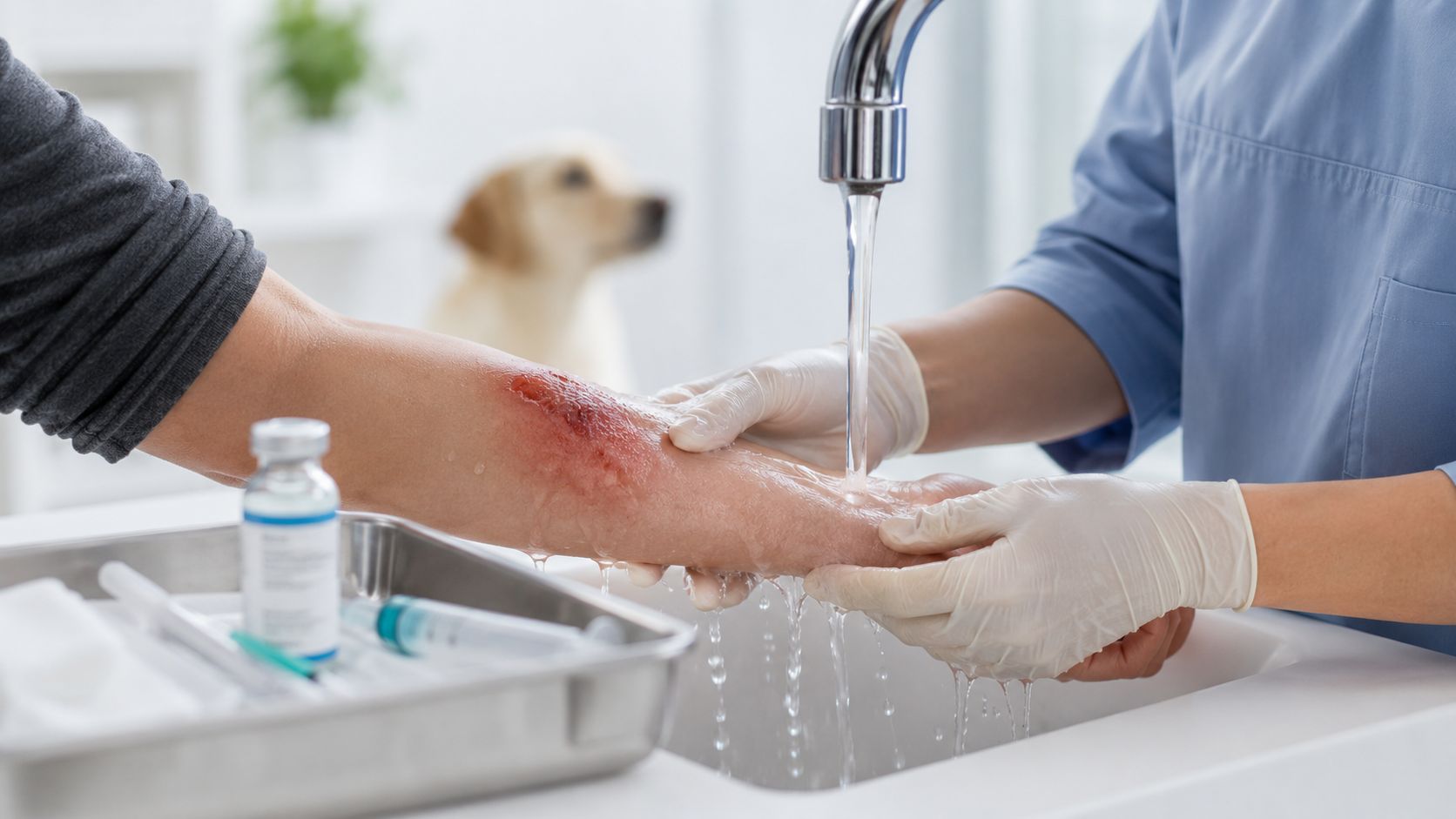
The literature cited in PMC specifies washing the wound with soap and water for 15 minutes as the first step PMC wound care guidance. That wash matters because it physically removes viral inoculum before it can bind to nerve tissue. It's not a substitute for vaccine or HRIG, but it adds to both.
If you can, flush the area gently and thoroughly. Avoid suction devices, and try to avoid suturing unless a clinician decides the wound needs it. If alcohol or povidone-iodine is available, applying it after washing is a common clinical practice in wound management, and tetanus status should be checked at the clinic.
Practical rule: if water is scarce, use whatever clean running water you can get first. Wound cleansing still comes before paperwork, travel, or waiting for an appointment.
Mucous membrane exposure needs the same urgency. If saliva got into the eyes, mouth, or nose, rinse copiously with clean water or saline and seek care immediately. The goal is to reduce local contamination before the virus can move deeper.
For a calm, evidence-based overview of wound-cleaning principles, EkagraHealth AI for wound care is a useful reference to keep nearby when you're dealing with an actual bite. The key idea is simple, washing is additive to medical prophylaxis, not an alternative to it.
The CDC and WHO Vaccine and Immunoglobulin Schedule
A clinic visit for rabies post exposure prophylaxis can feel fast and confusing because the order matters. The schedule is arranged that way on purpose. HRIG gives immediate passive antibodies, while vaccine teaches the body to make its own protection. The two parts are timed to overlap so the person has coverage while the immune response is still building.
How the pieces fit together
HRIG is placed where it can do the most good right away. The dose is 20 IU/kg, with as much as anatomically feasible infiltrated into and around the wound, and any remainder given at a distant intramuscular site PMC wound care guidance. The vaccine then trains the immune system over the next two weeks, which is why a person who has never been vaccinated is usually scheduled for day 0, day 3, day 7, and day 14, with day 28 added for immunocompromised patients CDC rabies PEP guidance.
Timing for HRIG has a narrow window. Guidance says it can still be given up to 7 days after the first vaccine dose, but not later, because after that point vaccine-induced antibodies are expected to be forming PMC wound care guidance. WHO guidance also uses the 0.5 IU/mL threshold in serologic assessment, which helps explain why clinicians care about whether the immune response is likely to be established or still incomplete WHO rabies vaccination guidance. If you want a broader context for how adult schedules are organized across vaccines, see our guide to the immunization schedule for adults.

Never vaccinated versus previously vaccinated
The path changes if someone has been vaccinated before. Previously vaccinated people generally need two doses three days apart and no HRIG CDC rabies PEP guidance. That difference matters because prior immune memory shortens the response time.
| Patient status | Vaccine schedule | HRIG |
|---|---|---|
| Never vaccinated | Day 0, 3, 7, 14, with day 28 if immunocompromised | One dose, if indicated |
| Previously vaccinated | Two doses, three days apart | Not given |
WHO also recognizes intradermal and intramuscular regimens in some settings, especially where vaccine supply or clinic capacity is limited WHO rabies vaccination guidance. The route can differ, but the clinical logic stays the same, give passive protection when it is needed, then keep the vaccine series on schedule.
Adjusting PEP for Children, Pregnant People, and Immunocompromised Patients
People often worry that the standard schedule changes completely in special situations. It usually doesn't. The main differences are in dosing, follow-up, and how carefully the immune response is checked.
Who gets what
| Group | Schedule | Dosing | Special consideration |
|---|---|---|---|
| Children | Same as standard | Weight-based, including HRIG at 20 IU/kg PMC wound care guidance | Precise weight measurement matters |
| Pregnant people | Same as standard | Standard vaccine and HRIG when indicated | PEP is recommended because the disease is fatal |
| Immunocompromised patients | Same schedule plus day 28 dose CDC rabies PEP guidance | Standard dosing, with follow-up serology | Confirm response with antibody testing |
Why these adjustments exist
Children need the same protection as adults, but weight makes a difference for HRIG calculations. That's one reason the clinic weighs the child carefully instead of estimating. The viral risk is the same, but the dose has to match the body.
Pregnant people should receive full PEP when indicated. The disease risk is far greater than the theoretical downside of delaying protection, so the regimen is used when exposure warrants it. For a broader look at infection management in pregnancy, viral infection during pregnancy is a useful companion topic.
Immunocompromised patients need extra attention because the immune system may not respond effectively on the usual timeline. That's why the day 28 dose and serology matter. The clinic isn't being cautious for its own sake; it's making sure the response is indeed present.
Common Pitfalls That Compromise PEP Effectiveness
The most dangerous mistakes are usually small and practical, not dramatic. People wash late, clinics skip local HRIG infiltration, travelers miss a dose, or someone assumes a small scratch doesn't count. Those errors are where preventable failures happen.

Where things go wrong
A recent traveler study found that delayed PEP was associated with ages 35 to 60 years, superficial wounds, and single wounds, with adjusted odds ratios of 3.08, 2.86, and 1.88. The same study found incomplete PEP was associated with ages 18 to 34 and 35 to 60, with adjusted odds ratios of 2.04 and 2.28. Prior rabies immunization lowered the risk of incomplete PEP with an adjusted odds ratio of 0.19, and an intradermal regimen also lowered risk with an adjusted odds ratio of 0.58 traveler PEP study.
A 2024 follow-up study also found that a shortened vaccine-sparing PEP regimen still produced protective rabies-neutralizing antibodies above threshold in 87% of recipients one year later 2024 follow-up study. That finding doesn't make missed doses safe. It shows modern regimens can work well when they're completed.
If HRIG was given late, or not infiltrated into the wound, the fix is to contact the treating clinic or local public-health team immediately. The same goes for missed vaccine doses, the schedule should be resumed, not abandoned.
The practical fixes
- Delayed wound washing: Wash immediately, even if hours have passed, then seek care.
- HRIG not infiltrated into the wound: Ask whether more can be placed locally, because passive neutralization belongs at the exposure site.
- HRIG given into the gluteus: Ask the clinic to review administration technique, because the remainder should be given at a distant intramuscular site.
- Missed vaccine doses: Resume the series as soon as possible and document the delay for the clinician.
Small wounds still matter if they match a Category III exposure. A puncture doesn't need to look serious to be dangerous. The decision is based on exposure route, not appearance.
Accessing PEP Quickly and Traveling With an Incomplete Series
The hardest part for many people is not understanding the schedule, it's finding the right clinic fast enough. Stock, cold chain, and timing all matter, especially if you're between cities or countries.
What to ask when you call ahead
Start with a direct question, “Do you have rabies vaccine and HRIG on site today?” If the answer is no, ask where they refer patients for same-day administration. A clinic can be excellent for follow-up doses and still not be the right place for first-day HRIG.
If you're traveling, keep the vaccine handling details in mind. The logistics of rabies biologics depend on cold-chain continuity, which is why storage and handling matter for every dose. A practical overview is available in VirusFAQ's vaccine storage and handling guidelines.
When observation is part of the decision
If the animal is a domestic pet that can be safely observed, public-health authorities may use observation to guide the final decision. If the animal is wild or has escaped, that uncertainty pushes the case toward immediate prophylaxis. Don't wait passively if the exposure meets Category III criteria or the animal can't be evaluated.
- Call first: Confirm vaccine and HRIG availability before leaving home.
- Bring details: Species, location, time of exposure, and whether the animal is available for observation.
- Plan the next dose: Ask for the exact date and location of the follow-up visit before you leave.
If you're crossing borders, keep the documentation with you. A partly completed series is much easier to finish when the clinic records are clear and the product details are known.
Prevention Before Exposure and the Bigger Public Health Picture
PEP is the backup plan. The first line of defense is avoiding exposure in the first place, which means vaccinating high-risk people before they're bitten and controlling rabies in animals upstream.
People who work around animals or viruses, such as veterinarians, lab workers, travelers to higher-risk regions, and spelunkers, should ask about pre-exposure vaccination. If they're exposed later, their PEP course is shorter because their immune system already has a head start. Community dog vaccination and stray-animal management matter just as much, because rabies prevention works best when transmission is interrupted before it reaches people.
For travelers who need to document pet vaccination status and travel paperwork, Passpaw for pet travel documents is a useful reference point to keep the administrative side from becoming a barrier to safe movement.
Rabies also reinforces a broader public-health habit that VirusFAQ.com emphasizes across viral topics, clean surfaces, clean hands, and prompt action when contamination is possible. PEP is highly effective when it's used correctly, but the smarter long-term investment is preventing the exposure in the first place. If you've had a bite, scratch, or bat exposure, contact a clinician or public-health authority now, then keep the follow-up appointments until the series is complete.
Leave a Reply