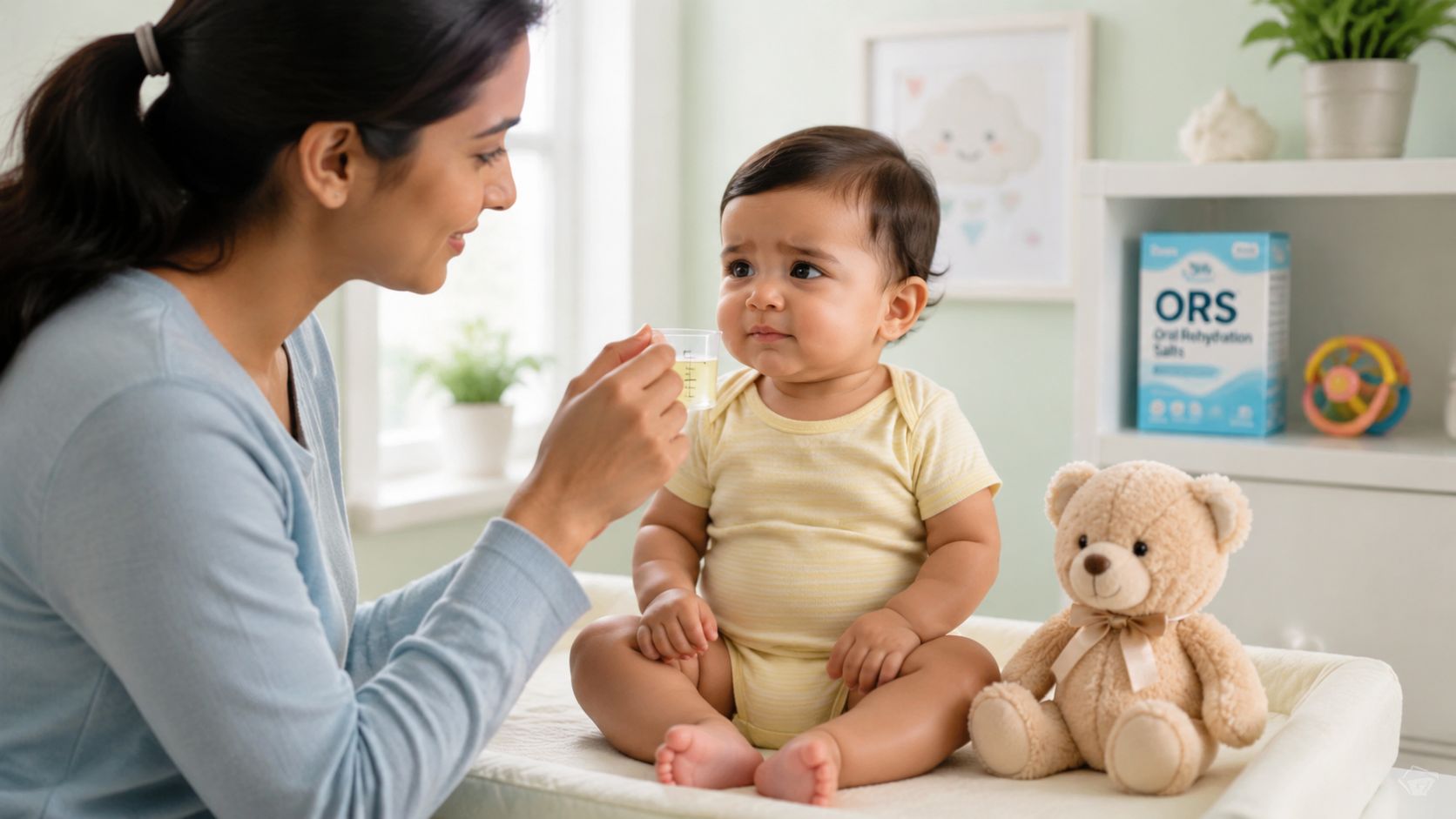
That diaper change can catch you off guard. Your 10 month old seemed mostly fine, then suddenly the stool is looser, more frequent, and now you're wondering whether this is a passing stomach bug or the start of something serious.
Most of the time, diarrhea in a baby this age is manageable at home with careful hydration and close watching. The biggest risk isn't the mess. It's fluid loss. That's why a calm plan matters more than trying to stop the diarrhea quickly.
Diarrhea in early life can also matter beyond today. A child with an average monthly diarrhea burden of roughly 23 diarrhea days per year was found to be 0.38 cm shorter at age 24 months than a child with no diarrhea history, as described in the World Health Organization fact sheet on diarrhoeal disease. That doesn't mean one short illness will harm your baby. It means good management matters, especially when diarrhea keeps happening.
If you're also trying to figure out whether this looks like a brief stomach bug, this guide on a 24 hour stomach bug in children can help with context.
Your Baby Has Diarrhea Now What
Start with three questions.
Is your baby still drinking? Are they still making wet diapers? And do they still seem alert between stools?
If the answers are yes, that's reassuring. A 10 month old with diarrhea often has a viral stomach infection, and many babies recover with home care, continued feeding, and oral rehydration solution. Parents often get thrown off because baby stool is soft to begin with. What matters more is a clear change from your baby's normal pattern, especially if the stool becomes watery and keeps coming.
What to do in the first few hours
Focus on support, not on stopping the stool.
- Offer fluids early: Small amounts given often are easier on the stomach than large feeds all at once.
- Keep feeding going: Breast milk or formula usually shouldn't be stopped.
- Watch output: Wet diapers tell you more than the number of dirty ones.
- Notice behavior: A playful baby with loose stools is very different from a listless baby who can't stay awake.
Practical rule: Your first job is preventing dehydration. Your second job is noticing when the pattern no longer looks like simple viral diarrhea.
What usually worries parents most
Parents often assume the danger is the virus itself. In many cases, the urgent issue is whether the baby is losing fluids faster than they can replace them.
That sounds scary, but it also gives you something concrete to do. You don't need to guess. You can watch for wet diapers, tears when crying, interest in feeding, and signs of dryness around the mouth and eyes. Those clues are often more useful than trying to identify the exact cause on day one.
Common Causes of Diarrhea in a 10 Month Old
At 10 months, babies are in a perfect storm for stomach infections. They touch everything, put toys in their mouths, crawl across floors, share germs in daycare, and are also trying new foods. So when diarrhea shows up, there are a few common buckets to think about.

If you want a broader primer on stomach viruses, this overview of what causes viral gastroenteritis is a useful companion.
Viral infections are the most common reason
For many 10 month olds, the cause is viral gastroenteritis. Rotavirus and norovirus are leading viral causes of acute gastroenteritis in young children. These viruses inflame the gut and make it harder for the intestines to absorb fluid normally, so stool becomes loose and frequent.
Viruses spread easily because babies explore with their hands and mouths. A toy, changing table, high chair tray, or caregiver's hands can all help move a virus from one person to another. That's one reason diarrhea can seem to move through a household or daycare room so quickly.
Parents also ask whether the exact virus matters. Sometimes it does. CDC surveillance data noted that certain high-risk genotypes, including Norovirus GII.4, are disproportionately prevalent in the 6 to 12 month age group, and that can affect transmission patterns and daycare exclusion decisions differently than bacterial illness, according to this South Carolina Department of Public Health document summarizing CDC surveillance information.
Food and feeding changes can muddy the picture
A 10 month old is often eating a wider mix of solids. New fruits, larger portions, richer foods, and sweet drinks can all loosen stool.
Parents often find the causes confusing. A baby can have diarrhea from a virus, from diet, or from both at once. For example, a baby with a mild stomach virus who also gets juice may have worse stool because extra sugar pulls water into the gut.
A few food-related triggers parents notice include:
- Fruit juice: Even when babies like it, sugary drinks can worsen loose stool.
- New foods: A sudden change in diet can make stool look different for a day or two.
- Temporary trouble digesting lactose after illness: Some babies seem more sensitive to regular formula for a short time while the gut heals.
Bacterial causes are less common but more concerning
Bacterial diarrhea isn't the first thing I assume in an otherwise stable 10 month old, but it's important to consider when the story doesn't fit a simple virus.
Think more carefully about a bacterial cause when you see:
- Blood in the stool
- High fever
- A baby who appears much sicker than expected
- A clear food exposure concern
Daycare diarrhea is often viral. Bloody stool or a distinctly ill-looking infant deserves more caution.
Not every loose stool is true diarrhea
Teething gets blamed for many things. It may coincide with loose stool because babies drool more and put more objects in their mouths, but teething itself doesn't explain significant watery diarrhea.
A useful question is whether the stool is just softer than usual or clearly abnormal for your baby. Frequency, wateriness, and the baby's energy level matter more than color alone.
How to Manage Diarrhea and Dehydration at Home
Home care has one priority above everything else. Replace what your baby is losing. A 10 month old can get dehydrated faster than an older child, so the goal is steady rehydration, not forcing a full feeding schedule right away.

The standard of care is oral rehydration solution, not juice. An ORS is balanced to help the intestine absorb water and electrolytes. The recommended formula contains 75 mmol/L sodium, and delaying ORS for more than 24 hours increases hospitalization risk by 35% in infants under 12 months, as explained in the Seattle Children's guidance on diarrhea in babies 0 to 12 months.
Start with oral rehydration solution
Think of ORS as a medical fluid, not just a drink. It works because the sodium and glucose are in the right balance for absorption.
Offer small amounts often. A few sips every few minutes are usually better tolerated than a larger amount all at once, especially if your baby has also been vomiting.
What to avoid:
- Fruit juice: It can worsen osmotic diarrhea.
- Sports drinks: They aren't designed for infant rehydration.
- Plain water as the main replacement fluid: It doesn't replace the right electrolytes.
Keep breast milk or formula going
Parents often think they should stop milk during diarrhea. In most cases, that's not the best move.
Breastfeeding should continue because it provides hydration and immune support. Breast milk contains IgA and lactoferrin, which help reduce viral load and support the gut lining. Formula is also usually continued. For some babies, especially if stool seems worse after regular formula during a viral illness, a clinician may suggest a brief trial of lactose-free or hydrolyzed formula while the gut recovers.
If your baby wants smaller, more frequent feeds, that's often easier on the stomach than pushing a full bottle.
Add simple solids if your baby tolerates them
If your 10 month old is already eating solids and isn't vomiting repeatedly, gentle foods can help.
Good choices often include:
- Rice cereal
- Bananas
- Applesauce
- Plain yogurt
- Other starchy, low-residue foods your baby already knows
Parents sometimes hear about the BRAT diet and think it has to be rigid. It doesn't. The practical idea is simple. Choose bland, easy foods and skip greasy, very sugary, or high-fiber foods for now.
A short comparison helps:
| Food choice | Why it helps or hurts |
|---|---|
| Rice cereal | Gentle and easy to digest |
| Bananas | Mild texture and often well tolerated |
| Plain yogurt | May support recovery in some babies |
| Juice | Sugar can draw more water into the gut |
| Fatty foods | Harder to digest during stomach illness |
Know the dehydration signs you are checking for
For infants under 1 year, dehydration warning signs include no wet diapers for more than 6 to 8 hours, no tears when crying, and sunken eyes or dry mouth. Those signs matter more than whether the diaper contents look dramatic.
I tell parents to use the whole picture:
- Urine output
- Mouth and tears
- Energy level
- Ability to keep taking fluids
If all four are reasonable, home care is often appropriate. If they start slipping, it's time to call your pediatrician.
A few common mistakes to avoid
Parents make these mistakes because they want to help fast.
- Switching to juice because the baby likes it more
- Stopping all feeding
- Trying over-the-counter anti-diarrhea medicine
- Waiting too long to begin rehydration
- Focusing only on stool count instead of hydration
The right home plan is usually boring but effective. Offer ORS. Continue breast milk or formula. Use simple solids as tolerated. Watch diapers and behavior closely.
Warning Signs That Require a Doctor's Visit
This is the part parents want in plain language. Some symptoms mean you shouldn't keep trying to manage 10 month old diarrhea on your own.

Call your doctor promptly if you notice these red flags
No wet diapers for more than 6 to 8 hours, no tears when crying, and a dry or sunken-looking mouth or eyes are not subtle signs. They point to dehydration.
- High fever: If your baby has a fever over 102°F, that raises concern for a more serious infection pattern.
- Bloody stool: Blood isn't expected with routine viral diarrhea.
- Severe dehydration signs: Dry mouth, sunken eyes, no tears, or a long stretch without wet diapers need prompt assessment.
- Altered mental status: If your baby is unusually hard to wake, floppy, or less responsive, get medical help right away.
- Repeated vomiting that blocks hydration: If fluids won't stay down, home rehydration becomes much harder.
Why these signs matter
A baby can look tired from a poor night's sleep and still be okay. A dehydrated baby often looks different in a more persistent way. They may seem limp, less interested in feeding, or less interactive.
Blood in stool and high fever also shift the picture. Those findings can suggest causes beyond a simple viral illness and may require testing or targeted treatment.
When urgent care or the emergency department makes sense
Go in sooner rather than later if your baby can't take fluids, seems to be getting worse hour by hour, or you're seeing several warning signs at once.
Trust what you see. Parents often notice the change before they can fully describe it. If your baby seems markedly different from their usual self, that matters.
How to Prevent Future Episodes of Diarrhea
Most parents think about treatment first. Prevention matters just as much, especially because many cases of 10 month old diarrhea start with a virus moving through hands, toys, tables, and shared spaces.

If you're trying to reduce the next round of household spread, this guide on how to prevent a stomach virus gives a broader family plan.
Break the chain of viral spread
Viruses such as norovirus don't need much help to move through a home. A diaper change, a shared toy, a contaminated high chair tray, or an unwashed hand before preparing a bottle can be enough.
That means prevention isn't abstract. It's specific.
- Wash hands well: After diaper changes, before feeding, and after cleaning stool or vomit.
- Clean high-touch surfaces: Changing tables, crib rails, high chairs, faucet handles, and doorknobs matter.
- Disinfect toys and feeding surfaces: Especially anything your baby mouths often.
- Separate dirty laundry promptly: Soiled clothes and linens shouldn't sit around the room.
Many families benefit from keeping disinfecting wipes in the places they need them, such as the diaper station, kitchen, and car. Wipes don't replace soap and water for hands, but they can make it easier to clean a tray, handle, toy bin edge, or changing pad quickly after contamination.
Surface hygiene works best when it's easy enough to do immediately, not later.
Use feeding choices that don't irritate the gut
Sugary drinks can make loose stool worse. After infancy, the American Academy of Pediatrics recommends limiting juice to no more than 4 ounces per day for children ages 1 to 6 years, and no fruit juice for infants younger than 6 months. Excess sugar is a recognized contributor to non-viral diarrhea. The same CDC resource also notes that after widespread rotavirus vaccination in the United States, hospitalizations for rotavirus gastroenteritis in children under five dropped by more than 85%, as described on the CDC rotavirus vaccination page.
For a 10 month old, the practical lesson is simple. Keep drinks simple, avoid using juice as a comfort fluid, and stick with the feeding plan your pediatrician recommends.
Vaccination changes the risk landscape
Rotavirus used to send huge numbers of young children to hospitals and emergency departments. Vaccination changed that dramatically.
A baby who completes the rotavirus vaccine series on schedule has important protection during the first year of life, when diarrheal illness can hit hardest. Prevention isn't just about avoiding infection altogether. It's also about reducing how severe the illness becomes if exposure happens.
Build a routine that fits real life
The best prevention plan is the one your family can repeat.
Try this checklist:
- Keep soap and wipes where diaper changes happen
- Clean shared surfaces the same day they get soiled
- Wash hands before preparing bottles and solids
- Send clearly labeled clean items to daycare
- Ask about return-to-daycare rules after stomach illness
A complicated plan gets dropped. A visible, repeatable routine protects babies better.
Frequently Asked Questions From Parents
Parents usually have a few practical questions left after the immediate panic settles. Here are the ones I hear most often.
How long does viral diarrhea usually last
It varies. Many viral illnesses improve over a few days, though stools can stay loose for a bit after the child otherwise seems better. What matters most is whether your baby is staying hydrated and gradually acting more like themselves.
When can my baby go back to daycare
Follow the daycare's policy and your pediatrician's advice. This is especially important because some viral causes spread very easily in group settings, while bacterial causes may lead to different exclusion decisions.
Is teething causing the diarrhea
Teething may overlap with loose stools because babies chew on more objects and swallow more saliva, but it doesn't explain significant watery diarrhea by itself. If the change is dramatic, think beyond teething.
Are over-the-counter anti-diarrhea medicines safe for a 10 month old
No. Loperamide and similar antidiarrheal medicines are contraindicated in infants under 2 years because of the risk of fatal respiratory depression and toxic megacolon, and the FDA prohibits their use in this age group, according to Vickery Pediatrics guidance on diarrhea.
Is there anything besides fluids that may help
For some infants already eating solids, plain yogurt may help. The same pediatric source notes that adding plain yogurt can reduce stool frequency by 25% and shorten duration by 1.5 days.
Should I dilute formula
Don't dilute formula unless your child's clinician tells you to. Babies need the right balance of fluid and nutrition, and over-dilution can create its own problems.
A baby with diarrhea usually needs a steady parent, a close eye on hydration, and a low-drama plan. Most cases improve. The key is knowing when the pattern still looks manageable and when it doesn't.
For more parent-friendly guides on viruses, stomach bugs, transmission, and practical prevention, visit VirusFAQ.com.
Leave a Reply