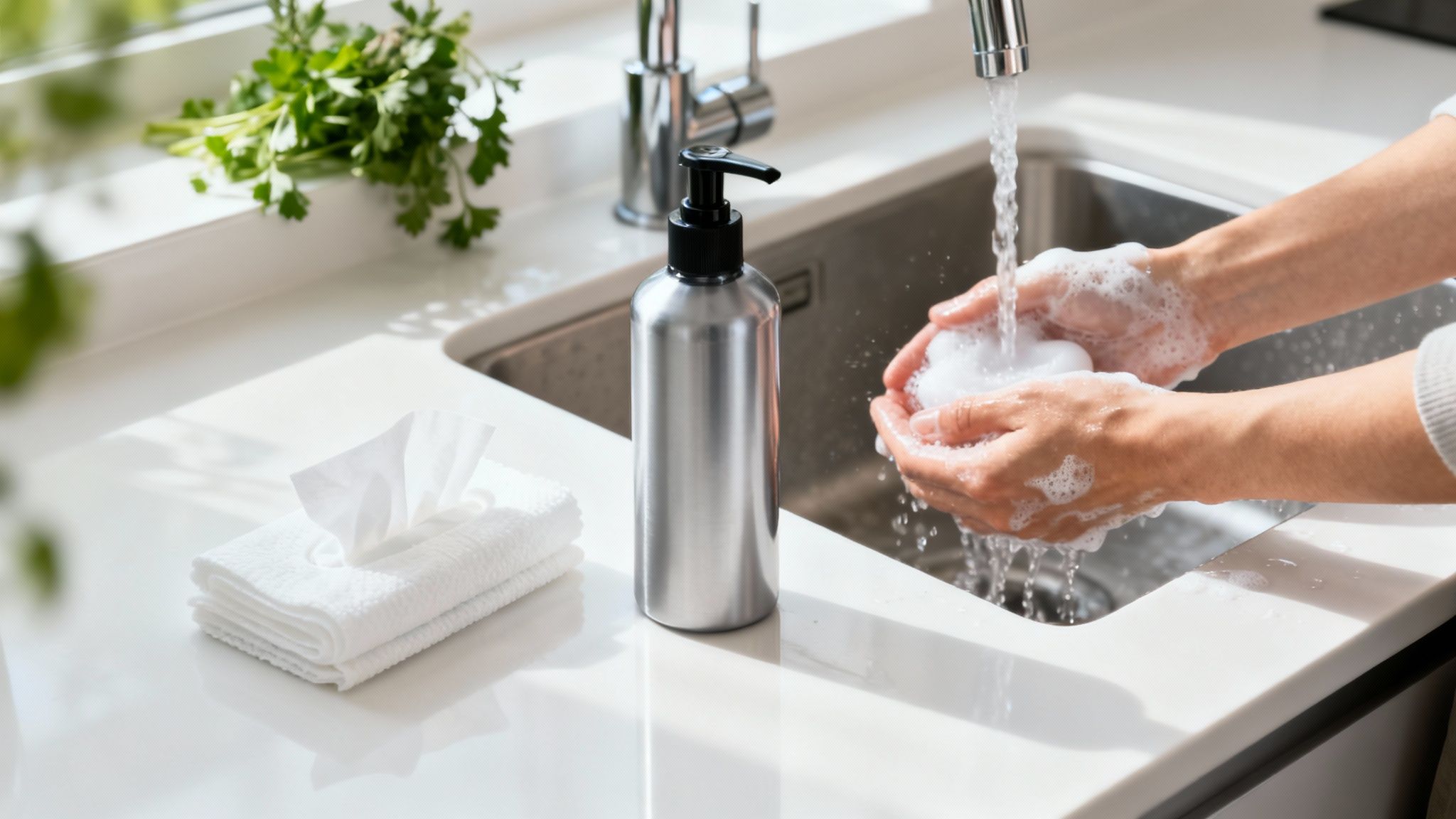
When a stomach bug hits, it feels like it sweeps through the entire house in a matter of days. It's miserable. The good news is, you're not powerless against it. The best defense is a good offense, which in this case means a combination of meticulous handwashing, smart food safety, and targeted disinfection of the places germs love to hide.
These simple, everyday actions create a powerful shield against highly contagious, non-enveloped viruses like Norovirus and Rotavirus.
Your Battle Plan for a Virus-Free Home

It’s easy to feel helpless once a stomach virus breaches your front door, but having a proactive strategy makes all the difference. This guide goes beyond the "wash your hands" advice you've heard a million times and gives you a realistic, battle-tested plan for keeping your family healthy.
We're going to focus on practical things you can actually do, especially during peak seasons when viruses like the incredibly resilient Norovirus are everywhere. Think of this as your family's defense playbook—we'll dive into the specific, science-backed actions that truly stop these viruses in their tracks.
Core Prevention Strategies
Here's where we'll focus our efforts:
- Mastering Hand Hygiene: This is your number one weapon. We'll cover how to do it right, because technique matters more than you think.
- Strategic Disinfection: It's not about bleaching your entire house. It’s about knowing which cleaners and wipes actually kill tough, non-enveloped viruses and where to use them for maximum impact.
- Smarter Food Safety: A few simple habits in the kitchen can shut down a major route of transmission.
- Smart Containment Protocols: If someone does get sick, knowing exactly how to isolate the illness can save everyone else from a world of hurt.
Norovirus is the leading cause of vomiting and diarrhea from acute gastroenteritis in the US, causing up to 21 million illnesses each year. It’s incredibly contagious—it only takes a tiny number of viral particles to make you sick.
This plan will give you both the immediate actions and the deeper knowledge you need to turn your home into a fortress against stomach bugs.
Here’s a quick checklist to keep the most important prevention steps top-of-mind. Pin it to your fridge or save it on your phone.
Your Stomach Virus Prevention Checklist
A quick overview of the most critical actions to protect your family from stomach bugs, broken down by focus area.
| Prevention Area | Key Action | Why It's Critical |
|---|---|---|
| Hand Hygiene | Wash with soap and water for at least 20 seconds. | Alcohol-based sanitizers are often ineffective against non-enveloped viruses like Norovirus. Soap and water physically remove the virus. |
| Surface Cleaning | Use disinfecting wipes or a cleaner specifically registered by the EPA against Norovirus on high-touch surfaces. | Norovirus can live on surfaces for days or weeks. Many common cleaners don't kill it. |
| Food Safety | Wash all fruits and vegetables thoroughly; cook shellfish to 145°F. | Viruses can easily contaminate food during preparation or from the source. Heat kills them. |
| Laundry Duty | Wash contaminated clothes and bedding in hot water and dry on high heat. | The virus can survive a cold wash. High heat is necessary to kill any lingering particles. |
| Sick Person Care | Immediately clean and disinfect any area after someone vomits or has diarrhea. | Vomit and diarrhea aerosolize the virus, spreading it into the air and onto nearby surfaces. |
Following these key steps dramatically reduces the odds of a virus spreading from one person to the next.
The Truth About Handwashing and Stomach Bugs

We’ve all heard it a thousand times: "wash your hands." But when you’re up against a formidable foe like Norovirus or Rotavirus, how you wash them makes all the difference. A quick rinse-and-go just won't cut it.
The real magic happens with soap, warm water, and good old-fashioned friction. You need to lather up and scrub for at least 20 seconds—that’s about how long it takes to hum "Happy Birthday" through twice. This isn't just about killing germs; it’s about physically prying those microscopic viral particles off your skin and washing them down the drain.
It’s not just folk wisdom. Major health studies have shown this simple habit can slash the rate of stomach bugs by up to 30%. It’s one of the most powerful tools we have.
Why Hand Sanitizer Often Fails
It's tempting to reach for hand sanitizer, but against many stomach viruses, you're getting a false sense of security. Norovirus is a "non-enveloped" virus, meaning it lacks the outer fatty membrane that alcohol-based sanitizers are designed to attack and dissolve.
While sanitizers are effective against enveloped viruses like influenza and SARS-CoV-2, they are not a reliable defense against most stomach viruses. When it comes to preventing Norovirus, soap and water is the gold standard.
This is a critical distinction that many people miss. For a deeper dive into the science behind effective scrubbing, check out our guide on proper hand washing technique.
Making Handwashing a Reflex
The key is to build this habit into the high-risk moments of your day. Think about all the times you’re most likely to pick up or pass along germs.
Make washing your hands non-negotiable at these key times:
- After using the restroom. This is ground zero for viruses that spread through the fecal-oral route.
- Before you cook or eat anything. This protects you from ingesting germs and keeps you from contaminating food for others.
- The minute you get home from a public place. Think of all the surfaces at the grocery store, on public transit, or at school.
- After taking care of someone who’s sick. This is crucial for breaking the cycle of infection right in your own home.
How to Disinfect Your Home and Stop Norovirus in Its Tracks
It’s a nasty little fact, but stomach viruses like norovirus can survive on household surfaces for days, sometimes even weeks. That incredible staying power is exactly why your home can quickly become a battleground once someone gets sick. To keep the virus from spreading from one family member to the next, you need a solid game plan for disinfecting the right way.
We’re not just talking about wiping down the kitchen counter. Norovirus thrives on all those high-traffic surfaces we touch without thinking. Doorknobs, light switches, the refrigerator handle, TV remotes, and yes, even your phone and tablet—each one is a potential hotspot.
This is where the difference between cleaning and disinfecting really matters. Cleaning gets rid of visible dirt and some germs, but disinfecting is what actually kills the virus. You have to do both. First, you clean away the grime, then you follow up with a disinfectant to eliminate the threat for good.
Choosing the Right Disinfectant
Not all cleaning products are created equal, especially when you're up against a tough bug like norovirus. Many common household cleaners and wipes simply aren’t strong enough to kill this stubborn, non-enveloped virus. To really stop it, you need to bring out the big guns.
For years, the gold standard for killing norovirus has been a bleach-based solution. We cover the exact ratios and safety steps in our detailed guide on using bleach for disinfection. If bleach isn't an option, look for products that are EPA-registered and clearly state on the label that they are effective against norovirus.
Key Takeaway: Always check the product label. If it doesn't specifically list "norovirus," assume it won't work. You also have to follow the instructions for "contact time"—that’s how long the surface needs to stay visibly wet with the disinfectant to actually kill the virus.
For everyday defense or for a rapid response when someone is sick, EPA-registered disinfecting wipes designed to kill Norovirus are a highly effective and convenient tool. They combine the cleaning and disinfecting power into one simple step, making it much faster to keep those high-touch surfaces safe without the need for mixing solutions.
And don't forget the floors! Beyond just hard surfaces, knowing the best ways to effectively clean your carpet to remove germs can make a big difference in reducing pathogens hiding in your home.
Making Your Kitchen a No-Virus Zone
Your kitchen is the heart of your home, but let's be honest—it can also be a major hotspot for stomach viruses if you're not careful. The good news is that a few simple, consistent habits can turn this high-risk area into a safe zone for your family.
The path to preventing a stomach bug often starts right at the sink. It’s absolutely crucial to wash all fresh produce under running water, and I mean all of it. Even if you plan on peeling that avocado or melon, a knife can easily drag viruses from the skin right into the flesh you're about to eat.
Shellfish, especially oysters, are another common culprit that can harbor norovirus. The only way to be certain they're safe is to cook them thoroughly to an internal temperature of 145°F. This ensures any nasty pathogens are killed off before they get the chance to make you sick.
Preventing Cross-Contamination
One of the sneakiest ways viruses spread in the kitchen is through cross-contamination. This is just a technical term for when germs jump from a contaminated food or surface to a clean one. A classic, all-too-common example is using the same cutting board for raw chicken and then for chopping up a fresh salad.
A critical rule of thumb is to use separate cutting boards: one for raw meats and seafood, and another for ready-to-eat foods like fruits and vegetables. This simple separation is a powerful strategy in your food safety arsenal.
Keeping things separate is a cornerstone of good kitchen hygiene. If you want to dive deeper, we have a whole guide on the different ways to prevent cross-contamination that's worth a read.
When Someone in the House Is Sick
If a family member is down with a stomach virus, they should absolutely not be preparing food for anyone else. It's not worth the risk. The virus can be shed in massive quantities, and it only takes a few invisible particles on their hands to contaminate a meal for the entire household.
Here’s how to manage meals safely in that situation:
- Designate one healthy person to handle all the cooking and food prep.
- The sick individual should stay out of the kitchen if at all possible.
- Make sure they use their own separate set of utensils, plates, and cups.
Mastering basic food handling is key to keeping your kitchen safe from pathogens. For more in-depth advice, this guide on how to prevent food contamination is a great resource. Following these simple kitchen rules can make a huge difference in reducing your risk of a food-related outbreak.
How to Contain the Virus When Someone Is Sick
Once a stomach bug makes its way into your house, the game changes. You’re no longer just preventing—you’re in full-on containment mode. This is about damage control, isolating the illness and keeping everyone else from being the next domino to fall.
The first move? Designate a "sick room." If you have more than one bathroom, assign one exclusively to the person who's ill. This one simple step can dramatically cut down the chances of viruses like Norovirus spreading through shared spaces and contaminated surfaces.
Safely Handling Cleanup and Laundry
When someone is actively sick with vomiting or diarrhea, how you clean up is absolutely critical. These incidents can actually aerosolize viral particles, blasting them onto every surface nearby. Always, always wear disposable gloves before you even think about cleaning.
Use paper towels to handle the worst of the mess, then immediately disinfect the area. You’ll need a bleach-based cleaner or a disinfectant specifically approved by the EPA to kill norovirus. For quick and reliable cleanup, having a canister of norovirus-killing disinfecting wipes on hand is invaluable.
Contaminated laundry is another major threat. Bedding, towels, and clothing need to be handled carefully. Carry them to the washing machine without shaking them out, which can send a cloud of viral particles into the air.
Wash all contaminated items on their own, separate from the rest of the family's laundry. Use the hottest water setting your machine has and dry them on high heat. It's the combination of detergent and intense heat that's needed to truly kill the virus.
This infographic breaks down the core principles of virus safety, which are just as vital for containment as they are for everyday prevention.

The big takeaway here is that consistent, separate steps—washing, separating, and cooking—create layers of protection that stop viruses from spreading. Applying that same mindset of isolation and decontamination when someone is sick is your best shot at breaking the cycle of infection before it becomes a household-wide disaster.
Common Questions on Preventing Stomach Viruses
When you're trying to keep a stomach virus at bay, a lot of practical questions come up. Let's dig into some of the most common ones to really nail down the best ways to keep your family healthy.
How Long Is Someone Contagious?
This is a big one. A person with a stomach bug is at their most infectious when they’re actively sick—think vomiting and diarrhea—and for the first couple of days after they start feeling better. But the virus doesn't just pack up and leave when the symptoms do.
Here's the critical part: viruses like norovirus can still be hanging out in their stool for two weeks or even longer. That’s exactly why you can't let your guard down. Sticking with that strict handwashing and disinfection routine is absolutely vital long after everyone seems to be back to normal.
Can You Get the Same Stomach Virus Twice?
Unfortunately, the answer is a resounding yes. Your body might develop some short-term immunity to the exact strain that just made you miserable, but there are countless other types of stomach viruses out there, especially when it comes to norovirus.
Getting sick with one version gives you pretty much zero protection against all the others. This is why you can't ever rely on a past illness to keep you safe. Your only real defense is consistent prevention.
Remember, infection with one type of norovirus may not protect you against other types. This highlights the importance of ongoing hygiene practices rather than assuming you're "immune" for the season.
Do All Disinfecting Wipes Kill Norovirus?
Absolutely not, and this is a crucial point that many people miss. Most standard cleaning wipes you grab off the shelf, even many that say "disinfecting," are not effective against norovirus. This non-enveloped virus is just too tough for them.
To be sure a product works, you must check that it is EPA-registered and specifically lists "Norovirus" on its kill claims.
Always check the active ingredients and, just as importantly, follow the directions for contact time. That means the surface has to stay visibly wet for the full time listed on the package to actually kill the virus. If you just give it a quick swipe, you aren't achieving true disinfection—you're just pushing viral particles around. This is why choosing a quality, lab-tested disinfecting wipe is your best bet for peace of mind and genuine protection.
Leave a Reply