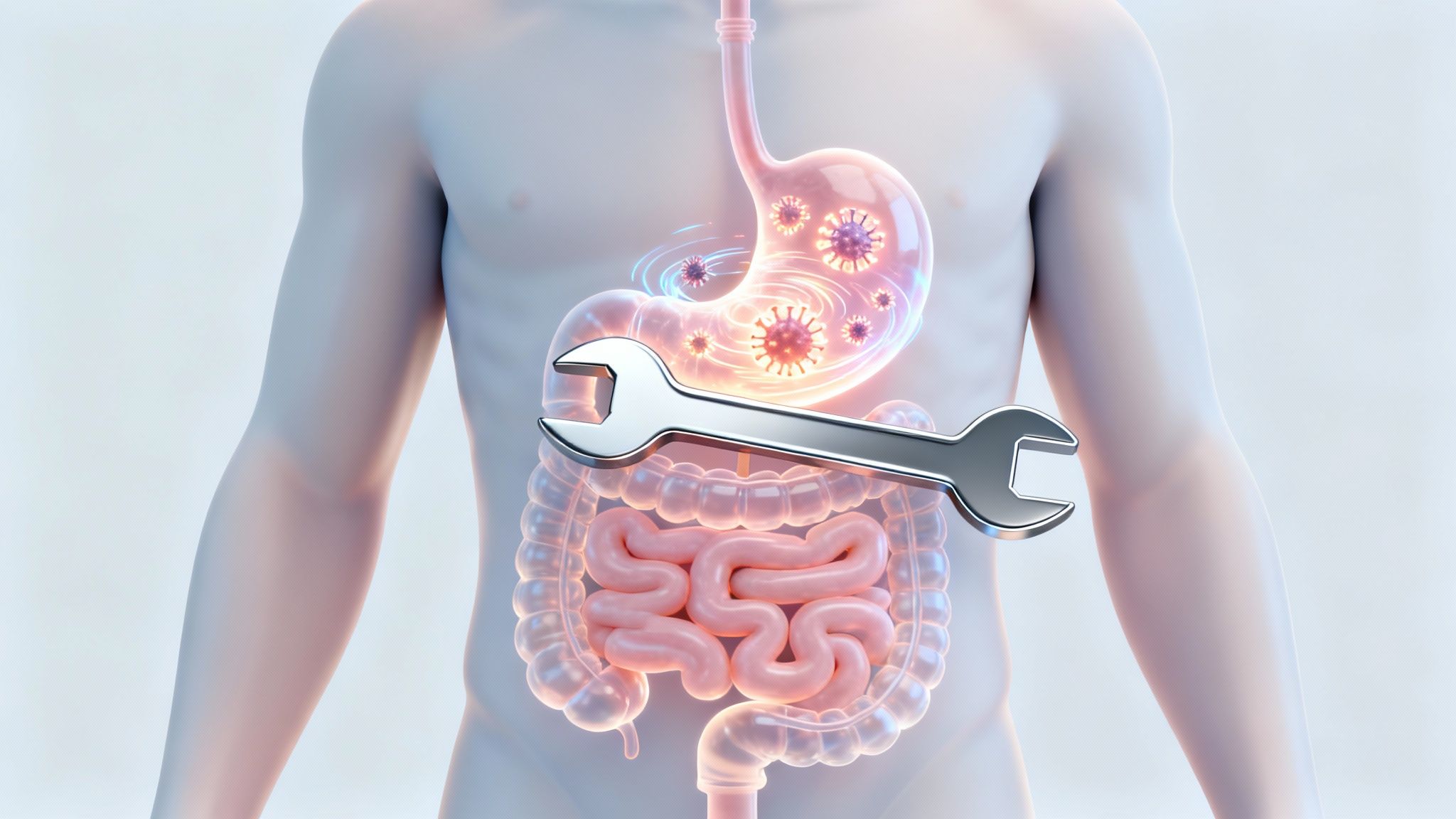
If you’ve ever had a nasty bout of the “stomach flu,” you’ve had a run-in with viral gastroenteritis. And despite the popular nickname, this illness has absolutely nothing to do with influenza, which is a respiratory virus. Viral gastroenteritis is a direct assault on your digestive system, caused by a variety of highly resilient, non-enveloped viruses.
What Is Viral Gastroenteritis Anyway?
Think of your gut as a finely tuned assembly line, working around the clock to absorb nutrients and water from everything you eat and drink. When a virus like norovirus or rotavirus shows up, it’s like a saboteur throwing a wrench into the machinery. These viruses hijack your intestinal cells and force them to churn out more copies of themselves.
This hostile takeover throws the whole system into chaos. Your gut can no longer do its job properly. In response, your body hits the emergency alarm to expel the invader, triggering those classic, miserable symptoms we all dread: vomiting and diarrhea.
The primary function of the intestines—absorbing fluids—is reversed. Instead of taking water in, the damaged intestinal lining begins to leak fluid out, which is a major cause of watery diarrhea and dehydration.
This digestive disruption is usually the work of a few key viral culprits. They all cause similar misery, but some are more common in certain age groups or settings.
Here’s a quick rundown of the main viruses that cause gastroenteritis and who they tend to affect the most.
Quick Guide to Gastroenteritis-Causing Viruses
| Virus Name | Most Affected Group | Primary Method of Spread |
|---|---|---|
| Norovirus (Norwalk Virus) | All age groups | Contaminated surfaces, food, and person-to-person contact |
| Human Rotavirus | Infants and young children (pre-vaccine) | Fecal-oral route |
| Astrovirus | Young children and the immunocompromised | Fecal-oral route |
| Adenovirus | Primarily children under 2 | Fecal-oral route, respiratory droplets |
While that table gives you the basics, let's break down the main players a little more:
- Norovirus (Norwalk Virus): This is the undisputed champion of gastroenteritis, causing the most cases across all age groups. It's infamous for sweeping through close-quarter environments like cruise ships, schools, and nursing homes.
- Rotavirus: Before a vaccine became widely available, this was the leading cause of severe gastroenteritis in infants and young children worldwide.
- Astrovirus and Adenovirus: These are less common but still significant troublemakers, especially for kids and people with weakened immune systems.
Getting to know these viruses is the first step toward understanding what’s really behind the so-called “stomach flu”—and more importantly, how to stop it from spreading.
Meet the Viruses Behind Your Stomach Troubles
Viral gastroenteritis isn't caused by a single bug but rather a handful of microscopic invaders, each with its own nasty tricks. Getting to know the specific viruses behind the illness helps explain why one bout of stomach flu can feel so different from another. Let's break down the most common culprits.
This infographic gives you a quick visual of what's happening—these viruses go straight for the stomach and intestines.

As you can see, your digestive system is ground zero for the infection, which is why the symptoms hit you right in the gut.
The Key Players in Viral Gastroenteritis
While plenty of viruses can mess with your digestion, a few usual suspects are responsible for most cases around the world.
- Norovirus (The Equal-Opportunity Offender): This is the heavyweight champion of gastroenteritis, causing the most infections across all age groups. Norovirus is incredibly contagious and famous for causing explosive outbreaks in crowded places like schools, cruise ships, and hospitals.
- Rotavirus (The Childhood Threat): Before a vaccine was developed, rotavirus was the number one cause of severe, dehydrating diarrhea in babies and young kids. While the vaccine has been a game-changer in many countries, rotavirus is still a major threat where immunization rates are low.
- Astrovirus and Adenovirus (The Less Common Culprits): These viruses also cause stomach flu, but the symptoms are usually milder than what you'd get from norovirus or rotavirus. They tend to pop up most often in young children, the elderly, and people with weaker immune systems.
The impact of these tiny viruses is huge. The global market for treating viral gastroenteritis grew from $6.75 billion in 2024 to $7.06 billion in 2025 and is expected to hit $8.69 billion by 2029.
Understanding Their Structure and Spread
Most of these troublemakers, especially Norovirus (Norwalk Virus) and Human Rotavirus, are what's known as RNA viruses. Think of RNA as a simpler, less stable genetic blueprint than DNA. This allows them to mutate and change quickly, which is exactly why you can get sick from the same type of virus over and over again.
It's their tough-as-nails structure and clever transmission methods that make them so good at spreading. This is a big part of the challenge in identifying and managing biological hazards, whether in a hospital or an office. Knowing your enemy is always the first step.
Why Norovirus Is So Hard to Contain
Norovirus isn't just another stomach bug; it's the undisputed champion of viral gastroenteritis outbreaks. Its uncanny ability to rip through communities is what makes it such a major public health concern, especially in close quarters like schools, cruise ships, and nursing homes.

So, what makes it so tough to stop? It really comes down to a nasty combination of extreme contagiousness and remarkable resilience.
A Tiny Dose Causes Big Problems
The main reason norovirus is so difficult to contain is its incredibly low infectious dose. It can take as few as 10 to 18 viral particles to make a completely healthy person sick.
To put that into perspective, a single gram of feces from an infected person can hold billions of those particles. This means even microscopic, invisible traces of the virus on a surface or in food can easily cause an infection, making transmission almost effortless. This environmental stability on surfaces is precisely why disinfecting high-touch areas is crucial for outbreak prevention.
Norovirus is the leading single cause of acute viral gastroenteritis worldwide, responsible for an estimated 685 million cases each year. Children under five are particularly vulnerable, accounting for about 200 million of those cases annually. To learn more about its global impact, you can explore the detailed findings from Nature Portfolio.
The Genetic Shapeshifter
Another huge challenge is the virus's chameleon-like ability to change. Norovirus is a master of genetic mutation, constantly churning out new strains. This creates two major problems for public health:
- No Lasting Immunity: Getting sick with one strain of norovirus doesn’t protect you from getting sick with another. Your immune system might not even recognize the new version, which is why people can catch norovirus over and over again.
- Vaccine Development is a Nightmare: This constant mutation makes creating a universal vaccine incredibly challenging. Scientists are working on it, but a widely available vaccine remains elusive for now.
Understanding these factors shows why norovirus spreads so ferociously. You can dive deeper into the specific ways norovirus gets around in our article on its transmission mechanisms and environmental persistence. This is exactly why strict hygiene and proper disinfection are our most powerful defenses against this formidable bug.
When it comes to viral gastroenteritis, it's not all bad news. While norovirus is still a major headache, the story of rotavirus is a stunning public health success story.
Before 2006, Human Rotavirus was the number one cause of severe, life-threatening stomach flu in babies and young kids around the globe. For parents, it was a terrifying prospect.
The real danger wasn't the virus itself, but the rapid, severe dehydration caused by relentless vomiting and diarrhea. It was so intense that many children needed to be hospitalized just to get enough fluids, putting a huge strain on families and hospitals.
A Public Health Game Changer
The introduction of the rotavirus vaccine completely rewrote the script. It’s easily one of the most successful public health wins of the 21st century, drastically cutting down the virus's devastating reach.
The before-and-after numbers are just staggering. Before the vaccine, rotavirus was responsible for over 440,000 deaths every single year in children under five.
Here in the United States, the virus used to cause up to 70,000 child hospitalizations annually. Once routine vaccination started, that number dropped by 40,000 to 50,000. It was a massive, immediate testament to how well the vaccine worked. You can dive deeper into these pivotal rotavirus findings at the National Library of Medicine.
Lingering Challenges and Big Lessons
But as incredible as this success is, the fight isn't totally over. Rotavirus remains a serious threat in parts of the world with low vaccination rates, where it still causes far too much preventable suffering.
This gap drives home a critical lesson in the battle against what causes viral gastroenteritis: a scientific breakthrough is only as good as our ability to get it to the people who need it. The rotavirus story proves we can defeat major viral threats, but it’s also a powerful reminder that global teamwork and consistent vaccination are the only ways to protect every child. It shows that with smart science, even the toughest viruses can be tamed.
How These Invisible Viruses Get Around
So, we know who the main offenders are. But how do they travel from person to person with such shocking speed? The viruses that cause gastroenteritis are absolute masters of transmission, using a few key superhighways to find their next victim. Getting a handle on these routes is the first step in breaking the chain of infection.
The main culprit is the fecal-oral route. It sounds gross, and it is, but it just means microscopic particles from an infected person's stool end up being swallowed by someone else. This usually happens when contaminated hands—after using the restroom or changing a diaper—touch food, surfaces, or directly touch someone’s mouth.
Everyday Transmission Battlegrounds
It's not just about direct contact. These viruses are incredibly tough and can hang around for days or even weeks on everyday surfaces, turning common objects into viral hotspots. We call these contaminated surfaces fomites.
- High-Touch Surfaces: Think doorknobs, light switches, remote controls, and countertops. One touch is all it takes to pick up the virus.
- Contaminated Food and Water: A sick food handler can easily contaminate a meal without even knowing it. Unwashed produce, like a salad, is another frequent carrier.
- Airborne Particles: When someone vomits, the force can blast tiny, virus-packed droplets into the air. These can travel several feet, land on surfaces, or even be inhaled by anyone nearby.
You really can't overstate how resilient these viruses are. Norovirus, for instance, can survive freezing temperatures and even some common cleaners, making it a stubborn threat on surfaces long after you think the coast is clear.
This incredible toughness is why a quick wipe-down often isn't enough. An invisible minefield of viruses could be waiting on the next surface you touch. This is exactly why targeted disinfection with effective products isn't just a good idea—it's a critical defense against whatever causes viral gastroenteritis.
Your Action Plan for Preventing Infection

Knowing how easily these viruses travel, it’s time to build a solid defense. An effective action plan moves beyond just hoping for the best and focuses on breaking the chain of transmission at every possible weak point. This means getting strategic about your hygiene and food safety routines.
Your single most powerful tool is proper handwashing. While hand sanitizers have their place, they are often no match for tough, non-enveloped viruses like Norovirus (Norwalk Virus) and Human Rotavirus.
For preventing viral gastroenteritis, soap and water are non-negotiable. Lathering up for at least 20 seconds isn't just about getting clean—it creates the friction needed to physically lift stubborn virus particles from your skin and wash them straight down the drain. This is especially critical after using the restroom and before you handle food.
Disinfecting High-Touch Hotspots
Since these non-enveloped viruses can survive for days on surfaces, targeted disinfection is your next line of defense. Just wiping things down won't cut it; you need a product proven to kill these resilient germs. Focus your efforts on the areas that get the most traffic throughout the day.
- Kitchen Surfaces: Countertops, fridge handles, and sink faucets are prime real estate for viruses.
- Common Areas: Think about all the things people touch without a second thought—doorknobs, light switches, TV remotes, and shared electronics.
- Bathroom Fixtures: Faucets, toilet flush handles, and countertops need regular attention, especially when someone in the house is sick.
Using disinfecting wipes specifically designed to eliminate viruses like Norovirus and Rotavirus is an essential part of keeping these surfaces from becoming transmission zones. For a deeper dive, check out our complete guide on how to prevent the stomach virus.
Smart Food and Water Safety
Finally, be mindful of what you're eating and drinking. Always wash fruits and vegetables thoroughly under running water, and be sure to cook foods like shellfish to the proper internal temperature to kill any lingering pathogens.
To really strengthen your defenses against waterborne threats, understanding the different methods for water purification is crucial for ensuring every glass is safe. These small, deliberate steps can make a huge difference in stopping a stomach bug before it ever gets a chance to start.
Common Questions About Viral Gastroenteritis
Even with a solid game plan, it's totally normal to have a few nagging questions about what causes this illness and how to deal with it. Let's clear up some of the most common ones so you have all the facts straight.
Is Viral Gastroenteritis the Same as the Stomach Flu?
Nope, but it’s a super common mix-up. "Stomach flu" is just a nickname. This illness is caused by viruses like Norovirus and Human Rotavirus that zero in on your intestines.
The real flu—influenza—is a respiratory illness caused by a completely different family of viruses, such as Influenza A Virus (H1N1). The distinction really matters because a flu shot won't do a thing to protect you from gastroenteritis, and the prevention tactics are different, too.
How Long Are You Contagious After Getting Sick?
You're most contagious when you're in the thick of it with symptoms like vomiting and diarrhea. But here’s the kicker: the virus can hang out in your stool for days, sometimes for up to two weeks, after you feel totally fine.
This is exactly why these viruses are so good at spreading. Someone feels better, goes back to life as usual, and unknowingly passes it on. It’s why you have to stay on top of handwashing and disinfecting surfaces even after the sick person has recovered.
Can I Get Viral Gastroenteritis More Than Once?
Unfortunately, yes. Recovering from one bout of norovirus, for example, doesn't give you a free pass for life. There are tons of different strains out there.
These viruses are constantly changing just enough that your immune system doesn't recognize the new version. That leaves you open to getting sick with similar, miserable symptoms again and again.
Do Hand Sanitizers Work Against Norovirus?
Not very well, and this is a big one. Alcohol-based hand sanitizers are great against many enveloped viruses like SARS-CoV-2 and influenza, but they’re pretty useless against tough, non-enveloped viruses like norovirus. Its outer shell is like armor that alcohol just can't penetrate effectively.
Your best defense is good old-fashioned soap and water. Washing your hands for at least 20 seconds physically pries the virus particles off your skin and sends them down the drain. Sanitizer is an okay backup if you're in a pinch, but it should never be your first choice.
Leave a Reply