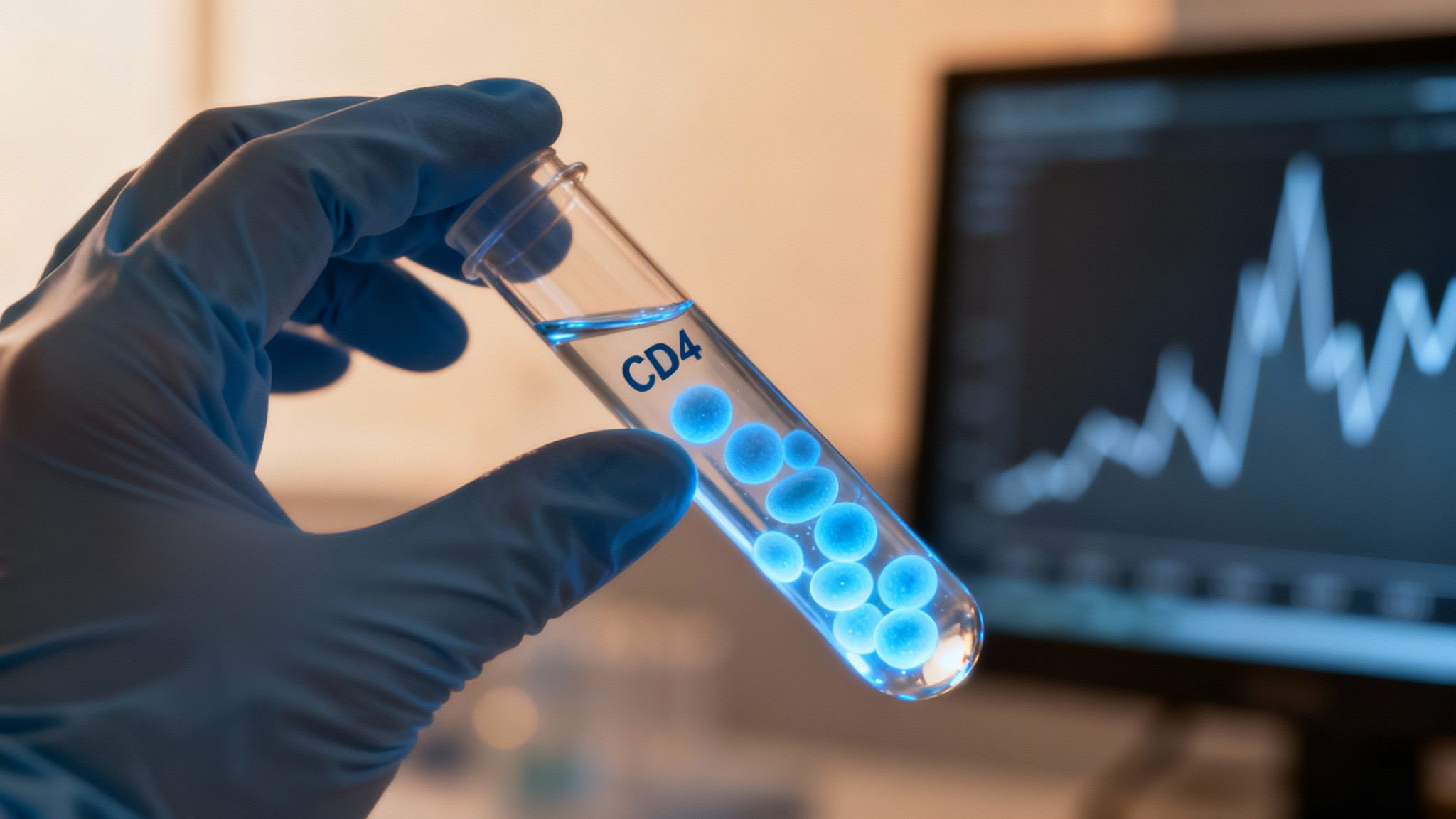
When you're dealing with Human Immunodeficiency Virus (HIV), one number stands out: the CD4 count, often called the T cell count. This isn't just a lab value; it’s a critical measure of your immune system's health and the key to tracking how well your body is fighting the virus.
A low count is the defining marker for when HIV has progressed to Acquired Immunodeficiency Syndrome (AIDS). Understanding what this number means is the first step toward taking control and managing your health effectively, especially in an environment where many viruses, from Influenza to Coronaviruses, pose a potential threat.
Decoding Your Immune System's Strength

Think of your immune system as a highly organized army, constantly defending your body from invaders like bacteria, fungi, and viruses such as HIV-1, Influenza, or SARS-CoV-2. In this army, the CD4 T-cells (or T-helper cells) are the generals. They don't fight the battles on the front lines themselves. Instead, they coordinate the entire defense, sending out signals that tell other immune cells where to go and what to attack.
Human Immunodeficiency Virus (HIV) is incredibly strategic. It doesn't attack the foot soldiers; it goes straight for the generals. HIV targets and infects these CD4 T-cells, turning them into tiny virus-producing factories. Eventually, the virus destroys the host cell, releasing thousands of new copies to hunt down and infect even more CD4 cells.
This systematic attack dismantles the immune system's command structure. As the generals are taken out one by one, the body's defenses become disorganized, weak, and ultimately ineffective against a wide range of pathogens.
Why This Number Matters So Much
Your T cell count is a direct measure of how many of these "generals" are left in your bloodstream. For a person without HIV, a healthy CD4 count is anywhere from 500 to 1,500 cells per cubic millimeter (mm³) of blood.
As HIV destroys these critical cells, the count drops. This decline is what healthcare providers track to gauge the progression of the disease.
The threshold that defines AIDS is a T cell count that falls below 200 cells/mm³. At this point, the immune system is considered severely compromised, leaving the body vulnerable to serious opportunistic infections. You can explore the full history of this clinical marker and its significance in HIV care.
A Quick Guide to T Cell Count Ranges
To put it all into perspective, here’s a simple breakdown of what the numbers generally mean for someone living with HIV.
HIV T Cell Count At A Glance
| T Cell (CD4) Count Range (cells/mm³) | Immune System Status | Clinical Significance |
|---|---|---|
| Above 500 | Healthy / Normal | The immune system is strong and functioning well. Risk of opportunistic infections is very low. |
| 200 to 499 | Moderately Compromised | The immune system is weakened. Increased risk for certain infections like shingles, thrush, and bacterial pneumonia. |
| Below 200 | Severely Compromised | This is the clinical definition of AIDS. High risk for serious, life-threatening opportunistic infections. |
| Below 50 | Critically Compromised | Extremely high risk for severe infections, such as MAC (Mycobacterium avium complex) and CMV (Cytomegalovirus). |
This table is a general guide, but it clearly shows why monitoring your CD4 count is so crucial for making treatment decisions with your doctor.
Taking Control of Your Health
Watching your CD4 count provides a clear picture of what's happening inside your body. A dropping count means HIV is winning the battle, but a stable or rising count is a sure sign that your treatment is working.
Understanding your T cell count is more than just knowing a number. It's about gaining control over your health, making informed decisions with your healthcare provider, and tracking your progress on the path to a strong, resilient immune system.
Throughout this guide, we'll dig deeper into:
- The difference between normal and low T cell counts.
- How modern antiretroviral treatments can rebuild your immune defenses.
- The practical steps you can take to protect your health.
Even as treatment helps your immune system recover, reducing your exposure to environmental pathogens is a smart strategy. Viruses like Influenza and Norovirus can be easily transmitted through contaminated surfaces. Simple hygiene, like using quality disinfecting wipes on doorknobs, phones, and countertops, can be a small but powerful part of staying healthy. Knowledge is power, and your T cell count is one of the most valuable pieces of information you have.
Understanding Why T-Cells Are So Important
To really get why your T-cell count matters so much, it helps to step back and look at what these cells actually do in your body.
Think of your immune system as a highly trained orchestra. You have dozens of different musicians, each with a specific instrument and a critical role to play in defending against viruses like Hepatitis B (HBV) or Herpes Simplex (HSV-1). In this elaborate symphony of defense, your CD4 T-cells are the conductors.
These conductors don't fight invaders directly. Instead, they direct the entire performance. They tell every other musician—from the B-cells that produce antibodies to the killer T-cells that destroy infected cells—exactly when to come in and what to do. Without a conductor, the orchestra is just a chaotic mess, completely unable to fight off a threat. That’s why a healthy number of CD4 T-cells is the cornerstone of your body's defenses.
How HIV Hijacks the Immune System
What makes HIV so uniquely devastating is its strategy. Unlike other viruses that might attack various cells throughout the body, HIV goes straight for the conductors. It specifically targets and hijacks your CD4 T-cells.
Once HIV gets inside a CD4 cell, it forces the cell's machinery to stop everything it's doing and start cranking out thousands of new copies of the virus.
This process is destructive for two reasons:
- It turns your most important immune cells into tiny virus factories.
- It ultimately kills the CD4 cell, which means one less conductor is left to lead the orchestra.
This one-two punch is what makes HIV so damaging. As more and more conductors are taken out, the immune system's ability to coordinate a defense crumbles, leaving your body vulnerable to a host of other pathogens.
The slow-motion loss of CD4 T-cells is the very heart of how HIV progresses to AIDS. It isn't just a symptom of the disease; it is the disease in action, systematically taking apart your body's ability to protect itself.
The Symphony of Cellular Defense
Your immune system is a beautiful, complex network of specialized cells all working together. If you want to see how all the pieces fit, you can check out a more detailed diagram of the immune system. Right at the center of it all are the CD4 cells, communicating with all the other key players.
When a CD4 "conductor" cell spots an invader, it releases chemical messengers called cytokines. These signals are like sheet music, activating a whole range of immune responses perfectly tailored to the specific threat.
Key Immune Cells Activated by CD4 T-Cells:
| Immune Cell Type | Function | Analogy |
|---|---|---|
| B Cells | Produce antibodies that tag pathogens for destruction. | The archers, marking targets from a distance. |
| Cytotoxic T Cells | Directly find and destroy infected cells. | The elite soldiers, engaging in close combat. |
| Macrophages | Engulf and digest cellular debris and pathogens. | The cleanup crew, removing threats from the battlefield. |
By targeting the conductor, HIV doesn't just silence one instrument; it throws the entire orchestra into disarray. The archers don't know what to aim at, the soldiers never get their orders, and the cleanup crew isn't dispatched. This is why tracking your AIDS T-cell count is so vital—it’s a direct measure of how well your immune orchestra can still perform.
How to Decode Your T Cell Count Numbers
Getting your lab results back can feel like you’re trying to crack a code. A page full of numbers doesn't tell a clear story on its own, but your T cell count paints a vivid picture of your immune health. Understanding these numbers is the first step toward having productive conversations with your doctor and taking control of your treatment journey.
The test used to measure your CD4 count is called flow cytometry. Think of it as a highly advanced sorting machine for your blood. It uses lasers and special detectors to pick out and count the exact number of CD4 T-cells in a single cubic millimeter (mm³) of blood. This gives you a precise snapshot of how strong your immune system is right now.
Key T Cell Count Ranges and What They Mean
Your T cell count places your immune health on a spectrum, from strong and ready to severely weakened. Each range signals a different level of risk and helps guide your care. Knowing these thresholds helps you understand exactly what your body is up against.
These numbers aren't just data points; they're direct indicators of how well your body can defend itself.
-
Healthy Range (500–1,500 cells/mm³): This is the normal range for someone without HIV. A count in this zone means your immune system is in top shape, fully equipped to handle whatever comes its way. Your risk of opportunistic infections is extremely low.
-
Early Immune Weakness (350–500 cells/mm³): While still fairly strong, a count in this range shows that HIV is starting to make an impact. Your defenses are beginning to wear down, and you might be more susceptible to common infections like oral thrush or shingles.
-
Significant Vulnerability (200–350 cells/mm³): At this stage, your immune system is moderately compromised. The risk for more serious infections starts to climb. This is a critical window to intervene with treatment and prevent any further decline.
The AIDS-Defining Threshold: Below 200
When a T cell count drops below 200 cells/mm³, it marks a crucial turning point. This is the official threshold for an AIDS diagnosis, whether or not you've had any severe illnesses.
At this level, your immune system is severely weakened. This leaves you highly vulnerable to a range of serious opportunistic infections (OIs)—illnesses caused by germs that a healthy immune system would normally fight off without a problem. A common and dangerous OI at this stage is Pneumocystis jirovecii pneumonia (PCP), a life-threatening lung infection.
This diagram helps visualize the T cell's role as the immune system's conductor, coordinating a complex response that falls apart when its numbers drop.

As the image shows, a healthy T cell count (the conductor) leads a coordinated immune response (the orchestra). But when the count is low, the result is immune chaos.
Research has shown that even with better treatments, many people are diagnosed late, with counts already below 350 cells/μL. While starting treatment with a count under 200 cells/μL used to mean a poorer prognosis, modern antiretroviral therapy has completely changed the game. One study on T-cell count recovery on modern ART found that T cell counts reached a median of 586 cells/μL after 5-12 years of consistent treatment.
Understanding your specific count is empowering. It transforms an abstract number into actionable knowledge, allowing you and your doctor to make the best decisions for your health and proactively manage infection risk.
It's also important to remember that the CD4 count is just one piece of the puzzle. It's often looked at alongside the total number of lymphocytes, another type of white blood cell. For a deeper dive, you can learn more about the absolute lymphocyte count normal range and how it helps assess overall immune function.
How ART Helps Rebuild Your Immune System

Seeing a low T-cell count can feel discouraging, but it’s only one part of the story. The other part is the incredible power of modern treatment. Antiretroviral therapy (ART) is the single most important tool we have to stop HIV in its tracks and give your immune system the chance to make a powerful comeback.
Think of ART as a way to shut down the virus's production lines. It works by interfering with HIV's ability to make copies of itself, which dramatically lowers the amount of virus in your blood—what we call the viral load.
When the constant assault on your CD4 cells finally lets up, your body gets the breathing room it needs to start healing. It can finally begin producing new, healthy T-cells and rebuilding its defenses from the ground up.
The Rebuilding Process: Immune Reconstitution
This remarkable recovery process has a name: immune reconstitution. It’s your body’s natural ability to replenish its army of T-cell "generals" once it's freed from the constant pressure of HIV. The goal of ART is to get your viral load so low that it becomes undetectable, which directly allows your AIDS T-cell count to start climbing.
But how fast does this happen? The timeline is different for everyone. Several factors play a role in how quickly your CD4 count rebounds:
- Your starting CD4 count: People who start treatment earlier, with a higher T-cell count, often see a faster and more complete recovery.
- Your age: Younger people tend to have a more robust immune response compared to older adults.
- Consistency is key: Sticking to your ART regimen without missing doses is non-negotiable. Skipping medication can give the virus a chance to start replicating again, which puts the brakes on your recovery.
- Your overall health: Other health conditions can affect how well your immune system is able to bounce back.
Despite these variables, the results are overwhelmingly positive. With consistent treatment, the vast majority of people see a steady increase in their T-cell count, moving them out of the danger zone and back toward a strong, functional immune system.
The core principle is simple but powerful: by suppressing the virus, you unleash your body's natural ability to heal. ART doesn't just manage HIV; it creates the conditions for your immune system to rebuild itself from the inside out.
From Vulnerable to Strong: A Realistic Look at Recovery
The recovery journey usually happens in two phases. The first phase, which often occurs in the first few months of ART, can bring a surprisingly rapid jump in CD4 cells. This is because existing T-cells that were "hiding out" in swollen lymph nodes move back into the bloodstream.
After that initial surge, the second phase begins. This is a more gradual, steady increase as your body gets down to the business of producing brand-new T-cells. This slower climb can continue for years, reminding us that immune recovery is a marathon, not a sprint.
Long-term studies paint an inspiring picture of what's possible. Research exploring the transformative power of HIV treatment shows that the immune system continues to strengthen even after years of therapy. After 5-12 years of consistent treatment, the median CD4 count stabilized at an impressive 586 cells/μL, with 78% of patients maintaining complete viral control.
This data proves that ART does more than just stop a virus—it transforms HIV from a life-threatening illness into a manageable chronic condition. It gives people the power to regain their health, rebuild their immune defenses, and look forward to a long, healthy life.
Monitoring Your Health with T Cell Counts and Viral Load
Living with HIV is a partnership between you and your healthcare team, and your lab results are the foundation of that relationship. Keeping a close eye on your numbers is one of the most empowering things you can do—it helps you see how you’re doing, track your progress, and make smart decisions about your treatment.
The two most important numbers you’ll track are your T cell count and your viral load. It helps to think of them as being on a seesaw; they have an inverse relationship. When your treatment is working well, your viral load plummets. In response, your T cell count climbs, which is a great sign that your immune system is getting stronger.
The Testing Schedule and What to Expect
When you’re first diagnosed, your doctor will order a set of baseline labs to get a starting picture of your health. This initial snapshot will include your very first T cell count and viral load measurement.
Once you begin antiretroviral therapy (ART), you’ll get into a regular testing rhythm to make sure the medications are doing their job.
- Initial Follow-up: Expect to have your labs drawn again 2 to 8 weeks after starting or switching your meds. This first check-in is crucial to confirm the treatment is successfully knocking down the virus.
- Ongoing Monitoring: After your viral load becomes undetectable and your T cell count stabilizes, you’ll typically get tested every 3 to 6 months. This routine check makes sure everything stays on the right track.
- Stable and Healthy: If you've maintained an undetectable viral load and a healthy T cell count (over 500 cells/mm³) for a couple of years, your doctor may suggest moving to annual testing.
This consistent monitoring isn't about any single number; it's about building a trend line. One test is just a snapshot in time, but a series of tests tells the whole story of your immune system’s recovery. To get the full picture, it’s helpful to understand what is viral load testing and how it fits in.
Understanding Fluctuations in Your T Cell Count
It’s completely normal to feel a jolt of anxiety if you see your T cell count dip a little, especially when you’ve been sticking to your treatment plan perfectly. But the truth is, small ups and downs are perfectly normal and usually nothing to worry about. Your T cell count is a dynamic number, and lots of things besides HIV can make it wiggle.
Remember, healthcare providers focus on the long-term trend of your T cell count, not a single isolated number. A small, temporary dip is usually insignificant as long as your viral load remains undetectable.
Several everyday things can cause a temporary blip in your T cell count:
- Minor Illnesses: Your body is smart. If you're fighting off a cold or the flu, your immune system might pull T cells out of the bloodstream to go fight the infection, causing a temporary drop in your lab result.
- Vaccinations: Getting a flu shot or another vaccine can fire up your immune system, which can cause a short-term change in your cell counts.
- Time of Day: Believe it or not, T cell levels can naturally shift a bit depending on when your blood is drawn.
- Stress and Fatigue: A tough week at work or not getting enough sleep can have a small, temporary effect on your immune system.
Knowing about these influences can save you a lot of unnecessary stress. As long as the overall trend is stable or heading up and your viral load stays suppressed, these little variations are just part of your body’s normal rhythm.
A Proactive Guide to Living Well with HIV
Knowing your numbers is the first step, but truly thriving with HIV comes from taking proactive control of your health. This journey isn't just about medication; it's about a complete approach to your well-being. Let's pull everything together and outline the practical steps you can take to support your immune system for a long, vibrant life.
The main takeaway is simple: your T-cell count is a direct measure of your immune strength. We’ve seen how Antiretroviral Therapy (ART) is a game-changer, stopping the virus in its tracks and allowing your T-cell numbers to bounce back. Regular check-ins with your doctor act as your roadmap, showing you exactly how well your body is responding to treatment.
Supporting Your Immune System from All Angles
While ART does the heavy lifting, your daily habits play a powerful supporting role. Think of these lifestyle choices as reinforcing the strong foundation your medication builds every single day.
Here’s where you can make a real difference:
- Balanced Nutrition: Fueling your body with nutrient-rich foods—think fruits, vegetables, lean proteins, and whole grains—gives your immune system the raw materials it needs to build new, healthy cells.
- Regular Exercise: You don't have to run a marathon. Moderate activity like brisk walking, swimming, or cycling has been shown to boost immune function, lower inflammation, and work wonders for your mental health.
- Stress Management: Chronic stress can throw a wrench in your immune system's gears. Finding healthy outlets, whether it's meditation, yoga, or a favorite hobby, is non-negotiable.
- Quality Sleep: Your body does its most important repair work while you sleep, including manufacturing immune cells. Aim for 7-9 hours a night to give it the time it needs.
Living with a chronic condition can sometimes trigger worries. It’s important to find effective strategies for managing health anxiety to protect your peace of mind.
Why a Clean Environment Matters
Even as your immune system recovers, it can still be more vulnerable than that of someone without HIV. Because of this, lowering your exposure to everyday germs is a smart, proactive move. Good hygiene isn't just about being tidy—it's an active part of your health defense plan.
A recovering immune system is like a fortress being rebuilt. While the walls get stronger every day, it's wise to keep potential invaders at bay. Simple hygiene habits significantly lower your risk of picking up common illnesses that could slow down your progress.
A few consistent habits can make a huge impact. Frequent hand washing with soap and water is your absolute first line of defense. On top of that, get into the habit of using quality disinfecting wipes on high-touch surfaces. Wiping down doorknobs, your phone screen, light switches, and kitchen counters helps clear pathogens from your environment, including viruses like Rhinovirus or Feline Calicivirus that can linger on surfaces.
This simple step reduces the number of battles your immune system has to fight, letting it focus on the main mission: rebuilding your T-cell count. By understanding your numbers, partnering with your healthcare team, and making these conscious daily choices, you are firmly in the driver's seat of your health.
Answering Your Top Questions About T Cell Counts
If you're living with HIV, you're bound to have questions as you navigate your health journey. Let's tackle some of the most common ones about the AIDS T cell count to give you the clarity and confidence you need.
Can My T Cell Count Go Down Even If I'm on Treatment?
Yes, it absolutely can, and it's usually not a reason to panic. Think of it like the stock market—minor day-to-day fluctuations are normal, but it's the long-term trend that really matters.
A temporary dip can be caused by all sorts of things, like a common cold, a recent vaccine, or even just the time of day your blood was drawn. Lab results can also have a bit of natural variability. As long as your viral load stays undetectable and your T cell count is generally stable or trending upward over time, a small, isolated drop isn't something your doctor will be concerned about.
What's the Difference Between a CD4 Count and a CD4 Percentage?
This is a great question. Your CD4 count is the straightforward number—how many T cells are in a tiny sample of your blood, measured in cells per cubic millimeter (cells/mm³). The CD4 percentage, on the other hand, tells you what proportion of all your white blood cells (specifically, your lymphocytes) are T cells.
The absolute count can sometimes bounce around if your total white blood cell count changes for any reason. The percentage, however, tends to be much more stable. That's why doctors look at both. A normal CD4 percentage is between 30% and 60%, and a percentage that falls below 14% is another way AIDS can be diagnosed, no matter what the absolute T cell count is.
Think of it this way: the absolute count is a snapshot of your immune army's size at that moment. The percentage gives a more stable, big-picture view of your army's composition.
If My T Cell Count Is High, Can I Stop My Medication?
This is a hard no. A high T cell count is fantastic news—it means your antiretroviral therapy (ART) is doing its job perfectly by stopping HIV from making copies of itself.
If you stop taking your medication, the virus will immediately roar back to life. Your viral load will become detectable again, and your T cell count will start to fall, leaving your immune system vulnerable. Sticking to your daily ART is the only way to keep the virus suppressed, protect your T cells, and safeguard your long-term health.
Leave a Reply