We've all heard someone say it: "Oh, it's just a 24-hour stomach bug." It’s a dangerously misleading phrase. While the worst of the misery might only last a day, the virus behind it is highly contagious for much, much longer.
You can actually start spreading the virus before you even feel sick and continue to do so for several days after you feel perfectly fine. This guide will walk you through the real timeline and explain how to stop the spread.
The Myth of the 24-Hour Stomach Bug
That nasty illness that knocks you out for a day is almost always caused by a virus like Norovirus, a highly resilient and infectious form of acute viral gastroenteritis. Thinking of it as a one-day problem is a huge mistake—it’s how these viruses tear through homes, schools, and offices so quickly.
Those 24 hours of intense symptoms are just the peak of the storm, not the entire event.
The virus is actively shedding from your body long before the first wave of nausea hits and remains a threat long after you've braved your first real meal. This sneaky, extended contagious window is precisely why it’s so easy to pass along and why proper disinfection is critical.
Norovirus Is a Global Problem
This isn't just some minor bug; Norovirus is a serious global health issue and a leading cause of acute gastroenteritis worldwide. It is responsible for an estimated 685 million cases every single year.
In the United States alone, the CDC reports that Norovirus causes 19 to 21 million illnesses annually, with cases spiking in the winter. The sheer scale of its impact shows why getting the contagious timeline right is so critical for keeping our communities healthy and our homes sanitized.
The real danger of calling it a "24-hour stomach bug" is that it makes us let our guard down. The contagious period stretches far beyond the symptoms, making it incredibly easy to infect others when you think you’re in the clear.
Realizing the illness lasts far longer than a single day is the first step in stopping the cycle. To get a better handle on how long you'll be out of commission and when you can truly say you're better, it helps to understand the complete stomach virus recovery time. Armed with that knowledge, you can take the right steps to protect everyone around you.
Mapping The Complete Contagious Timeline
To really dodge the stomach bug, you have to understand its entire lifecycle—not just the single day you feel absolutely awful. That phrase "24-hour stomach bug contagious" is a bit misleading because the virus is actually working on a much longer schedule.
Let's break down the three distinct phases of its contagious timeline. Getting this progression right is key. It shifts the focus from just reacting to symptoms to proactively stopping the spread before, during, and long after the worst of it is over.
The Silent Pre-Symptom Phase
The incubation period is easily the most deceptive stage of viral gastroenteritis. This is the time between when you get exposed to the virus and when you first feel sick, which usually lasts anywhere from 12 to 48 hours.
During this window, you feel perfectly fine, but the virus is already multiplying inside your body. The scary part? You can start shedding viral particles and become contagious near the end of this phase, unknowingly spreading it to others before you even feel the first twinge of nausea.
Peak Illness And Maximum Contagion
This is the phase everyone knows and dreads—the sudden, violent onset of nausea, vomiting, diarrhea, and stomach cramps. While the symptoms are at their absolute worst for about 24 to 72 hours, this is also when you are at your most contagious.
Every single episode of vomiting or diarrhea can release billions of viral particles. These particles can easily contaminate surfaces, become airborne for a short time, and infect anyone nearby. This is precisely why immediate isolation and aggressive disinfection with effective wipes or sprays are non-negotiable once symptoms start.
This timeline shows how that brief, intense period of sickness is just one piece of a much longer contagious puzzle.

The main takeaway here is that the contagious period stretches out significantly on both sides of that peak symptom phase. That makes being cautious after you feel better just as important as the actions you take while you're sick.
The Lingering Post-Symptom Threat
And here's where most people make a critical mistake. Once the worst is over and you feel better, you assume you're in the clear. Not so fast. You can continue to shed the virus in your stool for days, and in some cases, for two weeks or even longer after you've recovered.
While the amount of virus you shed drops off after symptoms stop, you are still considered contagious. The CDC recommends waiting at least 48 hours after your symptoms have completely resolved before returning to work or school.
This extended shedding period is a huge reason for recurring outbreaks in families and workplaces. You could feel totally recovered but still contaminate a bathroom doorknob or a shared coffee pot, kicking off the whole miserable cycle for someone else. This is why you must keep up with thorough handwashing and cleaning surfaces with effective disinfecting wipes long after you feel back to normal.
To make this easier to visualize, here’s a quick breakdown of the contagious timeline.
Stomach Bug Contagious Period Breakdown
This table summarizes the key phases of viral gastroenteritis contagiousness, symptoms, and necessary precautions for each stage.
| Phase | Typical Duration | Contagiousness Level | Key Precautions |
|---|---|---|---|
| Incubation (Pre-Symptom) | 12 – 48 hours | Low to Moderate (towards the end) | Standard hygiene; be mindful if you know you were exposed. |
| Peak Illness (Symptomatic) | 24 – 72 hours | Extremely High | Strict isolation, frequent handwashing, immediate disinfection of contaminated surfaces. |
| Recovery (Post-Symptom) | Up to 2+ weeks | Moderate to Low (decreases over time) | Continue diligent handwashing, disinfect bathrooms, and wait 48 hours post-symptoms before returning to public life. |
Understanding these distinct phases is your best defense. It's not just about surviving the 24 hours of misery; it's about protecting everyone around you for the full duration of the threat.
How the Stomach Bug Spreads Like Wildfire
Ever wonder how one sick person can take down an entire office, classroom, or household in just a few days? The culprit is usually Norovirus, the incredibly resilient and ridiculously contagious virus behind most cases of the "24-hour stomach bug." Its ability to spread is astonishingly efficient, making diligent hygiene—and the right disinfecting products—an absolute must.
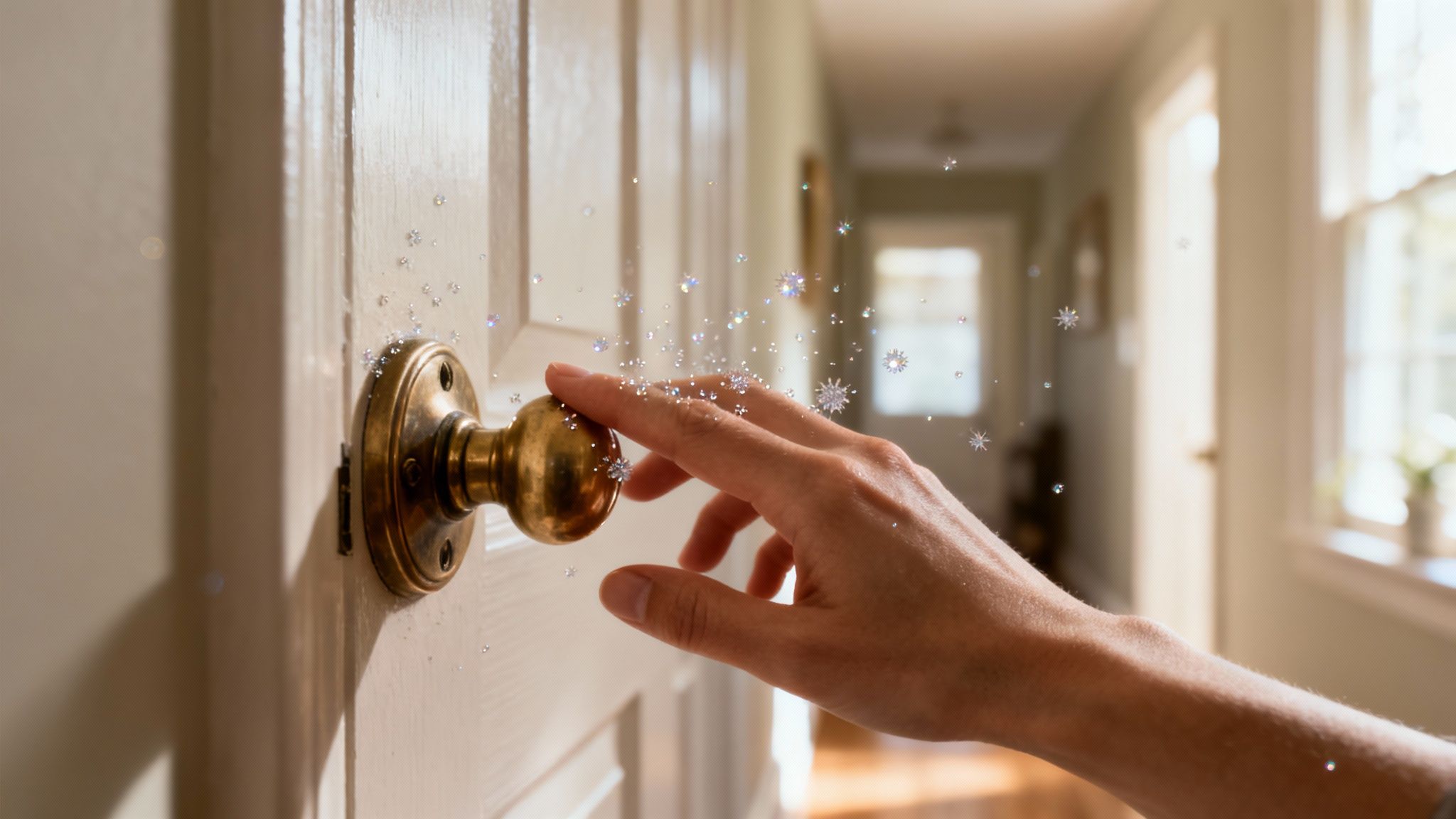
Think of it like trying to clean up invisible glitter after a craft project. Long after you’re sure you’ve wiped down every surface, you keep finding it everywhere—on your clothes, the furniture, even hours later. Viruses like Norovirus behave in a similar way, but their impact is a whole lot worse.

The Primary Routes of Transmission
Norovirus is an expert at moving from person to person through several key pathways. When someone is sick, microscopic viral particles from their vomit or stool can easily contaminate the entire surrounding environment.
Here’s how it usually gets around:
- Contaminated Surfaces (Fomites): This is one of the most common ways the stomach bug makes its rounds. An infected person touches a doorknob, light switch, remote control, or their phone, leaving a trail of viral particles behind. The next person who touches that same surface and then touches their mouth can get sick. You can learn more about how viruses hang around on objects in our guide on what is fomite transmission.
- Direct Person-to-Person Contact: Something as simple as shaking hands with someone who is sick or caring for an ill family member can put you in direct contact with the virus. Those invisible particles easily transfer from their hands to yours.
- Contaminated Food and Water: If someone preparing food doesn't wash their hands properly after being sick, they can contaminate every meal they touch. This is a classic recipe for a widespread outbreak, which is why food safety is so critical.
The virus can survive on surfaces for days, turning everyday objects like countertops, keyboards, and shared utensils into major transmission hotspots. This is exactly why effective disinfection is so important—not just wiping, but truly killing the virus with a powerful disinfectant wipe or spray.
A Small Dose Causes Big Problems
What truly sets the 24-hour stomach bug apart is the minuscule amount of virus needed to make someone sick. It’s estimated that exposure to as few as 18 viral particles—an amount so small it's completely invisible—is enough to cause a full-blown infection.
This incredible efficiency is why outbreaks spread so quickly in closed environments. One documented outbreak showed that before anyone realized what was happening, each infected person had already passed the virus to an average of 14 others. You can find more details on norovirus transmission rates from healthcare experts.
An often-overlooked risk is aerosolization. When someone vomits, tiny droplets loaded with the virus can become airborne and travel several feet, landing on nearby surfaces or being inhaled by others in the room.
This fact alone highlights why you have to be so quick and thorough when cleaning up after someone gets sick. It’s not just about what you can see; it's about eliminating the microscopic viral particles you can’t. Without aggressive cleaning and disinfection, that "invisible glitter" will keep spreading, ensuring the stomach bug lives up to its name.
Your Action Plan for Cleaning and Disinfecting
When a stomach bug hits your home, your normal cleaning routine just won't cut it. Viruses like Norovirus are notoriously tough survivors. Simply wiping down a countertop isn't nearly enough to stop them from spreading. You need a solid one-two punch: clean first to get rid of the visible grime, then disinfect to kill the viral freeloaders left behind.
Think of it like getting a stain out of a carpet. You first have to blot up the spill (cleaning). Only then can you apply a stain remover to break down what’s left in the fibers (disinfecting). If you skip that first step, the disinfectant can't get to the virus, and the problem will just keep coming back.

Choosing the Right Disinfectant
Not all cleaning products are created equal, especially when you're up against a beast like Norovirus. A lot of common household cleaners and even some antibacterial wipes are basically useless against this type of virus. You need to bring out the big guns.
Your best weapons fall into two categories:
- Chlorine Bleach Solution: Simple, cheap, and brutally effective. The CDC recommends a solution of 5 to 25 tablespoons of regular household bleach per gallon of water.
- EPA-Registered Disinfectants: Look for products on the EPA's List G. These are specifically tested and approved to kill Norovirus. Just check the label for an EPA registration number and language confirming it’s effective against Norovirus. Disinfecting wipes from this list are especially convenient for high-touch surfaces.
Using the wrong product gives you a false sense of security. It leaves your whole family vulnerable to the next wave of illness. Always read the label.
A Step-by-Step Disinfection Strategy
To take back your home from the virus, you need a game plan. Start at the "ground zero" of the illness and work your way out. And please, wear disposable gloves for this whole operation.
1. Immediate Cleanup of Bodily Fluids
Move fast after any vomiting or diarrhea. First, gently soak up all the visible material with paper towels. Don’t scrub aggressively—that can fling virus particles into the air. Seal the soiled towels in a plastic bag and throw it away immediately.
2. Clean the Area Thoroughly
Once the initial mess is gone, clean the spot with soap and water. This step is critical. It removes the gunk that can act like a shield, protecting the virus from the disinfectant you’re about to use.
3. Disinfect Everything
Now, apply your bleach solution or EPA-approved disinfectant to the entire area. You have to let it sit for the recommended "contact time" on the product label, which is usually 5-10 minutes. This is when the magic happens.
Don't just spray and wipe. The disinfectant needs time to do its job. Rushing this step is like taking antibiotics for only one day—you might knock the germs down, but you won't knock them out.
4. Sanitize All High-Touch Surfaces
Time to expand your search-and-destroy mission. Use your disinfectant to wipe down every high-touch surface in your home, especially in bathrooms and the kitchen. Think doorknobs, light switches, faucets, TV remotes, phones, and countertops. Using ready-to-use disinfecting wipes makes this step fast and effective.
If there was an accident on a bed, cleaning a mattress properly is key to stopping the spread. For those tough situations, you can find a detailed expert guide on how to get pee out of a mattress that walks you through the process.
5. Handle Laundry with Care
Wash any contaminated bedding, towels, and clothes right away. Use the hottest water setting the fabric can handle and dry everything on high heat. When you carry the soiled laundry, do it carefully—don't shake it out and send virus particles flying.
Following this plan is the most effective way to break the chain of transmission. For a deeper dive into the science of why this works, check out our guide on how to disinfect surfaces and protect your home.
When You Can Safely Rejoin the World
Feeling better after a stomach bug is a massive relief, but it’s not a green light to immediately jump back into your routine. This is a critical moment. A small misstep here can kick off a whole new wave of infections for everyone around you.
That old “24 hours symptom-free” rule you’ve probably heard? It’s outdated and, frankly, dangerous when dealing with a super-contagious virus like Norovirus.
Thinking you're in the clear just a day after your symptoms stop is one of the biggest mistakes people make. As we’ve covered, your body can keep shedding viral particles long after the worst is over. Rushing back to the office or sending a kid back to school too soon is exactly how these illnesses spread like wildfire.
The 48-Hour Rule: A Public Health Standard
So, what’s the right way to handle it? Public health organizations like the CDC are crystal clear on this: you need to wait a minimum of 48 hours after your last symptom (vomiting or diarrhea) has completely stopped.
This isn't just a casual suggestion. It's a guideline rooted in solid science about how long you remain a significant transmission risk.
Sticking to this two-day waiting period is non-negotiable for a few key reasons:
- It Lowers the Viral Shedding Risk: This gives your body a safer buffer zone, allowing the amount of virus you’re shedding to drop dramatically.
- It Protects Vulnerable People: You might be heading back to a place with infants, elderly folks, or immunocompromised people who could face severe complications from the same bug.
- It Breaks the Chain of Transmission: Following this rule is one of the most powerful things you can do to stop an outbreak in its tracks.
Why Waiting Is So Important
That extra day of staying home might feel like an inconvenience, but it directly addresses the post-symptomatic viral shedding we talked about earlier. You could feel totally fine but still leave behind enough virus on a keyboard, a coffee pot handle, or a shared toy to infect the next person who touches it.
Waiting the full 48 hours is an act of social responsibility. It’s about recognizing that being contagious isn't just about how you feel—it's about whether you can still pass the virus on. This simple act of patience is your best tool to prevent becoming "patient zero" for a new outbreak.
By resisting the urge to get back to normal life right away, you protect your colleagues, your kids’ classmates, and your community. The goal isn't just your own recovery; it's making sure the "24-hour stomach bug contagious" cycle doesn't start all over again with someone else.
Your Top Stomach Bug Questions, Answered
When you're dealing with a stomach bug, a million questions can run through your mind. You're not just trying to feel better; you're trying to keep the rest of your family from catching it. Let's clear up some of the most common worries with straightforward, practical answers.
Can I Catch the Stomach Bug From Someone Who Seems Fine?
Yes, absolutely—and this is one of the main reasons it spreads like wildfire. A person can start shedding the virus and become contagious before they even feel the first twinge of sickness.
Even more sneakily, they can remain contagious for 48 hours or even longer after their symptoms are completely gone. That quiet, extended contagious period is why relentless handwashing and regular use of disinfecting wipes on shared surfaces are your best defense, especially when you know a bug is making the rounds.
Isn't This Just a Bad Case of Food Poisoning?
It's easy to mix them up because the symptoms feel so similar, but they aren't the same thing. The "stomach bug" is almost always viral gastroenteritis, an infection sparked by super-contagious viruses like Norovirus. It jumps from person to person with incredible ease.
Food poisoning is a much broader term for getting sick from contaminated food or drinks. While viruses (including Norovirus) can be the culprit, it's often caused by bacteria like Salmonella or parasites. The biggest clue is usually timing: food poisoning often hits you much faster, sometimes within just an hour of eating.
Why Do I Seem to Get the Stomach Bug Every Single Year?
If it feels like you're stuck in a miserable annual tradition, you're not just unlucky. There's a biological reason for it. The viruses behind gastroenteritis, especially Norovirus, come in countless different strains and are constantly changing.
This means getting sick once doesn't give you a free pass for the future. Your immune system might build a short-term defense against the exact strain that got you, but you’re still a sitting duck for all the others. Because these viruses evolve so quickly, prevention through good hygiene and thorough disinfection is a far better bet than hoping for immunity.
Think of it like the common cold. The sheer number of Norovirus strains and their ability to mutate means you can't build up permanent immunity. That's why you can catch it again and again.
When Is It Time to Call a Doctor?
For most healthy adults, a stomach bug is a miserable but short-lived ordeal that you can manage at home. However, you need to watch carefully for signs of severe dehydration, which is where things can get dangerous.
You should seek professional medical care if you or a loved one experiences:
- Feeling dizzy or lightheaded every time you stand up.
- Not being able to urinate for 8 hours or more.
- Being unable to keep any liquids down for over a full day.
- A high fever or seeing blood in your stool.
The very young, the elderly, and anyone with a compromised immune system are at much higher risk for complications and should be seen by a doctor sooner rather than later.
As you recover, many people look for gentle ways to support their system. You might find it helpful to explore some natural remedies for digestive problems that can help soothe your gut as you get back on your feet.
Leave a Reply