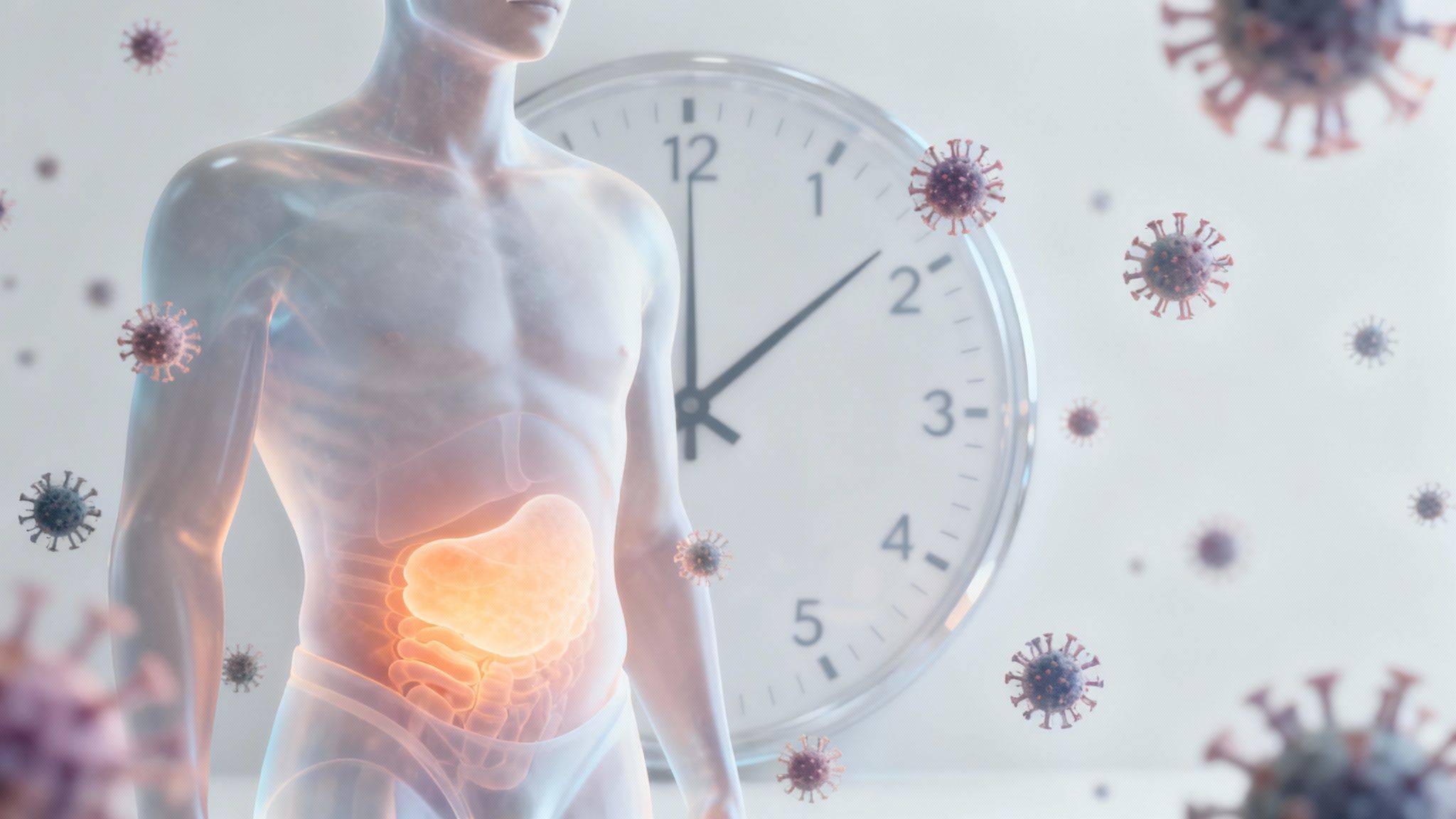
You’ve battled through the worst of the stomach flu—scientifically known as viral gastroenteritis—and the acute symptoms have finally subsided. You feel human again. The temptation is to jump right back into your normal routine, but here's a critical point: just because you feel better doesn’t mean you’ve stopped being contagious.
In fact, you can continue to spread the viruses responsible for stomach flu for a few days to two weeks after you feel completely better. This is due to a process called “viral shedding,” where your body continues to expel virus particles long after the misery has ended. Understanding this timeline is absolutely critical to avoid transmitting the illness to family, friends, and coworkers.
The Stomach Flu Contagious Window Explained
When you're experiencing acute gastroenteritis, your only goal is to survive the waves of nausea and cramping. But protecting those around you is just as important, and that means knowing when you're a risk to others. The infectious window is surprisingly long and actually starts before you even feel the first symptom.
We can break it down into three key phases: the incubation period (before symptoms), the symptomatic phase (when you're actively sick), and the post-symptom recovery period. While you’re most infectious when symptoms are at their peak, the danger is far from over when they fade.
Viral Shedding After Symptoms Subside
This is the phase that is often misunderstood. After the vomiting and diarrhea stop, your body can continue to shed the virus—especially resilient non-enveloped viruses like Norovirus—in your stool for two weeks or more. Every time you use the bathroom, you're potentially contaminating surfaces with virions without even knowing it.
One of the biggest mistakes people make is heading back to work or school the moment they feel okay. The reality is that you’re still a walking transmission risk, which makes diligent handwashing and surface disinfecting with appropriate virucidal agents essential to break the chain of infection.
This timeline gives you a clear picture of how a Norovirus infection typically plays out, showing just how long that contagious period really lasts.

As the graphic shows, you're contagious before you feel sick and for a significant period after you've recovered.
Other viruses have their own specific timelines. Human Rotavirus, for instance, can also be shed for up to two weeks after recovery. You can learn more about the specific contagious periods for different stomach flu viruses from the Mayo Clinic's expert insights. This extended shedding phase is exactly why you can't let your guard down—keep cleaning with effective disinfecting wipes to prevent a full-blown household outbreak.
To make this easier to digest, here's a quick summary of the contagious windows for the most common culprits behind viral gastroenteritis.
Stomach Flu Contagious Periods At a Glance
| Virus Type | Incubation Period | Symptomatic Period | Post-Symptom Contagious Period |
|---|---|---|---|
| Norovirus | 12-48 hours | 1-3 days | Up to 2 weeks or more |
| Rotavirus | ~2 days | 3-8 days | Up to 10 days or more |
| Astrovirus | 3-4 days | 2-3 days | Up to 2 weeks |
| Adenovirus | 3-10 days | 1-2 weeks | Can be several weeks |
This table highlights just how different each virus can be, but the common thread is clear: the risk of spreading the illness doesn't end when your symptoms do. That post-symptom period is where we often let our guard down, and it's crucial for preventing further transmission.
The Three Phases of Stomach Flu Contagiousness
To fully comprehend how long you're contagious, you have to think beyond just the days you feel acutely ill. It helps to imagine the infection in three distinct phases. Each stage involves a different level of "viral shedding," which is the key to understanding your risk of spreading it to others.
This is precisely why viral gastroenteritis can spread rapidly through a household, even when you think you’re being careful. An individual can appear perfectly healthy but still be actively spreading the virus.
Phase 1: The Incubation Period
This is the silent, preclinical part of the infection. The incubation period is the time between initial exposure to the virus and the onset of clinical symptoms. The virus isn't dormant; it's rapidly replicating within your body, and you don't feel a thing.
For a potent virus like Norovirus, this stage can be incredibly short—sometimes just 12 to 48 hours.
The concerning part? You can begin shedding the virus toward the end of this phase, making you contagious before you even know you're sick. This is a primary reason it spreads so efficiently in families, schools, and offices. To dig deeper into this, check out our guide on what is an incubation period.
Phase 2: The Symptomatic Period
This is when the viral infection is at its peak, and you feel it. The symptomatic period is when all those miserable symptoms manifest: vomiting, diarrhea, nausea, and stomach cramps. Your body is now a full-blown virus-producing machine, and your viral load is at its highest.
Every episode of vomiting or diarrhea can release millions—or even billions—of viral particles into the air and onto surfaces. This is when you are most infectious.
At this point, isolation isn't just a good idea; it's critical to interrupt the transmission cycle. Meticulous hygiene and disinfection become non-negotiable.
Phase 3: The Post-Symptomatic Period
You've finally turned a corner and are starting to feel better. But here’s the most misunderstood part of being contagious: you're not in the clear yet.
During the post-symptomatic period, your body is still shedding the virus, primarily in your stool, for days or even weeks after your symptoms have resolved. With Norovirus, this can continue for two weeks or longer.
This means you’re still a transmission risk to others every time you use the bathroom. It’s why you absolutely must maintain strict handwashing and disinfection of high-touch surfaces long after you feel better.
Why Norovirus Is So Aggressively Contagious

Not all viruses that cause gastroenteritis are created equal, and Norovirus (also known as Norwalk Virus) is in a league of its own. It's not just another virus; it’s a master of transmission, practically engineered to spread with high efficiency. That aggressive nature is exactly why understanding its contagious period is so critical for public health.
Its ruthless efficiency comes down to a few key traits that make it incredibly difficult to contain once it enters a home, school, or office. Understanding these is the first step toward effective prevention and control.
The Power of a Low Infectious Dose
One of the biggest reasons Norovirus spreads so rapidly is its remarkably low infectious dose. This means very few viral particles are needed to initiate a full-blown infection. In fact, it can take as few as 10 to 18 microscopic viral particles to make a healthy adult sick.
To put that into perspective, a single episode of vomiting or diarrhea can release billions of these virions into the environment. This creates a massive imbalance where even the tiniest exposure can lead to illness, making transmission almost effortless.
This extreme contagiousness is a significant public health issue. The United States alone sees around 19 to 21 million cases of norovirus each year. The sheer volume of virus an infected person sheds is just staggering. For more on this, check out what doctors wish patients knew about norovirus contagiousness.
This concentration of viral particles means that even an invisible, microscopic trace on a surface or in food is more than sufficient to infect the next person.
A Fast and Furious Timeline
Norovirus doesn't waste any time, which helps it outpace our efforts to contain it. The infection timeline is brutally efficient:
- Rapid Incubation: After exposure, symptoms can manifest in as little as 12 to 48 hours. This short fuse means you can go from feeling completely fine to intensely ill in less than a day.
- Intense Illness: The sickness itself is acute but brief, typically lasting one to three days. While short, this is when viral shedding is at its peak and you are most infectious.
- Stubborn Shedding: Here's the critical point: the virus doesn't just disappear when you feel better. You can continue shedding Norovirus in your stool for two weeks or even longer, meaning you remain contagious long after recovery.
Environmental Resilience
In addition to its biological advantages, Norovirus is exceptionally robust. It can survive outside of a human host for a surprisingly long time.
This small non-enveloped virus can persist on surfaces like doorknobs, countertops, and remote controls for up to two weeks, waiting for a new host. It’s also resistant to many common cleaners and alcohol-based hand sanitizers, which have limited efficacy against it.
This environmental persistence is a major factor in prolonged outbreaks. Because of this, meticulous cleaning with the right products is your best line of defense. You can learn more in our deep dive into norovirus transmission and disinfection strategies.
Beyond Norovirus: Meet the Other Stomach Bugs
While Norovirus gets significant attention for its explosive outbreaks, it's certainly not the only virus causing gastroenteritis. A few other viruses can trigger the same symptoms, but they operate under slightly different rules—especially concerning their persistence.
Think of "stomach flu" as a catch-all term for viral gastroenteritis. Identifying the specific viral agent helps explain why one person's illness might be a brief 24-hour event while another's drags on for a week or more.
Rotavirus: The Childhood Culprit
Human Rotavirus is infamous for causing severe, watery diarrhea, particularly in infants and young children. In fact, before a vaccine became widely available, it was the leading cause of severe gastroenteritis in that demographic.
Its incubation period is slightly longer than Norovirus, typically around two days. Once symptoms appear, they can last from three to eight days. The real concern, however, is the prolonged contagious period. A child can shed the virus in their stool for up to 10 days or even longer after they feel completely better, which is why it spreads so effectively in daycare settings.
Adenovirus: The Multi-Talented Menace
Adenovirus is a versatile pathogen. It can certainly cause stomach flu symptoms like diarrhea and vomiting, but it's also responsible for the common cold, conjunctivitis (pink eye), and bronchitis. It's a true multi-tasker.
When it targets the gastrointestinal tract, symptoms can last for a week, sometimes longer. Most concerning is its extended contagious period. Viral shedding can persist for several weeks after recovery. That long tail makes it incredibly difficult to contain without hyper-vigilance about hygiene long after the acute phase is over.
The key takeaway is that feeling better doesn't mean you're no longer a risk. With viruses like Adenovirus and Rotavirus, the post-symptom shedding period is a major factor in their spread. This makes continued handwashing and disinfecting surfaces with effective wipes absolutely essential.
To put it all into perspective, let's break down the key differences between the most common viruses causing gastroenteritis.
Comparing Viral Gastroenteritis Agents
Each stomach flu virus has its own unique characteristics, affecting everything from its transmission route to how long you pose a risk to others. The table below highlights these crucial distinctions.
| Virus | Primary Transmission Route | Typical Symptom Duration | Post-Symptom Contagious Period |
|---|---|---|---|
| Norovirus | Fecal-oral, contaminated surfaces/food | 1-3 days | Up to 2 weeks or more |
| Rotavirus | Fecal-oral, contaminated surfaces | 3-8 days | Up to 10 days or more |
| Astrovirus | Fecal-oral | 2-3 days | Up to 2 weeks |
| Adenovirus | Fecal-oral, respiratory droplets | 1-2 weeks | Can be several weeks |
As you can see, a one-size-fits-all approach doesn't work for viral gastroenteritis. The specific virus involved determines how long the illness lasts and, more importantly, how long you need to remain on high alert to prevent transmission.
Proven Steps to Stop the Spread of Stomach Flu
Knowing how long viral gastroenteritis is contagious is half the battle. The other half? Implementing effective strategies to stop it from spreading through your household.
Once a tough bug like Norovirus is introduced, it can seem inevitable that everyone will get sick. But that doesn't have to be the case. With a proper infection control plan, you can break the chain of transmission.
This isn't just about tidying up. It's a strategic war against an invisible enemy that can survive on surfaces for days or even weeks. Let’s review the tactics that actually work.
Master Proper Handwashing Techniques
When you're dealing with Norovirus, not all hand hygiene methods are effective. Those alcohol-based hand sanitizers? They are largely ineffective against the tough, non-enveloped protein capsid of Norovirus.
Your best and most reliable weapon is soap and water.
Vigorous handwashing does more than just kill germs—the mechanical friction physically removes virus particles from your skin so they can be washed down the drain. Follow this protocol every single time:
- Wet your hands with clean, running water.
- Lather up with soap and scrub for at least 20 seconds. Be sure to clean the backs of your hands, between your fingers, and under your nails.
- Rinse thoroughly under running water.
- Dry your hands with a clean towel or air dry.
Remember, you can still be contagious for up to two weeks after you feel better. Diligent handwashing must continue long after your symptoms are gone, especially after using the bathroom, to prevent unknowingly transmitting the virus to others.
Clean, Sanitize, and Disinfect Surfaces
To truly eliminate viral threats, you must understand the difference between cleaning, sanitizing, and disinfecting. These terms are often used interchangeably, but they represent three distinct steps in controlling viral spread.
- Cleaning: This is step one. It involves using soap and water to physically remove dirt, grime, and some germs. It is necessary, but it will not inactivate Norovirus.
- Sanitizing: This reduces the number of germs to a safer level. It’s better than just cleaning, but may not be sufficient to eliminate a resilient virus like Norovirus.
- Disinfecting: This is the crucial step. Disinfection uses chemicals specifically designed to inactivate or kill pathogens on surfaces. For Norovirus, this means using a bleach solution or an EPA-approved product like disinfecting wipes that explicitly lists Norovirus on its label.
Focus your disinfecting efforts on the viral superhighways in your home—the high-touch surfaces. Think doorknobs, light switches, remote controls, faucets, and toilet handles.
For a complete playbook on keeping your home virus-free, check out our guide on how to prevent a stomach virus.
Safely Handle Contaminated Items
When someone is actively sick, any object they touch—or anything in their immediate vicinity—can become a fomite (a contaminated object). This is especially true for bedding, clothing, and towels.
Handling these items requires extreme care to avoid aerosolizing the virus and spreading it further.
Always wear disposable gloves when dealing with soiled laundry. Wash these items immediately in hot water on the longest cycle available, then dry them on high heat.
Beyond just hygiene, you can also support your body from the inside out. Building up your internal defenses by eating for a healthy gut microbiome can aid recovery and potentially make you less susceptible to future infections. Combining external defense with internal strength provides the best chance of staying well.
When Is It Safe to Go Back to Work or School?
So, you're finally feeling human again after a miserable bout with the stomach flu. The big question now is, when can you actually leave the house and get back to your life?
Most guidelines suggest waiting until you’ve been symptom-free for 48 hours. It’s standard advice, and it’s a reasonable starting point. But with a highly efficient virus like Norovirus, that two-day rule is often the bare minimum.
Here’s the catch: you can still be shedding the virus in your stool for up to two weeks after your symptoms are gone. Returning to the office or sending a child to school too soon means you could unknowingly initiate a new chain of transmission.
This is exactly why some settings have much stricter exclusion policies. They simply cannot risk an outbreak.
High-Risk Environments Need Higher Standards
For certain jobs and settings, the 48-hour rule is insufficient. The risk of a single case escalating into a full-blown outbreak is so high that a longer isolation period is required to ensure safety.
These high-risk environments include places like:
- Food Service: An infected food handler is a rapid vector for contaminating food and infecting dozens of people. Norovirus is a leading cause of foodborne illness outbreaks.
- Healthcare Facilities: An outbreak in a hospital or nursing home can have severe consequences for patients with compromised immune systems.
- Daycare Centers and Schools: Children are highly effective at sharing pathogens. Close quarters make these ideal environments for viruses to spread rapidly.
In these high-risk professions, workplace policies or public health guidelines often mandate staying home for 72 hours or more after symptoms resolve. That extra day provides a much safer buffer against viral shedding and infecting others.
Ultimately, it comes down to responsible action. You must balance your own need to return to normal with the critical need to protect the community. If you’re ever in doubt, waiting an additional day is always the prudent choice. And maintain meticulous handwashing and disinfecting—it’s the best defense for everyone.
Your Top Questions About Stomach Flu Contagion, Answered
Even with a basic understanding of the timeline, real-life situations always raise more questions. When you're managing a stomach flu outbreak at home, you need clear, practical answers to keep everyone safe.
Let's address some of the most common questions about viral gastroenteritis.
Can I Still Catch It From Someone Who Feels Better?
Yes, and this is arguably the most misunderstood aspect of viral gastroenteritis. Someone who had Norovirus can continue to shed the virus in their stool for two weeks or even longer after their symptoms have completely resolved.
This "post-symptom" shedding is a primary reason why the virus spreads so effectively through families and classrooms. Just because they feel fine does not mean the risk is eliminated. This makes continued, strict handwashing an absolute must for everyone in the household.
Is Hand Sanitizer Good Enough to Kill the Virus?
Unfortunately, no. Most alcohol-based hand sanitizers are not effective against tough, "non-enveloped" viruses like Norovirus. They may provide a false sense of security while leaving infectious virions behind.
Your most effective tool is soap and warm water. You need to wash your hands vigorously for at least 20 seconds. The friction from scrubbing and the surfactant properties of soap work together to physically lift the virus off your skin and send it down the drain.
The resilient nature of Norovirus is precisely why proper hygiene is non-negotiable. Do not rely on hand sanitizer; always choose soap and water to ensure you are effectively removing the threat.
How Long Does Norovirus Live on Surfaces?
Norovirus is incredibly resilient in the environment. It can survive on hard surfaces like countertops, doorknobs, light switches, and remote controls for up to two weeks.
This long survival time is what makes surface disinfection so critical. To truly break the chain of transmission, you must actively inactivate the virus on fomites. Use a cleaner that contains bleach or an EPA-registered disinfectant specifically proven to be effective against Norovirus.
Leave a Reply