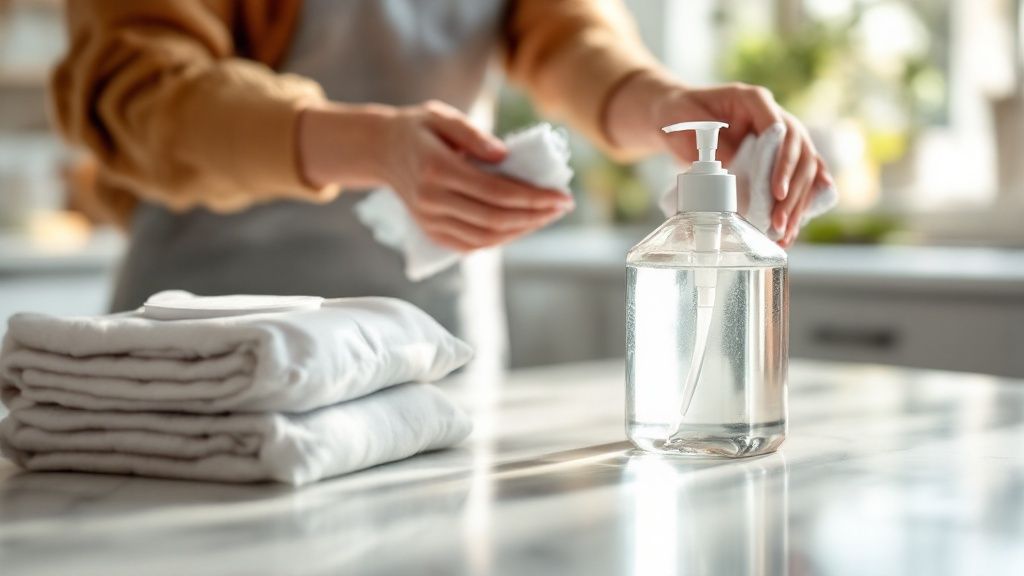
When it comes to staying healthy, especially during flu season or any other time viruses are making the rounds, you need more than just one trick up your sleeve. An effective plan isn't about a single magic bullet; it's about building layers of defense. This involves combining smart personal habits, like solid handwashing, with a consistent routine of cleaning the surfaces we all touch every day.
Think of it less as a reaction to getting sick and more as building a practical, everyday system to keep viruses like Influenza, Rhinovirus, and even resilient pathogens like Norovirus at bay in your home, at work, and everywhere in between.
Building Your Practical Viral Defense Strategy

Let's move beyond the generic "wash your hands" advice and build a real-world framework that actually works. This guide is all about creating a reliable, multi-layered strategy that weaves together personal hygiene with effective environmental cleaning to seriously cut down your risk of getting sick.
First, you have to understand how these viruses—whether it's Influenza A Virus (H1N1) or a common cold Rhinovirus Type 14—actually get around. They travel through the air in tiny droplets when an infected person coughs or sneezes, but they also land and wait on surfaces. That's how someone can touch a contaminated doorknob, then rub their eye, and suddenly be infected.
This is exactly why we need a two-pronged attack. You have to manage your own actions while also taking control of your immediate environment. It’s the only way to truly break the chain of transmission.
A Multi-Layered Approach to Protection
The heart of a strong viral defense is knowing that no single action is perfect. But when you layer several simple strategies on top of each other, you create a much tougher barrier for viruses to penetrate. It’s a simple mental model that helps you focus on what you can actually control, from the office to the grocery store.
A proactive and layered strategy is far more effective than a reactive one. By combining good hygiene with regular disinfection, you create a robust defense that actively reduces viral load in your environment and minimizes opportunities for transmission.
This guide will walk you through the essential strategies that form this protective shield, giving you a straightforward plan to safeguard your health. We’ll cover everything from mastering hand hygiene to the right way to disinfect those high-touch surfaces where viruses love to hang out.
To get started, here’s a quick overview of the key defense layers we’ll dive into. Think of this table as your blueprint for a comprehensive viral defense plan.
Your Multi-Layered Viral Defense Plan
This table breaks down the essential strategies we'll be covering, giving you a quick reference for building a comprehensive virus protection plan in any environment.
| Defense Layer | Key Actions | Primary Goal |
|---|---|---|
| Personal Hygiene | Frequent hand washing, using hand sanitizer, avoiding face-touching, and practicing respiratory etiquette. | Reduce the direct transfer of viruses from your hands to your eyes, nose, and mouth. |
| Environmental Cleaning | Regularly cleaning and disinfecting high-touch surfaces like doorknobs, light switches, and phones. | Eliminate or inactivate viruses on surfaces to prevent indirect transmission. |
| Lifestyle Choices | Getting adequate sleep, maintaining a balanced diet, and managing stress to support immune function. | Strengthen your body’s natural ability to fight off infections if exposure occurs. |
| Vaccination | Staying up-to-date on recommended vaccines for preventable viral diseases like Influenza and SARS-CoV-2. | Train your immune system to recognize and effectively combat specific viral threats. |
By incorporating actions from each of these layers into your daily routine, you're not just hoping to avoid viruses—you're actively building a fortress to keep them out.
Mastering Personal Hygiene to Stop Viruses
Preventing viral infections always starts with your personal habits, and it goes a lot deeper than just being told to "wash your hands." Think of hand hygiene as your first and most powerful line of defense. Why? Because your hands are the primary way viruses travel from a surface straight to your body.
When you touch a contaminated doorknob, shopping cart, or keyboard, viruses like Rhinovirus or Norovirus (Norwalk Virus) can hitch a ride. The real problem starts when you unconsciously touch your eyes, nose, or mouth—the main entry points for these germs. That simple, often unnoticed, act is exactly how many common infections take hold.
The Power of Proper Handwashing
Washing your hands with good old soap and water is a surprisingly effective process. The soap molecules actually work to break apart the outer lipid envelope of a virus, destroying it. Meanwhile, the friction from rubbing your hands together and the running water simply wash the debris away. This is why a thorough scrub is so much better than a quick rinse.
Of course, you can't always get to a sink. For those moments, an alcohol-based hand sanitizer with at least 60% alcohol is a solid backup. It works by denaturing the proteins that make up the virus, rendering it inactive. I always keep a small bottle with me for after I use an ATM, pump gas, or grab a public handrail.
To make sure you're getting the most out of every wash, check out our detailed guide on the proper hand washing technique.
Breaking the Face-Touching Habit
Most of us touch our faces dozens of times an hour without ever thinking about it. This habit is a huge weak link in your personal defense system. The key to breaking it is to first become aware of what triggers it. Do you rest your chin in your hand when you're thinking? Rub your eyes when you're tired?
A simple but effective trick is to just keep your hands busy. Squeeze a stress ball during a long meeting or just fold your hands in your lap while watching TV. The first step to stopping a risky behavior is making the unconscious, conscious.
Why Respiratory Etiquette Matters
Airborne viruses like Influenza A Virus (H1N1) and Human Coronavirus spread through tiny respiratory droplets. These are released whenever an infected person coughs, sneezes, or even just talks. Practicing good respiratory etiquette is one of the most considerate things you can do to break this chain of transmission and protect everyone around you.
Instead of covering your mouth with your hands—a surefire way to contaminate them—always cough or sneeze into a tissue or the crook of your elbow. It's a small shift that prevents you from spreading the virus to every single surface you touch afterward.
- Use a Tissue: If you can, always grab a disposable tissue to cover your mouth and nose.
- Dispose Immediately: Toss the used tissue in a trash can right away. Don't leave it on a desk or table.
- Wash Your Hands: After you cough, sneeze, or blow your nose, wash your hands with soap and water or use your hand sanitizer.
These personal hygiene practices are absolutely foundational. The World Health Organization (WHO) consistently points to infection prevention and control (IPC) as a core global strategy, with hand hygiene right at the center. This isn't just for hospitals—it's for our daily lives, and it's one of the best tools we have to reduce the spread of all kinds of infections.
How to Disinfect Your Home for Viruses
Your home is your sanctuary, but keeping it that way means being smart about germs. To really stop viruses from spreading indoors, you have to get one thing straight: cleaning and disinfecting are two different jobs. Think of it as a one-two punch.
Cleaning is the first step—it's all about physically removing dirt, grime, and some of the germs from a surface. You're clearing the way. Disinfecting comes next, and it's the knockout blow that actually kills the viruses and bacteria left behind. You absolutely need both.
Imagine someone in your house comes down with Norovirus (Norwalk Virus), a notoriously tough and contagious non-enveloped virus. If you just wipe down a countertop with a damp cloth, you might just be smearing the virus around. The right way is to first clean the surface with soap and water to get rid of any gunk, then follow up with a disinfectant to neutralize the real threat.
Pinpointing High-Touch Hotspots
Viruses don't move on their own; they hitch a ride on our hands. They often linger on the surfaces we touch all day without even thinking about it. The best defense is a good offense—making a habit of disinfecting these "hotspots" is a simple way to break the chain of transmission for everything from the Avian Influenza Virus (H5N1) to common colds.
Focus your energy on these usual suspects:
- Doorknobs and Handles: This isn’t just front doors. Think cabinet pulls, refrigerator and microwave handles, and every doorknob in between.
- Light Switches: We flick them on and off constantly, making them a five-star resort for germs.
- Electronic Devices: Our phones are the worst offenders, but don't forget TV remotes, keyboards, computer mice, and tablets.
- Kitchen and Bathroom Fixtures: Faucet handles, toilet flushers, and soap dispensers get touched multiple times a day.
The key is to be proactive, not just reactive after someone gets sick. Wiping these surfaces down daily or every few days—especially during cold and flu season—can seriously cut down the viral load in your home and lower everyone's chances of getting sick.
Building a strong immune system is your body's long-term defense strategy. As the image below shows, a diet packed with vitamins and nutrients from fresh produce gives your body the fuel it needs to fight off invaders.

Of course, good nutrition is just one part of the puzzle. It works best when you're also actively getting rid of viruses in your environment.
Choosing the Right Tools for the Job
The cleaning aisle can feel overwhelming, but picking a solid disinfectant is easier than it looks. Your best bet is to look for products registered with the EPA that specifically say they kill viruses. For day-to-day convenience, disinfecting wipes are an excellent choice. They roll the cleaner and the disinfectant into one easy step, perfect for a quick wipe of a doorknob or remote control.
No matter what you're using—a spray or a wipe—the single most important thing to pay attention to is contact time. This is the non-negotiable amount of time a surface must stay visibly wet for the product to actually kill the germs it promises to. It can be anywhere from 30 seconds to 10 minutes, so always check the label. If you want to dive deeper into why this is so critical, check out our guide on how long different viruses can survive on surfaces.
Choosing the Right Disinfectant for Your Home
Not all disinfectants are created equal, and some are better suited for certain viruses and surfaces than others. This table breaks down the most common household options to help you pick the right one for the job.
| Disinfectant Type | Effective Against | Best For (Surfaces) | Key Consideration |
|---|---|---|---|
| Alcohol (Ethanol) | Enveloped viruses (Influenza, Coronaviruses, HBV, HCV, HIV-1) | Electronics, stainless steel, glass | Must be at least 60-70% concentration to work. |
| Quaternary Ammonium | Many bacteria, some enveloped viruses (Herpes Simplex Virus 1/2) | Floors, walls, furniture | Less effective on tough non-enveloped viruses like Norovirus or Rhinovirus. |
| Hydrogen Peroxide | Broad-spectrum (Rhinovirus Type 39, Human Rotavirus) | Countertops, bathroom surfaces, food-safe areas | Can discolor some fabrics and surfaces over time. |
| Bleach (Sodium Hypochlorite) | Most viruses, including tough non-enveloped ones (Norovirus, Feline Calicivirus) | Hard, non-porous surfaces like tiles, toilets | Must be diluted properly and requires good ventilation. |
Ultimately, the best disinfectant is the one you'll actually use correctly. Whether it's bleach for a deep clean or convenient wipes for daily upkeep, following the instructions is what will keep your home and your family safe.
Staying Safe in Public and High-Traffic Areas

Stepping outside your front door means stepping into a whole new ballgame for viral defense. Shared spaces—offices, buses, grocery stores—naturally come with a higher level of risk, and that requires a bit more situational awareness on our part.
The goal here isn't to be anxious. It's to be mindful. It's about recognizing high-contact environments and tweaking your habits to prevent viral infections.
Think about your average trip to the store. You might grab a handrail on an escalator, punch your PIN into a keypad, or push a shopping cart. Every single one of those surfaces has been touched by countless others, creating the perfect pathway for viruses like Influenza or Rhinovirus to find their next host. This is exactly where your personal hygiene habits become non-negotiable.
Smart Strategies for Shared Spaces
A few small, consistent actions can make a massive difference in cutting down your exposure in public. It’s really about creating a personal protective bubble through simple, repeatable habits.
- Sanitize After Contact: Make it a reflex. After you touch a gas pump, elevator button, or door handle, reach for an alcohol-based hand sanitizer. Keeping a small bottle in your car, bag, or pocket turns this from a chore into a seamless habit.
- Be Mindful of Proximity: When you can, try to keep a little extra space between yourself and others. This is especially true in crowded indoor spots or if you notice someone is obviously under the weather. Viruses like SARS-Related Coronavirus 2 (SARS-CoV-2) travel through respiratory droplets, and distance is one of the easiest, most effective barriers there is.
- Wipe Before You Use: Tossing a small pack of disinfecting wipes in your bag gives you direct control over your immediate environment. A quick wipe-down of a grocery cart handle, an airplane tray table, or a public computer mouse takes seconds but eliminates a major point of contact.
Navigating the Modern Workplace
The office is its own unique ecosystem, packed with shared kitchens, conference rooms, and equipment. A smart game plan here protects not just you, but your entire team from the usual round of workplace bugs.
Your personal desk is the one spot you have the most control over. Get into the habit of regularly wiping down your keyboard, mouse, phone, and desk surface with a disinfecting wipe—especially when you know cold and flu season is hitting its peak.
If a coworker is sick, it’s okay to maintain a respectful distance. Be extra diligent about hand washing after meetings or using shared equipment like the office printer. And when you're in the shared kitchen, wash your hands before and after you handle your food, paying close attention to hotspots like the microwave handle, fridge door, and coffee pot.
These aren't complicated rules. They're practical, easy steps designed to fit right into your daily life. They reduce your risk without adding stress, empowering you to move through public spaces with confidence and a clear plan to stay healthy.
How Lifestyle Choices Boost Your Immune Defenses
While washing your hands and disinfecting surfaces are your first line of defense, your body’s own immune system is the ultimate backup. Think of it as a highly trained security team, constantly on patrol for invaders. Building a resilient immune system is a long-term investment in your health, not a quick fix.
This isn’t about some magic pill or a single "superfood." It's about making consistent, smart choices that give your immune cells the tools they need to function at their peak. A well-supported immune system can react faster and more effectively, which often means you get less sick—or recover quicker—when you do encounter a virus.
Fueling Your Body's Defenses
The food you eat literally builds your immune cells. A diet packed with a colorful variety of fruits, vegetables, lean proteins, and healthy fats provides a steady supply of the vitamins and minerals that are absolutely essential for immune function.
For example, Vitamin C, found in citrus fruits and leafy greens, is crucial for producing white blood cells—the key fighters in your immune army. Micronutrients like zinc and Vitamin D also play vital roles. Without these foundational elements, your immune system is essentially working with one hand tied behind its back.
You can dive deeper into this topic in our guide on several powerful ways to strengthen your immune system.
The Non-Negotiable Roles of Sleep and Exercise
Regular physical activity does more than just keep you fit. It boosts circulation, allowing your immune cells to travel more freely throughout your body and get to where they're needed, faster. Even something as simple as a brisk daily walk has been shown to have a major positive impact.
Quality sleep is perhaps the most underrated pillar of a strong immune response. While you rest, your body ramps up the production of cytokines, a type of protein that targets infection and inflammation, effectively creating a more robust immune response.
On the flip side, chronic sleep deprivation can slash the production of these protective proteins. This can leave you far more vulnerable to common viruses like the Influenza A2/305/57 Virus (H2N2) or the rhinovirus after you've been exposed. Don't forget stress management, either—practices like meditation or simple mindfulness can lower cortisol, a stress hormone known to suppress immune function over time.
Why Vaccinations Are a Game-Changer in Disease Prevention
When it comes to public health, vaccinations are one of our single greatest success stories. They’re a powerful, proactive tool for stopping viral infections before they ever get a foothold, protecting not just individuals but entire communities.
Think of a vaccine as a training drill for your immune system. It introduces a harmless piece of a virus—like an inactivated or attenuated version—which teaches your body how to recognize the real enemy without you actually having to get sick.
This clever process lets your immune system build up a "memory" of the intruder. It creates specialized antibodies and memory cells that are ready to launch a swift, powerful attack if you ever come across the real virus, whether that’s Influenza A Virus (H1N1) or SARS-CoV-2. This is what dramatically lowers your odds of getting seriously ill.
How Individual Shots Create Community-Wide Protection
Getting vaccinated isn't just about protecting yourself. It's a crucial contribution to community immunity, what many people know as "herd immunity." This happens when a large enough percentage of the population becomes immune to a disease, making it incredibly difficult for the virus to spread from one person to the next.
This collective shield is absolutely vital for protecting the most vulnerable people in our communities, including:
- Newborns who are too young to receive their first shots.
- People with weakened immune systems, such as those with HIV-1 or individuals undergoing cancer treatment.
- Anyone with a specific medical condition that prevents them from being safely vaccinated.
When you get vaccinated, you help build a protective barrier around these individuals, shielding them from viruses they might not be able to fight off on their own.
Vaccination is the foundation of any solid prevention plan. It works hand-in-hand with all the daily hygiene and disinfecting habits we’ve talked about to create a tough, multi-layered defense against viral threats.
The results speak for themselves. Influenza, for example, is still a major global threat, leading to around 5 million hospitalizations every year. Yet, seasonal flu vaccines have been shown to cut related doctor visits and hospitalizations by about 50%. You can see the latest data for yourself on the CDC's page about influenza vaccination effectiveness. The evidence is clear: vaccination is a core strategy in any serious effort to prevent viral infections.
Still Have Questions? Let's Clear a Few Things Up
Even with the best game plan, some practical questions always pop up. Let's tackle a few common ones I hear all the time to make sure you feel confident putting these prevention strategies into practice.
Homemade vs. Store-Bought Disinfectants: What Really Works?
It’s tempting to reach for a bottle of vinegar or other natural ingredients for cleaning, but when it comes to killing tough viruses, they just don't cut it. While some have mild antimicrobial properties, they aren't formulated or tested to kill resilient, non-enveloped viruses like Norovirus or Human Rotavirus.
When you're dealing with a real sickness in your home, you need something you can count on. Your best bet is always an EPA-registered disinfectant. Look at the label, follow the instructions for the "contact time" (how long the surface needs to stay wet), and you'll know you're actually killing the germs. For quick, effective cleaning of non-porous surfaces, a good canister of disinfecting wipes is hard to beat.
How Long Do Viruses Stick Around on Surfaces?
This is a great question, and the answer is… it depends! It varies a ton between different viruses.
For example, influenza viruses can survive on hard surfaces like stainless steel for up to 48 hours. On the other hand, some of the rhinoviruses that cause the common cold might only last a few hours. Because you never really know what you're up against, this variability is exactly why regular disinfection of high-touch surfaces—doorknobs, phones, remote controls—is a non-negotiable part of staying healthy.
I Got My Flu Shot. Am I All Set?
Getting a flu shot is one of the single best things you can do to protect yourself during flu season. But is it a magic bullet? Absolutely not.
Think of it this way: the flu vaccine is your first and best line of defense against influenza. It does an amazing job at that, but it offers zero protection against the hundreds of other viruses out there, from common rhinoviruses to coronaviruses.
True prevention isn't about one single action. It's about layering your defenses. Combine personal actions (like vaccination and handwashing) with environmental control (like using disinfecting wipes on surfaces) to create a much stronger shield than any one step could provide on its own.
This layered approach is critical on a global scale, too. We’ve seen worrying dips in global vaccination coverage in recent years, which has led to a scary resurgence of preventable diseases like measles. This is often fueled by misinformation, vaccine hesitancy, and disruptions from the pandemic. It’s a powerful reminder that public health requires a coordinated effort from all of us. You can learn more about the global challenges in infectious disease control on healthhiv.org.
Leave a Reply