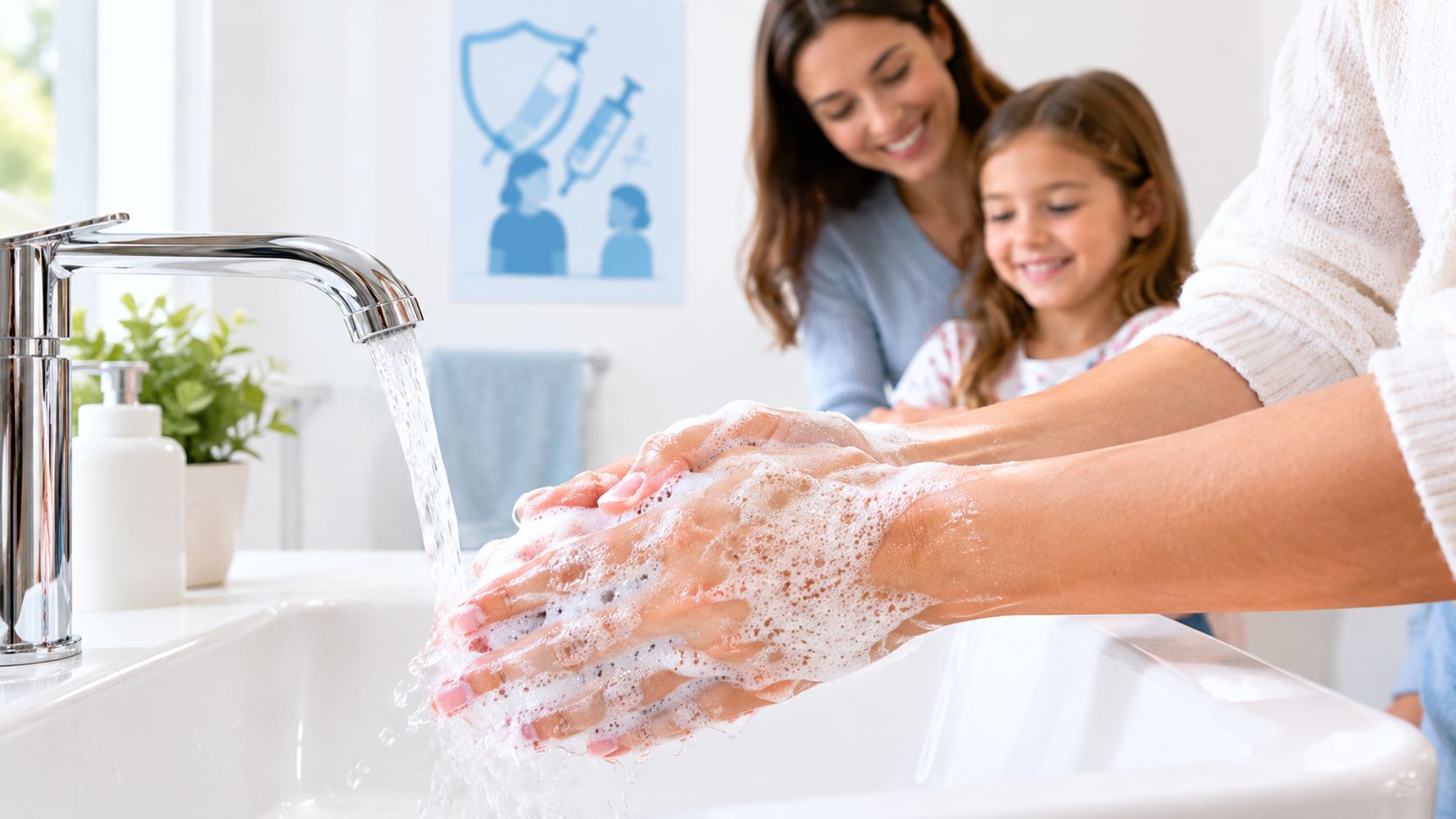
You've just changed a diaper, and your toddler reaches for a snack before you can turn to the sink. Or someone at home is coughing, and you're wiping down the kitchen counter while wondering whether you've missed a more important step. Viral meningitis prevention starts with knowing how viruses spread, then interrupting transmission at the moments that matter most.
Viral meningitis has several causes, and prevention depends on the virus involved. For families, that means combining practical hand and surface hygiene with vaccination against viruses for which vaccines are available, while knowing when a possible exposure needs medical advice.
How Viral Meningitis Spreads and Why Prevention Matters
Meningitis is inflammation of the membranes around the brain and spinal cord. Among viral causes, enteroviruses are especially common. They can spread through fecal-oral contact, such as when germs pass from stool to hands and then to food or the mouth, and through respiratory secretions.
Reported viral-meningitis incidence ranges from 0.26 to 17 cases per 100,000 people, and enteroviruses are associated with as many as 75,000 meningitis cases annually in the United States, according to this overview of viral meningitis causes and prevention. These figures describe a broad range, not an individual person's risk. The practical lesson is that everyday transmission routes deserve attention, especially around toileting, diaper changes, and care for someone with respiratory symptoms.

Focus on the point of transmission
Washing hands before eating is useful, but it may come too late if a caregiver has changed a diaper and then handled a cup, toy, or snack. The aim is to wash after a likely contamination event, so germs don't travel from hands to household objects, food, or another person.
Respiratory secretions create a separate route. Caring for someone who is coughing or sneezing calls for handwashing, less close contact where feasible, and attention to shared objects. Avoiding shared utensils and cleaning frequently touched surfaces help address the ways germs can move through a household.
Vaccination adds another layer. Routine vaccines against measles, mumps, poliovirus, and influenza reduce infections that can sometimes involve the central nervous system. But there isn't a broadly effective vaccine for many enteroviruses, so hygiene and exposure reduction remain important. For a fuller explanation of the different causes, see what causes viral meningitis.
Hand Hygiene and Surface Disinfection That Actually Interrupt Transmission
A general sense of cleanliness isn't enough if the highest-risk moments are missed. For enteroviruses, the key is to match each action to a route of spread: hands after toileting and diaper changes, surfaces that people touch repeatedly, and items that contact saliva.

A practical routine
-
Wash at the right moments. Use soap and clean water after using the toilet, changing a diaper, coughing or sneezing, or touching your mouth, and before preparing food. In situations involving possible fecal contamination, prioritize soap and water. Alcohol-based sanitizer can be a fallback when a sink isn't available, but it shouldn't replace washing after diapering or toileting. CDC guidance explains how viral meningitis spreads and the role of hygiene.
-
Clean frequently touched surfaces. Give extra attention to handles, faucets, counters, and other shared touchpoints. Follow the surface-cleaner or disinfectant label for its intended use and directions. Wipes can be convenient for hard surfaces, but using one doesn't replace washing hands after a contamination risk.
-
Don't share items that touch mouths. Keep drinks, utensils, toothbrushes, and other saliva-contaminated items separate when someone is ill.
-
Limit close-contact settings during acute illness. Where feasible, keep symptomatic people and sick children home from school, childcare, and other close-contact settings.
Practical rule: After a diaper change, wash your hands before touching the next clean object, not just before sitting down to eat.
If you want a more technical overview of the principles behind infection prevention, the infection control protocols USMLE guide offers a clinical learning resource. For a household routine, proper hand-washing technique can help caregivers make the handwashing step clear and consistent.
Vaccination as a Prevention Layer for Vaccine-Preventable Viruses
Vaccines don't prevent every viral infection that can cause meningitis. They do help prevent several important viral illnesses that can sometimes affect the brain or its surrounding tissues. That makes immunization a meaningful part of viral meningitis prevention, alongside measures that reduce day-to-day transmission.
Routine vaccination against measles, mumps, poliovirus, and influenza reduces infections that can occasionally involve the central nervous system and cause meningitis or meningoencephalitis. The benefit is indirect but important: preventing the underlying infection can also prevent some of its less common complications. An explanation of the basic mechanism is available in how vaccines work against viruses.

Match vaccination to place and exposure
Some viral risks vary by region. Vaccines against Japanese encephalitis are relevant in parts of Asia, while tick-borne encephalitis vaccination can provide protection in parts of Europe. A clinician or travel-health service can help determine whether a region-specific vaccine fits a person's destination and circumstances.
The broader public-health case for immunization is also clear. The World Health Organization's meningitis roadmap estimated 5 million new meningitis cases and 290,000 deaths worldwide in 2017. It reported that conjugate vaccines against Hib, meningococcus, and pneumococcus had already dramatically reduced disease burden in settings with strong uptake. The roadmap projected that its implementation could prevent 2.75 million meningitis cases, 780,000 cases of long-term sequelae, and 920,000 deaths by 2030. Those figures include bacterial meningitis, but the general lesson applies to preventable infections: routine coverage, outbreak response, surveillance, and equitable access can reduce illness before complications occur. The projections and context are described in the WHO meningitis roadmap.
No broadly effective vaccine exists for many enteroviruses, so vaccination doesn't replace handwashing or other precautions. For older adults considering influenza vaccination, a clinician can explain the available options, including the high-dose flu shot for older adults.
Household Precautions When Someone Is Ill
A household member with a confirmed viral meningitis diagnosis or symptoms that raise concern can leave caregivers unsure what to do. Keep the response simple: wash hands frequently, avoid close contact where practical, and don't share cups, utensils, or toothbrushes. Clean commonly touched surfaces as part of your usual precautions, especially when several people use the same room or bathroom.

Don't confuse viral and bacterial advice
Antibiotics don't treat viral infections. A household member shouldn't assume antibiotics will prevent viral meningitis or help someone recover from it. The World Health Organization advises people living with someone who has meningitis to contact a clinician about antibiotics specifically when bacterial meningitis is a concern. A clinician can assess the situation and advise whether any treatment or prevention is appropriate.
That distinction matters because suspected bacterial meningitis, including meningococcal disease, can call for a different and urgent response. CDC defines close contacts for meningococcal disease as household members, childcare contacts, and people directly exposed to oral secretions, such as through kissing or mouth-to-mouth resuscitation, during the 7 days before symptom onset. This definition is for meningococcal disease, not a reason to treat every household contact of someone with viral meningitis.
For caregivers supporting someone at home, clear cleaning routines and safe handling of shared spaces can make daily care easier. These safety tips for UK carers provide broader guidance for home-care settings. If you're unsure whether a diagnosis is viral or bacterial, or whether a close contact needs assessment, contact a health professional rather than trying to decide based on symptoms alone.
Healthcare and Community Outbreak Response Measures
Household precautions help limit exposure at home, but clinics, childcare settings, schools, and public-health agencies also shape how infections spread. During an outbreak, clear communication helps people understand which symptoms need attention, which precautions to follow, and whether a vaccine is available for the virus involved.
Surveillance is part of that response. Health authorities use information about illness and transmission to identify patterns and decide whether targeted measures are needed. When an effective vaccine exists, vaccination can become part of an outbreak response, alongside public communication and efforts to reach people who might otherwise miss routine immunization.
The WHO roadmap sets out the broader public-health principle: high routine immunization coverage, rapid outbreak vaccination, surveillance, and equitable access can prevent infections before they progress to meningitis. Its projected reductions concern meningitis overall, with strong evidence for vaccines against bacterial causes. For viral causes, the relevant vaccine depends on the virus, such as measles, mumps, polio, influenza, or certain region-specific infections.
A recent example illustrates the response model, while also showing why bacterial and viral causes shouldn't be confused. In the first half of 2024, reactive vaccination campaigns against meningococcal disease in Nigeria and Niger vaccinated a combined 4.9 million people. Meningococcal disease is bacterial, not viral. Still, the sequence of surveillance, rapid vaccination, and public communication can be adapted to viral threats when an effective vaccine is available.
Families contribute by following local health guidance, keeping routine vaccinations up to date, staying home during acute illness where feasible, and seeking advice when an exposure is identified. Public-health action works best when communities can understand the message and act on it. That includes making guidance clear about what a vaccine can prevent and what it can't, so families continue sensible hygiene measures even when vaccination is available.
Post-Exposure Actions and When to Seek Urgent Care
Suppose a school or health department contacts you because someone close to your child has suspected meningococcal disease. That situation needs prompt professional advice. It isn't the same as hearing that a household member has ordinary viral meningitis, and you shouldn't use leftover antibiotics or try to choose a medicine yourself.
For close contacts of confirmed or suspected invasive meningococcal disease, CDC recommends antimicrobial chemoprophylaxis regardless of vaccination status. It should ideally begin within 24 hours after the index patient is identified; prophylaxis given more than 2 weeks after exposure has little value. Recommended first-line options include ceftriaxone, ciprofloxacin, and rifampin, but ciprofloxacin resistance can cause prophylaxis failure, so local susceptibility information may affect the choice. These recommendations are outlined in the CDC guidance on meningococcal disease.
That guidance applies to suspected or confirmed invasive meningococcal disease, not routine viral meningitis. If public-health officials or a clinician contact you about a meningococcal exposure, seek their instructions urgently and tell them when and how you were exposed. If you're caring for someone who may have meningitis and they're becoming very unwell, seek urgent medical assessment rather than waiting for a rash or trying to determine the cause at home.
For a likely viral illness without a known meningococcal exposure, follow the clinician's advice and continue practical household precautions. If symptoms worsen or you're worried about the diagnosis, contact a healthcare professional again. The safest next step after a high-risk exposure is assessment, not self-medication.
If this guide helps you make a clearer prevention plan, check your household's vaccination records, set up a handwashing routine after toileting and diaper changes, and identify a clinician or local health service to contact if a meningitis exposure is reported.
Leave a Reply