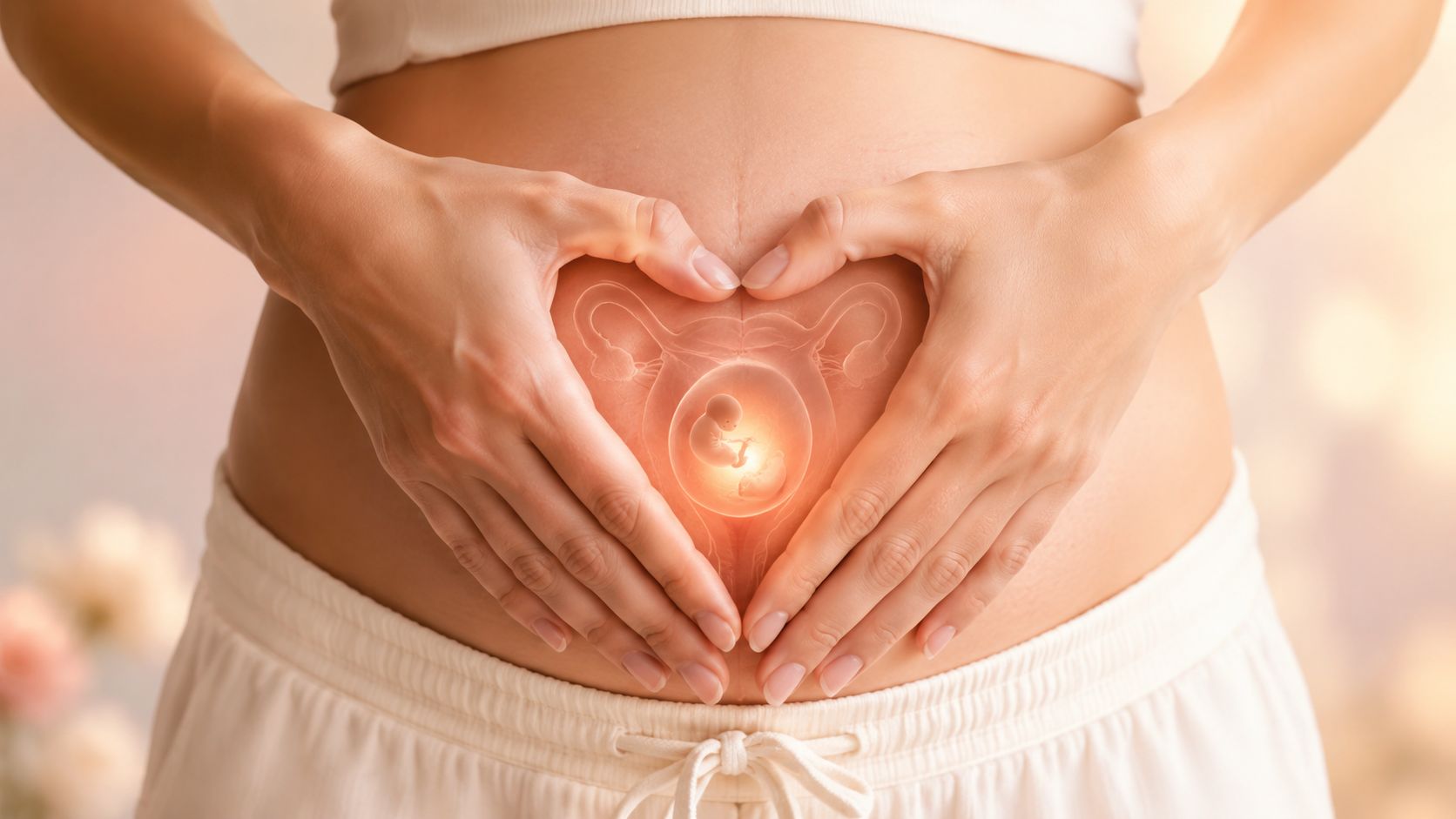
A lot of people arrive at a 4 week pregnancy in the same quiet way. They wake up, realize their period is late, take a test in a bathroom before work, and then stare at a faint second line wondering if life just changed in two minutes.
That uncertainty is normal. So is the rush of practical questions. Is it really positive? Am I 4 weeks pregnant if conception was more recent? Is cramping okay? Should I already be doing something different at home, at work, or around other people who are sick?
The earliest days of pregnancy are tiny in size and huge in meaning. Even before you look pregnant or feel much at all, important structures are beginning to form. That's also why the basics matter so much right now: rest, good prenatal care, and a safer daily environment with careful hand hygiene and routine cleaning of high-touch surfaces.
That Positive Test and What It Means
Maya is standing in a quiet bathroom before sunrise, looking at a second line that was not there in last month's plans. Her first question is one of the most common ones in early pregnancy. How can this be 4 weeks already?
Pregnancy dating starts earlier than many people expect. Clinicians count from the first day of your last menstrual period, so the clock begins before fertilization happens. That means a positive test at 4 weeks usually reflects a pregnancy that was conceived about 2 weeks ago, even though the calendar says 4.
A home pregnancy test turns positive because it detects hCG, a hormone your body begins making after implantation. In plain terms, the test is picking up a chemical signal that the embryo has attached and your body has started shifting into pregnancy mode. If you are tempted to squint at a faint line or retest three times in one morning, that reaction is common. Early pregnancy often feels abstract because the body can change before the mind catches up.
This is also a good moment to separate two ideas that sound similar but mean different things. Gestational age is the dating system used in pregnancy care. Embryonic age is the time since fertilization. That gap explains why “4 weeks pregnant” does not mean the embryo has been growing for a full month.
The first response does not need to be perfect. It helps to be steady.
Start with the basics:
- Use your last menstrual period as your starting date: It gives you the standard timeline used for appointments and testing.
- Begin or continue a prenatal vitamin: Folate matters early, often before many people have symptoms.
- Protect your environment: A clean home does not need to be spotless, but this is a smart time to wash hands often, avoid close contact with people who are sick, and regularly clean high-touch surfaces like faucet handles, phones, and doorknobs. For many families, that is the first practical act of protection for the developing embryo.
- Bring your partner into the process: If you're navigating this as a couple, guidance on men's role during the 7 DPO wait can help partners understand the uncertainty that often comes before and just after a positive test.
- Keep expectations realistic about imaging: At this stage, you usually will not see much on a scan yet, and how 3D and 4D ultrasound works later in pregnancy is very different from what early pregnancy imaging can show.
Many people worry that because everything is so small, nothing important is happening yet. The opposite is true. Early pregnancy is more like laying a foundation than decorating a room. You may not see much from the outside, but the conditions around that new pregnancy still matter. Clean hands, lower exposure to viral illness, rest, and timely prenatal care all support a safer start.
Your Baby's Development at 4 Weeks
At this stage, the embryo is so small that it still helps to picture a poppy seed. But size hides the scale of the work underway. In a 4 week pregnancy, foundational structures are being laid down with remarkable speed.
By exactly 4 weeks of gestation, the embryo measures about 2 mm and is changing from a flat form into a curved, C-shaped structure. During this same week, the neural tube begins to form, limb buds emerge, and the primitive heart starts its first rhythmic contractions at around 105 beats per minute, according to Michigan's fetal development week 4 overview.
Here is a simple visual of those early milestones.

The blueprint is already forming
At 4 weeks, the embryo has two important cell layers, the epiblast and hypoblast, which will go on to form future organs and body parts, as described in the American Pregnancy Association week 4 overview. This is one reason clinicians take very early pregnancy seriously even when symptoms are mild or absent.
The outer part of the early pregnancy is changing too. The blastocyst is splitting into structures that will become the embryo and the placenta, while implantation settles it deeper into the uterine lining, a process summarized in The Bump's week 4 description. You can think of it as the pregnancy beginning to establish both the “passenger” and the “support system” at the same time.
What is supporting the embryo right now
In these first days, the embryo is protected and nourished by temporary structures before the placenta fully takes over.
- Amniotic sac: This forms around the embryo and contains cushioning fluid.
- Yolk sac: This provides early nourishment before the placenta is ready for its larger job.
- Placental beginnings: Cells on the outside are already developing into the placenta, which will later deliver oxygen and nutrients.
That's why “nothing much is happening yet” isn't really true. A 4 week pregnancy is quiet from the outside and highly organized on the inside.
The earliest developmental work is about setup. The body is building protection, blood supply, and the first architecture for organs long before most people look pregnant.
Seeing ahead without seeing much yet
It's uncommon to have an ultrasound this early, and even if one is performed, expectations need to stay realistic. Detailed imaging comes later. If you're curious about how pregnancy imaging changes over time, this guide to 3D and 4D ultrasound helps explain what those scans are for and when they're more useful.
For now, the key idea is this: in a 4 week pregnancy, the embryo is tiny, but the body has already started the first draft of the brain, spinal cord, heart, and body plan.
Common Symptoms and Body Changes
You may be brushing your teeth before work, noticing your breasts feel sore, and wondering whether the light spotting you see means your period is starting or something else is happening. At 4 weeks, early pregnancy often feels quiet and uncertain because many body changes overlap with premenstrual symptoms.
The clearest clue for many people is a missed period. After that, the signs can be faint. You might feel more tired than usual, mildly bloated, or aware of breast tenderness that seems to linger instead of fading.
Some people feel almost nothing.
That can be normal too. In these first days, hormones are beginning to shift, but they have not affected every body in the same way or on the same timeline.
Spotting and cramping can happen in early pregnancy
Light spotting and mild cramping are common reasons people worry right away. A small amount of spotting can happen around the time the fertilized egg settles into the uterine lining. It is usually lighter than a normal period and does not keep building into your usual menstrual flow.
A simple way to sort through the confusion is to look at the pattern, not just the symptom. PMS and early pregnancy can share many of the same signals, but the timing and intensity may differ.
Symptom checker
| Symptom | Early Pregnancy Sign | Typical PMS Sign |
|---|---|---|
| Bleeding | Light spotting, often lighter than a usual period | Flow tends to become more like a regular menstrual period |
| Cramping | Mild cramping can happen in early pregnancy | Cramping may build as a period approaches |
| Period timing | Missed period may be the first clear clue | Period usually arrives on schedule or only slightly off |
| Breasts | Tenderness may feel different or persist | Soreness often improves once the period starts |
| Energy | Fatigue may feel out of proportion to your routine | PMS can feel draining too, but usually follows your familiar pattern |
Why this week feels hard to read
Early pregnancy is a little like hearing the first soft notes of a song and trying to name the tune before the chorus begins. The signals are real, but they are still subtle.
Ask yourself a few practical questions:
- Is this bleeding lighter or shorter than my usual period?
- Do these symptoms feel unfamiliar for my normal cycle?
- Have the changes continued instead of fading?
Those details often help more than checking for one dramatic sign.
If you are noticing changes in your mouth as well, some people become more aware of gum irritation or tooth discomfort early on. This overview of causes of pregnancy related tooth sensitivity gives a helpful plain-language explanation of why that can happen.
Symptoms are only part of the picture
At 4 weeks, how you feel matters, but so does the environment around you. Early pregnancy planning is also a good time to reduce exposure to people who are sick, wash hands more carefully, clean high-touch surfaces, and be thoughtful about food handling. Those habits support your health while your body begins the work of building protection for the embryo.
That first layer of protection starts with you.
When no symptoms are still normal
Many people worry that a healthy pregnancy should feel obvious right away. It often does not. No nausea, no breast pain, and no major body changes at 4 weeks do not automatically point to a problem.
Nausea often starts later. If it does, and you want simple comfort measures, this guide to acupressure for morning sickness may be useful once those symptoms appear.
Confirming Your Pregnancy With Confidence
A faint line can bring relief, excitement, or instant second-guessing. Many people retest because they don't trust the first result, especially if they tested early.
That uncertainty usually comes down to timing. Your body has to make enough hCG for the test you're using to detect it. A blood test can pick up pregnancy earlier than a home urine test.
Why a negative test can still happen
Serum pregnancy tests can detect pregnancy 8 to 11 days after conception, but less sensitive over-the-counter tests create a 2 to 4 day ambiguity window around 4 weeks gestation. During that window, a person can be pregnant and still get a negative urine test, as explained in Medscape's pregnancy testing overview.
That's why one negative home test doesn't always settle the question if your period still hasn't come.
A steadier way to test
Use a practical approach instead of testing repeatedly at random.
- Start with timing: If you've only just reached the day your period is due, a negative result may mean it's early.
- Follow the instructions exactly: Pregnancy tests are most helpful when used as directed.
- Repeat only if needed: If the first test is negative and your period still doesn't start, test again after a short wait.
- Call a clinician when the result is unclear: A blood test may answer the question sooner.
What to do after a positive result
Once the test is clearly positive, the next step is usually to contact your clinician or midwife for early prenatal guidance. You don't need to solve every question before that call. You just need enough confidence to move from wondering to acting.
If you like to understand the medical side of testing and reports, this guide on how to interpret lab results can make the language less intimidating.
A 4 week pregnancy often begins with uncertainty. That doesn't mean you're doing anything wrong. It means you're testing at the edge of what early biology allows us to see.
Knowing When to Contact a Clinician
The hardest part of a 4 week pregnancy is that normal and concerning symptoms can overlap. Mild cramping may be part of implantation. Spotting may be harmless. But those same signs can also create fear, especially if you've waited a long time for this pregnancy or have had a prior loss.

At this stage, normal implantation cramping can be indistinguishable from early miscarriage signs, and 45% of pregnant women report holding back concerns due to perceived provider dismissal, according to the CDC's respectful maternity care summary. That matters because early pregnancy is already full of uncertainty. You should not have to add self-doubt on top of it.
Signs that deserve a call
Contact a clinician if symptoms feel outside your normal range or if your instincts tell you something isn't right. In general, reach out for:
- Bleeding that becomes heavy: Especially if it no longer resembles light spotting.
- Pain that is strong or one-sided: Early discomfort is often mild. Sharper or localized pain deserves attention.
- Symptoms that escalate quickly: Sudden worsening is worth discussing.
- Any concern you can't shake: Anxiety itself is a valid reason to call.
How to advocate for yourself
Some readers worry they'll be told to “wait and see.” Sometimes waiting is medically appropriate. Being dismissed is not. You can be calm, specific, and persistent at the same time.
Try language like this:
“I know some cramping can be normal in early pregnancy, but this feels different from what I expected, and I want guidance on whether I should be seen.”
That sentence does two useful things. It shows you understand early pregnancy can be variable, and it states clearly that you want a response.
Trusting your own read on your body
No article can sort every symptom into neat boxes. Your own baseline matters. If your body is giving you a signal that feels unusual, you don't need permission to ask questions.
A good prenatal relationship starts early. You're not bothering anyone by calling. You're participating in your care.
Creating a Safe Haven for Your Pregnancy
You set your coffee mug on the counter, answer a text on your phone, then reach for toast. A partner has a mild cold. A toddler has sticky hands. At 4 weeks, pregnancy protection often starts in moments this ordinary.
Early pregnancy is a period of fast, delicate development. You cannot control everything, but you can make your home and daily routine cleaner and safer. That simple shift matters. A safe environment is one of the first ways to protect the tiny cluster of cells that is beginning to grow into an embryo.

Viruses and hygiene in early pregnancy
It helps to group infections by how they spread, because each route points to a practical habit.
Some viruses spread through touch. Norovirus is a common example. It can move from unwashed hands to food, bathroom surfaces, faucet handles, and shared items in the home. CMV also matters in pregnancy, especially around saliva and urine from young children, which is why careful handwashing after diaper changes, wiping noses, or handling cups and utensils is so useful.
Other viruses spread through the air. Influenza is the household example many families know best. Coughing, sneezing, close face-to-face contact, and shared indoor air all raise the chance of passing it around. That makes distance from sick household members, better ventilation, and regular cleaning of high-touch objects more helpful than many people realize.
The goal is not to make your home sterile. It is to interrupt the usual paths germs take from surfaces and shared spaces to your hands, face, food, and body.
A practical home routine
Small habits work like a series of little gates. Each one lowers the chance that an infection gets through.
- Wash hands with intention: After using the bathroom, before eating or preparing food, after handling tissues, and after contact with a child's saliva, mucus, or diaper area.
- Clean the surfaces people touch all day: Phones, doorknobs, light switches, remote controls, faucet handles, refrigerator pulls, and kitchen counters deserve the most attention.
- Use disinfecting products the way the label directs: Contact time matters. A quick swipe is not always enough to disinfect a surface.
- Create a “sick-day routine” at home: If someone is ill, avoid sharing cups, utensils, towels, lip balm, or pillows, and clean bathroom and kitchen touchpoints more often.
- Handle personal care products thoughtfully: If you are sorting through what stays in your bathroom cabinet, a simple pregnancy skincare routine can help you review products and note what to ask your clinician about.
Ordinary care counts early
At 4 weeks, the pregnancy may still feel more like a test result than a reality you can see. Hygiene gives you something concrete to do. Washing your hands before eating, wiping down a shared phone, or keeping a sick family member's cup separate may seem small, but those steps reduce everyday exposure in people's daily environments.
Keep the approach calm and realistic. Clean enough. Consistent enough. Safe food handling, cleaner counters, and attention to shared surfaces are practical first acts of care for early pregnancy.
Your 4 Week Pregnancy Questions Answered
A positive test can make everything feel suddenly important, including small choices at home. At 4 weeks, you are caring for something microscopic, but the questions are very real. Clear answers can help you sort normal early changes from signs that deserve a closer look.
Is cramping normal at 4 weeks
Mild cramping can be normal this early. The uterus is beginning to respond to pregnancy hormones, and some people notice sensations that feel a bit like a period starting.
Call a clinician if cramping becomes strong, is focused on one side, or comes with heavy bleeding, fainting, shoulder pain, or a general sense that something is not right.
What if I have no symptoms yet
No symptoms can still fit a healthy early pregnancy. At 4 weeks, hormone levels are rising, but each body responds in its own way.
Some people notice breast tenderness, fatigue, or nausea almost at once. Others feel little or nothing yet. A pregnancy does not have to feel dramatic to be real.
Should I start folic acid now
Yes. If you have just learned you are pregnant, start a daily supplement with 400 micrograms of folic acid unless your clinician has told you to take a different amount.
This early window matters because the embryo is forming structures that later become the brain and spinal cord. Folic acid supports that process at a stage when many people are only beginning to suspect or confirm pregnancy.
Can I exercise
Often, yes. If you were already doing moderate activity and you feel well, you can usually continue with sensible adjustments.
Walking, gentle strength work, and other familiar movement are often fine. Stop and check with a clinician if you have bleeding, significant pain, dizziness, chest symptoms, or a medical condition that calls for more specific advice.
When should I book prenatal care
Book care once you have confirmed the pregnancy or strongly suspect it. Early contact gives you a chance to review medications, ask about supplements, and talk through any symptoms that worry you.
Even one early phone call can help set the plan.
Do I need to change my home routine already
A few practical changes are worth starting now. Early pregnancy is a little like the setup phase before a delicate seed has even broken the soil. What surrounds it matters.
Keep food preparation areas clean. Wash hands well, especially before eating and after using the bathroom or handling shared items. If someone at home is sick, be more careful about shared cups, towels, and high-touch surfaces. Those simple routines lower everyday exposure to viruses and other germs, which is one of the first ways you can protect a developing embryo.
If you want more plain-language guidance on viruses, transmission, and practical prevention at home, explore VirusFAQ.com for educational and scientific articles that help you build safer everyday habits.
Leave a Reply