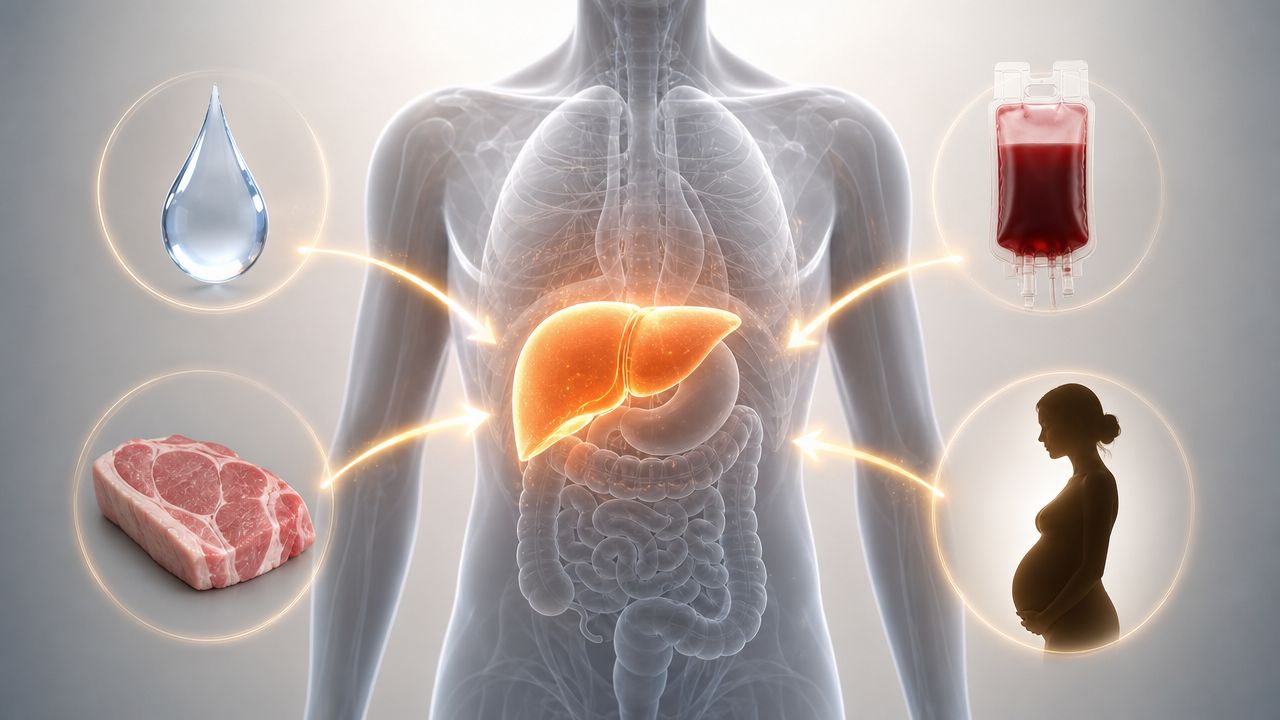
A lot of people still think hepatitis E is obscure. It isn't. A 2020 meta-analysis estimated that 12.47% of the world's population, about 939 million people, have had past HEV infection, while 15–110 million people were estimated to have recent or ongoing infection according to this global HEV infection review.
That single finding changes the starting point. Hepatitis E is not just a rare travel illness or a niche food safety issue. It's a liver infection caused by the hepatitis E virus (HEV), and its spread follows more than one pathway. In some places, contaminated water drives transmission. In others, the bigger issue is food, especially certain animal products. In healthcare settings, blood exposure can matter too.
That mix is what makes hepatitis E transmission confusing. People often ask one simple question, “How do you catch it?” The honest answer is that the route depends a lot on where you are, which HEV genotype is involved, what you eat, how sanitation works, and whether medical exposure is part of the picture. If you want a broader primer on how viruses spread in everyday life, this guide to common virus infections helps place HEV in context.
An Introduction to the Widespread Hepatitis E Virus
Hepatitis E has infected a striking share of the global population, which is one reason it deserves more attention than it usually gets. Hepatitis E is liver inflammation caused by the hepatitis E virus, or HEV. Because the liver helps process nutrients, clear waste, and support many day-to-day body functions, infection can leave someone feeling very ill. Yet some infections stay mild or pass unnoticed.
That combination shapes transmission. A virus spreads more easily when some cases are obvious and others are quiet.
Why hepatitis E transmission gets misunderstood
Hepatitis E is often misunderstood as only a waterborne illness. That picture is incomplete.
Unsafe water does drive major outbreaks in some regions. In other places, infection is more closely tied to food, especially undercooked pork or game meat. A smaller but often overlooked share of risk comes through blood transfusions, and in some pregnancies, the virus can pass from mother to baby.
HEV works less like a single-route threat and more like traffic finding different roads in different cities. The destination is the same, but the route changes with local sanitation, food habits, animal exposure, and medical systems. That wider view matters if the goal is prevention, because the right response in one setting may miss the main hazard in another.
A broader guide to common viral infection pathways can help place HEV in that bigger context.
A virus shaped by environment and exposure
The setting around the virus often determines how it reaches the next person. Where sewage can contaminate drinking water, fecal-oral spread becomes a major concern. Where pork production and consumption play a larger role, the food chain becomes more important. Where blood products are used, screening and transfusion safety enter the picture.
The virus also does not stay confined to one obvious surface or source. If contaminated material reaches hands, kitchen tools, food preparation areas, or bathroom surfaces, transmission opportunities increase unless cleaning is thorough. Surface hygiene is not the whole story with hepatitis E, but it supports the same public health principle seen across infectious diseases: break the chain at every practical point.
This pattern, where one virus behaves differently across populations because of genetic variation and local conditions, lines up with broader ideas in RiverAxe LLC's genetic diversity insights. For HEV, that means a complete risk profile has to include water, food, blood exposure, pregnancy-related spread, and the everyday hygiene measures that reduce contamination.
Understanding the Four Faces of HEV Genotypes
Hepatitis E behaves less like one single outbreak pattern and more like four related versions of the same problem. HEV-1, HEV-2, HEV-3, and HEV-4 all infect humans, but they tend to travel through different routes, show up in different settings, and create different prevention priorities.

HEV-1 and HEV-2 in water-linked settings
As noted earlier in the global HEV infection review, HEV-1 and HEV-2 are most strongly associated with contaminated water and sanitation failures. These genotypes drive the classic outbreak pattern seen where sewage can reach drinking water or food preparation areas.
The chain of transmission is straightforward. An infected person sheds the virus in stool. That material contaminates water, hands, surfaces, or food. Another person swallows the virus, often without any obvious warning sign that exposure happened.
This is why sanitation infrastructure matters so much. A failure at one point in the chain can expose many people at once.
HEV-3 and HEV-4 in animal and food exposure
HEV-3 and HEV-4 are different in practical terms. They are more often linked to animal reservoirs, especially pigs, and to foodborne exposure from undercooked pork or game meat. In higher-income countries, this pattern explains why hepatitis E can still circulate even where municipal water systems are generally safer.
A useful way to picture the difference is source versus supply route. With HEV-1 and HEV-2, the shared hazard is often contaminated water. With HEV-3 and HEV-4, the virus more often enters human life through infected animals, raw meat, kitchen handling, and sometimes blood products. That broader route matters because prevention is not only about drinking water. It also includes cooking meat thoroughly, avoiding cross-contamination, and following basic foodborne illness prevention steps in the kitchen.
Kitchen surfaces fit into this story too. If raw meat juices contaminate a cutting board, knife, faucet handle, or countertop, the virus can move indirectly to ready-to-eat food unless cleaning and disinfection are thorough.
Why genotype matters in plain language
Genotypes are different branches of the same virus family. They are close enough to share the name hepatitis E, but different enough to shape who gets exposed and how public health teams respond.
That distinction explains a common point of confusion. A person in an area with poor sanitation may face a very different HEV risk than a person in a country with modern water systems but frequent pork consumption, blood transfusion exposure, or pregnancy-related concerns. The virus is the same family. The route into the next host changes.
If you'd like a simple refresher on how genetic variation can change real-world behavior without changing the identity of the organism itself, RiverAxe LLC's genetic diversity insights offer a useful background read.
| Genotype pattern | Typical transmission pattern |
|---|---|
| HEV-1 and HEV-2 | Commonly tied to contaminated water and sanitation gaps |
| HEV-3 and HEV-4 | More often linked to animal reservoirs, food exposure, and in some settings blood-borne spread |
The practical question is simple: if someone asks about hepatitis E transmission, ask which exposure setting fits the case. That one step makes the risk picture much clearer.
The Main Pathways Fecal-Oral and Foodborne Transmission
If you strip away the jargon, the two main hepatitis E transmission stories are these: something contaminated gets swallowed, or animal-associated food isn't prepared safely.

How the fecal-oral route works
Start with one infected person. HEV is shed in stool. If sanitation is poor, that waste can contaminate water, hands, food, and shared environments. Another person then ingests the virus, often without realizing there was any exposure at all.
This is why public health experts care so much about toilets, sewage handling, handwashing, and clean drinking water. The route sounds crude, but the biology is straightforward. Material from stool reaches the mouth of another person, directly or indirectly.
A household example makes this easier to picture:
- Bathroom contamination: An infected person uses the toilet and doesn't clean their hands well.
- Shared touch points: Faucet handles, toilet flush levers, doorknobs, counters, and light switches can become contaminated.
- Food preparation: Someone touches those surfaces, then prepares fruit, bread, or other ready-to-eat foods.
- Final step: Another family member eats the food or touches their mouth.
That doesn't mean every surface becomes a major transmission source on its own. It means surfaces can become links in the chain, especially when hand hygiene and cleaning are poor. That's why cleaning kitchens and bathrooms thoroughly matters. The virus doesn't need dramatic conditions. It only needs a path.
A useful mental model is “toilet to hand, hand to surface, surface to mouth.”
How foodborne zoonotic spread happens
The second major route is different. Here, the problem begins in infected animals, especially those connected to pork and game meat. The risk rises when meat is eaten raw or undercooked, or when kitchen handling spreads contamination from raw animal products onto other foods.
A realistic kitchen scenario looks like this:
- Raw pork or game meat enters the kitchen.
- The meat isn't cooked thoroughly.
- The same board, knife, or hands touch salad ingredients or cooked food.
- A person eats the contaminated meal.
This is one reason food safety guidance for HEV overlaps with general safe-cooking advice. Separate raw meat from ready-to-eat foods. Clean utensils and prep areas thoroughly. Cook meat completely. If you want broader kitchen prevention habits that help reduce contamination risks, this guide on ways to prevent foodborne illness is a useful companion.
What readers often get wrong
Some people think “foodborne” means restaurant outbreaks only. Not necessarily. Home kitchens are a major place where contamination chains can form.
Others think “fecal-oral” always means visibly dirty water. Not necessarily either. The route can be subtle. A sink handle, chopping board, towel, or bathroom surface can become part of the pathway if hygiene breaks down.
Hidden Dangers Blood Transfusions and Vertical Spread
Most public discussions stop at water and food. That's incomplete. Some of the most important hepatitis E transmission questions today involve blood products, transplant medicine, and pregnancy.

Blood transfusion isn't a fringe concern
The old assumption was that hepatitis E belonged mostly to unsafe water or risky meals. That assumption no longer holds. Transfusion-transmitted HEV is now recognized as an important route in many countries, which is clinically important because many infections are asymptomatic and therefore easy to miss in donor screening, according to the archived CDC hepatitis E FAQ.
That last point matters most. A donor can feel completely well and still carry the virus. For routine life, that may lead nowhere obvious. For someone receiving blood or an organ transplant, the consequences can be much more serious.
Why transplant patients deserve special attention
People who receive organ transplants often take medicines that suppress immune function. That weakens their ability to clear infections. In that setting, an exposure that might pass unnoticed in a healthy person can become a persistent medical problem.
Hepatitis E stops looking like “just another stomach-related travel virus.” It becomes a healthcare-associated risk that clinicians need to consider, especially when liver abnormalities appear without a clear explanation.
Clinical takeaway: If the patient profile includes transfusion, transplantation, or immune suppression, hepatitis E belongs on the differential list.
Vertical spread during pregnancy
Another under-discussed route is vertical transmission, meaning spread from an infected pregnant mother to her baby. Public health references also note that this route has been reported.
For readers, the important point isn't to memorize terminology. It's to understand that hepatitis E transmission can cross generations in the setting of pregnancy. That makes exposure prevention more urgent for pregnant women, especially in areas with unsafe water or likely foodborne exposure.
A simple summary helps:
| Overlooked route | Why it matters |
|---|---|
| Blood transfusion | Donors may have no symptoms, so infection can be easy to miss |
| Organ transplant setting | Immunosuppressed patients may have more difficulty clearing infection |
| Vertical transmission | Infection during pregnancy can affect both mother and baby |
From Exposure to Illness Incubation and Symptoms
One reason hepatitis E is hard to trace is timing. People often expect food or water exposures to cause illness quickly. HEV doesn't always follow that pattern.
Symptoms usually appear 15–60 days after exposure, with a mean incubation of about 40 days, according to CDC guidance summarized here. That long window makes outbreak investigation much harder. By the time a person feels ill, they may have forgotten a trip, a meal, a water exposure, or a medical event from weeks earlier.
Why the incubation period matters
Think about how people remember risk. Most of us can recall what we ate yesterday. Fewer can reliably recall one undercooked dish from several weeks ago, or whether a household water disruption happened a month earlier.
That delay creates two problems:
- For individuals: It becomes harder to identify the likely source of infection.
- For public health teams: It becomes harder to connect multiple cases to one exposure.
- For blood safety and screening: A person may feel healthy during a period when infection is still relevant.
If you want a plain-language explanation of why viruses can stay silent before symptoms begin, this overview of what is incubation period gives useful context.
What illness can look like
When hepatitis E does cause symptoms, people may develop a typical hepatitis picture. That can include feeling tired, feverish, unwell, or noticing jaundice, which is yellowing of the skin or eyes. Some people also develop digestive symptoms or dark urine.
But symptom patterns aren't reliable enough to identify HEV by feeling alone. Many infections don't announce themselves clearly. Some are mild. Some are missed. Some are found only when blood tests show liver inflammation.
The long gap between exposure and symptoms is one reason hepatitis E can hide in plain sight.
Why silent infection affects transmission
An asymptomatic person won't isolate because they don't know they're infected. They won't warn blood services for the same reason. They may continue normal cooking, caregiving, travel, and household activities.
That doesn't mean every unnoticed infection leads to spread. It means silence helps the virus avoid detection, especially when hygiene, food safety, or screening systems already have weak points.
Who Is Most at Risk from Hepatitis E
Risk isn't evenly distributed. The same virus creates different danger profiles depending on living conditions, diet, pregnancy, and immune status.
People exposed to unsafe water and sanitation gaps
The first high-risk group includes people living in or traveling through places where sewage control and drinking water safety are unreliable. In those settings, hepatitis E transmission can move through community infrastructure, not just individual behavior.
That's why outbreaks can cluster where flooding, crowding, or weak sanitation systems disrupt the barrier between waste and drinking water. The person at risk may have done nothing “reckless.” The environment itself creates the hazard.
People who eat certain animal products
Another group includes people who consume undercooked pork, wild boar, deer meat, or other animal products linked to zoonotic spread. This doesn't mean everyone who eats these foods will become infected. It means preparation matters.
Higher-risk situations include:
- Undercooked meat: Especially when the center remains insufficiently cooked.
- Raw handling errors: Knives, boards, and countertops can spread contamination to ready-to-eat foods.
- Wild game habits: Home butchering or informal preparation can add risk if hygiene is weak.
People with weakened immune systems
Immunocompromised people deserve particular attention. This includes some organ transplant recipients and others whose immune defenses are reduced. For them, an infection may be harder to clear, and the clinical stakes can be higher.
This group also sits at the intersection of multiple routes. They may be vulnerable to food exposure, but they may also face risks related to transfusion or transplantation. That combination makes awareness especially important in clinical care.
Pregnant women
Pregnant women are one of the most important high-risk groups in hepatitis E. Public health references have long recognized that infection can be especially severe during pregnancy, and vertical transmission adds another layer of concern because the baby may also be affected.
The practical lesson is simple. Pregnancy lowers the margin for error around contaminated water, unsafe food, and delayed diagnosis. A pregnant person with possible exposure and symptoms consistent with hepatitis shouldn't assume it's a minor stomach bug.
Pregnancy changes the conversation from “Could this be hepatitis E?” to “We should take that possibility seriously.”
Risk depends on setting, not just the virus
The same label, hepatitis E, can hide very different real-world dangers. A rural community with compromised water systems faces one kind of threat. An urban household preparing pork faces another. A transplant unit thinks in different terms again.
That is why broad awareness matters. People often ask whether hepatitis E is a disease of poorer countries or richer countries. The better answer is that different transmission routes dominate in different settings.
How to Prevent Hepatitis E and Control Its Spread
Prevention works best when it matches the route. Water-related hepatitis E needs sanitation and safe drinking water. Foodborne hepatitis E needs careful cooking and kitchen hygiene. Blood-related risk depends on healthcare systems and screening decisions. At home, the goal is always the same. Break the chain before the virus reaches someone's mouth or bloodstream.

What people can do day to day
The basics matter because they interrupt the main pathways directly:
- Wash hands well: Especially after using the toilet, changing diapers, cleaning bathrooms, and before handling food.
- Use safe water: In higher-risk settings, avoid untreated water for drinking, brushing teeth, or washing foods eaten raw.
- Cook meat thoroughly: Pork and wild game deserve extra care.
- Separate raw and ready-to-eat foods: Use different boards, knives, or thorough cleaning between tasks.
Why cleaning surfaces belongs in the plan
Because HEV is shed in stool, contaminated hands can spread material to surfaces in bathrooms, kitchens, and shared living spaces. That doesn't mean casual contact with any object automatically leads to infection. It means surfaces can help ferry contamination from one step to the next.
Good cleaning reduces that bridge. Focus on high-touch points and food-prep areas:
- Bathroom touch points: Flush handles, faucets, toilet seats, counters, and door handles.
- Kitchen risk zones: Countertops, sink fixtures, cutting boards, fridge handles, and table surfaces.
- Shared household objects: Light switches and other frequently handled items during illness in the home.
When contamination is plausible, thorough cleaning followed by appropriate disinfection of hard surfaces adds an extra layer of protection, especially in bathrooms and kitchens where fecal-oral transmission chains can begin.
Home rule: If hands, food, and bathroom traffic all meet in the same space, cleaning isn't cosmetic. It's part of infection control.
Public health prevention and future tools
At the community level, the big wins come from sanitation systems, protected water supplies, and food safety practices across the supply chain. In healthcare, attention to blood safety and risk-based screening decisions matters for vulnerable patients.
There is also an HEV vaccine available in China, which shows that prevention isn't limited to hygiene alone. For readers comparing broader hepatitis prevention strategies and practical healthcare costs, this overview of UK hepatitis vaccination expenses may offer helpful context, even though hepatitis E prevention still depends heavily on route-specific measures like safe water, safe food, and hygienic environments.
Understanding hepatitis E transmission helps people act earlier and more precisely. Clean water, careful cooking, solid hand hygiene, and thorough surface cleaning all target different links in the same chain.
If you want more plain-language virus guides that connect transmission science to practical prevention, explore more educational resources at VirusFAQ.com.
Leave a Reply