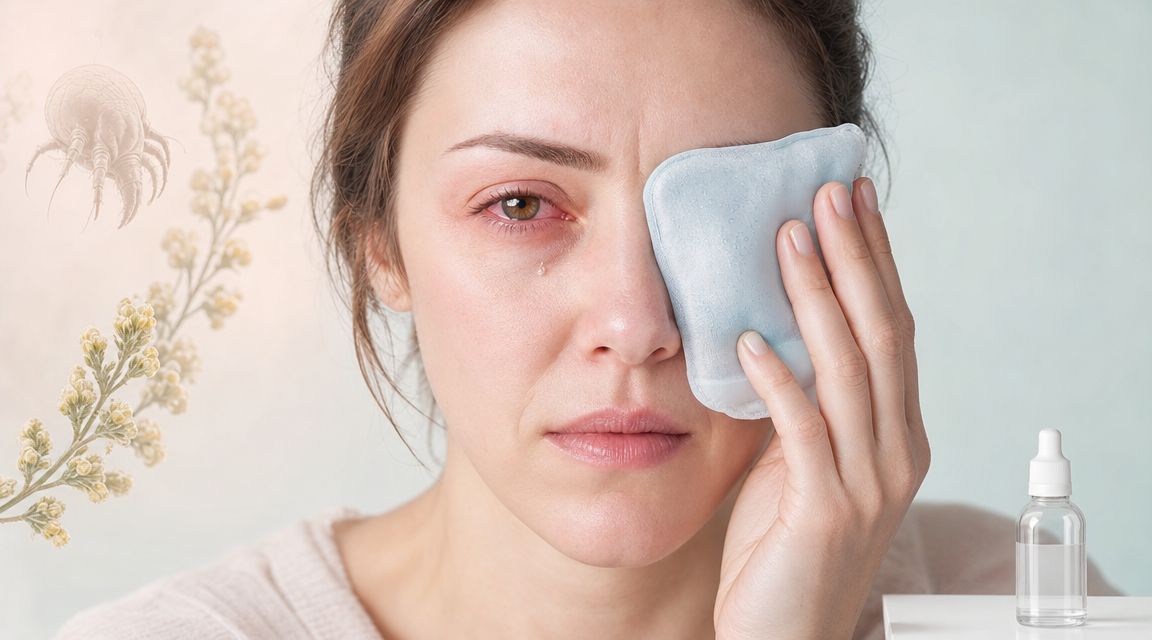
You wake up, head to the mirror, and one or both eyes look angry. They're red, itchy, watery, and uncomfortable enough to make you wonder whether you caught pink eye from someone at work, your child's school, or the gym.
Sometimes that fear is justified. Sometimes it isn't.
A lot of red-eye episodes are not infections at all. Acute atopic conjunctivitis is an allergic eye reaction, not a virus. That difference matters because the right response changes completely. If it's allergic, the focus is symptom control and trigger avoidance. If it's viral, hygiene becomes a bigger priority because viral conjunctivitis can spread from person to person.
Understanding Your Red Itchy Eyes
If your first thought is, “Is this contagious?”, that's a smart question. Red eyes all look similar from a distance, but the cause can be very different. Acute atopic conjunctivitis usually shows up in people whose immune system already leans allergic. The eyes react to things like dust or animal exposure rather than to a germ.

That's why readers often get confused. The mirror shows redness and tearing. Friends call any red eye “pink eye.” But “pink eye” is a broad everyday term, not a diagnosis.
Why the skin around your eyes matters
Eye symptoms also spill into the surrounding eyelid skin. If you already have sensitive skin, rubbing, tearing, and repeated wiping can make the whole area feel worse. Gentle skin care can help protect the eyelids while the eye itself settles down, which is why some people also look for resources on Swiss oxygen skincare for delicate eyes.
A useful starting rule is simple:
Practical rule: If itching is the dominant complaint, think allergy early. If exposure to a sick person is the dominant story, think infection early.
That rule isn't perfect, but it helps people stop lumping every red eye into one category. Acute atopic conjunctivitis is uncomfortable, but it usually calls for allergy-focused care, not panic about spreading infection across the household.
What Is Acute Atopic Conjunctivitis
Acute atopic conjunctivitis is best understood as an eye manifestation of atopic disease. In plain language, that means the eye is participating in the same allergic tendency that can also show up as eczema, asthma, or other allergic symptoms.
Merck Manual describes the severe chronic form, atopic keratoconjunctivitis, as a perennial allergic conjunctivitis caused by nonseasonal allergens such as dust mites and animal dander, and it notes symptoms including itching, lacrimation, discharge, and conjunctival hyperemia in its discussion of allergic conjunctivitis. The same source also supports a practical takeaway for patient education: acute atopic conjunctivitis is a perennial allergic conjunctivitis often caused by nonseasonal allergens like dust mites and animal dander. It typically affects adults between 30 and 50 who also have a history of eczema and asthma, and it is not contagious.

Think of it as hay fever in the eyes
Many people understand seasonal allergies in the nose. Your body meets a trigger, the immune system overreacts, and you start sneezing or itching. Acute atopic conjunctivitis works in a similar way on the eye surface.
The key idea is not infection. The problem is an allergic cascade. The eye becomes inflamed because the immune system treats an otherwise ordinary exposure as a threat.
Why some people are more likely to get it
This condition doesn't usually appear out of nowhere in a person with no allergic background. It often fits a larger pattern.
Look for clues such as:
- Eczema history that flares on the skin, especially around the face or eyelids
- Asthma or hay fever that suggests a broader atopic tendency
- Year-round exposures like dust mites or pets rather than only a passing cold contact
- Repeated episodes that seem to follow the same environment
That last point is where people often misread their symptoms. They may assume, “I keep getting infections,” when the actual pattern is repeated allergen exposure in the bedroom, office, or home.
The eyes aren't failing you. They're reacting the way an allergic immune system often reacts elsewhere in the body.
Acute atopic conjunctivitis makes more sense when you stop treating it as a random eye event and start seeing it as one part of a bigger allergic picture.
Recognizing Key Signs and Symptoms
The symptom that should get your attention first is itching. Not mild irritation. Real urge-to-rub itching. That's one of the strongest clues that you may be dealing with an allergic process rather than a contagious viral one.
The symptom pattern that fits best
People with acute atopic conjunctivitis often notice several features together:
- Both eyes involved rather than one clearly infected eye
- Tearing or watery discharge instead of thick pus
- Redness across the whites of the eyes
- Swelling of the conjunctiva or eyelids
- A puffy, jelly-like look to the eye surface, which clinicians call chemosis
The wording around discharge causes confusion. Allergy-related discharge is usually watery or stringy. People often hear “discharge” and assume “infection,” but that's not always true. Thick yellow or green material that mats the lashes points you more toward bacterial causes, not classic allergic inflammation.
What readers commonly mistake
Some people focus on the redness and ignore the itch. Others fixate on watering and assume they must be contagious. Try reading the symptoms as a group instead of one by one.
A practical self-check is:
- What bothers you most. If the answer is itching, allergy moves higher on the list.
- Is it in both eyes. Bilateral symptoms favor allergy.
- What does the fluid look like. Watery is different from purulent.
- Did you have a cold exposure. That raises concern for viral conjunctivitis instead.
If you're trying to compare your symptoms with contagious pink eye patterns, this guide on how long pink eye is contagious can help clarify what usually matters for spread.
Symptoms that should change your plan
Some symptoms don't fit a simple allergy story and should prompt medical evaluation sooner:
- Pain rather than itch
- Photophobia, meaning light sensitivity
- Reduced vision
- Contact lens problems
- A feeling that something is stuck in the eye and won't stop
Those signs can point beyond routine allergic conjunctivitis and need more careful assessment.
Distinguishing Allergy From Viral Infection
This is the most important distinction in day-to-day care. Allergic conjunctivitis is not contagious. Viral conjunctivitis is. If you confuse them, you can end up using the wrong treatment and taking the wrong precautions.
StatPearls notes that up to 80% of acute conjunctivitis cases are viral in the broader acute conjunctivitis picture, while allergic conjunctivitis remains a major noninfectious subgroup in its review of conjunctivitis. That's one reason clinicians work hard to separate allergic red eye from infectious red eye. The decision affects both treatment and infection control.

Side by side differences
| Feature | Allergic Conjunctivitis | Viral Conjunctivitis | Bacterial Conjunctivitis |
|---|---|---|---|
| Main driver | Allergen exposure | Virus | Bacteria |
| Contagious | No | Yes | Can be contagious |
| Dominant symptom | Itching | Watering, irritation, gritty feeling | Thick discharge |
| Usual pattern | Often bilateral | May begin in one eye, then involve the other | One or both eyes |
| Discharge | Watery or stringy | Watery | Purulent or mucopurulent |
| Common context | Atopy, eczema, asthma, hay fever | Recent sick contact or cold symptoms | Crusting, glued lashes, heavier discharge |
Why itching changes the odds
When a patient says, “I can't stop rubbing my eyes,” allergy jumps up the list. Viral conjunctivitis often feels gritty, irritated, and watery, but not always dominated by itch in the same way.
Bacterial conjunctivitis creates a different sort of complaint. Patients often describe sticky discharge, crusting, or lashes stuck together on waking.
What to do differently if it's viral
At this juncture, the response divides.
If the problem is allergic, the practical steps are avoiding triggers, using the right eye drops, and calming inflammation. If the problem is viral, your priorities expand to include hand hygiene, avoiding shared towels or pillowcases, cleaning frequently touched items, and reducing opportunities to spread secretions to others.
That's why it helps to understand broader viral vs. bacterial infection symptoms when you're sorting out red-eye illnesses more generally.
If redness comes from allergy, you don't need to treat yourself like a biohazard. If redness comes from a virus, hygiene matters for everyone around you.
This is also the only context where household surface cleaning and disinfection become part of the eye-care conversation. Not because acute atopic conjunctivitis needs disinfection, but because a viral look-alike might. Using allergy drops while ignoring contagious spread is the wrong move for viral pink eye. Using disinfecting wipes for a purely allergic flare won't solve the underlying problem either.
How Doctors Confirm the Diagnosis
Doctors usually diagnose acute atopic conjunctivitis clinically, meaning from the story and the exam rather than from a lab test. BMJ Best Practice emphasizes that the diagnosis is primarily clinical, based on a history of atopy and bilateral itching, tearing, and redness in its guidance on conjunctivitis.
The questions that matter most
A clinician often learns the most by asking focused questions:
- Do you have eczema, asthma, or other allergies
- Are both eyes itchy
- Did symptoms start after a likely trigger
- Do you wear contact lenses
- Do you have pain, light sensitivity, or blurry vision
That final group matters because it can suggest a different diagnosis. Eye pain and vision change aren't the usual center of a straightforward allergic picture.
What the exam is trying to sort out
The eye exam is not just about confirming allergy. It's also about ruling out more serious causes of a red eye.
Doctors are asking, in effect:
- Is this allergic inflammation?
- Is this a viral or bacterial infection instead?
- Is there corneal involvement?
- Could this be something more urgent than conjunctivitis?
For readers curious about when viral illnesses really do need lab confirmation, this overview of laboratory diagnosis of viral infections gives useful context. In a routine allergic red eye, though, extensive testing usually isn't the first step.
The diagnosis often comes from pattern recognition. Bilateral itching plus an atopic history points in a very different direction than pain, blurred vision, or a contagious exposure story.
Effective Management and Treatment Options
Treatment works best when you match it to the mechanism. In acute atopic conjunctivitis, the target is the allergic response. You're trying to reduce itch, redness, and swelling, not kill a virus or bacterium.
EyeWiki describes a practical treatment ladder for allergic conjunctivitis. It notes that treatment can escalate from OTC options like ketotifen to prescription mast-cell stabilizers such as cromolyn or dual-acting antihistamines such as olopatadine and bepotastine, with topical steroids reserved for short-term use in refractory cases because of side effects.

Start with simple relief
For many people, the first moves are mechanical and soothing:
- Cold compresses can calm swelling and itching.
- Artificial tears help dilute allergens on the eye surface.
- Stopping contact lens wear is important until the eye settles.
That last point gets overlooked. Contact lenses can worsen irritation and muddy the diagnostic picture if the underlying issue is something more than allergy.
When eye drops make sense
If symptoms continue, allergy drops move to the front.
Common examples include:
- Ketotifen as an over-the-counter option
- Olopatadine
- Bepotastine
- Azelastine
- Cromolyn or nedocromil for ongoing control in selected cases
These aren't random “redness relievers.” They're aimed at histamine signaling and mast-cell activity, which is why they fit allergic disease.
When doctors step up treatment
Some cases are more inflamed, more persistent, or part of a more severe atopic eye disease pattern. In those situations, clinicians may prescribe stronger anti-inflammatory therapy.
Short-course topical steroids can help refractory inflammation, but they aren't casual drops. They're used carefully because ocular steroids carry safety concerns. That's why people shouldn't self-treat with leftover prescription steroid drops from a different eye problem.
Short-term relief is good. Safe short-term relief is better. Steroid drops need supervision.
A simple treatment ladder looks like this:
| Step | Typical approach |
|---|---|
| Immediate comfort | Cold compresses, artificial tears, stop contact lenses |
| First medication step | OTC ketotifen |
| Next step if symptoms persist | Prescription antihistamine or mast-cell stabilizer |
| Refractory inflammation | Short supervised course of topical steroid |
The best sign that treatment is on track is practical, not abstract. Itch and redness should start easing once triggers are reduced and the right drops are used.
Long-Term Prevention and Practical Advice
The best long-term strategy is to treat acute atopic conjunctivitis as an allergy management problem, not as a recurring mystery infection. If your eyes keep flaring in the same places or seasons, there's probably a trigger worth identifying.
Reduce the triggers you can control
A few habits often make a real difference:
- Cut down dust exposure in sleeping spaces if dust mites seem relevant.
- Be realistic about pet triggers if symptoms worsen around animal dander.
- Wash hands and face after exposure to outdoor or household allergens.
- Don't rub your eyes, even though the urge is strong. Rubbing often worsens irritation.
If symptoms are frequent, it may also help to discuss broader allergy management with your clinician. Managing the nose, skin, and lungs can support the eyes too when the whole picture is atopic.
Keep the eyelid area calm
People often focus only on the eyeball and forget the eyelids. Repeated tearing, rubbing, and cleansing can leave the skin around the eye irritated. Gentle products and simple routines usually work better than aggressive scrubbing.
Households with pets sometimes notice a second challenge. A pet's allergens can trigger human symptoms, while pet care decisions can create confusion of their own. If that overlap comes up in your home, this explainer on managing dog anxiety with Benadryl is a useful reminder that antihistamine questions in animals need their own species-specific guidance.
Know when the situation changes
Come back to one key question each time red eye appears: Is this allergy, or could this be a contagious viral conjunctivitis instead?
If the pattern is familiar, itchy, bilateral, and tied to your allergic history, allergy care usually makes sense. If the story involves sick contacts, unilateral onset that spreads, or a more infectious-looking pattern, switch your thinking. That's when hygiene, avoiding shared personal items, and cleaning commonly touched surfaces matter more for protecting others.
Acute atopic conjunctivitis is common enough to be worth understanding well. The better you separate allergic red eye from viral pink eye, the faster you can get the right relief and the less likely you are to spread an infection that isn't the problem, or miss one that is.
For more plain-language guides on viruses, contagious eye infections, and prevention strategies, visit VirusFAQ.com.
Leave a Reply