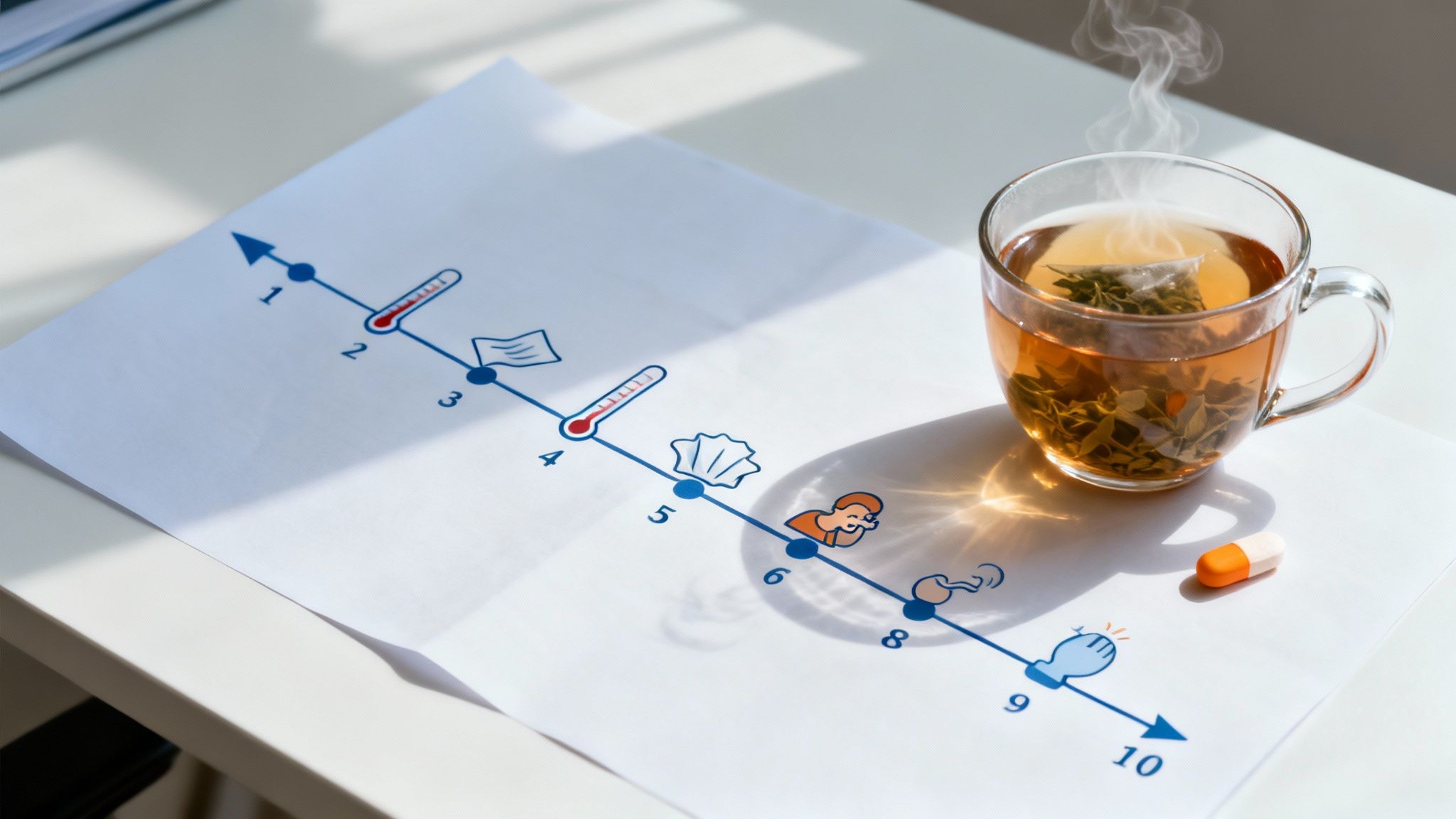
For most healthy adults, the common cold will run its course in about 7 to 10 days. It might feel like an eternity when you're stuck with a box of tissues, but the journey from that first scratchy throat to the last lingering cough usually follows a fairly predictable path.
Your Cold Symptom Timeline From Start to Finish
Knowing what to expect can make dealing with a cold a little more manageable. While everyone's experience is slightly different, the lifecycle of a cold virus has a clear beginning, middle, and end as your immune system gets to work.
The common cold, which is usually caused by rhinoviruses such as Rhinovirus Type 14 or Rhinovirus Type 39, is what doctors call a "self-limiting" illness—it goes away on its own. Research backs this up, confirming that for most of us, symptoms last about a week to ten days, though a pesky cough can sometimes hang around a bit longer. A deep dive into respiratory viruses published in a 2023 study on respiratory viruses confirms this general timeline.
A Typical Week with the Common Cold
To get a clearer picture, let's break down how a cold typically unfolds for a healthy adult. This table maps out the common progression of symptoms from the initial incubation period all the way through recovery.
| Phase | Day Range | What to Expect |
|---|---|---|
| Onset | Days 1–3 | Things usually kick off with a sore or scratchy throat. Sneezing and a runny nose often follow. You might start feeling tired or just a bit "off." |
| Peak | Days 4–6 | This is when symptoms are typically at their worst. Nasal congestion often thickens, a cough can develop, and you'll likely feel fatigued and achy. Your body is in full-on battle mode here. |
| Recovery | Days 7–10 | You'll start to feel the tide turn. Symptoms begin to improve, your energy levels slowly return, and congestion starts clearing up. Your cough should also become less frequent. |
As you can see, the worst of it is usually over by about day six. After that, it's a slow but steady climb back to feeling like yourself again.
The Three Main Stages of a Cold
Breaking it down even further, you can think of a cold in three distinct phases:
-
Onset (Days 1-3): This is the "uh-oh" stage. It starts subtly, maybe with a tickle in your throat, and quickly ramps up with sneezing and a runny nose. Fatigue often sets in, signaling that your body is gearing up for a fight.
-
Peak (Days 4-6): Welcome to the main event. Your symptoms are at their most intense now. Congestion is likely at its peak, a cough may have developed, and general achiness and fatigue are common. This is when you'll want to rest up the most.
-
Recovery (Days 7-10): Finally, some relief. Symptoms start to fade, your energy comes back, and you can breathe a little easier as congestion subsides. During this tail end, you might still be wondering just how long colds are contagious.
This visual timeline gives you a good idea of what to expect day by day.
As the timeline shows, the worst symptoms hit right in the middle of the illness, with things looking up after day six. Understanding this rhythm not only helps you prepare but also reminds you that feeling better is just around the corner.
The Day-by-Day Journey Through a Common Cold
Think of a common cold less like a single event and more like a three-act play. It has a distinct beginning, a messy middle, and a welcome end, each with its own signature symptoms. Knowing the script helps you understand exactly where you are in the recovery process and why you feel the way you do. It’s a short, intense battle, and your immune system is the star of the show.

Before the curtain even rises, there's a quiet incubation period. After you’re exposed to a virus like rhinovirus, it spends the next 24 to 72 hours replicating in your nasal passages. You feel perfectly fine because your body hasn't sounded the alarm just yet.
Days 1 to 3: The First Signs of Trouble
The first act kicks off the moment your immune system identifies the intruder. This is the phase filled with those classic "Uh oh, am I getting sick?" feelings.
Often, the very first clue is a sore or scratchy throat. That's the virus directly irritating the cells lining your pharynx. Almost on cue, your body turns on the waterworks, ramping up mucus production to trap and flush the virus out. This leads to sneezing and that all-too-familiar clear, watery runny nose. A wave of fatigue usually washes over you as your body starts diverting its energy to the fight.
Days 4 to 6: The Peak of Symptoms
Welcome to the main event. During these few days, your symptoms will be at their most intense because your immune response is going full-throttle. This is when most of us feel our worst and start wondering if this cold will ever end.
The clear mucus from the first few days often becomes thicker and may turn whitish or yellow. Don't panic—this is a good sign. It just means your immune cells are on the job. Nasal congestion usually gets worse, making it tough to breathe through your nose. It’s also common for a cough to show up, which is your body’s way of clearing inflammatory junk and mucus from your airways.
Think of this phase as your body’s clean-up crew in action. The inflammation and increased mucus are signs of a robust immune response, not the virus itself causing damage. It’s inconvenient, but it means your defenses are working as they should.
This is also when you'll feel the most drained and achy. Your body is pouring a ton of resources into fighting the infection, leaving you tired and sluggish. Listening to your body and getting plenty of rest during these peak days is the best thing you can do for a quicker recovery.
Days 7 to 10: The Resolution Phase
Finally, the conflict starts winding down. In this final act, your immune system has gained the upper hand, and you’ll notice your symptoms steadily improving.
You'll feel your energy levels slowly creep back up as your congestion starts to break apart. The need to blow your nose becomes less urgent, and any lingering aches should fade away. One of the last symptoms to leave the party is often the cough; it can sometimes hang around for another week or so as your airways heal from all the recent inflammation.
By day 10, most people are feeling pretty close to their old selves again, with maybe just a few minor, lingering signs that they were ever sick at all.
Ever feel like your cold is the houseguest who just won't take a hint, long after everyone else’s has packed up and left? You're not imagining things. While most colds in healthy adults wrap up in about 7 to 10 days, a few key factors can easily turn a short illness into a lingering nuisance.
Think of your immune system as a seasoned security team. For most healthy adults, it’s a well-oiled machine that spots an intruder—like a rhinovirus—and efficiently shows it the door. But sometimes, that team is understaffed, tired, or already dealing with another problem, giving the virus extra time to wreak havoc.
Age and Your Immune Response
Age is one of the biggest reasons for a cold's staying power. Your immune system's strength and experience change drastically over your lifetime, and that affects how you handle infections.
-
Young Children: A child's immune system is basically a rookie on the job. It hasn't seen many viruses before, so it takes a lot longer to recognize the threat and figure out how to fight it. This learning curve is why colds often seem to hit kids harder and stick around for what feels like an eternity.
-
Older Adults: On the other end of the spectrum, the immune system can slow down with age—a process called immunosenescence. The body's "security team" isn't as quick on its feet, and it doesn't have as many reinforcements to call in, which can stretch out recovery time.
Underlying Health and Lifestyle Factors
Beyond age, your general health and daily habits are major players in how well you fight off a cold. If your body is already dealing with other issues, it has fewer resources to spare for a new viral invader.
For instance, if you have a pre-existing condition like asthma or chronic bronchitis, your airways are already inflamed and sensitive. A cold virus is like throwing gasoline on that fire, often leading to a much nastier and longer-lasting cough. Likewise, a weakened immune system—whether from a chronic illness, certain medications, or even just poor nutrition—simply doesn’t have the horsepower to evict the virus quickly.
Your lifestyle choices matter, too. Chronic stress and skimping on sleep are both known to suppress immune function, leaving you wide open. Smoking is especially tough on your respiratory system; it paralyzes the tiny hairs (cilia) that are supposed to sweep mucus and germs out of your lungs, basically rolling out the welcome mat for a prolonged infection.
While a week or two is standard recovery for healthy individuals, those with underlying conditions like asthma or compromised immunity may find their symptoms persisting for three weeks or more. This extended duration also increases the risk of complications like pneumonia.
In fact, research confirms this isn't just an anecdotal experience. While healthy people typically kick a cold in one to two weeks, vulnerable groups often face a much tougher fight. A recent review looked at why some people struggle to recover and found that those with asthma, bronchitis, or immune deficiencies can take over three weeks to get better. This longer sick time also makes them more susceptible to secondary infections. You can dig deeper into these findings on why some viral symptoms last longer.
Knowing this isn't about being paranoid—it's about being prepared. If you fall into one of these higher-risk groups, you know it’s even more important to be diligent with things like handwashing and disinfecting surfaces to protect yourself and others around you.
Is It a Cold, Flu, or COVID-19?
When you’re stuck with a cough, sniffles, and a sore throat, it’s only natural to wonder what you’re up against. Figuring out how long your symptoms might stick around is one thing, but telling one respiratory illness from another can feel like a real guessing game.
The common cold, influenza (the flu), and COVID-19 are all caused by respiratory viruses, so it's no surprise their symptoms overlap. The real clues often lie in how quickly the illness hits, how severe it feels, and a few unique warning signs.
A common cold, usually the work of a rhinovirus, tends to creep up on you. You might feel a scratchy throat one day, then wake up sneezing with a runny nose the next. The flu, caused by viruses like Influenza A (H1N1), often feels like getting hit by a truck—the symptoms come on suddenly and with a lot more force. SARS-CoV-2, the virus behind COVID-19, is the wild card; its arrival can be slow and gradual like a cold or fast and furious like the flu.
Key Symptom Differences
While there’s a lot of overlap, some symptoms are more telling than others.
A high fever, intense body aches, and crushing fatigue are classic hallmarks of the flu. A cold might leave you feeling a bit tired, but it rarely causes the kind of can’t-get-out-of-bed exhaustion or severe muscle pain that comes with influenza.
COVID-19 shares the fever and aches with the flu but is well-known for causing a potential loss of taste or smell. It’s worth noting that this particular symptom has become less common with newer variants of the virus.
To get a clearer picture, it helps to see the symptoms laid out side-by-side. For an even deeper dive, check out our flu vs cold symptoms chart.
The only surefire way to know what you have is to get tested, especially for the flu and COVID-19. Symptom patterns are helpful clues, but a diagnostic test is the only way to get a definite answer.
Symptom Checker Cold vs Flu vs COVID-19
When you feel that first tickle in your throat, this table can help you make a more informed guess about what might be going on. Use this as a general guide to compare the most common symptoms of a cold, the flu, and COVID-19.
Use this table to compare the common symptoms of a cold, the flu, and COVID-19 to help identify your illness.
| Symptom | Common Cold | Influenza (Flu) | COVID-19 |
|---|---|---|---|
| Symptom Onset | Gradual | Abrupt | Varies (Gradual or Abrupt) |
| Fever | Rare | Common, often high | Common, can vary |
| Aches & Pains | Slight | Common and often severe | Common, can vary |
| Fatigue/Weakness | Mild | Intense and common | Common, can be severe |
| Sneezing | Common | Sometimes | Sometimes |
| Stuffy Nose | Common | Sometimes | Common |
| Sore Throat | Common | Sometimes | Common |
| Cough | Mild to moderate | Common, can be severe | Common, can be severe |
| Headache | Rare | Common | Common |
| Loss of Taste/Smell | Rare | Rare | Sometimes |
Just remember, everyone experiences illness a little differently. This chart is a starting point, not a substitute for professional medical advice.
How to Help Your Body Recover and Feel Better Faster
Knowing a cold's typical timeline is one thing, but actively helping your body get through it is another. While there’s no magic pill for the rhinoviruses that cause the common cold, you can absolutely take steps to ease your symptoms and give your immune system the support it needs.

This isn’t about just waiting it out—it's about proactively managing your recovery. The two biggest non-negotiables are rest and hydration. Getting plenty of sleep lets your body focus its energy on fighting the infection. Meanwhile, staying hydrated with water, broth, or herbal tea helps thin out mucus and soothe a raw, scratchy throat.
Essential Self-Care Strategies
Beyond the basics, a few simple strategies can bring some serious relief and help your body’s natural healing process along. Think of these as your comfort toolkit to get you back on your feet faster.
- Soothe Your Symptoms: Over-the-counter medications can be a huge help. Decongestants can clear a stuffy nose, while pain relievers can take the edge off body aches and fever. Just be sure to follow the package directions, and don't hesitate to ask a pharmacist if you're unsure about anything.
- Embrace Home Comforts: A warm saltwater gargle is a classic for a reason—it can temporarily relieve a sore throat. The same goes for sipping warm liquids like honey and lemon tea, which can be incredibly soothing for a nagging cough.
- Manage Your Environment: Adding a little moisture back into the air can make a big difference for a dry cough or irritated sinuses. This is where exploring the benefits of a humidifier, especially in the dry winter months, can be a game-changer.
Of course, a good recovery starts with a strong foundation. You can learn more about getting your immune system in fighting shape in our guide on how to boost your immune system.
Preventing the Spread to Others
Feeling better isn't just about you—it’s also about protecting the people around you. Cold viruses are ridiculously contagious and spread easily through respiratory droplets from a cough or sneeze. They also hang out on surfaces, just waiting for the next person to touch them.
Since viruses can survive on hard surfaces for hours, disinfecting your home is a critical part of managing a cold. This simple practice makes a huge difference in keeping your family healthy and breaking the cycle of transmission before someone else gets sick.
Think of this as your containment plan:
- Wash Your Hands. A Lot. Use soap and water and scrub for at least 20 seconds, especially after you cough, sneeze, or blow your nose. This is your single best defense.
- Disinfect High-Touch Surfaces. Viruses like Rhinovirus and Norovirus can live for hours on doorknobs, light switches, remote controls, and countertops. Wiping these areas down regularly with a disinfecting wipe gets rid of germs before they can spread.
- Cover Your Coughs and Sneezes. Trap those germs in a tissue or the crook of your elbow to stop them from becoming airborne.
By making these habits second nature, you’re not only helping yourself recover faster but also playing a huge part in keeping everyone else healthy.
Most of the time, a common cold is just a minor annoyance. Your immune system is well-equipped to handle it, and you'll typically be on the mend within that classic 7-to-10-day window. It's a temporary fight, and learning to trust your body's recovery process is usually the best thing you can do.
But it’s also important to know when something’s not right. A cold should follow a pretty predictable path: it gets worse for a few days, hits a peak, and then starts to get better. If your symptoms take a sharp turn for the worse or just refuse to leave, it might be a sign that it's time to get a professional opinion.
Key Warning Signs to Watch For
Sometimes, what starts as a simple cold can open the door for something more serious, like a secondary infection. Think sinusitis, bronchitis, or even pneumonia. While your immune system is busy fighting off the cold virus, bacteria can sneak in and take hold. Knowing the difference between a normal recovery and a potential complication is crucial.
You should get in touch with a healthcare provider if you notice any of these red flags:
- A Fever That Won't Quit: A fever that hangs around for more than three days or spikes above 101.3°F (38.5°C) is a good reason to call your doctor.
- Symptoms Get Better, Then Suddenly Worse: This is the classic signature of a secondary infection. You might start feeling like you've turned a corner, only to get hit with a new wave of symptoms that feel even more intense.
- Severe Pain: Don't ignore a pounding headache, intense sinus pressure, or a sharp earache. These can signal a sinus or ear infection that needs treatment.
- Breathing Difficulties: Any shortness of breath, wheezing, or persistent chest pain is a serious symptom that needs immediate medical attention.
- Symptoms Dragging on Past 10 Days: If you're over 10 days in and still see zero improvement, it’s a good idea to get checked out to make sure nothing else is going on.
If your cold symptoms just won't go away or start getting worse, you might want to seek medical advice. An online doctor prescription consultation can be a really convenient way to talk through what you're feeling. It's especially helpful for figuring out if you're dealing with a complication that needs medication.
Ultimately, you know your body best. If something just feels off or significantly different from your typical cold, it's always smarter to play it safe and check in with a professional.
Got Questions About Your Cold? We’ve Got Answers.
As you ride out a cold, a few common questions always seem to pop up. Here are some quick, straightforward answers to help you know what to expect.
Can a Cold Really Be Over in Just 3 Days?
It’s possible, but it's definitely not the norm. A cold that disappears in three days is unusually fast, as most rhinoviruses need the standard 7 to 10 days to run their full course.
If you bounce back that quickly, it probably means your immune system was already primed and ready for a fight. Another possibility is that your sniffles weren't from a cold virus at all but were triggered by something like allergies.
Why Does My Cough Always Seem to Be the Last Thing to Go?
Ah, the dreaded post-cold cough. It’s incredibly common for a cough to hang around long after you feel better. This is what’s known as a "post-viral cough."
It happens because the cold virus has left your airways inflamed and hypersensitive. Even though the infection is gone, this irritation can make you cough for several more weeks. It’s annoying, but it’s not usually a sign that you’re still sick.
Will Antibiotics Make My Cold Go Away Faster?
Absolutely not. Antibiotics are completely useless against the common cold.
Here’s why: antibiotics are powerful medicines designed to kill bacterial infections. Colds, on the other hand, are caused by viruses. Taking an antibiotic for a cold won’t touch the virus, won’t speed up your recovery, and contributes to the massive global health problem of antibiotic resistance. It's best to save them for when they're truly needed.
Leave a Reply