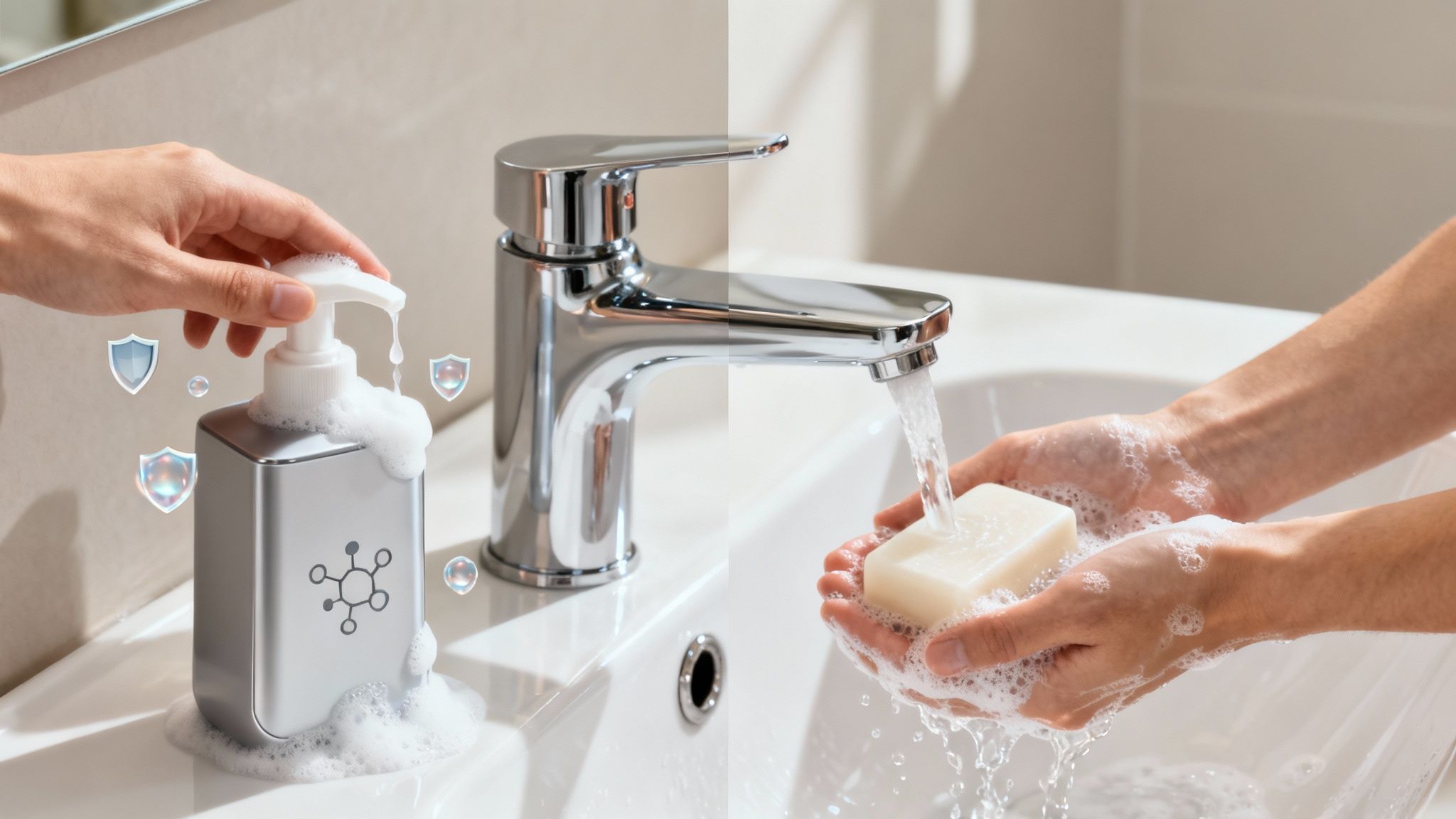
When it comes to antibacterial soap vs. regular soap, the biggest myth is that one is automatically better than the other for keeping you healthy. For most of us, washing with plain soap and water is just as good at preventing illness as using a product labeled "antibacterial." The real magic of handwashing isn't about killing germs on the spot—it's about physically lifting them off your skin and washing them down the drain.
This applies to everything from common bacteria to viruses like Influenza or SARS-CoV-2. The mechanical scrubbing action is what does the heavy lifting.
The Soap Showdown: Does Antibacterial Offer Real Protection?
For years, the debate over antibacterial versus regular soap has been a hot topic, with marketing campaigns often positioning antibacterial products as the superior choice for germ-conscious families. But as the science has caught up, both researchers and regulators have pushed back on that idea. For everyday life, that "extra protection" is mostly an illusion.

This shift in understanding led to a major change in how these products are sold. In 2016, the U.S. Food and Drug Administration (FDA) made a landmark decision, banning 19 different active ingredients from over-the-counter consumer antibacterial soaps, including the widely used triclosan. Why? Because manufacturers couldn't prove these chemicals were any more effective than just plain soap and water for preventing sickness in typical household settings. You can read more about the FDA's ruling on their consumer updates page.
The science is clear: For the vast majority of daily activities, the added chemicals in antibacterial soaps provide no extra benefit over plain soap and are not necessary for keeping your family safe from common illnesses.
A Quick Comparison for Home Use
So, what's the bottom line for your shopping list? It helps to see a direct comparison of how these products actually perform in the real world. This quick table breaks it down for typical home use.
Quick Verdict: Antibacterial vs. Regular Soap for Home Use
For everyday cleaning, the choice is pretty straightforward. Here’s a side-by-side look at the factors that matter most.
| Factor | Regular Soap | Antibacterial Soap |
|---|---|---|
| Primary Action | Physically lifts and removes germs, dirt, and oils. | Physically removes germs and adds a chemical agent to kill bacteria. |
| Effectiveness | Highly effective for removing bacteria and viruses with proper technique. | No proven additional benefit for preventing illness in home settings. |
| Key Ingredients | Surfactants (e.g., sodium laureth sulfate) that create lather. | Surfactants plus an active antibacterial agent (e.g., benzalkonium chloride). |
| Regulatory View | Considered the gold standard for daily hand hygiene by the FDA and CDC. | Subject to FDA scrutiny; many former active ingredients banned for consumer use. |
Ultimately, both do an excellent job of cleaning your hands. The real difference comes down to whether the added antibacterial agent is truly necessary for your situation—and for most homes, it isn't.
Later in this guide, we’ll dig deeper into the science, potential risks like antibiotic resistance, and specific situations where one type might be better than the other. We'll even look at how they stack up against viruses like Human Coronavirus and Norovirus, where scrubbing is king.
Understanding How Each Soap Actually Works
To really settle the antibacterial vs. regular soap debate, you have to get down to what’s happening at the microscopic level. While both get your hands clean, they go about it in slightly different ways. The whole difference boils down to one simple concept: physical removal versus a chemical attack.

The Surfactant Power of Regular Soap
Plain old soap, whether it's liquid or one of those traditional bar soap options, works through a beautifully simple mechanical process. Every single soap molecule has two different ends: a hydrophilic head that loves water and a hydrophobic tail that’s drawn to oils and fats.
When you lather up, those millions of hydrophobic tails grab onto the greasy, oily membranes that coat germs on your skin. This action literally pries microbes, dirt, and grime right off the surface. As you rinse, the water-loving hydrophilic heads get pulled down the drain, taking all the trapped gunk with them.
This physical removal is incredibly effective. For enveloped viruses like Influenza A Virus (H1N1), Hepatitis C Virus (HCV), or SARS-CoV-2, which have a protective outer lipid envelope, the soap’s fat-attracting tails can actually tear that layer apart, neutralizing the virus on the spot.
Antibacterial Soap: The Added Chemical Agent
Antibacterial soap starts with the exact same mechanical foundation as regular soap—it uses surfactants to lift and remove germs. But it has an extra trick up its sleeve: an active chemical ingredient designed to kill bacteria or stop their growth right on your skin.
Common active ingredients you might see are benzalkonium chloride or benzethonium chloride. These compounds are meant to add another layer of germ-killing power. It’s critical to remember the https://virusfaq.com/2025/08/15/difference-between-virus-and-bacteria/, because these agents are formulated to target bacteria specifically, not viruses.
The catch? This chemical action isn't instantaneous. For the antibacterial agent to do its job, it needs enough contact time with the bacteria, something a quick 20-second hand wash doesn't always provide.
Action Mechanism Showdown: Antibacterial vs. Regular Soap
At the end of the day, the core difference is removal versus killing. Regular soap is a master of removal, while antibacterial soap tries to do both.
This table breaks down how their core actions really stack up.
| Feature | Regular Soap | Antibacterial Soap |
|---|---|---|
| Primary Mechanism | Mechanical Removal: Surfactants lift and wash away germs, dirt, and oils. | Mechanical Removal + Chemical Action: Adds an active agent to kill remaining bacteria. |
| Action Against Viruses | Highly Effective: Physically removes viral particles and can disrupt the envelope of viruses like Human Coronavirus and Herpes Simplex Virus 1 (HSV-1). | No Added Benefit: The antibacterial agent does not target viruses. Effectiveness relies entirely on the same mechanical removal as regular soap. |
| Action Against Bacteria | Effective: Physically removes bacteria from the skin surface. | Potentially More Effective: Kills bacteria but requires adequate contact time. In practice, often no more effective than plain soap for general use. |
Ultimately, when it comes to preventing the spread of most common illnesses, especially viral ones, it’s the thorough scrubbing and rinsing action that does the heavy lifting. The mechanical force of any soap is your best and most reliable line of defense.
So, Does Antibacterial Soap Actually Work Better?
While the science behind soap is interesting, the real question is simple: does antibacterial soap actually work better than the regular stuff? The answer isn't a straight yes or no. It really depends on where you are and what you’re doing. For most of us, most of the time, the difference is practically zero. But in certain high-risk places, that changes.
To get to the bottom of this, researchers use methods like advanced pathogen detection to see what’s left on hands after washing. These techniques give them the hard data they need to compare the soaps fairly.
Effectiveness in Everyday Life
For the average person, the science is pretty clear. When you're washing your hands for about 20 seconds at home, school, or the office, antibacterial soaps don't offer any extra health benefits over plain soap. The physical act of scrubbing and rinsing is so good at getting rid of germs that the extra chemicals just don't make a noticeable difference in preventing sickness.
This isn't just a theory; it's backed by solid research. One Korean study published in the Journal of Antimicrobial Chemotherapy put soap to the test against 20 different types of bacteria. On the hands of volunteers, a standard 20-second wash with triclosan-based soap was no better at reducing bacteria than plain soap.
But here's where it gets interesting. In high-stakes environments, the story flips. Research from a partnership between Ecolab and the University of Arizona found that in a food handling setting, antibacterial soap left 70–80% fewer bacteria on hands compared to non-antibacterial soap. You can dig into these findings on antibacterial soap effectiveness to see for yourself. This shows that in places like commercial kitchens or hospitals—where stopping cross-contamination is critical—the right antibacterial formula can be a game-changer.
What About Viruses?
When we start talking about viruses, the debate gets a lot simpler. The "antibacterial" ingredients in these soaps are made to go after bacteria. They do absolutely nothing to viral particles, whether it's a small non-enveloped virus like Norovirus or an enveloped one like Human Immunodeficiency Virus Type 1 (HIV-1).
When it comes to preventing viral illnesses, it doesn't matter if your soap is antibacterial or not. The only thing that counts is the scrubbing motion, which physically lifts and washes away viral particles from your skin.
This is a huge point that marketing often glosses over. No soap "kills" a virus the way an antibacterial agent kills bacteria. Instead, the soap molecules in any kind of soap—regular or antibacterial—work by prying viruses off your skin. For some viruses, they can even break apart their fatty outer layer, making them harmless.
The Verdict: It’s All About the Situation
So, which soap should you use? It all comes down to the context.
- For most people at home: Plain old soap is just as effective. The most important thing for staying healthy is using good handwashing technique, not what kind of soap you use.
- For high-risk settings (hospitals, kitchens): Specially designed antibacterial soaps can offer an extra layer of defense. They significantly cut down the number of bacteria on hands, which helps prevent dangerous cross-contamination where it matters most.
At the end of the day, the vigorous scrubbing is what does the heavy lifting in hand hygiene. For the vast majority of us, regular soap has all the germ-fighting power needed to stay healthy, especially against the common viruses that make us sick.
The Potential Downsides of Antibacterial Soap
The promise of "extra protection" from antibacterial soap is tempting, but its widespread use comes with some serious and often-overlooked baggage. Beyond the debate over whether it’s actually more effective in a typical home, there are growing concerns about the long-term impact these products have on our health and the environment. It's a critical piece of the antibacterial vs. regular soap conversation.
The Specter of Antibiotic Resistance
The biggest worry by far is how these soaps contribute to antibiotic resistance. This isn't some far-off scientific problem; it's a major global health threat where bacteria evolve to outsmart the very drugs designed to kill them.
Think of it like this: when we constantly expose bacteria to antibacterial agents, we're basically creating a boot camp for superbugs. Only the strongest, most resilient bacteria survive the chemical onslaught. Those survivors then multiply, passing on their defensive traits. This process can lead to bacteria that are not just resistant to soap chemicals, but also to critical medical antibiotics we rely on in hospitals.
The Threat of Cross-Resistance
The link between common antibacterial agents and resistance to life-saving drugs is a very real problem. A major systematic review looked at 27 different studies conducted between 1980 and 2006 and came to a powerful conclusion. It found that triclosan-containing soaps offered no extra health benefits over plain soap for preventing illness at home.
Even more troubling, several lab studies showed that bacteria adapted to triclosan could also resist clinically important antibiotics. You can dig into the findings on triclosan and antibiotic resistance yourself.
This is a phenomenon known as cross-resistance, and it's where the real danger lies. It means the antibacterial soap you use at your kitchen sink could, over time, help create bacteria that are much harder to treat with medical-grade antibiotics when someone gets a serious infection.
Disrupting Your Skin's Natural Defenses
Beyond the global threat of resistance, antibacterial soaps can cause problems a lot closer to home—right on your own skin. Your skin is covered in a complex community of microorganisms called the skin microbiome. This collection of friendly bacteria, fungi, and other microbes plays a huge role in protecting you.
These "good" bacteria help maintain a healthy skin barrier, fight off invading pathogens, and even keep inflammation in check. The problem is, antibacterial soaps don't know the difference between good and bad germs.
Their broad-spectrum action can strip away these beneficial microbes, disrupting the delicate balance of your skin's natural ecosystem. This can leave your skin more vulnerable to pathogens, dryness, and irritation.
By weakening this first line of defense, you might inadvertently be making your skin less resilient to the very germs you're trying to get rid of. In contrast, regular soap works by physically removing harmful germs without carpet-bombing your skin’s helpful residents.
Environmental Contamination, Straight From the Sink
The impact of antibacterial soaps doesn't stop when the lather goes down the drain. Active ingredients like benzalkonium chloride often aren't fully removed by wastewater treatment plants.
From there, these chemicals end up in our rivers, lakes, and oceans. Once they get into aquatic environments, they can cause a cascade of negative effects:
- Disrupting Aquatic Life: These compounds can be toxic to algae, fish, and other organisms, throwing the entire food web out of whack.
- Persistence in the Environment: Some of these antibacterial agents break down very slowly, which means they can build up in water and soil over time.
- Promoting Resistance in Nature: The constant presence of these chemicals in our waterways can also fuel the development of resistant bacteria out in the wild.
This persistent contamination poses a long-term risk to entire ecosystems. Choosing regular soap is simply a more sustainable option that reduces the chemical load on our environment—and it’s a big reason why health authorities like the FDA recommend it for most day-to-day situations.
Choosing The Right Hand Hygiene Strategy
So, antibacterial or regular soap? The answer really boils down to your specific situation. For most of us, most of the time, the best strategy is surprisingly simple and backed by solid science. It’s less about finding the most potent chemical and more about mastering the right technique.
For everyday life—at home, in schools, or out in public—the clear winner is plain soap and water. When you pair it with a thorough 20-second scrub, it’s incredibly effective at physically lifting and rinsing away both bacteria and viruses. It's the mechanical friction of lathering and rinsing that does the real heavy lifting.
When to Consider Antibacterial Soap
While regular soap is the undisputed champ for daily use, antibacterial soaps do have a place. Think of them as a specialized tool for specific, high-risk environments where cutting down the bacterial load is absolutely critical to prevent serious infections.
You'll find them used in contexts like these:
- Healthcare Settings: In hospitals and clinics, healthcare workers rely on specific antibacterial formulas to stop dangerous pathogens from spreading between patients.
- On Doctor's Orders: Someone with a compromised immune system or a specific skin infection might be advised by their doctor to use an antibacterial wash to lower their risk.
- High-Risk Food Prep: Commercial kitchens and food processing plants sometimes use them to help reduce cross-contamination from raw meat, though strict food handling rules are still the top priority.
For the average person, these situations are rare. The decision to reach for an antibacterial soap should be driven by a genuine, elevated risk—not just a vague desire for "extra" protection.
This flowchart lays out the potential downsides of overusing antibacterial soaps, driving home why they aren't the go-to for general use.

As you can see, the main concerns—antibiotic resistance, harm to your skin’s good bacteria, and environmental pollution—are all linked to unnecessary use.
A Complete Hygiene Approach Beyond Handwashing
Good hygiene doesn't just stop at the sink. Sometimes you're nowhere near soap and water, and germs can spread just as easily from a contaminated surface as they can from unwashed hands. That’s where a bigger-picture strategy comes in.
When you're out and about, an alcohol-based hand sanitizer with at least 60% alcohol is your best bet. It’s great for quickly killing many germs and viruses, holding you over until you can get to a sink. Just remember, sanitizers don't work well on hands that are visibly dirty or greasy.
A truly effective hygiene plan considers both personal and environmental cleanliness. Tough, non-enveloped viruses like Norovirus (Norwalk Virus) and Rhinovirus Type 14 can survive for hours or even days on surfaces, turning doorknobs, countertops, and phones into transmission hotspots.
This is where using the right tool for the job really matters. While hand soap is for your skin, disinfecting wipes are engineered to kill pathogens on those high-touch surfaces. Wiping down these areas regularly breaks a key link in the chain of infection, stopping germs before they ever make it to your hands.
A smart, multi-layered defense combines diligent handwashing with plain soap, using hand sanitizer when needed, and regularly cleaning surfaces with disinfecting wipes. This approach gives you robust protection against a whole range of viruses and bacteria, covering both your hands and your environment.
To make it even clearer, here’s a quick guide to help you decide on the best hand hygiene method for different situations.
Hand Hygiene Decision Guide: When to Use What
| Situation | Recommended Primary Method | When to Consider Alternatives | Key Rationale |
|---|---|---|---|
| At Home (Daily Routine) | Plain Soap & Water | N/A | Removes dirt, germs, and chemicals effectively without contributing to resistance. |
| Public Restrooms/Shopping | Plain Soap & Water | Hand sanitizer if soap is unavailable. | Physical removal of germs is most effective. Sanitizer is a good backup. |
| Before & After Eating | Plain Soap & Water | Hand sanitizer if you can't get to a sink. | Crucial for preventing ingestion of pathogens. Sanitizer is better than nothing. |
| Healthcare Setting (Patient Care) | Antibacterial Soap/Sanitizer | Follow facility-specific protocols. | High-risk environment requires reducing microbial load to prevent HAIs. |
| On-the-Go (No Sink) | Hand Sanitizer (≥60% alcohol) | Disinfecting wipes for surfaces. | Quick, portable solution to kill most germs until hands can be washed. |
| After Handling Raw Meat | Plain Soap & Water | N/A | Thorough washing is essential to prevent foodborne illness like Salmonella. |
| Caring for a Sick Person | Plain Soap & Water | Disinfecting wipes for surfaces. | Frequent, thorough washing is key to breaking the chain of transmission at home. |
This table serves as a practical cheatsheet. At the end of the day, the goal is clean hands, and for most of life's messes, good old-fashioned soap and water is the gold standard.
Answering Your Questions About Hand Soaps
When it comes to hand hygiene, it's easy to get lost in the details. To help you feel more confident about what you’re putting in your soap dispenser, here are some clear, evidence-based answers to the questions we hear most often.
Is Antibacterial Soap More Effective Against Viruses Like The Flu Or SARS-CoV-2?
This is a huge point of confusion, and the answer is a firm no. Antibacterial agents are designed to kill bacteria, not viruses. Germs like Influenza A Virus (H1N1), Hepatitis B Virus (HBV), and SARS-CoV-2 have a completely different biological structure.
The real hero in the fight against viruses is the simple act of washing with any soap, whether it's regular or antibacterial. Soap molecules physically pry viral particles off your skin. For many enveloped viruses, soap also destroys their protective outer lipid layer, rendering them harmless. It’s the vigorous scrubbing and rinsing that get the job done, making plain old soap just as effective for fending off viruses.
Can I Develop An Allergy Or Sensitivity To Antibacterial Soap?
Yes, it's definitely possible. Some people find their skin reacts poorly to the active chemical agents in antibacterial soaps, like benzalkonium chloride, especially with frequent washing.
This irritation can show up in a few ways:
- Dryness and Cracking: The chemicals can strip your skin of its natural oils, leading to excessive dryness and even painful cracks.
- Redness and Itching: You might experience contact dermatitis, which is just an itchy red rash that pops up after you've touched an irritant.
- Disruption of the Skin Microbiome: As we’ve mentioned, these soaps can also wipe out the good bacteria on your skin, which can ironically leave it more vulnerable to other issues.
If you start noticing persistent redness, itching, or dryness after using an antibacterial soap, your best bet is often to switch back to a gentle, plain soap.
Does Water Temperature Really Matter When Washing Hands?
This is one of the most persistent myths in hand hygiene. Lots of people think hot water is a must for killing germs, but the truth is, water temperature has almost no effect on removing pathogens.
For water to have any real germ-killing power, it would have to be scalding hot—hot enough to give you a serious burn. The real job of water in handwashing is to help the soap create a lather and then rinse away all the germs the soap has lifted off your skin.
The most critical factors for effective handwashing are duration and technique. A thorough 20-second scrub with soap under comfortable, running water (warm or cold) is far more important than the temperature.
What Should I Use On My Kitchen Counters After Preparing Raw Meat?
This question gets at a really important distinction: cleaning your hands is not the same as cleaning surfaces. After you've handled raw meat, washing your hands thoroughly with plain soap and water is non-negotiable for removing dangerous bacteria like Salmonella or E. coli from your skin.
But soap and water aren’t the right tools for your countertops. Just wiping the counter with a soapy sponge can end up spreading pathogens around instead of getting rid of them. This is where you need a product specifically designed for surface disinfection to stop cross-contamination in its tracks.
A disinfecting wipe is perfect for this job. These wipes contain agents proven to kill bacteria and viruses on hard surfaces. Wiping down your counter, cutting board, and any utensils that touched the raw meat makes sure the area is properly sanitized and safe. It's a great example of how a complete hygiene strategy involves both personal and environmental cleaning. And while you're thinking about on-the-go hygiene, you might find our article that asks do alcohol-free hand sanitizers work? helpful for understanding different types of sanitizing products.
Leave a Reply