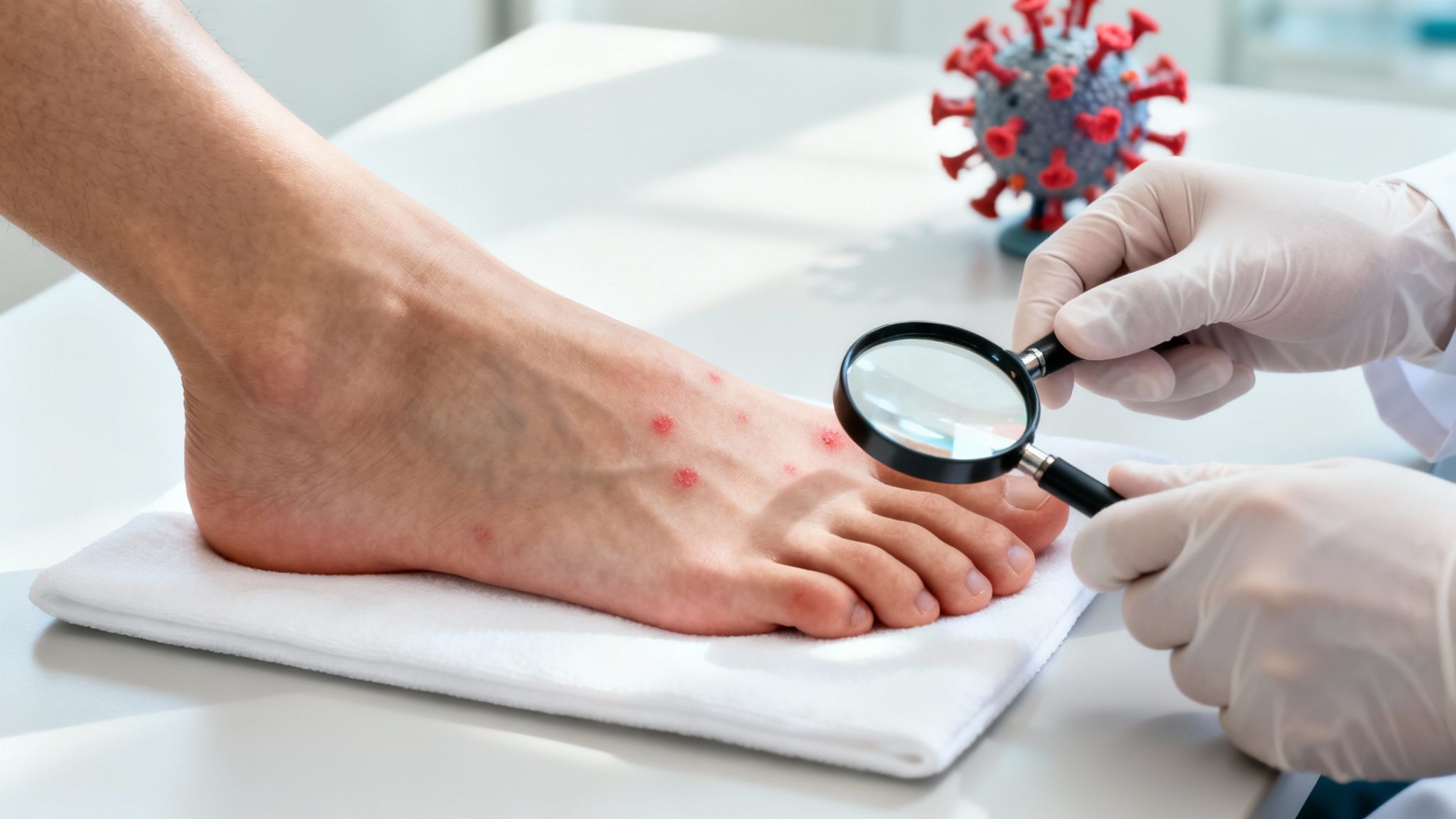
Hand, foot, and mouth disease (HFMD) isn't just for kids. While many people think of it as a mild childhood illness that only sweeps through daycares, adults can—and absolutely do—catch it. And when they do, it's often a much rougher ride.
The culprit is a family of viruses called enteroviruses, including strains like Coxsackievirus, Rhinovirus, and Norovirus. Even if you had HFMD as a child, you're not necessarily in the clear. Past exposure might give you some immunity, but certain viral strains can easily sidestep your body's defenses, leading to a miserable, painful, and surprisingly disruptive illness.
Why Adults Are Getting Hand, Foot, and Mouth Disease
Most adults operate under the assumption that they're immune to HFMD. After all, they probably encountered some version of it on the playground decades ago. But that immunity isn't a lifelong, all-access pass.
Think of your immune system like a bouncer with a very specific guest list. If it's seen a particular virus strain before, it knows not to let it in. But HFMD isn't one single virus; it’s a whole group of related enteroviruses.
This means that even if your body built up defenses against one common strain as a kid, a different one can show up years later and walk right past your immune system's defenses. Your body simply doesn't recognize this new troublemaker. If you're curious about the mechanics of this, you can learn more in our guide about whether you can get the same virus twice. This gap in immunity is a big reason why adult hand foot mouth disease is on the rise.
The Rise of More Aggressive Strains
It's not just your imagination—more adults are reporting HFMD cases, and there's a reason for it. We're seeing an increase in more aggressive viral strains that don't play by the old rules.
While HFMD is often caused by coxsackievirus A16 or enterovirus 71, a different player has entered the game: coxsackievirus A6. First identified in Finland in 2008, this strain has since caused widespread outbreaks affecting both children and adults.
The Coxsackievirus A6 strain is notorious for causing more severe symptoms in adults, including:
- A widespread and intensely painful rash that goes far beyond the hands, feet, and mouth, often spreading to the arms, legs, and torso.
- Higher fevers and more severe flu-like symptoms, like debilitating body aches and extreme fatigue.
- A higher chance of unpleasant after-effects, like onychomadesis (nail shedding) weeks after the initial illness.
To get a sense of how the illness can differ, let's compare the typical experiences.
HFMD in Adults vs. Children: A Quick Comparison
While the core virus is the same, the way it presents in adults can be starkly different from the textbook childhood version. Here's a quick rundown of what to expect.
| Symptom or Aspect | Typical Presentation in Children | Typical Presentation in Adults |
|---|---|---|
| Rash Severity | Mild, with small blisters on hands, feet, and in the mouth. | Often widespread, severe, and extremely painful. Blisters can be larger and cover more of the body. |
| Fever and Flu-like Symptoms | Usually low-grade fever and mild malaise. | Higher fevers, intense body aches, headache, and significant fatigue are common. |
| Mouth Sores | Painful but typically manageable. | Can be debilitating, making it difficult to eat, drink, or even talk. |
| Complications | Rare. | More likely to experience complications like nail shedding (onychomadesis) after the illness. |
| Recovery Time | About 5-7 days. | Can last 7-10 days or longer, with lingering fatigue and pain. |
The key takeaway is that adults often experience a more intense and prolonged version of the illness, which can be both physically and emotionally draining.
How Adults Typically Get Exposed
So, how do adults end up with a "kids' disease"? The answer is usually pretty straightforward: they get it from kids.
Parents, grandparents, teachers, and childcare workers are on the front lines. The virus is incredibly contagious and spreads like wildfire through:
- Respiratory droplets from an infected person's coughs or sneezes.
- Direct contact with the fluid inside the blisters.
- The fecal-oral route, which is a huge factor when changing diapers or if a child hasn't mastered handwashing.
An adult’s immune system might fend off a single, minor exposure. But when you're caring for a sick child around the clock, you're facing a constant, high-dose viral assault that can eventually overwhelm even a strong immune system. This is why even adults who thought they were immune can find themselves knocked down by a nasty case of adult hand foot mouth disease.
How HFMD Spreads in Everyday Life
To stop hand, foot, and mouth disease, you first have to understand how it moves through our daily lives. The viruses behind it—primarily Coxsackievirus A16 and Enterovirus 71, but also others like Rhinovirus—are experts at transmission. They can hang around on surfaces for hours and spread through the most innocent-looking interactions. This resilience on surfaces makes proper disinfection, such as using disinfecting wipes, crucial for prevention.
Lately, we've also seen a more aggressive strain, Coxsackievirus A6, which is often responsible for the more severe cases in adults. It follows the same playbook but tends to pack a bigger punch.
Picture a typical family scenario to see how an outbreak gets started. A child picks up the virus at daycare and brings it home. The tricky part? Before anyone even feels sick, the virus is already multiplying and shedding from their body. This pre-symptomatic phase is exactly why adult hand foot mouth disease catches so many people completely off guard.
Once the illness actually kicks in, the virus has plenty of ways to find its next host. Every cough or sneeze sends out a cloud of tiny, virus-filled respiratory droplets. Anyone nearby can breathe them in, or they can land on doorknobs, toys, and countertops, just waiting for the next person to come along.
The Primary Routes of Transmission
The enteroviruses that cause HFMD are incredibly resilient and have several main pathways for spreading from one person to another. Knowing these is key to breaking the chain of infection.
- Respiratory Droplets: A simple cough, a sneeze, or even just talking can launch infectious particles into the air. This is a super common way for it to spread in close quarters like homes, offices, or on public transit.
- Direct Contact: The fluid inside those classic HFMD blisters is loaded with the virus. Simply touching a sore or coming into contact with saliva from someone who is sick can pass it on. This includes things like sharing utensils, cups, or even giving a hug or a kiss.
- Contaminated Surfaces (Fomites): The virus can survive for hours on objects. Doorknobs, remote controls, phones, and kitchen counters can all become temporary homes for the virus. When someone touches a contaminated surface and then touches their mouth, nose, or eyes, the virus has found a way in. Regular use of disinfecting wipes on these high-touch areas is an effective strategy to mitigate this risk. You can learn more about the role of fomite transmission in spreading illnesses to see how this works for other germs, too.
- Fecal-Oral Route: Enteroviruses are shed in an infected person's stool, sometimes for weeks after the symptoms are gone. This route is especially common in homes with young kids, where diaper changes and potty training can easily spread the virus if hand hygiene isn't perfect every single time.
There's a common myth that HFMD is just a "kids' disease," but the reality is quite different.

As the graphic shows, the truth is that adults are absolutely vulnerable, which is why awareness for all age groups is so important.
Incubation Period and Contagious Window
After you're exposed, the virus doesn't make you sick right away. There's an incubation period—the time between when you get infected and when you first start feeling crummy.
For HFMD, the typical incubation period is 3 to 6 days. The really sneaky part is that an infected person can start shedding the virus and become contagious before they even feel sick.
This stealth transmission makes HFMD incredibly hard to contain. An adult can be spreading the virus around the office or at home without even knowing they're a carrier.
A person is most contagious during the first week of their illness, especially when they have a fever and the blisters are fresh. But the contagious window doesn't just slam shut once you feel better. The virus can stick around in respiratory secretions for up to three weeks and in fecal matter for several weeks—or even months. This really drives home the need for relentless handwashing and surface cleaning to protect yourself and everyone around you.
Recognizing the Symptoms of Adult HFMD
Most people think of Hand, Foot, and Mouth Disease as a minor bug that kids get. But when it hits an adult, it's a completely different ballgame—often far more severe and painful. The illness is sneaky, starting out like a bad cold or the flu, which is why it’s so easy to mistake for something else at first.
Knowing what to look for, especially the signs unique to adults, is the key to managing the misery and getting through it.

The whole thing usually kicks off with what doctors call a prodromal phase—a few days where you just feel awful before the really obvious symptoms appear. For adults, this stage can feel like you've been hit by a truck. It’s not a mild inconvenience; it’s a full-body experience.
This initial phase typically includes:
- High Fever: Forget the low-grade fevers kids might get. Adults often spike a sudden, high temperature.
- Severe Sore Throat: This is frequently the first and most agonizing symptom, making it painful to swallow anything.
- Intense Fatigue and Malaise: A deep, bone-crushing exhaustion and a general feeling of being unwell are common, often paired with significant muscle and body aches.
These flu-like symptoms are your body’s warning siren that an infection has taken root. Shortly after, the more distinctive and brutal symptoms of adult hand foot mouth disease start to show up.
The Classic Rash and Painful Mouth Sores
After the fever and fatigue, the trademark lesions of HFMD arrive. In adults, these are almost always more aggressive and painful than what children experience.
The two main events are the mouth sores and the skin rash, but they present with a particular intensity in adults.
Mouth Sores (Herpangina)
The sores inside the mouth, known as herpangina, are often the most debilitating part of the illness. They begin as small red spots on the tongue, gums, and inside of the cheeks before erupting into excruciatingly painful blisters or ulcers. For many adults, these sores make eating, drinking, or even talking an ordeal, which puts them at a real risk for dehydration.
Skin Rash and Blisters
At the same time or right after the mouth sores, the rash appears. And while the name suggests it’s limited to the hands and feet, that’s rarely the case for adults. The rash is made up of red spots that often turn into fluid-filled blisters.
A key difference with the HFMD rash is that it's typically non-itchy. Instead, the blisters are often tender, burning, or intensely painful to the touch. Simple things like walking or holding a pen can become incredibly difficult.
Atypical Presentations in Adults
What really sets adult HFMD apart is its tendency to show up in unusual and more severe ways, especially when caused by the Coxsackievirus A6 strain. While a child might have a few spots, an adult can end up with a much more dramatic and widespread outbreak.
These atypical symptoms can be pretty alarming and include:
- Widespread Rash: The rash can spread far beyond the hands, feet, and mouth, popping up on the arms, legs, torso, buttocks, and even the face and groin.
- Larger, More Painful Blisters: Adults may develop bigger blisters, called bullae, which are more likely to break open and cause significant pain.
- Post-Illness Nail Shedding (Onychomadesis): One of the strangest after-effects is onychomadesis, where fingernails and toenails loosen and fall off weeks or even months after the infection is gone. It's painless but can be quite distressing. It happens because the virus temporarily messes with nail growth.
This more intense clinical picture is exactly why an adult case of hand, foot, and mouth disease needs to be taken seriously. The combination of severe pain, a widespread rash, and the potential for unsettling after-effects makes the adult experience fundamentally different. Recognizing these signs early is crucial for managing the pain and taking the right precautions to avoid spreading this highly contagious virus to others.
Riding Out HFMD: How to Manage Your Recovery at Home
Once a doctor confirms you have hand, foot, and mouth disease, your focus will probably shift from "What is this?" to "How do I get through this?" Since a virus is the culprit, there are no antibiotics or quick fixes. It’s all about managing the symptoms, staying as comfortable as possible, and giving your body what it needs to fight back.
This part is a real test of patience, but the right approach can make a huge difference. The illness usually runs its course in 7 to 10 days, and your main job is to control the misery while your body does the heavy lifting.
Soothing That Awful Sore Throat
For most adults, the worst part is the brutal sore throat, thanks to the mouth ulcers (a condition called herpangina). These sores can make swallowing feel like a nightmare, but you absolutely have to stay hydrated to get better.
To get some relief and keep fluids going down, give these a try:
- Go Cold: Sipping on ice water, milkshakes, or even just sucking on ice chips or popsicles can numb the pain while delivering much-needed fluids and calories.
- Numbing Sprays & Lozenges: Over-the-counter throat sprays or lozenges with numbing agents like benzocaine can be a lifesaver, especially if you use them right before trying to eat or drink.
- Dodge the Irritants: Stay far away from anything acidic, salty, or spicy. Things like citrus juice, soda, and crunchy snacks will feel like pouring salt in a wound.
Taming the Fever and Body Aches
The first few days of HFMD often feel like a really bad flu, complete with a high fever and body aches that leave you feeling completely drained. That’s just a sign your immune system is putting up a fight.
You can tackle these symptoms with some over-the-counter help.
- Acetaminophen (like Tylenol) is a solid choice for bringing down a fever and easing general pain.
- Ibuprofen (Advil or Motrin) is also great for fevers and works particularly well on the inflammation that makes the blisters and body aches so painful.
Always stick to the dosage instructions on the package. And if you have any other health conditions, it's a good idea to check with your doctor before taking new medications.
Caring for the Painful Skin Blisters
Unlike a normal itchy rash, the blisters that come with adult HFMD are often tender, burning, or just plain painful. Taking care of them isn't just about comfort—it's also about preventing a secondary bacterial infection if they happen to break open.
Crucial Tip: The fluid inside those blisters is packed with the virus. Do not pop or scratch them. You'll risk spreading the infection to other parts of your body or to other people.
If a blister pops on its own, gently wash the area with soap and water, pat it dry, and dab on a bit of antibiotic ointment. A small bandage can help keep it clean and protected.
The Typical Recovery Timeline
Knowing what’s coming can make the whole ordeal a little less stressful. While it's slightly different for everyone, the illness tends to follow a fairly predictable path.
- Days 1-3: It usually kicks off with a sudden high fever, that wicked sore throat, and a wave of exhaustion.
- Days 2-5: The painful mouth sores appear, quickly followed by the rash and blisters on your hands, feet, and sometimes other spots.
- Days 5-10: The fever should break, and the blisters will start to dry up and heal. The sore throat and fatigue will slowly get better from here.
Remember, even after you start feeling human again, you can still be contagious for weeks. That’s why you have to be extra vigilant with handwashing and disinfecting surfaces long after your symptoms are gone.
When to Call the Doctor
Most cases of adult HFMD clear up on their own, but on rare occasions, serious complications can develop. You need to seek immediate medical care if you experience any of these red-flag symptoms, as they could signal a more serious problem like meningitis or encephalitis.
- A severe headache that doesn't get better with over-the-counter pain meds.
- A stiff neck that makes it hard to touch your chin to your chest.
- Any confusion, disorientation, or extreme sluggishness.
- Signs of dehydration, like not urinating, intense thirst, and dizziness.
By actively managing your symptoms at home and knowing the warning signs, you can get through your bout with adult hand, foot, and mouth disease safely.
Preventing the Spread in Your Home and Community
Dealing with a case of adult hand, foot, and mouth disease is one thing. But stopping the virus from marching through your family, friends, and coworkers is a whole different challenge. The enteroviruses behind HFMD are notoriously stubborn and can quickly turn a single illness into a household-wide event.
That means a proactive, almost obsessive, approach to hygiene and disinfection is your best line of defense. It starts with limiting exposure. Stay home from work or school when you're sick, especially during that first week when you're most contagious. Simple moves like not sharing cups, utensils, or towels can shut down easy transmission routes right away.

Building a Strong Hygiene Barrier
Your hands are the number one way this virus gets around. That makes consistent, proper handwashing the single most effective tool you have to break the chain of infection.
Think of it as setting up a safety checkpoint. Every time you wash your hands the right way—with soap and water for at least 20 seconds—you stop the virus from moving from a contaminated surface to your mouth, nose, or eyes.
This becomes absolutely critical after:
- Coughing, sneezing, or blowing your nose
- Using the restroom
- Touching any blisters or sores (yours or someone else's)
- Before making or eating food
If soap and water aren't an option, a hand sanitizer with at least 60% alcohol can work in a pinch. Just remember, it’s a backup, not a replacement for a good, old-fashioned scrub.
Disinfecting High-Touch Surfaces
Enteroviruses are surprisingly tough. They can hang out on doorknobs, remote controls, and countertops for hours, just waiting for the next person to come along. Wiping things down with soap and water isn't always enough to actually kill the virus—for that, you need to disinfect.
Focus your energy on the surfaces everyone touches constantly. This is key to protecting others in your home, especially since you can continue to shed the virus for weeks, even after you feel better.
Your cleaning mission should target the high-traffic areas and objects that multiple people handle all day. We're talking doorknobs, light switches, TV remotes, phones, keyboards, countertops, and faucet handles.
To get the job done right, you need the right tools. Grab a disinfecting wipe or spray that’s proven to work against viruses like enteroviruses. Make sure you follow the instructions on the label, paying close attention to the "contact time." That’s how long the surface needs to stay visibly wet for the disinfectant to actually kill the germs. For a deeper dive, check out our guide on how to properly disinfect surfaces against viruses.
A Broader Public Health Perspective
While these actions might feel small, their collective impact on public health is huge. HFMD outbreaks can sweep through communities, overwhelming clinics and disrupting daily life. Just look at the data from Asia and other parts of the world to see how quickly things can escalate. For example, China recorded around 1.9 million HFMD cases in 2015 alone. From 2008 to 2014, the country reported a staggering 10.7 million cases, with over 3,000 deaths tied to severe complications. You can get more insights on the global impact from a study published in Nature.
These massive numbers show exactly why individual prevention efforts matter so much. By being meticulous about hygiene and disinfection—including the regular use of disinfecting wipes—you’re not just protecting your own household; you’re doing your part to build a community-wide defense that helps stop these major public health events before they start.
Got Questions About Adult HFMD? We've Got Answers.
Learning about the symptoms and prevention of adult hand, foot, and mouth disease usually brings up a few more questions. After all, when you hear about a "kid's disease" hitting adults hard, it’s natural to have some specific concerns.
Let’s clear up some of the most common questions people have.
Can I Get Hand, Foot, and Mouth Disease More Than Once?
Yes, you can absolutely get HFMD multiple times in your life. This is a huge surprise to most people who figure once you've had it, you're immune for good. But it's not that simple.
HFMD isn't caused by a single, one-and-done virus. It’s the work of a whole family of related enteroviruses. When you get sick with one specific strain—say, Coxsackievirus A16—your body builds up a solid, lasting immunity to that exact strain.
But that immunity won't do a thing if you run into one of its cousins, like Coxsackievirus A6 or Enterovirus 71.
Think of it like this: Your immunity is a key that only fits one specific lock. It'll open the door to the A16 virus every time, but it won't work on the A6 or EV-71 doors. This leaves you vulnerable to getting sick all over again from a different strain.
How Long Am I Contagious With Adult HFMD?
This is a critical one. You are most contagious during the first week of the illness, especially while you have a fever and the blisters are fresh. That’s when the virus is shedding like crazy.
But here’s the part most people miss: the contagious period doesn't stop when you start feeling better. The virus hangs around in your system for a surprisingly long time.
It can be found in your saliva and mucus for up to three weeks after your symptoms first appeared. Even more shocking, it can be shed in your stool for weeks or even months after you've recovered.
This long tail of contagiousness is exactly why you can't let your guard down. Keep up with the handwashing and disinfecting high-touch surfaces long after you feel back to normal. It’s the only way to truly protect the people around you.
Are There Serious Complications From HFMD in Adults?
The good news is that the vast majority of adults with HFMD recover just fine. But it's true that serious complications, while rare, do happen—and they tend to be more common in adults than in kids. These issues are most often linked to a specific, more aggressive strain: Enterovirus 71 (EV-A71).
The biggest risks involve the central nervous system. These can include:
- Viral Meningitis: An inflammation of the membranes around the brain and spinal cord. Key signs are a killer headache, a stiff neck, and sensitivity to light.
- Encephalitis: This is much more serious. It's inflammation of the brain itself and can trigger confusion, seizures, or other severe neurological issues.
- Acute Flaccid Myelitis: An extremely rare but devastating condition that attacks the nervous system, leading to sudden weakness in the arms or legs.
A far more common—and much less scary—side effect is onychomadesis, which is just a fancy term for shedding your fingernails and toenails. This usually happens a few weeks or months after you’ve recovered. It looks alarming, but it’s totally painless, and the nails grow back normally.
The bottom line: if you experience a severe headache, stiff neck, or confusion during or after your illness, don't wait. Seek medical care right away.
Should I Isolate Myself if I Have Adult HFMD?
Yes, absolutely. Isolating yourself is the single most responsible thing you can do. Given how easily adult hand, foot, and mouth disease spreads, staying home is crucial, especially since adults are constantly moving through workplaces, public transit, and social circles.
Here’s how to isolate effectively:
- Stay home from work, school, and social events. Don't go back until your fever has been gone for at least 24 hours (without medication) and your blisters have started to scab over.
- Avoid close contact like hugging, kissing, or sharing personal items.
- Don't share anything that goes near your mouth or body—utensils, cups, towels, you name it.
- Wash your hands constantly with soap and water, especially after touching your blisters, coughing, or sneezing.
Following these steps isn’t just about getting yourself better; it’s a public health necessity. To help get the word out and make sure everyone understands what to do, check out some effective patient education resources that can provide clear guidance for you, your family, and your community. And of course, always talk to your doctor to get personalized advice on when it's safe to end your isolation.
Leave a Reply