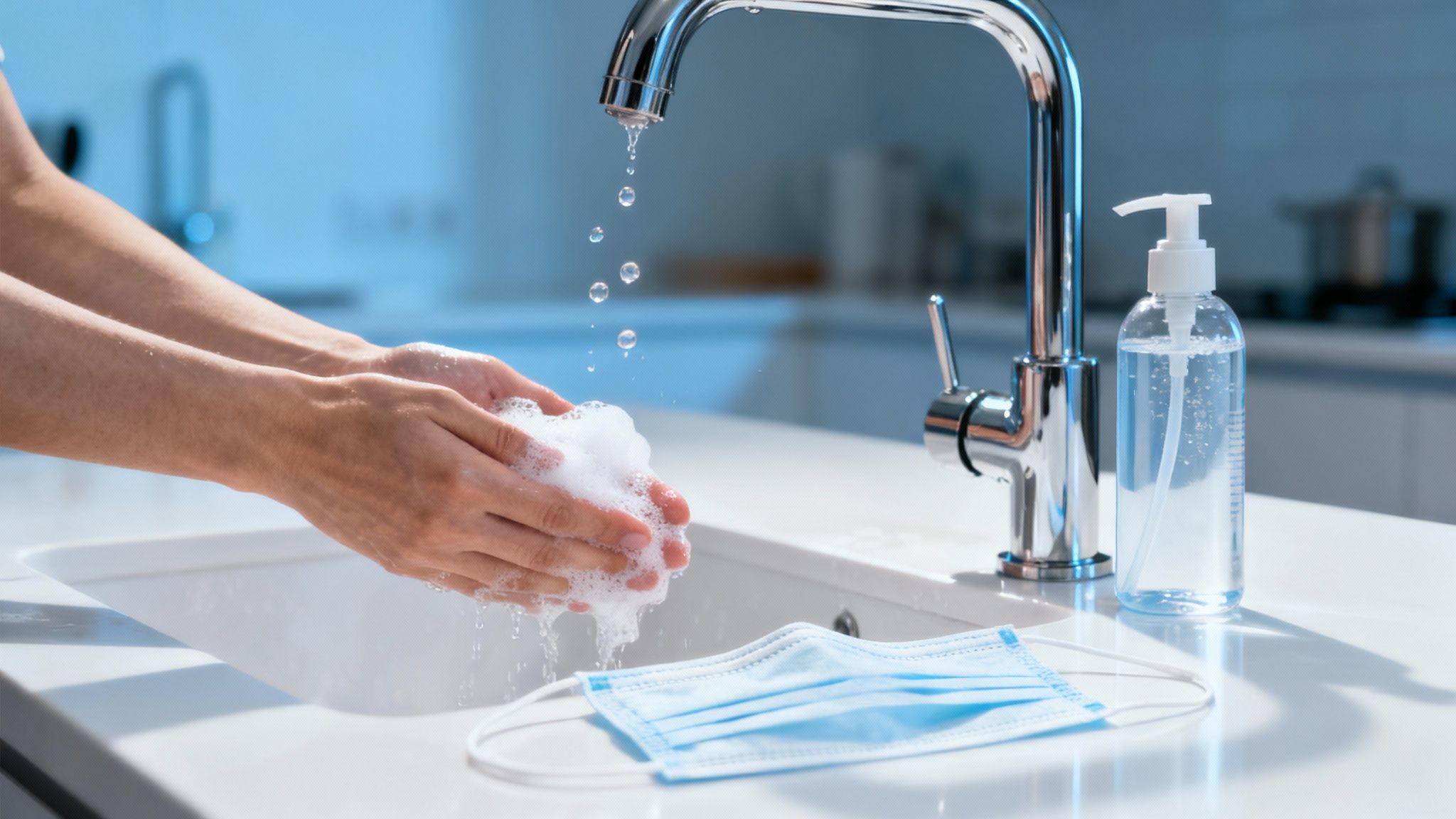
When it comes to preventing viral infections, it's not about complex medical interventions. It's about building a solid defense through simple, consistent habits that act as a barrier between you and the pathogens trying to get in.
The two most powerful tools in your arsenal are meticulous hand hygiene and proper surface disinfection. Master these, and you've already won half the battle against viruses like Human Immunodeficiency Virus Type 1 (HIV-1), Influenza A Virus (H1N1), and SARS-Related Coronavirus 2 (SARS-CoV-2).
Your Everyday Guide to Virus Prevention

Stopping viruses before they even have a chance to start is your best strategy for staying healthy. This isn't about high-tech solutions; it's about embedding smart, defensive actions into your daily life.
Think of it as interrupting the travel plans of viruses like Influenza A (H1N1) or the common Rhinovirus. These actions block the primary routes they use to get from one person to another or from a contaminated surface to you.
The Critical Role of Hand Hygiene
Your hands are the ultimate germ taxis. Throughout the day, you touch countless surfaces—doorknobs, your phone, elevator buttons—all of which could be harboring viruses. Without realizing it, you can easily transfer those pathogens to your face, giving them a direct entry point into your body.
Washing your hands with soap and water isn't just a quick rinse. It’s a mechanical and chemical takedown of germs. The soap molecules are brilliant at trapping and lifting away dirt, grease, and microbes, including tough viruses like SARS-CoV-2 and Herpes Simplex Virus 1 (HSV-1). The friction you create by scrubbing for at least 20 seconds physically dislodges them, and the running water washes them down the drain for good.
What if there's no sink in sight? An alcohol-based hand sanitizer with at least 60% alcohol is a solid backup. It works by destroying the proteins that make up the virus, essentially neutralizing the threat on the spot.
This simple practice is so fundamental that its rigorous application in healthcare settings is proven to dramatically cut down on health care-associated infections (HAIs). These infections are a huge threat in hospitals worldwide, leading to poor patient outcomes and fueling antimicrobial resistance.
In fact, the World Health Organization estimates that robust investments in infection prevention and control could slash the rate of HAIs by as much as 70%. It’s a straightforward act of hygiene that saves lives on a global scale.
To give you a clearer picture, here’s a quick summary of the most effective strategies you can use every day.
Effective Virus Prevention Strategies at a Glance
| Strategy | How It Works | Effective Against |
|---|---|---|
| Handwashing | Soap and water mechanically remove germs from the skin after at least 20 seconds of scrubbing. | Influenza A Virus (H1N1), Rhinovirus, SARS-CoV-2, Norovirus |
| Hand Sanitizer | Alcohol (at least 60%) denatures viral proteins, neutralizing them on contact. | Influenza, SARS-CoV-2, most common cold viruses |
| Respiratory Etiquette | Covering coughs/sneezes contains infectious droplets, preventing airborne transmission. | All respiratory viruses (Influenza, RSV, Human Coronavirus) |
| Surface Disinfection | Chemical agents in disinfecting wipes kill viruses on high-touch surfaces like doorknobs and phones. | Norovirus (Norwalk Virus), Influenza A, Herpes Simplex Virus 1 (HSV-1), Feline Calicivirus |
| Staying Home When Sick | Limits exposure to others, breaking the chain of community transmission. | All contagious viral illnesses |
These actions, when practiced consistently, form a powerful, multi-layered defense against common viral threats.
Mastering Respiratory Etiquette
Just as crucial as clean hands is controlling the germs you breathe out. When you cough or sneeze, you launch a spray of tiny respiratory droplets that can carry viruses. These particles can travel several feet and easily infect anyone who breathes them in.
Good respiratory etiquette is more than just good manners; it's a critical public health measure. Here's what it looks like in practice:
- Cover your mouth and nose with a tissue whenever you cough or sneeze. Then, get rid of the tissue right away.
- No tissue? Cough or sneeze into your upper sleeve or elbow, not your hands. This keeps your hands from becoming contaminated and spreading germs to every surface you touch.
- Always wash your hands after coughing, sneezing, or blowing your nose to clean off any lingering germs.
Making these actions a reflex helps break the chain of transmission. It protects everyone around you, especially those who are most vulnerable to getting seriously ill.
How Vaccines Prepare Your Immune System
Vaccines are one of the cornerstones of modern medicine and a game-changer for preventing viral infections. The best way to think about a vaccine is as a training camp for your immune system. It teaches your body to spot and destroy dangerous viruses like Influenza A Virus (H1N1), Hepatitis B Virus (HBV), or Human Rotavirus before they have a chance to make you seriously sick.
So, how does it work? A vaccine introduces a safe, harmless piece of a virus into your body. This could be a weakened or inactivated version of the virus, or in some cases, just a single signature protein that acts as a red flag. Your immune system immediately recognizes this piece as an invader and gets to work, building a powerful defense force of antibodies and memory cells tailored to fight that specific virus.
This "training session" is what gives you the upper hand. If you encounter the real, live virus later, your immune system isn't caught off guard. It recognizes the threat instantly and unleashes a fast, overwhelming response, often wiping out the infection before you even develop symptoms.
The Power of Immunological Memory
The real magic behind vaccination is something called immunological memory. After that first training run, specialized memory B and T cells stick around, patrolling your body for months, years, or even a lifetime. Think of them as veteran soldiers who know the enemy's playbook inside and out.
This is why vaccines are so incredibly effective. You get all the benefits of learning how to defeat a dangerous virus without having to suffer through the actual illness. The measles vaccine, for example, gives you robust protection without the life-threatening risks of pneumonia or encephalitis that a natural infection can bring.
By preparing your body in advance, vaccines give you a significant advantage. Instead of being caught off guard, your immune system is primed and ready, turning a potentially severe illness into a minor skirmish.
This proactive strategy has a long history of success. For decades, vaccination and public health measures have been our primary tools for preventing viral infections, leading to massive reductions in disease across the globe. The smallpox vaccine, for instance, led to the total eradication of the disease by 1980—a monumental achievement in public health.
Understanding Vaccine Efficacy
When you read about vaccines, you'll often come across the term efficacy. This is a specific measurement from controlled clinical trials that shows how well a vaccine prevents disease in the vaccinated group compared to an unvaccinated (placebo) group. A high efficacy rate is great news—it means the vaccine works very well under ideal conditions.
It's also helpful to know the difference between efficacy and effectiveness. Effectiveness measures how well the vaccine performs out in the real world, where things like age, underlying health conditions, and new virus variants can come into play.
There are a few different ways vaccines are made:
- Traditional Vaccines: These use a weakened (attenuated) or killed (inactivated) form of the actual virus. Classic examples include the measles, mumps, and rubella (MMR) vaccine and the polio vaccine.
- mRNA Vaccines: This newer technology gives your cells a set of instructions to create a harmless piece of a viral protein. Your immune system then learns to recognize that protein, all without ever being exposed to the virus itself. Some of the SARS-CoV-2 vaccines work this way.
Both methods have the same goal: to train your immune system to defend you. To dive deeper into these concepts, you can learn more about what vaccine efficacy means in our detailed guide. Keeping up with recommended immunizations is one of the most powerful things you can do to protect yourself and the people around you.
Creating a Healthier Home and Workspace
It’s easy to focus on handwashing, but what about the surfaces we touch all day long? Viruses can stick around on doorknobs, keyboards, and countertops for hours—sometimes even days. Turning your home and workspace into a healthier environment means understanding a key difference: cleaning vs. disinfecting.
Cleaning is about physically wiping away dirt and germs. It’s a great first step. But disinfecting is what actually kills the lingering pathogens. To truly break the chain of infection, you need to do both, and using a quality disinfecting wipe is the most efficient way to achieve this.
Targeting High-Touch Hotspots
Take a second and think about all the things you and everyone around you touch without even realizing it. Those are your high-touch hotspots, and they need the most attention.
In any home or office, the usual suspects are:
- Doorknobs and light switches
- Keyboards, mice, and remote controls
- Countertops and shared desks
- Faucets and toilet handles
- Refrigerator and microwave doors
These spots are magnets for viruses, from the common cold Rhinovirus Type 14 to the notoriously tough Norovirus (Norwalk Virus). Getting into the habit of wiping these areas down regularly with a disinfecting wipe is one of the simplest and most effective things you can do to stay healthy.
A critical factor in your strategy is the type of virus you're up against. Enveloped viruses, like Herpes Simplex Virus 2 (HSV-2) and Hepatitis C Virus (HCV), have a fragile outer layer that is easily destroyed. Non-enveloped viruses, such as Human Rotavirus and Rhinovirus, are much tougher and require stronger disinfecting agents to be eliminated effectively.
This is exactly why you can’t just grab any old cleaner. Using quality disinfecting wipes formulated to kill a wide range of viruses, from large non-enveloped viruses to small non-enveloped viruses, is non-negotiable for keeping a space truly hygienic.
The decision tree below shows just how much personal choices, like vaccination and diligent disinfection, fit into the bigger picture of protecting yourself and others.

As the visual makes clear, getting vaccinated and maintaining a disinfected environment puts you in a much safer category, while skipping these steps leaves you far more vulnerable to infection.
Improving Your Indoor Environment
Your efforts shouldn't stop at surfaces. The air you breathe matters, too. There are many proven methods for indoor air quality improvement that can seriously cut down on the spread of airborne viruses.
Even simple things, like cracking a window to increase ventilation or running an air purifier with a HEPA filter, can make a huge difference. They work by diluting the concentration of viral particles floating in the air.
When you combine a commitment to disinfecting surfaces with cleaner air, you create a powerful, multi-layered defense system against illness.
Strengthening Your Body's Natural Defenses

While washing your hands and disinfecting surfaces are your first line of defense, your own immune system is the ultimate internal security guard. Building a resilient immune response isn't about quick fixes or "boosting" it overnight. It’s about consistently giving your body the resources it needs to perform at its peak.
Think of it this way: your daily habits are what stand between you and viruses like the common cold Rhinovirus Type 39 or more serious pathogens like Hepatitis B Virus (HBV). Everything from what you eat to how well you sleep directly impacts how effectively your body can identify and neutralize these invaders.
Fueling Your Immune Army
The food you eat literally provides the building blocks for every single immune cell in your body. Certain vitamins and minerals are particularly crucial for keeping your defenses sharp and ready for action. Without them, your immune response can get sluggish, leaving you vulnerable.
Making a conscious effort to include these key nutrients in your diet is one of the most practical things you can do to prevent viral infections.
- Vitamin C: Found in citrus fruits, bell peppers, and broccoli, this antioxidant helps encourage the production of white blood cells—the soldiers of your immune system.
- Vitamin D: Often called the "sunshine vitamin," it plays a critical role in keeping your immune response balanced and effective. You can find it in fatty fish and fortified foods.
- Zinc: This mineral, found in lean meats, beans, and nuts, is essential for immune cell development and communication. Even a minor deficiency can seriously impair your body's ability to fend off germs.
A healthy gut is also increasingly recognized as a cornerstone of strong immunity. Understanding the role of probiotics for immunity can add another powerful layer to your defense strategy.
Remember, the goal is long-term, consistent support. No single food or supplement can offer instant protection. A well-nourished immune system is the result of sustained healthy eating habits.
The Non-Negotiable Role of Sleep
You might think of sleep as downtime, but it’s when your body does its most important repair and reinforcement work. During deep sleep, your immune system releases proteins called cytokines. Some of these are critical for fighting infection and inflammation.
When you're chronically sleep-deprived, your body produces fewer of these protective cytokines and infection-fighting antibodies. Studies have shown that people who don't get quality sleep are far more likely to get sick after being exposed to a virus.
Aiming for 7-9 hours of quality sleep per night isn’t a luxury—it’s a core component of your defense strategy.
Managing Stress to Protect Immunity
Persistent stress is a major saboteur of immune function. When you're constantly stressed, your body pumps out high levels of the hormone cortisol. Over time, elevated cortisol can suppress your immune system by lowering the number of disease-fighting cells called lymphocytes.
This is why incorporating stress-management techniques into your daily routine is so important. Practices like mindfulness, light exercise, or even just spending a few minutes in nature can have a measurable impact on your body's ability to fight off illness.
To learn more about building a robust defense, explore our complete guide on ways to strengthen your immune system.
Keeping an Eye on Global Threats and Future Outbreaks
While what you do at home is a huge part of the puzzle, preventing viral infections isn’t just about individual actions. It’s part of a massive, interconnected global health strategy. Your daily habits protect you and those around you, but public health organizations like the World Health Organization (WHO) and the Centers for Disease Control and Prevention (CDC) are fighting the same battle on a global scale. Their job is to spot and neutralize viral threats before they have a chance to explode.
Think of this global surveillance network as the planet's early warning system. Teams of scientists and data analysts are on the clock 24/7, pulling in information from hospitals, clinics, and labs all over the world. They’re looking for anything out of the ordinary—unusual patterns, or the first signs of new pathogens like novel strains of Avian Influenza Virus (H5N1) or new coronaviruses like Human Coronavirus. The sooner they spot it, the better.
How Technology Helps Hunt Down Pathogens
Modern tech has completely changed the game for disease tracking. Sophisticated data analytics and machine learning algorithms can now chew through gigantic datasets to pinpoint potential hot spots for viral activity. This gives health organizations a massive advantage, allowing them to predict where an outbreak might pop up and get resources there ahead of time, instead of just reacting after the fact.
Genetic sequencing, for instance, lets scientists rapidly identify a new virus, such as Duck Hepatitis B Virus (DHBV) or Bovine Viral Diarrhea Virus (BVDV), and watch how it changes as it spreads. This is absolutely critical for developing the right diagnostic tests, treatments, and vaccines. It helps them answer the big questions that shape every public health response:
- How does this thing actually get from person to person?
- How fast is it moving through the population?
- Is it getting more dangerous or less severe over time?
This is where the macro and micro levels connect. When you practice good hygiene, use disinfecting wipes, or stay home when you're sick, you're slowing down the virus locally. That slowdown buys precious time for global health systems to get their act together and mount a bigger, more coordinated response.
Mapping and Tackling Global Hot Spots
This kind of global surveillance and quick detection is our best shot at keeping viral outbreaks in check. A deep dive into public health events between 1996 and 2022 found over 2,200 incidents involving 70 different infectious diseases across 233 countries. That data showed that certain regions in Africa, America, and Asia are often ground zero for epidemic-prone diseases.
Take avian influenza A(H5N1), for example. It's caused over 890 human infections since 1997, and our ability to contain it hinges entirely on early detection in both animal and human populations. You can see exactly how the CDC tracks H5N1 cases and prepares for potential threats to get a sense of how complex this work is.
When you see the scale of this global defense network, it really drives home that every single action counts. Your commitment to preventing infections isn't just about protecting yourself—it's a direct contribution to a collective shield that protects communities everywhere.
Answering Your Top Virus Prevention Questions
When it comes to staying healthy, a little bit of knowledge goes a long way. People often have the same handful of questions about what really works and what doesn't.
Let's clear up some of the most common ones we hear, so you can feel confident in your prevention strategy.
Do Disinfectant Wipes Actually Work on Surfaces?
They absolutely do, and they are a critical tool for preventing viral infections. Many of the viruses that make us sick, like Influenza A2/305/57 Virus (H2N2) and the Rhinoviruses behind the common cold, can hang around on surfaces for hours. That turns everyday things like your phone, keyboard, or the breakroom doorknob into a potential hotspot for germs.
Grabbing an effective disinfectant wipe and giving these high-touch spots a quick clean kills those pathogens before they can cause trouble. It’s a simple move that breaks a key link in the chain of infection, stopping a virus from getting from a surface, to your hands, and then to your face. Think of it as a non-negotiable part of your defense plan.
Viruses don't just travel through the air. Contaminated surfaces are a huge part of how they spread through a community. A quick, targeted wipe-down neutralizes that threat on the spot.
Are Some Viruses Tougher to Get Rid of Than Others?
Yes, there's a big difference in how stubborn certain viruses can be. From a cleaning perspective, we often split them into two groups: enveloped and non-enveloped.
Enveloped viruses, like SARS-CoV-2 (the virus that causes COVID-19) or Herpes Simplex Virus 2 (HSV-2), are covered in a fragile, fatty outer layer. This "envelope" is their weak spot—it's easily broken down by soap, alcohol, and most common disinfectants found in quality wipes. This makes them relatively simple to kill.
On the other hand, non-enveloped viruses like Norovirus (Norwalk Virus) and Human Rotavirus are built like tiny tanks. They don't have that delicate outer layer, making them much more resilient. They can survive drying out and are tougher against many disinfectants. That’s why you must be extra diligent with handwashing and use disinfecting wipes proven to kill these hardier germs to avoid getting sick.
How Many Times a Day Should I Be Washing My Hands?
Instead of aiming for a specific number, it’s much more effective to focus on when you wash them. Building a habit around the most critical moments is what really makes a difference.
Make a point to wash your hands thoroughly:
- Before you start cooking or sit down to eat
- After you use the restroom
- After coughing, sneezing, or blowing your nose
- After you’ve been out touching public surfaces like doorknobs, handrails, or elevator buttons
- After taking care of someone who’s sick
The gold standard is a good scrub with soap and water for at least 20 seconds. When you can't get to a sink, an alcohol-based hand sanitizer is a good backup, but for surfaces, nothing beats the targeted application of a disinfecting wipe.
Can I "Boost" My Immune System If I Feel a Cold Coming On?
The idea that you can instantly supercharge your immune system overnight is, unfortunately, a myth. A strong, ready-to-fight immune system isn't something you can build in a day—it's the result of consistent, healthy habits over time.
While nutrients like Vitamin C and Zinc are definitely important for your immune system to function properly, no single supplement is going to act like an on-demand shield. Your best defense is a long-term one: a balanced diet, getting enough sleep, keeping stress in check, and most importantly, preventing exposure in the first place through diligent handwashing and regular use of disinfecting wipes. Those are the fundamentals that keep your body's natural defenses primed and ready for action.
Leave a Reply