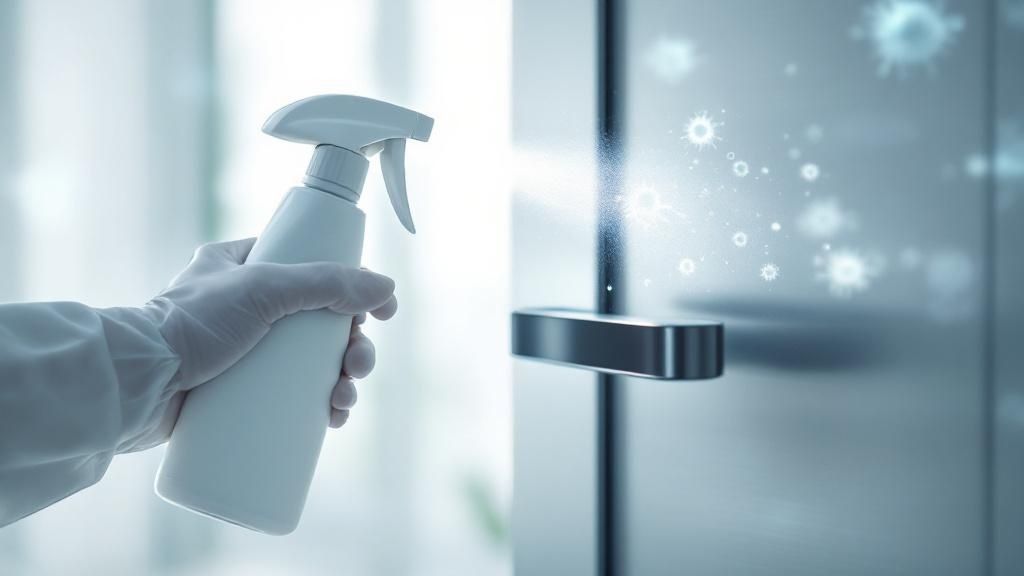
When we say something is germicidal, we're talking about its power to kill germs. But "germs" is a broad term that covers all sorts of microscopic troublemakers, including bacteria, fungi, and especially viruses.
Think of it this way: wiping down a counter is basic cleaning. Using a germicidal product is more like calling in a special forces team to hunt down and eliminate invisible threats hiding on that surface—threats like Influenza, SARS-CoV-2, or Norovirus.
Understanding the Power of Germicidal Action

Here’s the key difference you need to know. When a product is truly germicidal, it’s designed to destroy microorganisms, not just push them around or slightly reduce their numbers. This separates real disinfection from everyday cleaning or even sanitizing.
Cleaning gets rid of visible dirt and some germs. Sanitizing lowers the number of germs to what's considered a safe level. But a germicidal agent goes for a total takedown of a broad spectrum of pathogens.
This is absolutely crucial for stopping dangerous viruses in their tracks. Whether it's the Rhinovirus that gives you a common cold or tougher opponents like Influenza A (H1N1) and SARS-CoV-2, breaking the chain of transmission starts with effective disinfection. A germicidal product, like a disinfecting wipe, actively dismantles these threats before they can find a new person to infect.
The Science of Killing Germs
Germicidal technology isn't just about splashing harsh chemicals everywhere. It’s a whole field of methods engineered to take out different types of pathogens, from large enveloped viruses like Herpes Simplex Virus 1 (HSV-1) to small non-enveloped viruses like Rhinovirus. The main goal is to use an agent—either a chemical or a physical force—that fatally damages the microorganism.
- Chemical Agents: These are the workhorses in disinfecting sprays and wipes. They get the job done by breaking down the protective outer layers of germs or scrambling their internal parts.
- Physical Methods: This category uses energy to destroy microbes. The most well-known example is ultraviolet (UV) light, which zaps a germ's genetic code, making it impossible for it to replicate.
A key concept to grasp is that "germicidal" refers to a proven ability to kill. This isn't just marketing fluff; it's a performance standard. It means a product is verified to reliably wipe out harmful pathogens from an environment.
This kind of technology has been a game-changer for public health. Using things like ultraviolet (UV) light and powerful chemical agents to kill or deactivate microbes has been a recognized practice since the early 20th century.
Its importance really hit home during major infectious disease outbreaks, especially the COVID-19 pandemic, when the need for non-contact disinfection methods went through the roof. If you're interested, you can explore more about this market evolution and its drivers.
How Germicidal Products Destroy Viruses
When a virus comes up against a germicidal agent, it’s a one-sided fight the virus is guaranteed to lose. But how exactly does this takedown happen? Essentially, germicidal products rely on two main strategies to permanently neutralize viral threats: chemical sabotage and physical disruption.
Strategy 1: Chemical Warfare
The first approach is all about chemical warfare. This is the method behind powerful agents in disinfecting wipes and sprays. Think of these chemicals as saboteurs designed to attack a virus’s most critical weak points.
For enveloped viruses like Influenza A (H1N1), Hepatitis C Virus (HCV), or SARS-CoV-2, these chemicals go after their protective outer fatty layer. They dissolve this membrane, causing the entire virus to literally fall apart. For other types of viruses, the chemicals work by dismantling essential proteins, effectively collapsing the pathogen from the inside out. This makes chemical solutions like wipes an ideal first line of defense.
Strategy 2: Brute Physical Force
The second strategy uses physical force instead of chemicals. This approach relies on pure energy to obliterate the virus, and the most common example is Ultraviolet-C (UV-C) light. It acts like a genetic code scrambler.
By blasting a virus with UV-C radiation, its genetic blueprint—its DNA or RNA—is damaged beyond repair. This corruption makes it impossible for the virus to replicate, stopping the infection cycle cold.
This method is incredibly effective against a huge range of pathogens, from common enveloped viruses to much tougher non-enveloped ones like Norovirus or Human Rotavirus.
This image shows how UV-C light, a powerful physical germicidal method, can be used to disinfect surfaces in a modern laboratory.

The image highlights the clean, precise nature of UV disinfection, a technology that gets the job done without leaving any chemical residue behind.
Two Primary Germicidal Mechanisms
To break it down even further, here's a quick comparison of the two main ways germicidal agents get the job done. One method is like a demolition crew, while the other is more like a saboteur stopping the enemy's production lines.
| Mechanism Type | How It Works | Targeted Viruses |
|---|---|---|
| Chemical Disruption | Active ingredients in products like disinfecting wipes dissolve the virus's outer envelope or break down its essential proteins, causing it to disintegrate. | Effective against both enveloped (e.g., Influenza, SARS-CoV-2, HIV-1) and many non-enveloped viruses (e.g., Rhinovirus). |
| Physical Inactivation | Energy, like UV-C light, penetrates the virus and damages its DNA or RNA, preventing it from making copies of itself. | Broad-spectrum, effective against most viruses, including tough ones like Norovirus and Human Rotavirus, as well as bacteria and spores. |
Both of these mechanisms are crucial for stopping viruses in their tracks. One tears the virus apart piece by piece, while the other stops it from ever making more copies of itself.
Low-pressure UV germicidal lamps are a cornerstone of this physical technology. They are specifically engineered to pump out potent UV-C light that neutralizes microorganisms in water, air, and on surfaces. In fact, the U.S. Environmental Protection Agency confirms that UV disinfection can achieve a reduction of over 99.9% in bacteria and viruses in treated water, proving just how reliable it is.
Both chemical and physical methods are foundational to protecting public health. Understanding how they work is a critical first step, and you can learn more about how to prevent viral infections by building on this knowledge.
Choosing Your Germ-Fighting Tools

Alright, so you know what germicidal action is. Now for the practical part: picking the right tool for the job. Your options generally boil down to two main camps—the convenient chemical solutions you use every day and the heavy-hitting physical methods for bigger jobs.
Most of us are already familiar with chemical germicides. Think of the disinfecting wipes and sprays you grab to tackle high-touch surfaces. They’re quick, effective, and get their virus-killing power from a few key active ingredients.
- Quaternary Ammonium Compounds (“Quats”): You'll find these in tons of household disinfectants and wipes. They’re fantastic at dismantling the outer shell of enveloped viruses like the flu (H1N1, H5N1), many coronaviruses, and Hepatitis B Virus (HBV).
- Alcohol (Isopropyl or Ethanol): Any solution with at least 70% alcohol is a powerhouse. It works by destroying the proteins that viruses need to function and infect our cells.
These products are your frontline defense for doorknobs, countertops, phones, and keyboards. They deliver immediate, targeted protection right where you need it most, making germicidal wipes a must-have for daily virus prevention.
Physical Disinfection Methods
When you need to go bigger—like disinfecting the air in a room or sanitizing large areas—physical methods step up. The most well-known is Ultraviolet Germicidal Irradiation (UVGI), which uses a specific wavelength of UV light (UV-C) to shut down pathogens.
This isn’t something you use like a disinfecting wipe. Instead, it’s a technology built into systems designed for broad, automated disinfection.
UVGI works by scrambling the genetic material (the DNA or RNA) of microorganisms, including viruses like SARS-CoV-2 and Human Rotavirus. This damage stops them from being able to replicate, effectively neutralizing the threat without any chemicals.
You’ll see UVGI technology working behind the scenes in places like:
- Air purifiers for homes and offices
- Water treatment facilities
- Upper-room fixtures in hospitals and public buildings
- Sterilization equipment for medical instruments
These systems are absolutely vital in settings where keeping airborne or waterborne pathogens under control is a top priority. They’re a huge part of comprehensive strategies for hospital-acquired infection prevention, providing a constant, silent layer of germ-killing defense.
Where Germicidal Action Makes a Real-World Difference
The science behind germicidal action isn't just something you'd find in a lab report; it's a silent force working all around us, every single day. You see its biggest impact in high-stakes environments like hospitals, which are on the front lines of infection control. Here, germicidal solutions are essential for disinfecting everything from surgical tools to patient rooms, stopping dangerous pathogens like Hepatitis B Virus (HBV) and Herpes Simplex Virus 1 (HSV-1) in their tracks.
But this protective power extends far beyond clinical settings and into our homes and offices. Think about the disinfecting wipes you grab to clean your kitchen counter after handling raw meat. Or the ones you use to wipe down your keyboard during flu season. Each swipe delivers a targeted dose of germ-killing power that prevents viruses like Rhinovirus or Influenza from spreading from one person to the next.
Protecting the Spaces We Share
This invisible shield is especially vital in public spaces where germs can travel fast. Germicidal agents are constantly at work in places like:
- Public Transportation: Wiping down seats, poles, and handrails on buses and trains helps cut down the transmission of highly contagious viruses like Norovirus and SARS-CoV-2.
- Food Service: Restaurants and food processing plants depend on these cleaners to stop foodborne illnesses by eliminating bacteria and viruses from surfaces.
- Schools and Daycares: Regular disinfection of toys, desks, and common areas with germicidal wipes is key to protecting children from pathogens like Human Rotavirus and Rhinovirus.
Our heavy reliance on these products has fueled some serious market growth. In fact, the germicidal wipe market has expanded rapidly worldwide, with North America alone making up over one-third of the market revenue in 2022. This boom reflects a deep public trust in products that, to meet EPA regulations, must prove they can kill 99.9% of germs. You can dive deeper into the data by exploring the germicidal wipe market's growth and importance.
Once you understand where and how these products are used, you gain a new appreciation for the quiet work they do. Keeping germicidal wipes or sprays handy is a simple but incredibly powerful way to do your part in protecting public health.
Using Germicidal Products Safely and Effectively
A germicidal product is a powerful tool, but like any tool, it only works if you use it correctly. If you don't follow the rules, you might as well be using plain water. To get the full germ-killing power without putting yourself at risk, there are a few non-negotiable guidelines you need to know.
The single most important concept here is dwell time. This is the specific amount of time a disinfectant must stay visibly wet on a surface to kill the germs it promises to. If a product label says it has a 4-minute dwell time for Influenza A but the surface dries in 30 seconds, you haven't actually disinfected it. Always, always read and follow the label instructions to the letter.
Essential Safety Practices
Beyond dwell time, using these products responsibly is about protecting yourself while ensuring the disinfectant can do its job. Skipping these steps can lead to ineffective cleaning or, worse, create a health hazard.
- Ensure Good Ventilation: When you're using sprays or chemicals with strong fumes, open a window or turn on a fan. Good airflow is critical to keep you from breathing in concentrated vapors.
- Wear Protective Gloves: Many chemical germicides can be harsh on your skin, causing irritation or dryness. A simple pair of disposable gloves is an easy way to prevent direct contact and keep your hands safe.
- Never Mix Chemicals: This is a huge one. Mixing different cleaning products, especially anything containing bleach and ammonia, can create toxic gases. Stick to one product at a time, just as the directions tell you.
For physical methods like UV-C systems, safety is often built-in, but that doesn't mean you can ignore it. Direct exposure to UV-C light is dangerous for your skin and eyes. That’s why these systems are designed for empty rooms or enclosed inside devices like air purifiers, preventing any direct human contact.
Following these simple tips is fundamental for effective disinfection, especially in places where stopping the spread of infection is the top priority. It's a key part of how to prevent nosocomial infections in healthcare facilities and a smart habit for any home.
Common Questions About Germicidal Action
We've covered the what, how, and why behind germicidal action. Now, let's tackle some of the most common questions that arise when choosing and using these products.
What’s the Difference Between Antibacterial, Sanitizing, and Germicidal?
It helps to think of germ-killing power on a scale. Not all products are created equal, and knowing the difference is key to getting the protection you actually need against a range of pathogens.
- Antibacterial: This is the most specific level. As the name implies, these products are only proven effective against bacteria. They make no claims against viruses or fungi.
- Sanitizing: This is the next step up. A sanitizer's job is to reduce the total number of germs—bacteria and sometimes specific, easier-to-kill viruses—on a surface to a level that public health standards consider safe. This typically means a 99.9% reduction.
- Germicidal (or Disinfectant): This is the top tier. A germicidal product is a true disinfectant, engineered to kill or inactivate a wide spectrum of microorganisms. It must pass rigorous EPA testing to prove it can eliminate specific bacteria, tough viruses like Influenza, Norovirus, and SARS-CoV-2, and sometimes fungi.
When you choose a germicidal product like a disinfecting wipe, you're selecting a tool that’s been verified to take out the broadest range of microscopic threats.
A lot of people get tripped up by the word "natural." While some natural ingredients can be effective germicides, the only way to know for sure is to look for an official EPA registration number on the label. That number is your proof that it’s passed the necessary scientific tests.
Are Natural Germicidal Products Actually Effective?
Some absolutely are—but you have to know what to look for. Ingredients like thymol (from thyme oil) and citric acid are recognized by the EPA as legitimate active ingredients in registered disinfectants. They have proven germicidal muscle against a whole host of pathogens.
The problem is, "natural" on its own is just marketing jargon, not a scientific seal of approval. The real proof is the EPA registration number on the product. That number tells you the product has been tested and is legally allowed to claim it kills the germs listed on its label. Without it, you have no verified proof of its efficacy against viruses like Human Coronavirus or Rhinovirus.
How Long Does a Germicidal Wipe Need to Work?
This is probably the single most important—and most often ignored—step in disinfecting. It’s called “dwell time,” or sometimes “contact time.”
Simply put, it’s how long a surface has to stay visibly wet with the disinfectant for it to kill everything it promises to. This isn't just a suggestion; it's a requirement for the product to work.
Dwell time can be anywhere from 30 seconds to 10 minutes, depending on the wipe’s formula and the specific germ you’re trying to kill. If you wipe a counter and it dries in a minute, but the label says it needs a five-minute dwell time to kill SARS-CoV-2, you didn't actually disinfect for that virus. You just cleaned the surface. For true germicidal action, the surface must stay wet for the full time listed on the label.
Leave a Reply