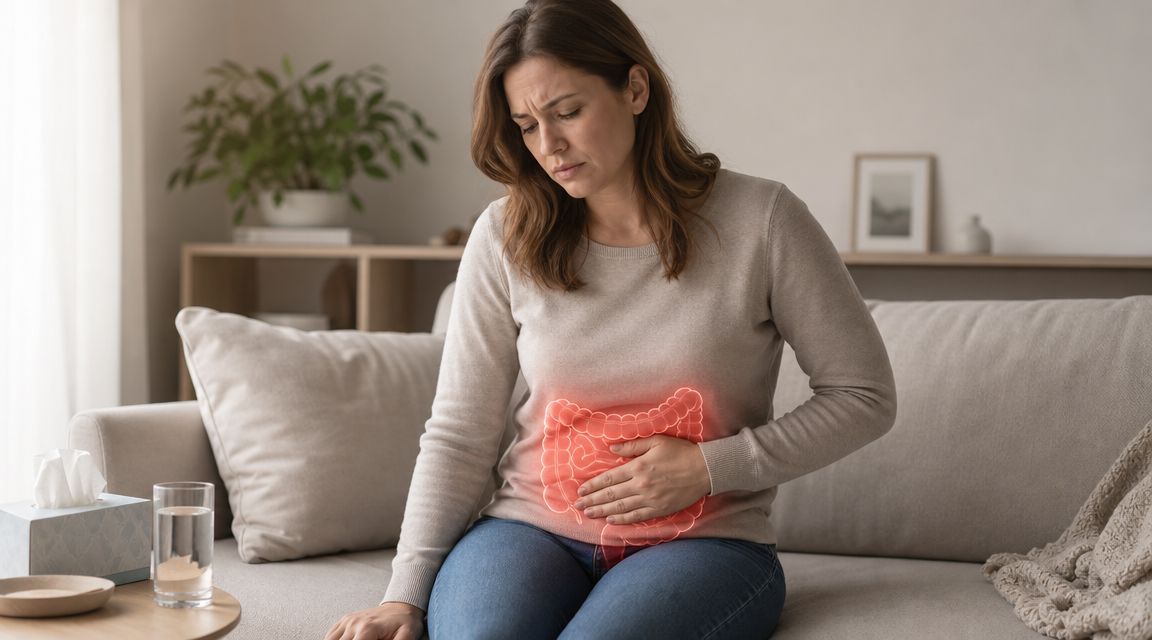
You're finally past the vomiting and nonstop bathroom trips. You can drink again, maybe even eat a little toast or soup. But your stomach still hurts, and that lingering cramp can make you wonder whether the virus is really gone or whether something else is wrong.
That question is common. Abdominal pain after stomach flu often falls into a gray zone between normal recovery and a sign that you need medical care. The tricky part is that both can start the same way. A gut that's healing can stay tender for a short time, but pain that keeps going, gets worse, or comes with warning signs needs a closer look.
The Virus Is Gone but the Pain Is Not

If your diarrhea or vomiting has eased but your belly still feels sore, crampy, or unsettled, that doesn't automatically mean the infection is still raging. In many cases, the pain is part of the same illness and reflects the gut's recovery after viral gastroenteritis.
A lot of people call this “stomach flu,” even though it isn't influenza. It's an intestinal infection that commonly causes abdominal cramps and pain, along with watery diarrhea, nausea, and vomiting. One of the most common causes is norovirus, which accounts for an estimated 50% of stomach flu cases worldwide in adults, and in the United States it's estimated to cause 19 to 21 million illnesses each year according to Cleveland Clinic's overview of stomach flu.
Why the ache can linger
Your intestines have just been through an inflammatory hit. Even when the worst symptoms stop, the gut lining may still be irritated, and the nerves that sense stretching and movement may stay more reactive than usual for a while. That can leave you with:
- Cramping after meals that feels worse when your intestines start moving again
- A dull sore feeling around the middle of the abdomen
- Bloating and gurgling that can make pain come and go in waves
Practical rule: Feeling “mostly better” does not always mean your digestive tract has fully recovered.
That's why many people feel confused. They expect a clean ending to the illness, but recovery is often uneven. You may have a better appetite yet still feel discomfort after eating. You may be back at work but still need frequent fluids and bland foods.
Why this happens in households so often
These stomach viruses spread easily. Public health guidance notes that viral gastroenteritis can spread through tiny infectious particles in stool or vomit, which helps explain why one sick person can turn into several cases in a home, dorm, classroom, or care setting. Symptoms can begin within 12 to 48 hours of exposure, and the pain often feels crampy rather than sharp.
If you've had stomach pain for a long time, not just after a recent virus, it can also help to read about broader patterns in decoding chronic gut pain. That kind of context helps people separate a short-lived post-viral problem from pain that deserves a bigger workup.
Inside Your Gut The Post-Viral Battlefield

When a stomach virus hits, the gut doesn't bounce back like flipping a light switch. Recovery looks more like a neighborhood after a storm. The worst damage may be over, but cleanup takes time.
That helps explain why abdominal pain after stomach flu can continue after the vomiting and diarrhea slow down. The virus may be gone, but the tissues and nerve pathways involved in digestion may still be irritated.
Lingering irritation in the gut lining
The inside of your intestines is lined with a thin protective layer. During viral gastroenteritis, that lining becomes inflamed. Afterward, it can stay sensitive for a while.
When food, liquid, or even normal digestive gas passes through, the gut may respond with discomfort instead of ignoring it. A meal that would normally feel fine can trigger cramping because the area is still healing.
Motility gets thrown off
“Motility” means the wave-like muscle contractions that push food and fluid through your intestines. After a stomach virus, this rhythm can become uneven. Some sections may move too quickly, others too slowly.
That mismatch can lead to:
- Cramping when the bowel squeezes harder than usual
- Bloating when gas or fluid moves sluggishly
- A stop-and-start feeling where pain rises, fades, and then returns
For a broader explanation of the infection itself, this guide on what causes viral gastroenteritis gives useful background on how these viruses affect the digestive tract.
Your pain may be coming less from “ongoing infection” and more from residual irritation, altered gut movement, and recovery stress on the intestines.
The gut can become temporarily more sensitive
After an infection, the nerves in the digestive tract can act like a car alarm set too easily. Normal stretching from food or gas can feel stronger than it should. That doesn't mean the pain is imaginary. It means the gut-brain signaling system is still on high alert.
Some people also notice that foods they usually tolerate suddenly seem to bother them. That's one reason general education around understanding gut wellness can be helpful during recovery. The digestive system isn't just processing food. It's also recalibrating after an infection.
How Long Should Abdominal Pain Last
People usually want a timeline more than anything else. They can tolerate some discomfort if they know it fits a normal recovery pattern. What makes them anxious is not knowing when lingering pain stops being expected.
The most practical benchmark is this: typical viral gastroenteritis symptoms last 1 to 3 days, and pain lasting more than a few days is less typical. Pain lasting longer than 2 weeks is unlikely to be from the original virus and raises concern for another diagnosis, including a post-infectious bowel problem, according to Healthline's review of stomach pain after stomach flu.
A rough recovery timeline
Here's a simple way to think about it.
- During the first few days: Cramping, nausea, diarrhea, and stomach pain can all still fit the original viral illness.
- After the acute phase: Mild soreness or brief cramping may linger while the gut lining and bowel movement patterns settle down.
- Beyond that short recovery window: Pain becomes harder to explain as “just the virus,” especially if vomiting and diarrhea are already gone.
For a broader look at what recovery can feel like, this article on stomach virus recovery time can help set expectations.
Normal short-term recovery versus something else
Not all lingering pain means the same thing. Two common patterns can confuse people.
| Pattern | What it can feel like | Why it happens |
|---|---|---|
| Short-term post-viral recovery | Mild cramps, bloating, discomfort after eating | The gut is still healing and more sensitive than usual |
| Temporary food intolerance | Pain, gas, or loose stools after dairy, fatty foods, caffeine, or rich meals | The recovering gut may not handle certain foods well right away |
| Post-infectious bowel issue | Ongoing pain, bowel changes, or sensitivity that doesn't fade as expected | The infection may have triggered longer-lasting gut sensitivity |
A useful checkpoint: If the pain is still clearly present after several days, and especially if it keeps interfering with eating or normal activity, it's time to reassess rather than assume it's ordinary healing.
A lot of readers get tripped up here because they think the only options are “still infected” or “totally recovered.” There's a middle ground. Your body may be done fighting the virus, while your digestive system is still struggling with the aftermath.
Practical Self-Care for a Healing Gut

The most helpful home treatment is often the least exciting one. Rehydration matters because abdominal pain after stomach flu is often worsened by ongoing fluid and electrolyte losses, which can increase intestinal spasms. Clinical guidance recommends oral rehydration with small, frequent fluid intake as first-line therapy, as described by UnityPoint's home treatment advice for stomach flu.
Start with fluids, not heavy meals
If your gut is touchy, large drinks and large meals can backfire. Small amounts taken often are usually easier to tolerate.
Try these approaches:
- Sip instead of gulping: Small, repeated sips are often gentler than drinking a full glass at once.
- Use oral rehydration when needed: If you've had a lot of fluid loss, drinks designed to replace fluid and electrolytes can be easier on recovery than plain water alone.
- Watch your body's response: If cramps worsen right after drinking quickly, slow down rather than stopping fluids altogether.
Keep food simple for a few days
When appetite returns, many people rush back to coffee, takeout, fried foods, or a big restaurant meal. That often reignites pain. A healing gut usually does better with plain, easy foods at first.
A practical short list looks like this:
- Gentle starches: Rice, toast, crackers, plain noodles, oatmeal
- Simple proteins: Plain chicken, eggs if tolerated, broth-based soups
- Easy portions: Small meals spaced out through the day instead of one heavy plate
You may also notice that certain foods temporarily bother you more than usual. Dairy, caffeine, greasy foods, and spicy meals are common troublemakers during this stage.
Eat for recovery, not for appetite alone. A food that sounds good isn't always a food your gut is ready for.
Protect the rest of the household
If one person in the home recently had viral gastroenteritis, hygiene still matters. Wash hands carefully after bathroom use and before food handling. Clean bathroom surfaces, counters, sink handles, toilet areas, and other high-touch spots with an appropriate disinfecting product so you lower the chance of passing the virus around again.
That prevention step matters because stomach viruses spread easily in close-contact settings, and repeated household spread can make it feel like the “same” illness never ends.
Red Flags When to See a Doctor Immediately
Most lingering abdominal discomfort after a stomach bug is not an emergency. But some symptoms should change your decision from “keep resting at home” to “get medical care.”
The red flags are fairly clear. Severe or persistent abdominal pain, blood in stool or vomit, high fever, or signs of dehydration such as inability to keep liquids down warrant medical evaluation to rule out other causes like appendicitis or bowel obstruction, according to Mayo Clinic's viral gastroenteritis guidance.
Normal Recovery vs. Red Flag Symptoms
| Symptom Area | Normal Recovery Sign | Red Flag Warning (See a Doctor) |
|---|---|---|
| Pain pattern | Mild cramping that comes and goes | Severe pain, worsening pain, or pain that stays intense |
| Pain location | Generalized soreness or diffuse cramps | Pain focused in one spot, especially if very tender |
| Vomiting and stool | Symptoms easing overall | Blood in stool or vomit |
| Fever | No fever or improving illness | High fever |
| Hydration | Able to sip fluids and urinate | Can't keep liquids down, getting dizzy, or looking dehydrated |
| Overall course | Slow improvement | Persistent symptoms that don't fit recovery |
Dehydration deserves respect
Dehydration is one of the biggest reasons a stomach virus becomes more dangerous. It can worsen cramps and make you feel weak, shaky, or lightheaded.
Warning signs that need attention include:
- Reduced urination
- Dizziness
- Rapid heart rate
- Confusion
- No urination for 6 to 8 hours
If your pain also spreads toward the back or feels deep and unusual, this article on abdominal pain radiating to back may help you think about other causes that aren't typical post-viral cramping.
Don't judge a stomach problem by diarrhea alone. A person can stop having diarrhea and still need care because of dehydration, localized pain, or bleeding.
Diagnosis and Preventing the Next Episode

If you do see a clinician, the visit is usually less mysterious than people expect. Most of the decision-making starts with your story. Where does it hurt? Is the pain crampy or sharp? Are vomiting and diarrhea gone, or still active? Are you urinating normally? Did the pain improve and then return?
A physical exam helps narrow things down. The clinician may check for tenderness, dehydration, bloating, and whether the pain is spread out or centered in one area. The main job is often to decide whether you're dealing with a lingering post-viral issue or a different abdominal problem that needs separate treatment.
Reasons pain may continue after the acute illness
A common frustration is that the “stomach flu” seems over, but the gut still feels off. That lingering discomfort can reflect ongoing dehydration, transient lactose intolerance, or a post-infectious functional bowel issue, as discussed by NIDDK's viral gastroenteritis information.
That distinction matters because treatment changes depending on the pattern:
- If dehydration is still driving cramps, rehydration becomes the priority.
- If dairy suddenly triggers pain, a temporary lactose issue may be part of the picture.
- If the gut stays sensitive long after the infection, your clinician may think about a post-infectious bowel condition.
Prevention is part of recovery
Once you've had a miserable stomach virus, prevention stops feeling abstract. It becomes practical. You want to avoid repeating the whole cycle.
Focus on habits that interrupt spread:
- Wash hands carefully: Especially after using the bathroom and before preparing food.
- Disinfect high-touch surfaces: Bathroom fixtures, counters, doorknobs, light switches, and shared devices are easy places for contamination to linger.
- Handle food safely: Be cautious with shared food, food prep surfaces, and sick household members preparing meals.
- Stay home when actively ill: Close contact helps these viruses move quickly through families and workplaces.
Good prevention is not just about avoiding vomiting and diarrhea next time. It's also about avoiding the days of uncertainty that can follow, when the virus is over but the abdominal pain is still hanging around.
Recovery often occurs with rest, fluids, and time. But if the pain is strong, persistent, localized, or paired with bleeding, fever, or dehydration, don't wait for reassurance from the internet. Get evaluated.
If you want more plain-language guides on stomach viruses, norovirus spread, and practical prevention steps for homes and shared spaces, explore more educational articles at VirusFAQ.com.
Leave a Reply