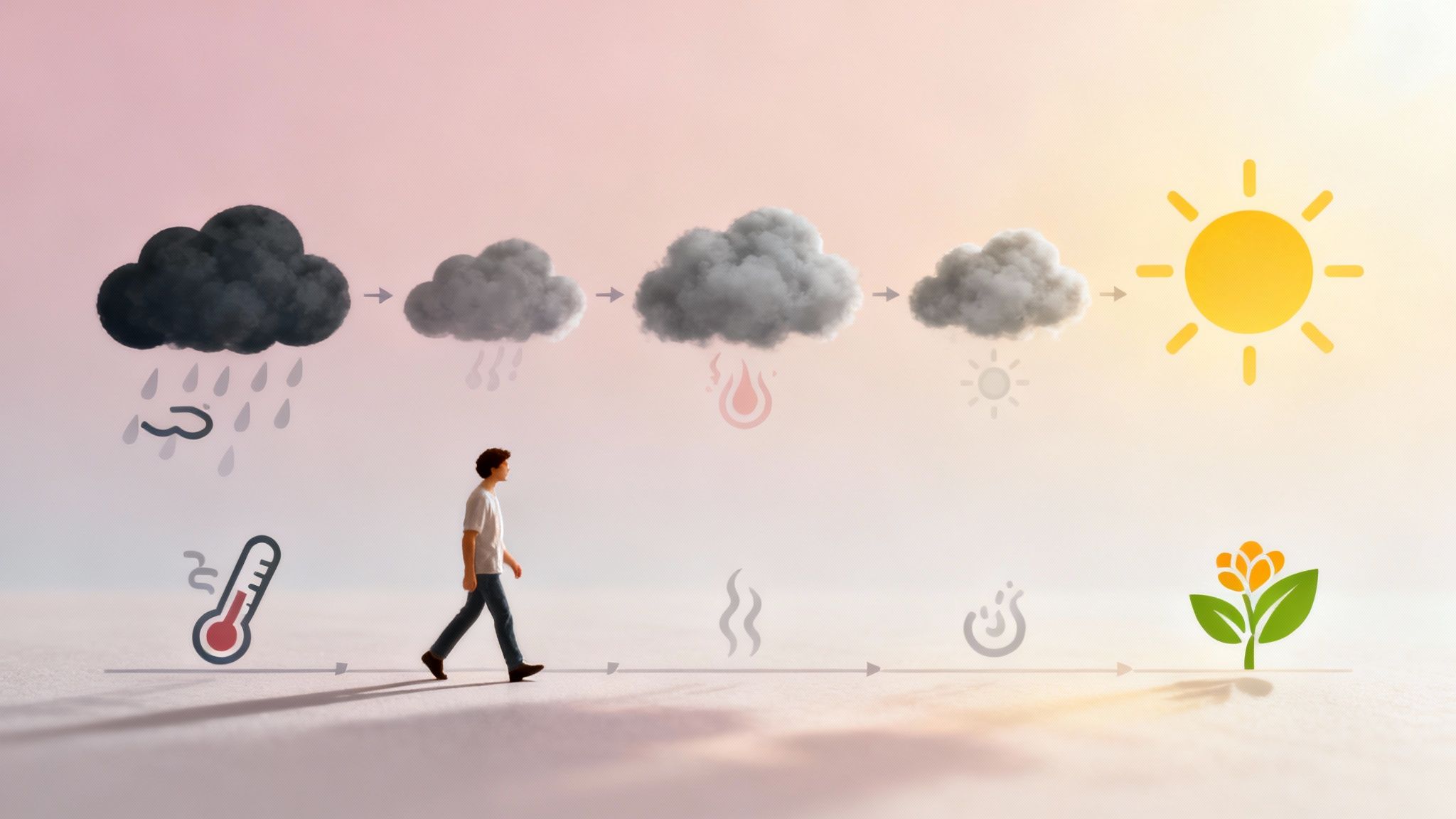
If you've ever had the flu, you know it's not a slow burn. It hits you like a ton of bricks. For most otherwise healthy people, the really miserable, can't-get-out-of-bed part of the flu lasts about 5 to 7 days.
But the flu doesn't just disappear after a week. It's common to deal with a nagging cough and a deep sense of fatigue that can stick around for another week or two. Don't be surprised if you're not quite 100% even after the fever breaks.
Your Flu Journey From Start to Finish
The flu might feel like a chaotic mess of symptoms, but it actually follows a fairly predictable path. Think of it like a storm passing through: first comes the sudden downpour, then the intense peak, and finally, the lingering clouds as it moves on.
Knowing what to expect can make the whole experience a little less daunting. The typical flu journey is often broken down into three key stages.
The Typical Flu Timeline at a Glance
This table breaks down the three stages of an uncomplicated flu infection, giving you a day-by-day look at what's likely happening inside your body.
| Stage | Typical Day Range | What to Expect |
|---|---|---|
| Symptom Onset | Days 1–2 | The Influenza A or B virus arrives suddenly and aggressively. You can go from feeling perfectly fine to having a high fever, chills, and severe body aches in just a few hours. This is the "hit by a truck" phase. |
| Peak Illness | Days 3–5 | This is when you'll feel your absolute worst. Symptoms are at their peak, and respiratory issues like a deep, chesty cough and congestion usually become much more noticeable as the virus replicates. |
| Recovery | Days 6–10+ | The fever and aches should start to fade, which is a huge relief. However, that lingering cough and a bone-deep tiredness can persist as your body works to fully heal and repair itself. |
As you can see, the worst of the flu is usually packed into that first week. This timeline helps you gauge where you are in the process and when you can start to expect some relief.
This infographic gives you a quick visual of what that timeline looks like.

It's clear from the chart that the most intense symptoms are concentrated within the first five days. Beyond just managing your own illness, understanding this timeline is also a key part of preparing for the winter flu season and helping to protect those around you.
A Day-by-Day Guide to Flu Symptoms

To really get a handle on how long the flu sticks around, it helps to look at it in stages. The flu doesn’t just show up unannounced; it has a quiet beginning before it hits you with its full force. Knowing this timeline can help you brace for what’s next and figure out where you are on the road to recovery.
The whole thing starts silently with the incubation period, which is usually 1 to 4 days after you’ve been exposed to the virus. You feel perfectly fine, but the influenza virus is already busy multiplying in your respiratory tract. It's during the tail end of this phase that you can start spreading the virus to others without even knowing it.
The Initial Onset: Days 1 to 3
The first thing most people notice about the flu is how fast it hits. Unlike a cold, which is often caused by slower-acting viruses like Rhinovirus, the flu comes on suddenly and intensely.
- Sudden High Fever: Your temperature can shoot up to 100°F (37.8°C) or even higher, seemingly out of nowhere.
- Chills and Sweats: Intense chills often go hand-in-hand with the fever, making you feel freezing cold even when you’re burning up.
- Severe Body Aches: This is the flu’s signature move. The muscle and joint pain can be brutal and widespread, making even getting out of bed feel like a marathon.
- Overwhelming Fatigue: A deep, profound exhaustion takes over, leaving you feeling completely wiped out.
During these first few days, it can be tough to tell what you're dealing with. For a side-by-side comparison, our flu vs. cold symptoms chart can help clear things up.
The Peak Illness: Days 4 to 6
As your body continues to wage war on the virus, your symptoms will likely start to shift. While the high fever and body aches might begin to back off a little, respiratory symptoms usually take center stage.
You'll probably notice a worsening cough that feels deep in your chest, paired with serious nasal congestion and a sore throat. This is often the toughest stretch for breathing, and you'll likely feel completely exhausted.
Key Takeaway: The shift from body-wide symptoms (like fever and aches) to more focused respiratory issues (like coughing and congestion) is a classic flu progression. It’s a sign that your immune system is actively working to clear the virus from your airways.
The Recovery Phase: Day 7 and Beyond
By the end of the first week, most people start to turn a corner. Your fever should be gone, and those debilitating aches will have hopefully faded into a bad memory.
But recovery isn't an overnight process. A nagging dry cough and a lingering feeling of fatigue can easily hang around for another week or more. It’s so important to keep resting during this time because your body is still using a ton of energy to repair the damage from the infection. If you push yourself too hard, too soon, you'll only set your recovery back.
When Are You Contagious With the Flu?

Here’s the sneakiest part about the flu: you can start spreading it before you even know you're sick. This happens because of something called viral shedding, where the virus multiplies inside your body and gets released every time you cough, sneeze, or talk.
This shedding can start a full 24 hours before your first symptoms even show up. That means you could be passing the flu along to family, friends, and coworkers while still feeling perfectly fine.
Pinpointing the Peak Contagious Days
Once the fever, chills, and body aches arrive, you’ve officially entered the main event. You are most contagious during the first 3 to 4 days of illness — which, not surprisingly, is usually when you feel your absolute worst.
But the risk doesn't just vanish after day four. Most healthy adults can keep infecting others for up to 5 to 7 days after getting sick. For children and people with weaker immune systems, that window can be even longer.
This is a critical point to remember. Just because your fever breaks doesn't mean you're in the clear. You still pose a risk to others, which is why isolating and being careful for that whole week is so important for stopping the spread.
What This Means for Your Household
Understanding this timeline is key to protecting the people you live with. The influenza virus is surprisingly tough and can survive on hard surfaces like doorknobs, light switches, and TV remotes for up to 24 hours.
Your best defense is a two-part strategy:
- Isolate: If you're sick, try to stay in a separate room as much as possible to limit direct exposure to others.
- Disinfect: Wipe down all those high-touch surfaces regularly with a good disinfecting wipe to kill any lingering virus particles.
This simple approach helps break the chain of transmission right inside your own home. If you want to dive deeper into this topic, you can learn more about how long viruses are contagious in our other guide.
Why Your Flu Experience Might Be Different
Ever wonder why your coworker was back on their feet in three days, but the flu knocked you out for a solid week? It's not just you. No two people experience the flu in exactly the same way.
While we often talk about the flu lasting about a week, several key factors can change the script entirely. Think of it like this: your body's fight against the virus depends on your unique health profile—your age, any underlying conditions, and whether you got your flu shot all play a huge role.
Key Factors Influencing Flu Duration
Your immune system is the single biggest variable in this equation. For some, it's a well-oiled machine ready for battle; for others, the fight is much tougher from the start.
- Age: Young children and adults over 65 often have a harder time. A child's immune system is still learning the ropes, while an older adult's may not respond as quickly, leading to longer illnesses and a greater risk of complications.
- Underlying Health Conditions: If you're already managing a chronic illness like asthma, diabetes, or heart disease, your body is working overtime. Fighting the flu on top of that can seriously prolong your recovery.
The global impact of seasonal flu is staggering, and these factors are precisely why it hits some populations harder than others. Influenza is estimated to cause 400,000 respiratory deaths and 300,000 cardiovascular deaths worldwide each year. In Europe alone, the flu is linked to about 31 deaths per 100,000 people over age 65 from respiratory disease, showing just how serious it can be for vulnerable groups. You can see more on the global impact of influenza on Our World in Data.
Vaccination Status: This one’s a game-changer. Getting a flu shot is like giving your immune system a training manual for the virus. It learns to recognize the enemy ahead of time, so if you do get sick, the illness is almost always milder and shorter.
Finally, the virus itself matters. Some flu strains are just plain meaner than others. An aggressive strain like Influenza A virus subtype H1N1 can make for a much rougher flu season for everyone.
Actionable Tips for a Faster Flu Recovery

While your immune system is the real hero fighting off the influenza virus, there are absolutely things you can do to support its efforts. When it comes to shortening how long the flu lasts, sticking to the fundamentals is the fastest way to get back on your feet.
Your body’s top priorities are simple: rest and hydration. Deep, uninterrupted sleep gives your immune system the resources it needs to work efficiently. Meanwhile, constantly sipping on water, broth, or electrolyte drinks is crucial for preventing dehydration caused by fever and helps thin out all that miserable mucus.
Symptom Management and Medical Support
Over-the-counter (OTC) medications won't cure the flu, but they can provide some much-needed relief from its worst symptoms, making the whole ordeal more bearable.
- Pain and Fever Reducers: Things like acetaminophen or ibuprofen are your best friends for taming body aches and bringing down a high fever.
- Decongestants: If you’re dealing with a nose so stuffy you can't breathe, these can help clear things up.
In some cases, your doctor might prescribe antiviral drugs. These medications work best when you start them within the first 48 hours of your symptoms appearing, and they can help dial down the severity and length of the illness. If you want to get into the nuts and bolts, you can learn more about how antiviral drugs work against viruses.
Remember, antibiotics are completely useless against the flu. It’s a viral infection, not a bacterial one, so taking them won't help you recover and can contribute to antibiotic resistance.
To give your body's natural defenses an extra boost, you can also look into incorporating essential vitamins for immune support into your routine.
Knowing When to See a Doctor
For most people, riding out the flu at home is the standard game plan. A few days of rest, plenty of fluids, and letting time do its thing is usually enough to get you back on your feet.
But sometimes, the flu takes a dangerous turn. It can spiral into serious complications that demand immediate medical attention. It's not about causing alarm—it’s about knowing the difference between "flu-miserable" and "this-is-an-emergency." Recognizing these red flags is crucial and can be life-saving.
Emergency Warning Signs in Adults
If you or another adult are dealing with the flu, head to urgent care or the ER if you see any of these signs:
- Difficulty Breathing: A feeling like you just can't get enough air or any noticeable shortness of breath.
- Persistent Chest Pain: This isn't just a cough-related ache; it's a constant pressure or pain in your chest or abdomen.
- Sudden Confusion: Any new dizziness, disorientation, or inability to think clearly is a major red flag.
- Severe Weakness: Feeling so unstable on your feet that you can't stand or walk without assistance.
- Symptoms That Improve Then Return: This is a classic warning sign. You start to feel better for a day, only to have the fever and a much worse cough come roaring back.
Red Flags for Children and Infants
The warning signs in kids can look a little different, so be on high alert for these symptoms:
- Fast or Troubled Breathing: Watch their chest and stomach for any signs of struggle or rapid, shallow breaths.
- Bluish Skin Color: Check their lips or nail beds for any blue or grayish tint.
- Not Drinking Enough Fluids: This can quickly lead to dehydration. A key sign is a lack of urination (e.g., no wet diapers for several hours).
- Extreme Irritability: This goes beyond typical fussiness. We're talking about a child who doesn't want to be held or comforted at all.
The flu can sometimes open the door to secondary infections like pneumonia or bronchitis. These complications are exactly why it's so important to pay close attention to any worsening or unusual symptoms, especially for people in high-risk groups.
The potential severity of influenza is why public health officials track it so closely. Between 2010 and 2024, the CDC estimates that the flu caused 9.3 million to 41 million illnesses and 120,000 to 710,000 hospitalizations in the U.S. each year. You can dive deeper into these numbers by checking out the CDC's public health reports on the yearly flu burden.
Common Questions About Flu Duration
Even with a day-by-day timeline, you probably still have some nagging questions about your own case. That’s perfectly normal. Let’s tackle a few of the most common concerns to give you some clarity and peace of mind.
Can the Flu Really Last for Three Weeks?
Yes, it absolutely can feel that way. While the worst part of the flu—the high fever and intense aches—usually clears up in about a week, it’s incredibly common for fatigue and a nagging cough to linger for two or even three weeks.
This is often called post-viral fatigue. Think of it as your body doing the cleanup and repair work long after the main battle with the virus is over. However, if you start feeling worse after the first week or your fever suddenly comes back, it's time to call a doctor. That could signal a secondary infection, like bronchitis or pneumonia, which needs medical attention.
How Do I Know If I Have the Flu or Just a Bad Cold?
It really comes down to speed and severity. A cold is a slow burn. It usually creeps up on you over a few days, starting with maybe a scratchy throat or a runny nose from a virus like Rhinovirus.
The flu, on the other hand, hits like a freight train. It comes on suddenly and all at once, marked by a high fever, severe body aches, and a level of exhaustion that makes even simple tasks feel impossible.
What's the Best Way to Stop the Flu from Spreading at Home?
Containment and cleaning are your best friends here. If you're the one who's sick, try to camp out in one room to limit contact with everyone else. And, of course, everyone in the house should be washing their hands like it’s their job.
But here’s the most important part: you have to clean the high-touch surfaces every single day. The influenza virus can survive on hard surfaces for hours. Using disinfecting wipes on doorknobs, light switches, faucet handles, and TV remotes is a simple but super-effective way to keep the virus from jumping to the next person.
If I Got the Flu Shot, Why Did I Still Get Sick?
This is such a common and smart question. The flu shot is your best line of defense, but it’s not a magic force field. Its main job is actually to prevent severe illness. Think of it as giving your immune system a cheat sheet for the test ahead.
Because your body was already trained by the vaccine, it can fight the virus off much more effectively if you do get infected. That almost always means you'll have a much milder and shorter illness, and your risk of ending up in the hospital with serious complications is way, way lower.
Leave a Reply