Ever wondered how viruses infect cells? It's not a random attack—it’s more like a calculated heist.
Think of a virus as a microscopic saboteur with a single-minded mission: get inside a target (your cell), seize control of its operations, and force the internal machinery to build an entire army of new saboteurs.
The Viral Playbook: How Viruses Hijack Your Cells
This guide breaks down that entire hijacking process, from the first moment a virus makes contact to its dramatic, explosive escape. We’ll pull back the curtain on each stage, showing you exactly how these tiny invaders use clever biological tricks to turn your body’s own cells against you.
To get started, let's look at the universal steps a virus takes to take over a host cell. Think of it as a roadmap for this fascinating biological takeover.
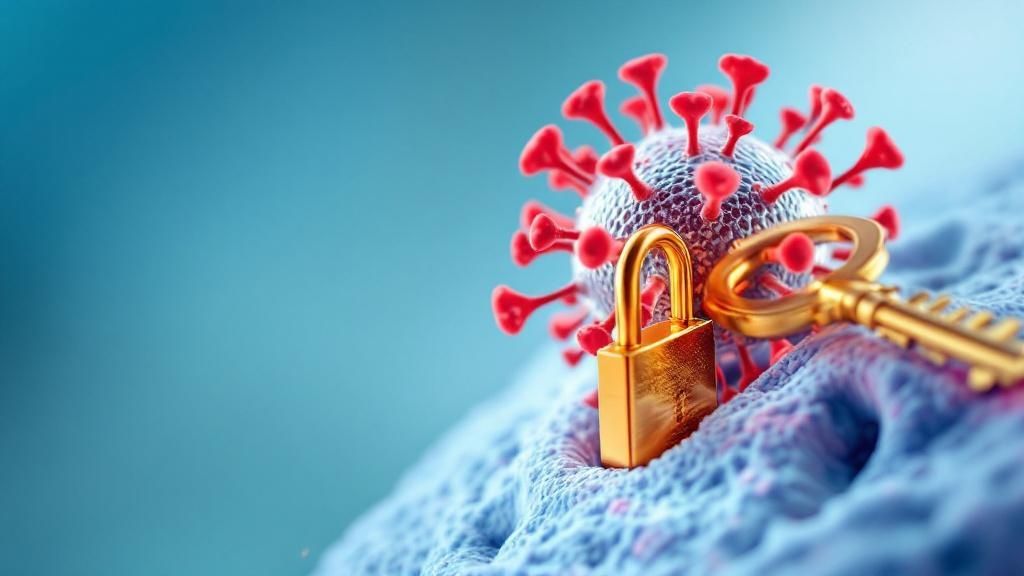
The image below visualizes that critical first step where the virus latches onto the cell's outer surface. It’s a perfect illustration of just how specific this interaction is—the viral proteins are shaped to fit the cell's receptors like a key sliding into a lock.

The Five Key Stages Of Infection
A viral infection isn't a single event. It’s a sequence of five distinct, carefully executed steps. Each one builds on the last, all leading to the mass production of thousands of new viral particles ready to repeat the cycle.
Understanding these stages reveals both a virus’s remarkable efficiency and its potential weaknesses. For a much deeper dive into the mechanics, you can learn more about how viruses infect cells in our detailed article.
The following table provides a quick summary of the five key stages involved in a typical viral infection.
The 5 Key Stages of Viral Infection
| Stage | Description |
|---|---|
| 1. Attachment | The virus latches onto a specific receptor on the surface of the host cell. |
| 2. Penetration | The virus or its genetic material enters the host cell. |
| 3. Uncoating | The viral capsid is removed, releasing the genetic material (DNA or RNA) into the cell. |
| 4. Replication | The virus hijacks the cell's machinery to make copies of its genetic material and proteins. |
| 5. Release | New viral particles are assembled and burst out of the cell, destroying it in the process. |
Each of these steps is a critical link in the chain of infection. If even one fails, the entire hijacking attempt can be stopped in its tracks.
Now, let's break down that first step.
The entire journey begins with a highly specific process called attachment. Viruses don't just bump into cells and hope for the best. Their surface is studded with proteins designed to bind only to specific receptor molecules on a host cell.
This is why a flu virus infects your respiratory cells but not your skin cells—it's looking for the right "docking station."
At its core, a viral infection is a process of biological hijacking. The virus provides the blueprint, and the host cell provides all the raw materials, machinery, and energy needed for mass production.
This lock-and-key mechanism is incredibly precise. Take the Human Immunodeficiency Virus Type 1 (HIV-1), for example, which specifically targets the CD4 receptor found on immune cells called T cells. It’s a perfect fit.
In fact, studies have found that 90-95% of viral infections kick off with this exact kind of specific receptor-binding interaction. It’s the handshake that starts the whole takeover.
Stage One: Making the Crucial First Contact

A viral infection isn't a random accident. The whole process kicks off with a highly specific, deliberate first step called attachment. Think of it less like a chance collision and more like a calculated docking maneuver that determines exactly which cells a virus can invade.
It all boils down to a sophisticated biological lock-and-key system. Every virus has unique proteins on its surface that act like "keys," and these keys are shaped to fit perfectly onto specific molecules on a host cell's surface. These molecules are the "locks," or receptors.
If the key doesn't fit the lock, the infection is a non-starter. This molecular matchmaking is precisely why viruses are so picky about the parts of the body they infect.
Why Viruses Are So Specific
This preference for a particular cell type—a concept known as cellular tropism—is dictated entirely by this initial attachment phase. A virus floating around in your bloodstream will ignore billions of cells until it bumps into one with the exact receptor it's built to recognize.
This is why different viruses cause such distinct illnesses:
- The Influenza A Virus (H1N1) targets cells in your respiratory tract because its surface proteins are a perfect match for the sialic acid receptors found all over your lungs and airways.
- Human Immunodeficiency Virus (HIV-1) goes exclusively for immune cells, like T-helper cells, because its keys are designed to fit the CD4 receptors on their surface.
- Hepatitis B Virus (HBV) causes liver disease simply because it seeks out receptors found only on liver cells (hepatocytes).
This is a fundamental rule in virology. The Rhinovirus Type 14 that gives you a common cold can't infect your liver, just as HBV can't give you a cough. The virus just doesn't have the right key to open any other cellular door.
The attachment phase is the most critical checkpoint in the viral life cycle. If a virus can't successfully bind to a host cell, its entire mission fails before it even gets off the ground.
This first connection is more than just a simple handshake; it sets off a chain reaction that preps the virus for the next stage of its invasion. Once it's securely attached, the virus is perfectly positioned to breach the cell's outer defenses.
Understanding this first contact also shows why simple hygiene, like using disinfecting wipes on a countertop, is so effective. By wiping out the virus, we deny it any chance of ever finding its matching lock in the first place.
Stage Two: Breaching the Cellular Defenses

Once a virus has successfully latched onto its target, the next move is getting inside. Think of the cell’s outer membrane as a secure border; the virus now has to act like a spy, using clever tactics to get past this defense. This entry, or penetration, isn't a brute-force attack. It's a sophisticated hijacking of the cell's own functions.
Viruses typically use one of two main strategies to get past the gate. The tactic they choose depends entirely on their structure—specifically, whether they have a protective outer layer called an envelope.
Direct Fusion: An Enveloped Virus Strategy
Enveloped viruses, like Human Immunodeficiency Virus Type 1 (HIV-1) and Herpes Simplex Virus 1 (HSV-1), use a method called direct fusion. Their envelope is like a universal key card that can merge with the cell's outer "door." As soon as the virus binds to a receptor, its envelope fuses directly with the cell membrane, allowing it to dump its genetic cargo right into the cell's interior.
This fusion is a seamless and efficient way to get inside without setting off internal alarms. It's a quick, direct deposit of the viral blueprint, immediately setting the stage for a hostile takeover.
A virus doesn't just knock on the door; it tricks the cell into opening it. Whether through fusion or deception, the goal is the same: to get its genetic instructions past the wall so it can begin its replication cycle.
Endocytosis: The Trojan Horse Tactic
Non-enveloped viruses, like the Rhinovirus Type 14 that causes the common cold or Feline Calicivirus, take a more deceptive route called endocytosis. Since they don't have an envelope to fuse with, these viruses trick the cell into thinking they're harmless nutrients or cargo that needs to be brought inside.
The cell obligingly wraps its own membrane around the virus, pulling it inward inside a bubble called a vesicle. It's a classic Trojan Horse maneuver. Once safely inside this bubble, the virus breaks out and releases its genetic material into the cell's cytoplasm, ready to begin its invasion.
This method of entry was a key factor in past outbreaks, showing just how efficiently viruses can hijack our cellular processes. For example, the Influenza A2/305/57 Virus (H2N2) behind the 1957 pandemic used a similar process to infect respiratory cells, leading to millions of deaths worldwide. You can explore a timeline of historic disease outbreaks on MayoClinic.org to learn more.
Stage Three: Seizing the Cellular Factory
Once the virus is inside, it's no longer just a passenger. It becomes the new foreman, and this stage—known as biosynthesis or replication—is where it executes its core mission: hijacking the cell's entire production line to churn out copies of itself.
The cell, once a finely tuned machine working for its own survival, is now a dedicated factory for the enemy.
The whole process kicks off when the virus releases its genetic blueprint—its DNA or RNA. Think of it like a hacker uploading malicious software into the cell's central computer. Almost immediately, the cell's normal operations, from making proteins to repairing itself, come to a screeching halt.
Rewriting the Production Orders
The viral genes instantly take command of the cell's ribosomes (the protein-building machinery) and enzymes (the workers). Instead of following the cell’s own genetic instructions, these components are forced to read the viral blueprint and start manufacturing two things and two things only:
- Viral Proteins: These are the building blocks for new viruses, including the protective capsid shell and the surface proteins needed to infect other cells.
- Viral Genome Copies: The cell is forced to make thousands of identical copies of the virus’s DNA or RNA.
This genetic takeover is brutally efficient. The virus just provides the instructions, and the host cell provides all the raw materials, energy, and machinery. A single infected cell can be turned into a production powerhouse, cranking out hundreds or even thousands of new viral parts in a matter of hours.
The core of viral infection is this transformation of a healthy, functioning cell into a zombie factory. Its original purpose is erased, and its entire existence is repurposed to serve the virus’s replication needs.
DNA vs. RNA Viruses: A Tale of Two Takeovers
How a virus seizes control really depends on its genetic makeup. Viruses generally fall into two main categories, and their approach to hijacking the cell’s machinery is quite different.
For DNA viruses, like the Herpes Simplex Virus 1 (HSV-1), the process is pretty direct. Their DNA often travels right to the cell's nucleus, where it can easily use the cell’s own enzymes to copy its genome and start building viral proteins.
But for other viruses, the strategy is different. To learn more about this second group, you can explore our comprehensive guide on what RNA viruses are and see how their replication methods set them apart. Pathogens like Influenza A Virus (H1N1) and SARS-Related Coronavirus 2 (SARS-CoV-2) use their RNA as a template, often bringing their own special enzymes to get the job done quickly right inside the cell's cytoplasm.
This is the point of no return for the host cell. Its resources are drained, its defenses are dismantled from the inside out, and its only function becomes assembling the next wave of viral invaders, setting the stage for the final, destructive breakout.
Stage Four: Assembling the Viral Army and Escaping
The host cell has been hijacked, turned into a full-blown virus production line. Now, with all the necessary parts—viral proteins and copies of the genetic blueprint—floating around inside, the virus enters its final, most dramatic stage. It’s time to assemble the troops and bust out.
This assembly process, known as maturation, is a masterpiece of biological efficiency. The viral proteins start coming together on their own, spontaneously forming new protective shells called capsids. At the same time, a copy of the viral genome gets neatly packed inside each new shell. Just like that, you have thousands of fully armed and functional virus particles, or virions, ready for deployment.
The Great Escape: Two Exit Strategies
With a brand-new viral army assembled and raring to go, there’s only one thing left to do: escape the exhausted host cell and find new targets. Viruses have come up with two main ways to pull this off, and the strategy they choose often determines whether an infection is a short, aggressive sickness or a long, chronic one.
The first method is pure brute force: lysis. Viruses like the common cold (Rhinovirus) and the dreaded stomach bug (Norovirus) just keep replicating until the cell is packed to the gills with new virions. The pressure builds and builds until the host cell literally bursts open, dying instantly. This explosive exit floods the surrounding area with a massive viral load, kicking off a rapid and acute infection.
A virus's exit strategy is a huge deal. A dramatic, cell-bursting escape leads to a sudden, acute illness. A stealthy, budding getaway, on the other hand, sets the stage for a chronic infection that can stick around for years.
The second, more subtle approach is called budding. This is the preferred method for enveloped viruses like Human Immunodeficiency Virus Type 1 (HIV-1) and Influenza A Virus (H1N1). Instead of blowing the cell to bits, these new virions push up against the cell membrane. As they exit one by one, they wrap themselves in a small piece of it. This gives them a clever disguise made from the host's own cellular material, helping them fly under the radar of the immune system.
Because budding doesn’t kill the host cell right away, it can survive longer and continue to serve as a virus factory. This is often the engine behind chronic infections, as the cell can release a slow, steady stream of new viruses over a long time. Grasping these two exit strategies is key to understanding why different viruses cause such wildly different types of illness.
From Single Cell to Global Threat
How does a microscopic event inside one cell explode into a worldwide pandemic? It all comes down to the ruthless efficiency of the viral lifecycle. Every step, from the first attachment to the final release of new viruses, is a masterclass in speed and scale, letting a single infection multiply at an exponential rate.
This is exactly how viruses like SARS-Related Coronavirus 2 (SARS-CoV-2) can tear through populations so quickly. The entire global crisis began with individual viral particles successfully latching onto ACE2 receptors in a person's respiratory tract. That one event set off a chain reaction, turning one cell into a factory for millions of new viruses, which then stormed neighboring cells, and on and on it went.
From Hijacking to Pandemic
Understanding this progression is the bedrock of modern public health. By knowing the SARS-CoV-2 infection process depends on that initial binding event, scientists could design incredibly specific tools to stop it. Vaccines, for instance, were engineered to block the virus's spike protein, essentially preventing it from ever picking the ACE2 "lock."
The devastating potential of this cellular process is written all over human history. Viral infections have a staggering global reach, proving just how good they are at getting into cells and spreading.
- The HIV/AIDS pandemic has infected roughly 86 million people globally since 1981, causing over 40 million deaths.
- The SARS-Related Coronavirus 2 (SARS-CoV-2) virus, which also targets ACE2 receptors, led to more than 700 million cases and over 7 million confirmed deaths worldwide. You can find more data on the impact of viral pandemics on PMC.
The journey from a single infected cell to a global pandemic underscores a critical truth: interrupting any part of the viral lifecycle can have a massive protective effect on public health.
This knowledge is the "why" behind every effective prevention strategy we have. For a detailed breakdown of each stage, from attachment to release, check out our guide on the viral replication cycle steps. When you grasp these mechanisms, it becomes clear why antiviral drugs, vaccines, and even simple hygiene measures like using disinfectant wipes are so vital. They’re all designed to throw a wrench into this deadly process before it can gain momentum.
Common Questions About Viral Infections
Once you start digging into how viruses work, a lot of questions come up. Let's break down a few of the most common ones to get a clearer picture of how these tiny invaders operate and why certain prevention tactics work so well.
Can a Virus Infect Any Cell in the Body?
Nope. Viruses are incredibly picky about which cells they break into. Think of it like a key and lock—a virus's surface proteins have to be a perfect match for the receptors on a cell's surface. This is a concept called cellular tropism.
This is exactly why respiratory viruses like Influenza A Virus (H1N1) stick to the cells lining your lungs and airways, while something like the Hepatitis B Virus (HBV) goes straight for liver cells. The virus completely ignores any cell that doesn't have the right "docking station," which is why an infection usually stays in one part of the body.
How Long Do Viruses Live on Surfaces?
This one really depends on the virus and the surface it’s sitting on. Some are fragile, while others are surprisingly tough. Enveloped viruses, which have a delicate outer fatty layer, usually don't last as long as their non-enveloped cousins.
- Influenza viruses can stay infectious on hard surfaces like stainless steel or plastic for up to 24-48 hours.
- Hardier non-enveloped viruses like Norovirus (Norwalk Virus) can survive for days or even weeks, just waiting for someone to touch that surface.
This is a perfect example of why disinfecting high-touch surfaces with effective wipes is so crucial. It’s a direct intervention in the attachment stage—if you wipe out the virus from the environment, you deny it the chance to ever make that first contact.
Preventing a viral infection often comes down to breaking the chain at its weakest link. Since attachment is the mandatory first step, effective surface hygiene can stop a virus before it ever gets a chance to enter the body.
Do All Viruses Kill the Host Cell They Infect?
Not always. While some viruses go for a smash-and-grab exit that destroys the cell, others use a stealthier approach that keeps their cellular factory running for a long time.
The aggressive strategy is called lysis. This is where viruses like the Rhinovirus Type 39 (which causes the common cold) replicate like crazy until the cell literally bursts open, releasing a massive wave of new viruses all at once. This typically leads to a sharp, short-term illness.
The stealthy method is called budding. Viruses like Human Immunodeficiency Virus Type 1 (HIV-1) and Influenza escape by wrapping themselves in a small piece of the cell's membrane, leaving one by one. This process doesn't kill the cell right away, effectively turning it into a long-term production plant that steadily churns out new viruses. This is often the mechanism behind chronic infections.
Leave a Reply