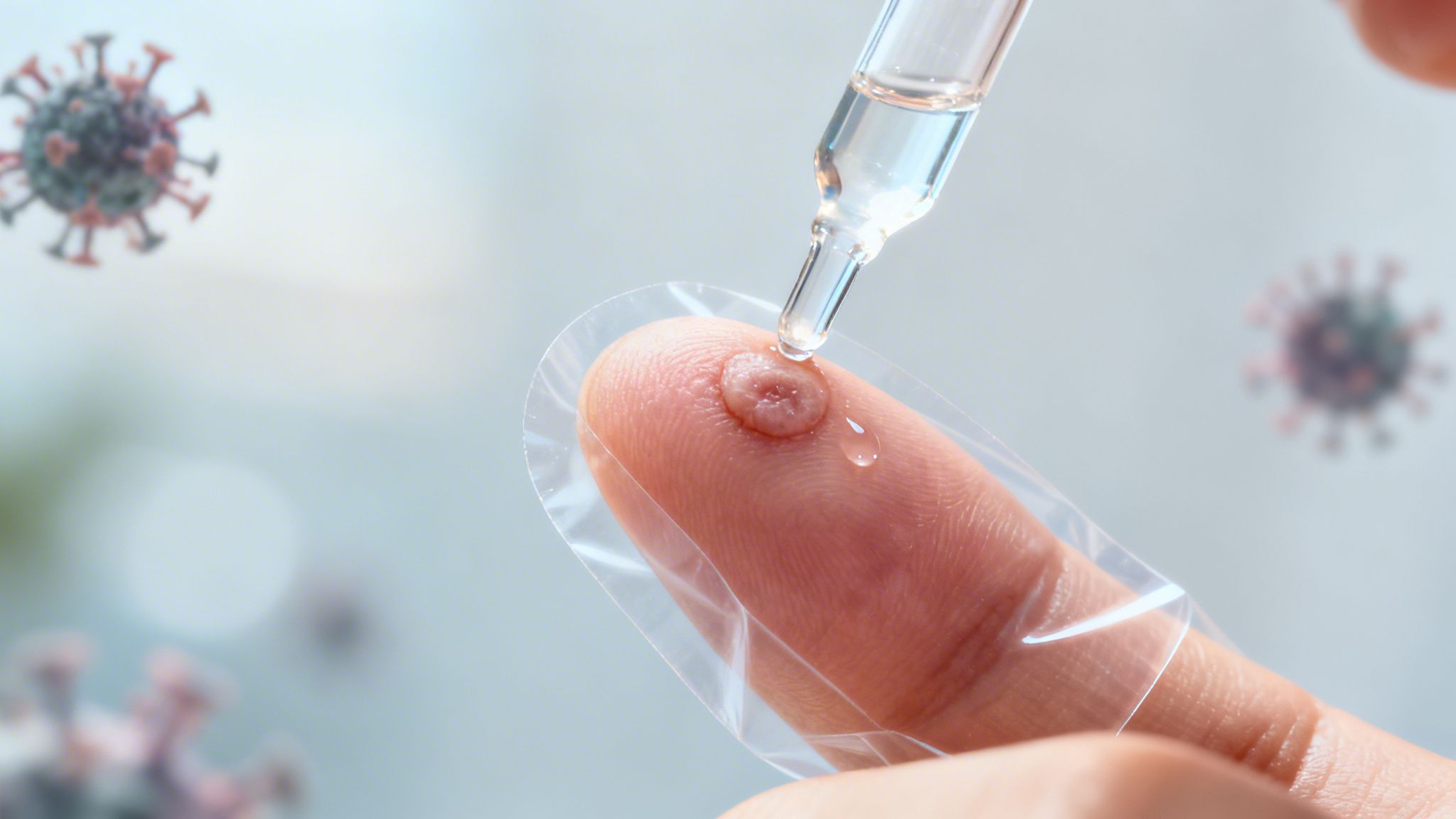
When you're dealing with a stubborn wart, using an acid-based treatment is often the most effective, common-sense first step. The most popular choice you'll find on pharmacy shelves is salicylic acid, which works by slowly but surely breaking down the tough keratin protein that makes up the wart's structure.
This process is called keratolysis, and you can think of it as carefully peeling away the wart, one microscopic layer at a time.
Understanding the Role of Acid in Wart Removal
Warts are harmless skin growths caused by different strains of the Human Papillomavirus (HPV). The virus, a small non-enveloped type similar in structure to viruses like Rhinovirus or Norovirus, sneaks into your body through tiny cuts or scrapes in the skin, triggering an infection that causes skin cells to grow way faster than normal. Using a targeted acid treatment is one of the most reliable ways to tackle these growths head-on.
The whole point of applying acid is to kick off a controlled destruction of the infected skin cells. This isn't a harsh, immediate burn; it's a gradual, methodical process. Imagine it as a super-targeted chemical exfoliant designed specifically for the tough, callused tissue of a wart. Over time, this repeated application weakens the wart's defenses, giving your body a chance to finally clear the virus from that spot.
There are two main types of acid treatments you'll encounter:
- First-Line Treatments: These are the over-the-counter products you can buy yourself, usually containing salicylic acid. They're widely available, affordable, and perfectly safe for home use when you follow the directions.
- Second-Line Treatments: This category includes much stronger acids, like bichloroacetic or trichloroacetic acid. Because they're so potent, they are only ever applied by a healthcare professional in a clinic, usually for warts that just won't go away.
This chart shows the typical path people take, starting with at-home care before moving on to professional help if needed.

As you can see, salicylic acid is the standard starting point. The stronger, professionally applied acids are reserved for cases that don't respond to the first round of treatment.
The Science Behind the Treatment
The power of using an acid for warts really comes down to its keratolytic properties. Keratin is the tough, fibrous protein that gives your skin, hair, and nails their strength. When you have a wart, HPV hijacks your cells and forces them to overproduce keratin, creating that signature rough, raised bump.
Salicylic acid gets to work by softening and dissolving the bonds holding all that extra keratin together.
By consistently breaking down the wart's tough exterior, acid treatments not only remove the physical growth but also expose the underlying virus to the body's immune system, prompting a natural defensive response.
This two-pronged attack is what makes acid such a gold-standard therapy. It physically removes the wart from the outside while also helping your immune system fight the viral cause from the inside. Understanding this is key to using these products safely and getting the best possible results.
How Acids Actually Eradicate Warts
To get why an acid for warts works, you have to know what you’re up against. A wart isn't just a random bump on your skin. It’s a tiny, localized infection caused by a strain of the Human Papillomavirus (HPV), a resilient, non-enveloped virus that can persist on surfaces. It’s smarter than it looks.
The virus tricks your skin into working overtime, churning out excess cells and a tough protein called keratin. All that extra material piles up, creating the wart’s classic rough, dense surface. It's like a tiny, self-contained fortress.
Acid treatments launch a strategic, two-pronged attack to dismantle this viral stronghold.
The Primary Action: Keratolysis
The main weapon in an acid’s arsenal is a process called keratolysis. It’s a technical term, but the concept is simple: it breaks down all that tough keratin.
The acid—usually salicylic acid in over-the-counter products—gets to work by dissolving the "glue" holding the infected skin cells together.
Think of it like gently sanding down a block of wood, layer by layer. Each application softens and destroys the outermost surface of the wart. Over days and weeks of consistent treatment, you’re gradually peeling away the entire growth until you get back down to healthy skin. This slow, controlled removal is precisely what makes it a safe option for at-home use.
This process is a targeted form of chemical exfoliation. While the principle is the same—dissolving the bonds between cells—here it’s focused with pinpoint accuracy on destroying just the wart tissue.
The Secondary Action: Immune System Stimulation
While the physical destruction is happening on the surface, something just as important is going on underneath. The mild, controlled irritation from the acid acts like a signal flare for your body's immune system.
The acid's gentle irritation alerts your immune system to the presence of the HPV infection, which has been hiding from detection. This prompts your body to send immune cells to the area to fight the virus from the inside out.
Warts are masters of disguise, often flying under the immune system's radar. The acid essentially rips off the mask, drawing attention to the infection site. This dual-action approach is what makes acid treatment so effective. It doesn't just chip away at the wart; it helps your body build a defense against the virus causing it.
This combination delivers a powerful one-two punch:
- External Destruction: The acid physically dissolves the wart tissue from the outside in.
- Internal Defense: It triggers an immune response to attack the HPV virus from the inside out.
This comprehensive strategy tackles both the symptom (the wart) and the cause (the virus), which is critical for preventing it from coming back. Since HPV is a non-enveloped virus, preventing its spread starts with diligent hygiene. While you're treating the wart, remember the virus can linger on surfaces. Keeping tools like nail files or pumice stones separate and using effective disinfecting wipes on surfaces can help stop the virus from spreading to other parts of your body or to other people.
This methodical process explains why consistency and patience are absolutely essential when using an acid for warts. Each application builds on the last, gradually weakening the wart’s structure and giving your immune system the upper hand.
Salicylic Acid: The Gold Standard for Home Treatment
When it comes to treating warts at home, salicylic acid is the undisputed champion. It’s accessible, affordable, and backed by a mountain of clinical evidence. This gentle but persistent acid for warts has become the go-to first-line therapy for a reason.
Unlike stronger acids used in a doctor's office that cause rapid tissue destruction, salicylic acid works through a slow, controlled process called keratolysis. It systematically breaks down the keratin protein that holds the wart together, letting you peel away the growth layer by layer. Think of it as a targeted chemical exfoliant designed specifically for that tough, abnormal skin.

Finding the Right Formulation for You
One of the biggest advantages of salicylic acid is that it comes in all sorts of formulations. This lets you pick the best format for your specific needs, making treatment more convenient and effective depending on where the wart is.
You'll typically find these options on pharmacy shelves:
- Liquids and Gels: These are perfect for common warts on hands and fingers. They usually come with a small brush that allows you to paint the acid precisely onto the wart tissue. Concentrations typically range from 17% to 40%.
- Medicated Pads and Plasters: Ideal for plantar warts on the soles of your feet. The adhesive pads keep the acid in direct, constant contact with the wart while also providing a bit of cushioning from the pressure of walking.
- Patches: Similar to pads, these adhesive patches deliver a steady dose of salicylic acid over a set time, often 48 hours, before you need to replace them.
The choice really comes down to the wart’s location and what you find easiest to use. A liquid offers precision for a wart on your finger, but a cushioned pad is far more practical for one on the bottom of your foot.
A Step-by-Step Guide to Safe Application
Getting this right is crucial for success and for protecting the healthy skin around the wart. Your most powerful tool here is consistency. A regular, daily routine will maximize the acid's effectiveness and get you faster results.
Here’s a simple, effective four-step process:
- Prepare the Area: Start by soaking the wart in warm water for about 5-10 minutes. This softens up the tough outer layers, making the skin more receptive to the acid.
- Debride the Surface: After soaking, gently file the surface of the wart with a pumice stone or emery board. This sloughs off the top layer of dead tissue and helps the acid penetrate deeper.
- Apply the Acid: Carefully apply your salicylic acid product directly onto the wart. Be as precise as you can to avoid getting it on the surrounding healthy skin.
- Cover the Wart: Cover the treated area with a bandage or the medicated pad itself. This helps lock in the treatment and keeps it from rubbing off.
It is essential to dedicate any tools used for wart treatment, like a nail file or pumice stone, for that purpose only. The Human Papillomavirus (HPV) that causes warts can spread via contaminated surfaces, so never use these tools on healthy skin or share them with others. Regularly disinfecting these tools and nearby surfaces with a product effective against non-enveloped viruses is a smart preventative measure.
Understanding Treatment Duration and Efficacy
Patience is a virtue when using salicylic acid. While some small warts might disappear in a few weeks, more stubborn ones can take up to 12 weeks of consistent, daily treatment to fully resolve. It's a marathon, not a sprint.
The good news is that this approach is incredibly well-documented. Salicylic acid is one of the most studied and effective treatments available over the counter. In fact, a major review of multiple clinical trials showed an impressive 75% cure rate in patients using salicylic acid, compared to just 48% in those using a placebo.
To get the best results while avoiding side effects, it's critical to understand how often to use salicylic acid based on the product’s instructions. Overdoing it can lead to skin irritation, while not applying it enough will just drag out the process. Finding that balance is the key to successfully using this gold-standard acid for warts.
When Stubborn Warts Won't Budge: Exploring Stronger Acids
So, you’ve tried over-the-counter salicylic acid, and that stubborn wart is still hanging around. What's next? This is usually when it’s time to call in a professional. For these tough, or recalcitrant, warts, dermatologists have a few stronger acids up their sleeve designed to get the job done.
These treatments are a significant step up from what you can buy at the pharmacy. Unlike salicylic acid’s slow-and-steady approach of peeling away layers, these more potent acids work by causing necrosis—basically, the controlled death of the wart tissue. It’s a more direct attack that can get you faster results, but it also comes with a higher risk of side effects like stinging, burning, or some temporary skin discoloration.
Monochloroacetic Acid and Formic Acid
Two of the go-to options for hard-to-treat warts are monochloroacetic acid (MCA) and formic acid. Both are highly corrosive, which is why they must be applied with extreme precision by a healthcare professional who can target only the wart.
- Monochloroacetic Acid (MCA): This powerful acid is a favorite for plantar warts. It essentially cauterizes the wart tissue chemically, destroying it in just a few applications.
- Formic Acid: While still quite strong, formic acid is another great option for stubborn common warts. It often comes in a specialized pen-like applicator to ensure the dose is controlled and precise.
There’s good clinical data backing these up. For instance, one key study on plantar warts found that MCA achieved a 46% cure rate, which was slightly better than a combination salicylic acid therapy. Another study showed that formic acid, when applied with a proprietary pen for just 30 seconds twice a week, cleared up treatment-resistant warts in 42.8% of adults. You can dig into more details on these destructive therapies for cutaneous warts to see how they stack up.
A huge part of professional wart treatment is stopping the spread of the Human Papillomavirus (HPV). Warts are contagious, and any surface they touch—from the floor to your towel—can get contaminated with this non-enveloped virus. This is why clinics are so strict about hygiene, often using powerful disinfecting wipes to sanitize everything between patients, ensuring a sterile environment.
Bichloroacetic and Trichloroacetic Acids
If even MCA and formic acid don't do the trick, dermatologists might escalate to bichloroacetic acid (BCA) or trichloroacetic acid (TCA). These are even stronger compounds, typically reserved for the most difficult cases.
TCA, for example, is a well-known peeling agent that can be carefully painted on to burn away the wart. BCA works pretty much the same way. Both require meticulous application, often with a tiny wooden stick, to coat the wart without touching any of the surrounding healthy skin. The clinician can tailor the strength, using concentrations anywhere from 30% to over 80%, depending on the wart's size and location.
Why You Absolutely Need a Professional for This
Using a potent acid for warts is a delicate balancing act. The whole point is to obliterate the viral tissue without creating a new problem, like a nasty scar. This is where a medical expert is non-negotiable.
- Precision: A dermatologist can apply the acid down to the millimeter, often protecting the surrounding area with a barrier like petroleum jelly.
- Dosage Control: They know exactly what concentration to use and how much to apply for different types of warts. A wart on your foot can handle more than one on your finger.
- Safety Monitoring: If things get painful or a blister forms, they know how to manage it and make sure the area heals properly.
Trying to use these chemicals at home is a recipe for disaster. You're far more likely to end up with a chemical burn, a deep scar, or a nasty infection than you are to get rid of the wart. When a wart just won’t quit, escalating to a stronger, professionally applied acid is the smartest and safest next move.
Specialized and Historical Acid Treatments
When the usual over-the-counter acids don't cut it, where do we turn? The quest to get rid of stubborn warts has led clinicians down some fascinating paths, exploring compounds far beyond the typical pharmacy shelf. This journey gives us a cool look at both the history and the future of dermatology.
These advanced options aren't just about peeling away skin layers. They use more complex, targeted attacks on the wart and the HPV causing it. They're typically reserved for cases where everything else has failed, which brings up a key point in wart treatment: you have to match the tool to the challenge.
Podophyllin: A Plant-Based Predecessor
Long before we had today’s refined formulas, dermatologists relied on podophyllin, a potent resin pulled from the Mayapple plant. It works very differently from salicylic acid. Instead of just dissolving skin, podophyllin is a cytotoxic agent—it literally poisons the wart cells, stopping them from dividing and multiplying. For decades, it was a go-to treatment.
This old-school acid for warts actually paved the way for many modern treatments. Studies from the late 60s and early 70s showed podophyllin had an impressive 81% cure rate for simple plantar warts. That was nearly as good as the salicylic-lactic acid combos popular at the time. You can dig deeper into these historical wart treatment outcomes to see how things have evolved.
Working with powerful compounds like these also highlights how crucial a clean environment is. Viruses like HPV can stick around on surfaces, so good hygiene is key to preventing spread. For a closer look at modern disinfecting agents, you can explore the various uses of hypochlorous acid in our other guide.
Bleomycin: The Injectable Solution
For the most difficult, treatment-resistant warts—what doctors call "recalcitrant"—clinicians might pull out an even bigger gun: bleomycin. This is a chemotherapy drug that works by directly damaging the DNA inside the wart's rapidly dividing cells, forcing them to self-destruct.
This isn't a cream you rub on top. Bleomycin is injected directly into the base of the wart. It sounds intense, but for warts that have shrugged off every other attack, it's remarkably effective.
Bleomycin is reserved for the most stubborn warts due to its potency. Clinical data has shown it can achieve up to a 92% clearance rate in these challenging cases, with many patients achieving success after a single treatment.
That high success rate makes it an invaluable last resort. The evolution from a plant-based resin like podophyllin to a powerful injectable like bleomycin really shows the ongoing effort to find a solution for every kind of wart, from the simple to the seemingly invincible.
Safety Precautions and When to See a Doctor
While using an acid for warts can be incredibly effective, the goal is always to get rid of the wart safely, not to create a bigger problem. Knowing what to expect in terms of side effects—and more importantly, recognizing when to stop—is just as crucial as the application itself. Following a few simple guidelines can help you remove the wart without any unnecessary drama.
With most over-the-counter acid treatments, the side effects are usually minor and totally manageable. You might notice some mild skin irritation, a bit of redness, or a slight stinging feeling right after you apply it. These are actually good signs, telling you the acid is getting to work breaking down that stubborn wart tissue.

Minimizing Common Side Effects
A few simple steps can protect the healthy skin around the wart and keep irritation to a minimum during the process.
- Create a Protective Barrier: Before you put the acid on, trace a thin layer of petroleum jelly around the border of the wart. This little trick creates a seal that stops the acid from spreading and bothering the healthy skin next to it.
- Apply Precisely: Use the applicator to dab the product only on the wart itself. Don't go overboard; a tiny, targeted amount is all you need for each treatment.
- Keep It Clean and Dry: Good hygiene is a must. Because HPV is a persistent virus, consider using virucidal wipes on bathroom counters or floors where you perform treatment. You can learn more about which cleaning agents work best in our guide covering hydrogen peroxide and rubbing alcohol.
These precautions are easy to follow and can make the whole treatment process much more comfortable while preventing skin damage.
Red Flags That Signal a Doctor's Visit
Let's be clear: at-home acid treatment isn't for every wart or every person. It's vital to recognize the signs that mean it's time to stop what you're doing and call a healthcare professional.
Your health always comes first. While at-home treatments are convenient, they’re only meant for simple, uncomplicated warts. Any sign of a potential complication is a clear signal to get professional medical advice.
Stop treatment and see a doctor if you notice any of these issues:
- Significant Pain or Bleeding: The wart becomes intensely painful, starts bleeding on its own, or develops open sores.
- Signs of Infection: The area gets increasingly red, swollen, feels warm to the touch, or starts oozing pus.
- Rapid Changes: The wart suddenly changes color, grows quickly, or takes on a strange new shape.
- Sensitive Locations: Never use over-the-counter wart acids on delicate areas like your face, nostrils, mouth, or genitals. Those spots need specialized care from a doctor.
On top of that, people with certain health conditions should skip at-home acid treatments altogether. If you have diabetes, poor circulation, or a weakened immune system, you're at a much higher risk for complications like infection and slow healing. In these cases, a doctor must manage any and all wart treatments.
Your Questions About Wart Acid, Answered
Wart treatment can feel like a guessing game, so let’s clear up some of the most common questions people have. Here’s what you need to know to handle wart acid safely and effectively.
How Long Does It Take for Acid to Remove a Wart?
This is where patience really pays off. If you’re using a daily over-the-counter salicylic acid treatment, you should start seeing some improvement in 2 to 4 weeks. Getting rid of a stubborn wart completely, though, can take as long as 12 weeks.
Stronger, professionally applied acids tend to work much faster. These might only require a few sessions, spaced several weeks apart. If you've been treating a wart at home for weeks with no change, that’s a clear sign it's time to see a doctor.
Can I Use Wart Acid on My Face or Genitals?
The short answer is absolutely not. Over-the-counter wart acids are designed for the thick, tough skin on your hands and feet. They are far too harsh for the delicate skin on your face, inside your nose or mouth, or in the genital area.
Using these products in sensitive spots can cause serious chemical burns, intense pain, and even permanent scarring. Warts in these areas need a professional's touch—a healthcare provider can offer much safer and more appropriate treatments.
Warts are caused by HPV, a virus that can spread just by touching it and then touching another part of your body. Always wash your hands thoroughly after treating a wart and consider using a disinfecting wipe on your hands to avoid spreading the virus to more sensitive areas.
What Should I Do If Acid Gets on Healthy Skin?
It’s easy for this to happen. If you accidentally get some of the acid on the healthy skin around the wart and it starts to sting or burn, wash the area right away with soap and warm water. A good, thorough rinse will neutralize the acid and wash it off.
Once the area is clean and dry, dab a little petroleum jelly on it. This will soothe the irritation and create a protective barrier while it heals. To avoid this problem in the first place, always put a ring of petroleum jelly around the wart before you apply the acid.
Leave a Reply